Jaison Abel, Head of Microeconomics, spoke to Inside Higher Ed about the job market for recent college graduates and the advantage of a college degree.
https://t.co/e11KTy9DOc
In this video, economists Wilbert van der Klaauw and Gizem Kosar discuss rising food insecurity in the U.S. and how it may be adding to consumer pessimism about where the economy is and where it’s going.
More: https://t.co/MibS2ZJ9LX
In this video, Research Economist Natalia Emanuel describes new research identifying a rise in unemployment for younger workers that coincides closely with the expansion of remote work.
Read more>>
https://t.co/moWeKiUQTF
SURVEY OF CONSUMER EXPECTATIONS
May 2026
The mean perceived probability of finding a job if one’s current job was lost decreased by 2.3 ppts to 43.7%, the lowest reading since December 2025.
#NYFedCMD
https://t.co/Ks3vGuu3YO
Households' year-ahead expectations for home price increases are stable at 4%, according to the 2026 SCE Housing Survey.
See more data on households' outlook for prices, rents, probability of refinancing and moving >>
https://t.co/8K2LKJfmwo
2026 SCE HOUSING SURVEY
The average perceived national mortgage rate decreased to 8.3% for today, 8.0% in one year, and 9.2% in three years.
#NYFedCMD
https://t.co/4e33ScMTrF
SURVEY OF CONSUMER EXPECTATIONS
April 2026
Median inflation expectations increased by 0.2 percentage point to 3.6 percent at the 1-yr-ahead horizon and were unchanged at 3.1 percent and 3.0 percent at the 3-year and 5-yr-ahead horizons, respectively.
https://t.co/22YzFj6qgF
SURVEY OF CONSUMER EXPECTATIONS
March 2026
Median inflation expectations increased by 0.4 ppt to 3.4% at the 1-year-ahead horizon, increased by 0.1 ppt to 3.1% at the 3-year-ahead horizon, and were unchanged at 3.0% at the 5-year-ahead horizon.
https://t.co/22YzFj6qgF
MARCH SURVEY
Median year-ahead commodity price change expectations increased by 5.3 ppts for gas to 9.4%, the highest reading since March 2022.
#NYFedCMD
https://t.co/KpMKS9nk9k
SURVEY OF CONSUMER EXPECTATIONS
February 2026
Median inflation expectations declined by 0.1 ppt at the one-year-ahead horizon to reach 3.0% while holding at 3.0% at the three- and five-year-ahead horizons.
#NYFedCMD
https://t.co/a2fwvSDnuc
The mean perceived probability of losing one’s job in the next 12 months decreased by 0.4 percentage point to 14.8%, according to the January Survey of Consumer Expectations.
#NYFedCMD
https://t.co/6b1TnbpGqA
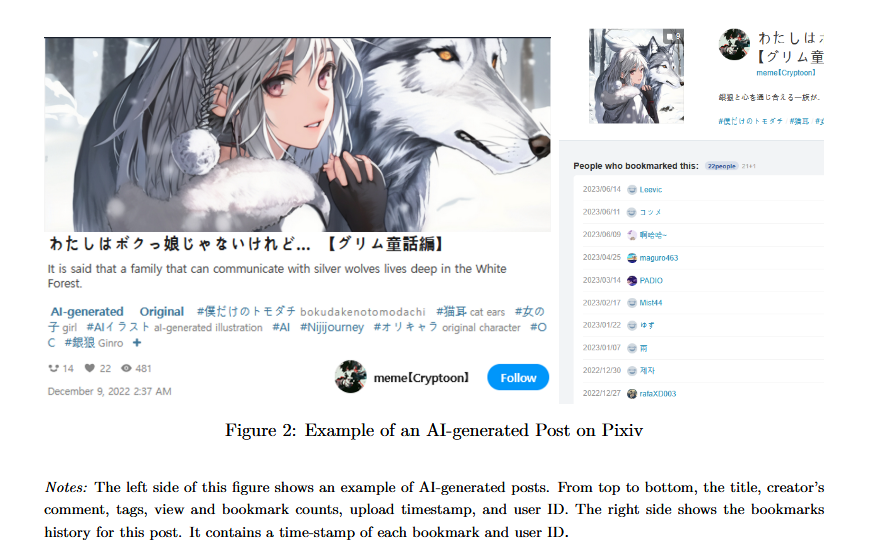
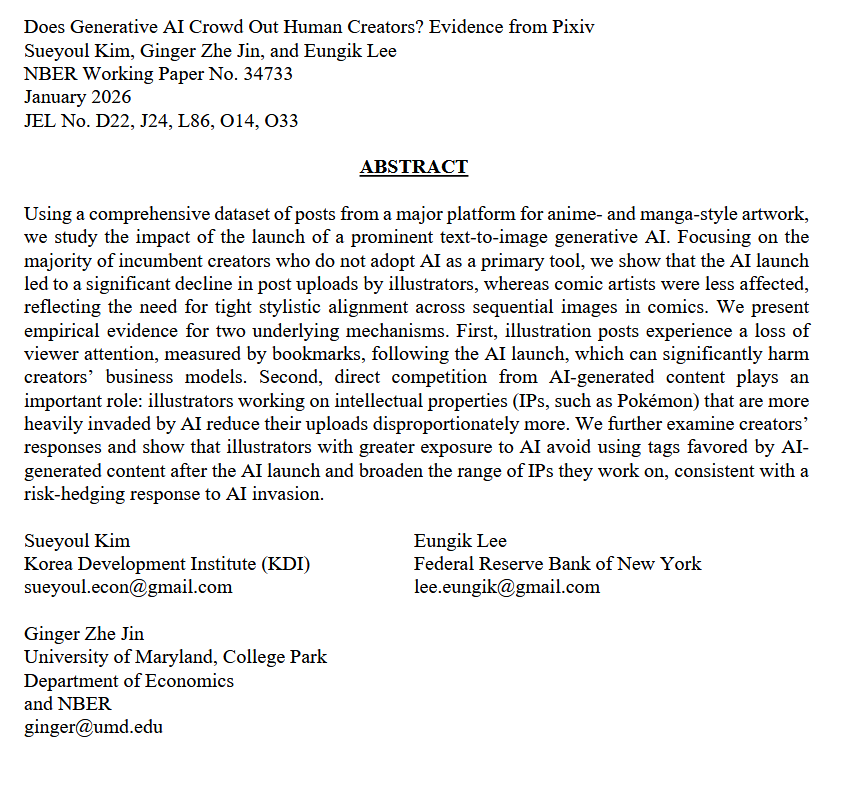
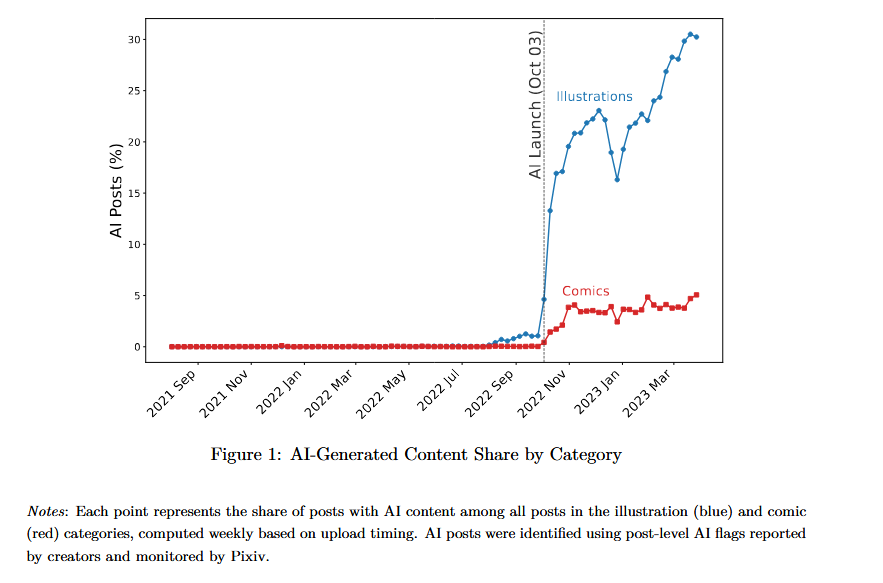
A lot in this paper on the impact of AI on anime fanart: Top creators reduced output 15%, but less prolific artists increased theirs 7%. Engagement on human art dropped ~30%. Comics were spared (early AI was bad at that) Artists adapted by diversifying & avoiding AI-heavy IP.
Using a comprehensive dataset of posts from a major platform for anime- and manga-style artwork to study the impact of the launch of a prominent text-to-image generative AI, from @Sueyoul Kim, Ginger Zhe Jin, and Eungik Lee https://t.co/pAPhfLvaen
Creative destruction rewards innovation but leaves workers exposed. New research measures worker preparedness to identify who is ready for accelerating AI-driven change—and who isn't, from Andrew Caplin, Søren Leth-Petersen, Victoria Gregory, Ida Maria Hartmann, @eungiklee, and Johan Sæverud https://t.co/4QgMZJjDXs
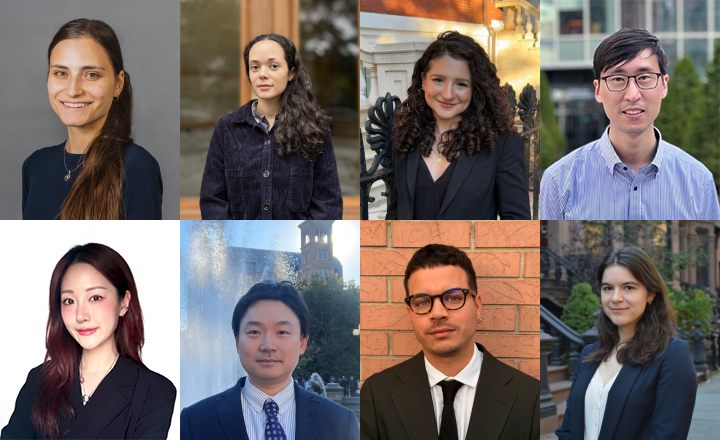
Excited to be on the job market!
This paper is part of my broader agenda to understand AI adoption through a behavioral economics lens. Thanks to Alex for the guidance and support!
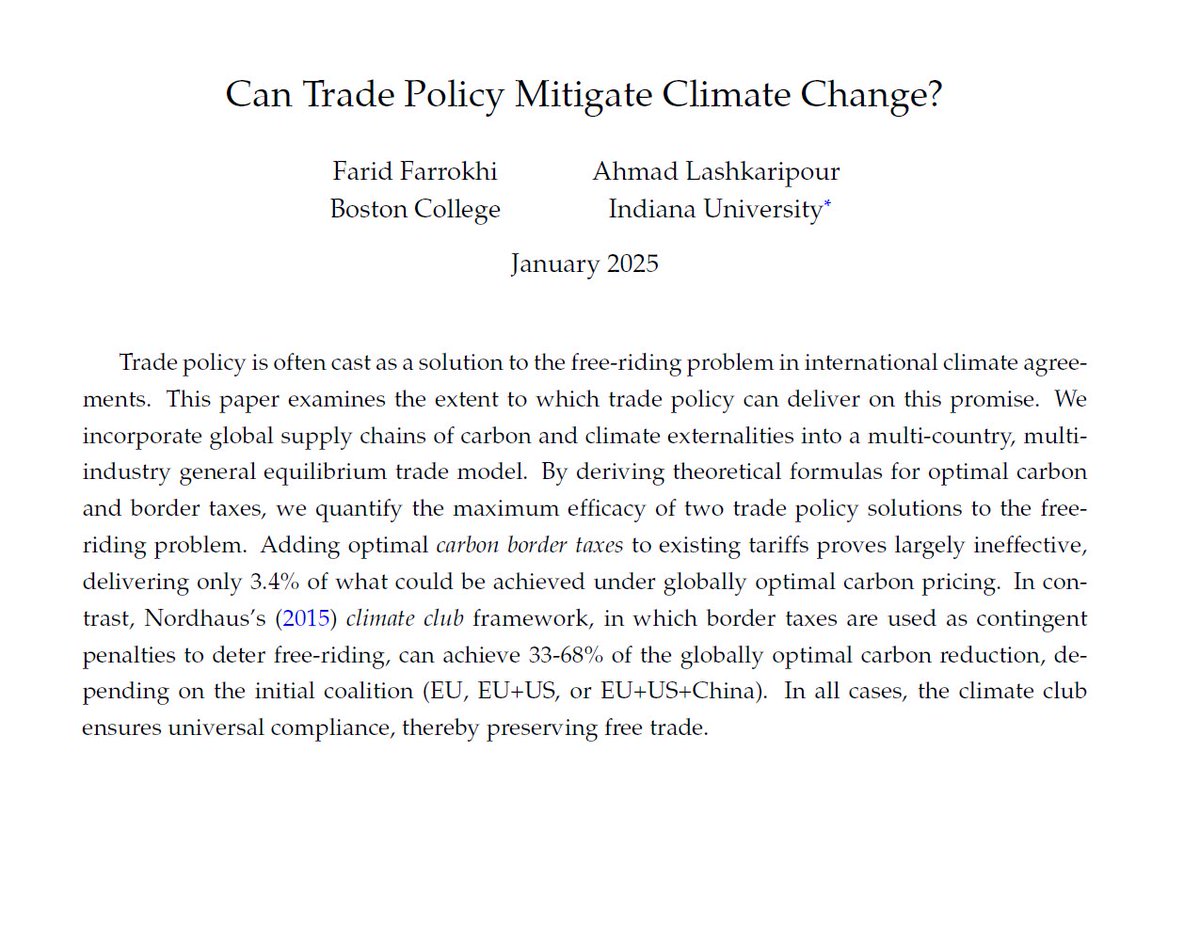
We study how trade policy can reduce global emissions. Unilateral carbon border taxes have limited efficacy at cutting foreign emissions. By contrast, coordinated trade penalties under a climate club prove highly effective. https://t.co/dH5mIGe0gJ