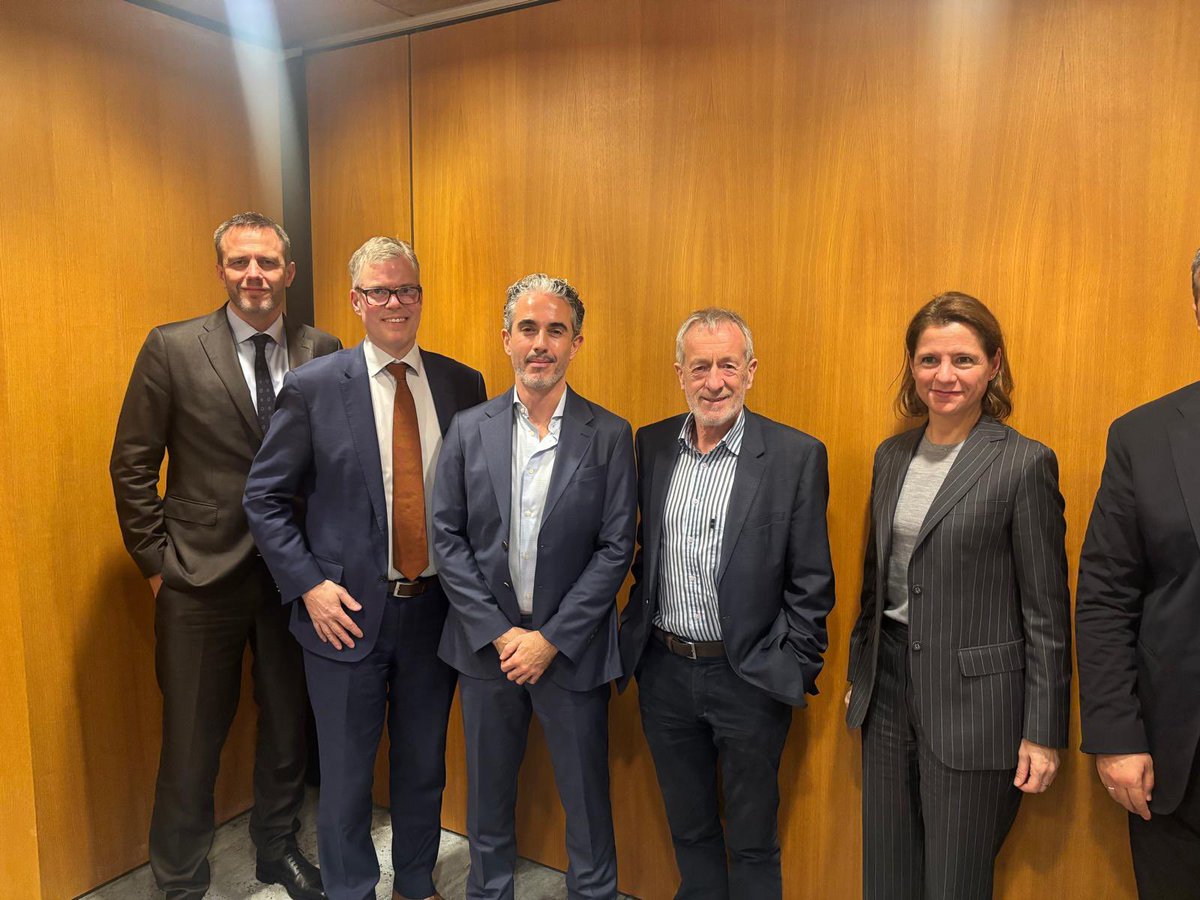
Two days in Strasbourg: our Presidency brought the voice of Europe's power sector to the heart of EU decision-making.
Alongside our Board meeting, our President Markus Rauramo, Vice Presidents Georgios Stassis and Catherine Fiamma MacGregor, and Secretary General Kristian Ruby met Commissioners and Members of the European Parliament on the questions that will shape investment for the next decade:
- Artificial intelligence and power with Executive Vice-President Henna Virkkunen
- The post-2030 energy and climate framework with Commissioner Dan Jørgensen and Executive Vice-President Teresa Ribera
- An exchange with MEP Pascal Canfin
At the European Energy Forum dinner, Catherine MacGregor joined the debate "Which meaningful ETS reform for a competitive Europe?"
Her message: the EU Emissions Trading System (ETS) is Europe's decarbonisation engine. Since 2005, emissions in ETS sectors have fallen by around 50% while the EU economy grew by around 30%. The power sector delivered the bulk of that reduction.
With around €6tn of power sector investment needed for the 2040 target, we call on co-legislators to secure:
- A predictable, meaningful and sustainable carbon price
- An ETS that anchors Europe's industrial policy
- A just transition for citizens and all regions of Europe
Keep the signal strong and the rules stable, and private capital will follow.
The future of clean heating and cooling depends on the choices we make today. Register for the Heat Pump Forum 2026 here: https://t.co/KQc6pTeKIP
Eurelectric is looking forward to joining the European Heat Pump Association’s Heat Pump Forum. The event will bring together decision-makers, industry and experts to discuss the policies and technologies shaping Europe's energy future.
Location: SQUARE Brussels Convention Centre
Date: Tuesday, 1 December 2026
The programme also includes the Heat Pump Awards, recognising outstanding heat pump projects from across Europe.
We look forward to seeing you there.
Great to welcome the @Eurelectric board to the European Parliament last night for a lively discussion on Europe's electricity future ⚡
As EPP Shadow Rapporteur on future-proofing electricity bills, I set out how we can make better use of our grids, rewarding flexibility & storage to cut consumer costs.
We also discussed the AI and data centre boom, especially in Ireland. I made the case that the companies driving it are among the wealthiest in the world and should pay their fair share towards the grids and clean energy it needs!! 🇮🇪🇪🇺
Negative electricity prices are not a sign of market failure; they are a signal of where Europe needs more flexibility. Explore the new discussion paper from @compasslexecon on our Market Design Day page: https://t.co/59aA83CuYE
Negative prices are becoming more common in European power markets, but the picture varies widely:
- In 2025, prices were negative in nearly 7% of hours in Spain and the Netherlands, compared with only 2% in Estonia.
- On 1 May 2026, prices in Belgium, France and Germany fell close to the –500 €/MWh floor, while Spain avoided such deep negative prices. A key difference: how much of each country’s wind and solar fleet has an incentive to respond to negative prices.
- Finland shows the market can respond. Negative prices fell from 8.3% of hours in 2024 to 5.3% in 2025, and to just 1% in the first half of 2026. New batteries, electric boilers and heat pumps helped make the difference.
When they reflect real supply and demand, negative prices show where storage, flexible demand and electrification are most valuable.
When they persist, they can point to structural barriers instead: older support contracts that reward producing at any price, rooftop solar shielded from market signals, or obstacles to deploying flexibility.
As Member States prepare their national Flexibility Needs Assessments, looking at what drives negative prices can help them target flexibility where it is needed most.
Thank you to the more than 80 participants who joined our Market Design Day yesterday.
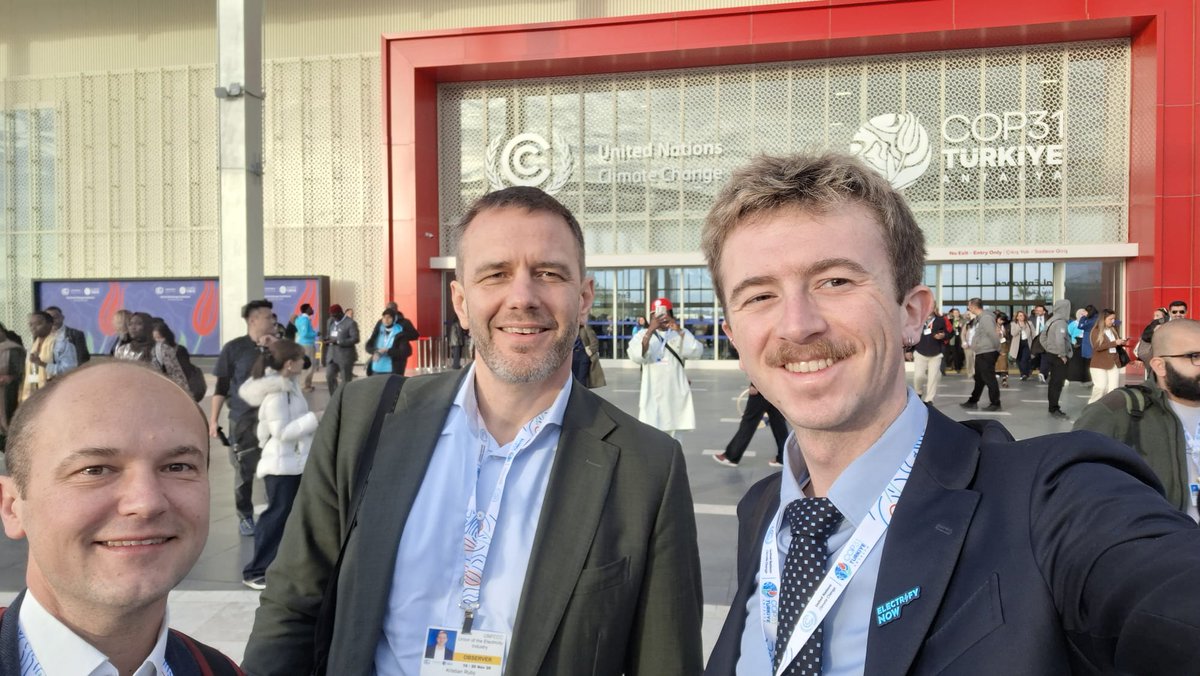
Electrification is emerging as a defining theme at COP31, with momentum building around a potential global agreement to reach 35% electrification by 2035. In Antalya, our Secretary General Kristian Ruby took that conversation to national television, our members, and global experts.
1. Closer cooperation for a more competitive Europe and Türkiye
In an interview with TRT, Türkiye's national public broadcaster, he discussed the state of Europe's energy transition and set out how Europe and Türkiye can work more closely together on electricity trade, grids, and clean technologies.
2. Grids as the backbone of electrification and growth
Our member TESAB, the Turkish Electricity Industry Association, brought international and Turkish energy leaders together for its "Grids, Growth and Green Transition" panel. Moderated by Hacı Ali Ulutaş, Vice President of the Energy Market Regulatory Authority, the panel brought together Konstantin O. Papailiou, President of CIGRE, İhsan Erbil Bayçöl, CEO of Enerjisa Üretim, Elvan Tuğsuz Güven, President of HESİAD to discuss how scaling grids, integrating renewables, and mobilizing finance are critical to accelerating the transition to an electrified economy.
3. Building resilient power systems for an electrified future
At the Sweden Pavilion, Kristian Ruby moderated Hitachi Energy's "Keeping the Lights On" panel. As economies shift from molecules to electrons, power systems must scale rapidly without compromising reliability. He was joined by Laura Cozzi, Director of Sustainability, Technology and Outlooks at the International Energy Agency, Albert Cheung, CEO of BloombergNEF, Rob McDonald, Managing Director of SSEN Transmission, and Maxine Ghavi, Executive Vice President and Head of Europe at Hitachi Energy.
Thank you to @TRT, @TESAB, @hitachienergy, and all our partners in Antalya.
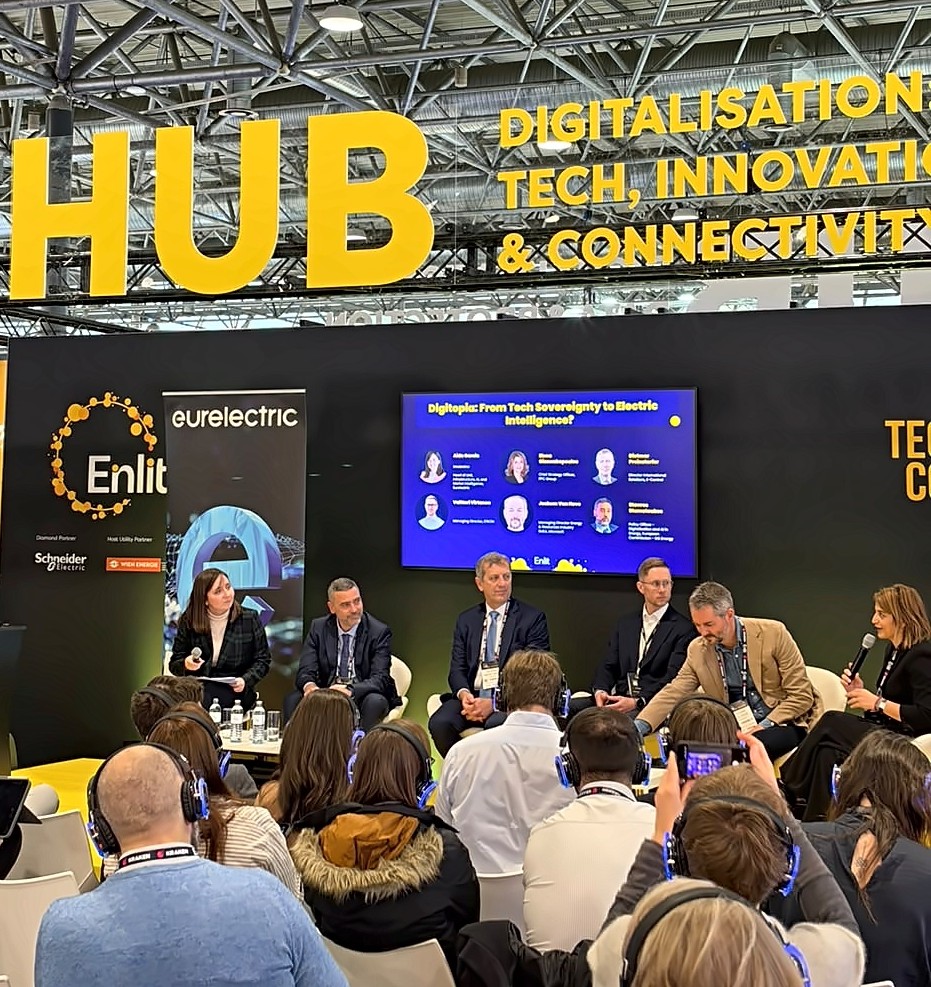
Today at our Digitopia Hub at Enlit Europe in Vienna, Eurelectric hosted two public panels on issues that will shape the future of Europe's power system.
Panel I: Tech sovereignty
As the electricity sector becomes more digital, the technologies it runs on become strategic assets. Moderated by Eurelectric's Aida García, Elena Giannakopoulou (PPC S.A.), Dietmar Preinstorfer (Council of European Energy Regulators (CEER)), Valtteri Virtanen (EYKON), Stavros Stamatoukos (European Commission DG ENER) and Jochem van Hove (Microsoft) discussed how Europe can secure the digital and clean-tech supply chains it depends on, reduce critical dependencies and keep control of the data and systems behind its grids, while staying open to global innovation.
Panel II: Power demand and grid assets: unlocking flexibility
Electricity demand is rising as transport, heating and industry electrify, and grids are under growing pressure. In a debate moderated by Eurelectric's Marianne Leonet Karu, Zivile Venslaviciute (Google), Dr. Sarah Sorge (ENGIE), Maria Andreeva (smartEn Smart Energy Europe) and Mugur George PAUNESCU (European Commission, DG ENER) explored how flexibility, from smart charging and storage to demand response, can make better use of existing grid assets, cut connection queues and lower costs for consumers, and what regulation needs to change to make it happen at scale.
Both debates build on our report "The Era of Electric Intelligence", which looks at how digitalisation and AI are reshaping the power system and what it will take for Europe to lead. Read it here: https://t.co/FAiEaf0ki6
Our programme at Enlit continues all week. Come and find us at the Digitopia Hub B.E145.
Eurelectric kicked off Enlit Europe week in Vienna!
Yesterday, with the start of Enlit Europe, we co-hosted our Digitopia Hub “Unlocking AI Value in the Utility Sector” with Microsoft for Energy at Microsoft Austria.
AI in the energy sector is moving from experiments to large-scale deployment. The key question is no longer whether to use it, but where it creates real value and how to build a business case that holds up, both for regulated network operators and for competitive producers and retailers.
Leaders from across the electricity value chain joined a candid panel debate on whether AI is proven, promised or overestimated. A hands-on challenge then showed how AI can support better decisions during a utility disruption.
A big thank you to Microsoft for Energy for hosting us, to Enlit Europe, and to our speakers from ESB, Wien Energie GmbH, E-Control, Schneider Electric and Microsoft Thanks also to everyone who joined us in Vienna and online.
See you at the Enlit Europe exhibition this week at stand B.E145!
What are the most urgent grid bottlenecks holding back Europe’s electrification?
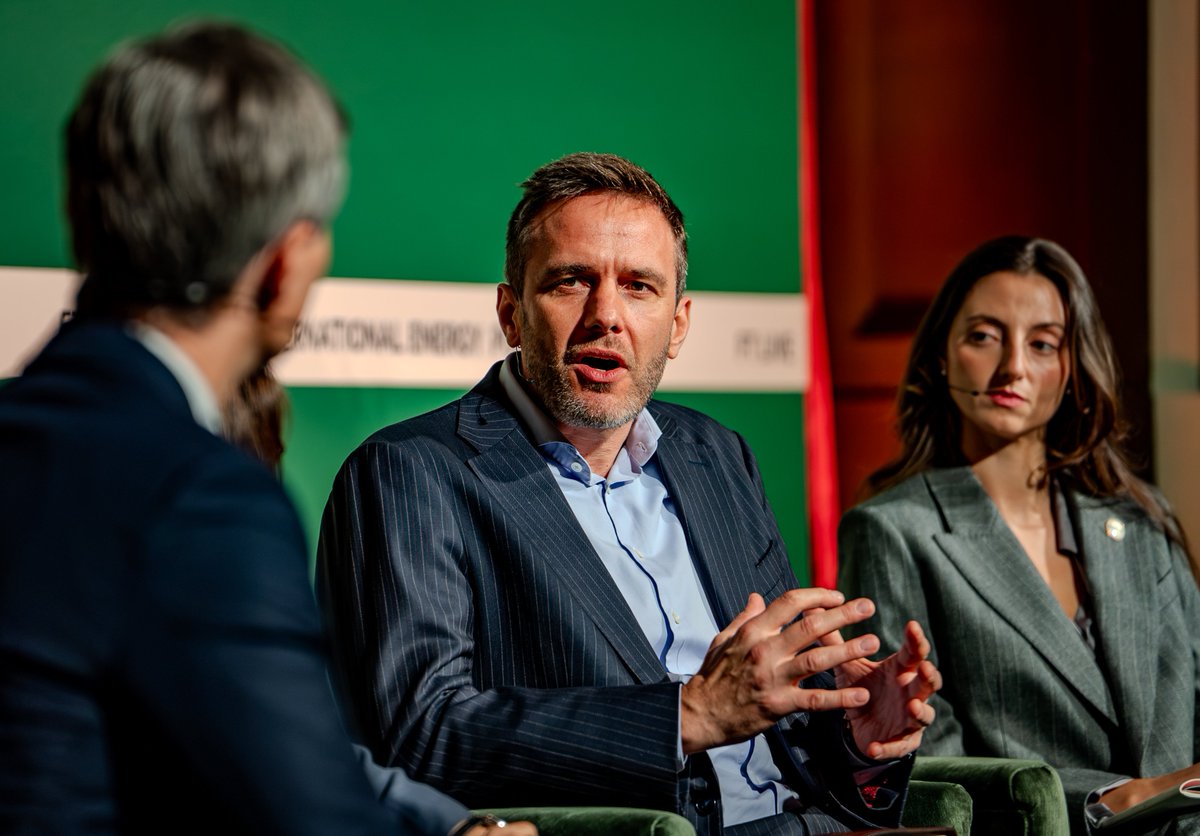
Eurelectric Secretary General @kristianruby joined the @ftlive Energy Policy Summit in Brussels to discuss building the electricity backbone for Europe’s industrial and technological future.
Investment is rising: distribution grid spending is set to reach €48–50bn next year, up from €32bn in 2023 (ACER). But Europe needs €57–65bn a year to keep pace with electrification.
Money alone won’t fix it. Permitting delays, equipment shortages and long lead times are holding back deployment. Waiting up to 40 months for a transformer is simply too long.
Three priorities stand out:
- Build ahead of demand
- Make better use of existing infrastructure
- Make growth work for the system, with faster access for large consumers that support it
An electric car is only as good as the charger it plugs into, and a charger is only as good as the grid behind it.
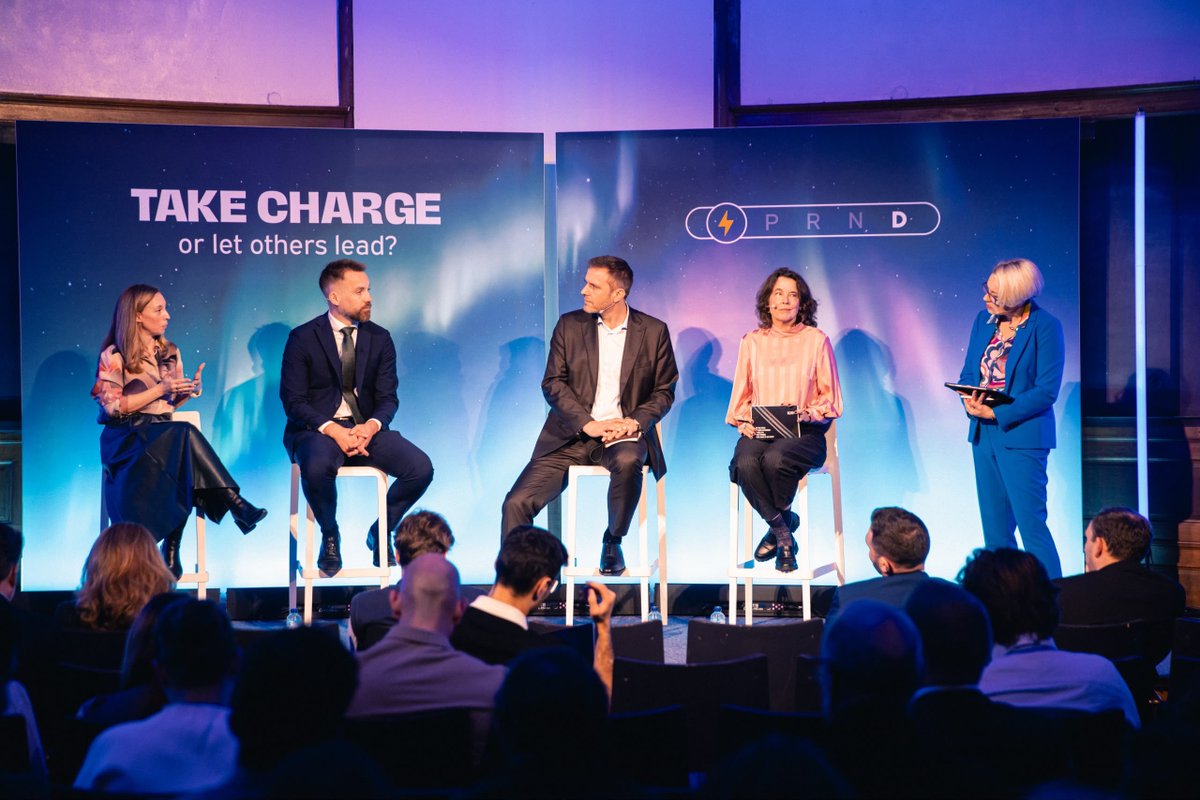
That was the starting point for our Secretary General Kristian Ruby at the Take Charge Europe Summit on Tuesday. He joined Sigrid de Vries (European Automobile Manufacturers' Association (ACEA)), Chris Heron (E-Mobility Europe) and Lucie Mattera (ChargeUp Europe) at the Take Charge Europe Summit – Making EV History, to discuss what it will take for our sectors to grow together.
Kristian’s key messages:
- The momentum is real. EV charging went from 3.5 TWh in 2020 to almost 29 TWh last year, and 73% of EU electricity now comes from clean sources. Every EV on the road gets cleaner every year.
- Corporate fleets are where our investment clocks line up. A car model takes years, a charger months, a grid connection can take several years. Fleets give predictable demand and known charging locations, so vehicles, chargers and grid connections can arrive at the same time. And today’s company cars are tomorrow’s affordable second-hand EVs for families.
- What none of us can absorb is uncertainty. €200bn has already been invested on the basis of current targets. Whatever comes out of the Automotive Package must be the final word for this decade.
Charging must be clearly cheaper than filling up. That means national tax systems must stop taxing electricity more heavily than the fossil fuels it replaces, and the Grids Package must work for distribution grids so depots and charging hubs can connect.
Thank you to Take Charge Europe and E-Mobility Europe for bringing carmakers, charging, e-mobility and the power sector onto one stage.
What does electrifying heavy industry look like in practice? Last week we saw it at the Tiense Suikerraffinaderij, where an electric heat pump is now making steam once produced by gas.
For Heat Pump Day on 27 October, a Eurelectric delegation visited the plant’s 4 MW high-temperature electric heat pump. The installation which was supported by SPIRIT Horizon Europe Project turns waste heat at around 80°C into steam at about 130°C, replacing part of the steam a gas boiler used to produce. It covers around 5% of the plant’s process heat. Tiense Suiker sees this as its first step towards electrifying all of its process heat.
Our key takeaways:
- Businesses often have a strong desire to electrify and move away from fossil fuels
- They need to see electrification in action to build confidence, make plans and reassure financial backers
- With the right expertise and support, electric solutions can be integrated into operations with little to no impact on production
Thank you to the European Heat Pump Association for organising the visit, and to Bart Aerts for his speech, tour and interview. Thank you to the Raffinerie Tirlemontoise - Tiense Suikerraffinaderij team for their warm welcome, explanations and tours. We are also grateful to Bruno Tobback, Member of the European Parliament, for his keynote speech, and to Malgosia Rybak, EMBA and Marlène Siméon for their panel contributions.
Stay tuned for more on the Raffinerie Tirlemontoise heat pump as Eurelectric prepares to delve deeper into their electrification success story.
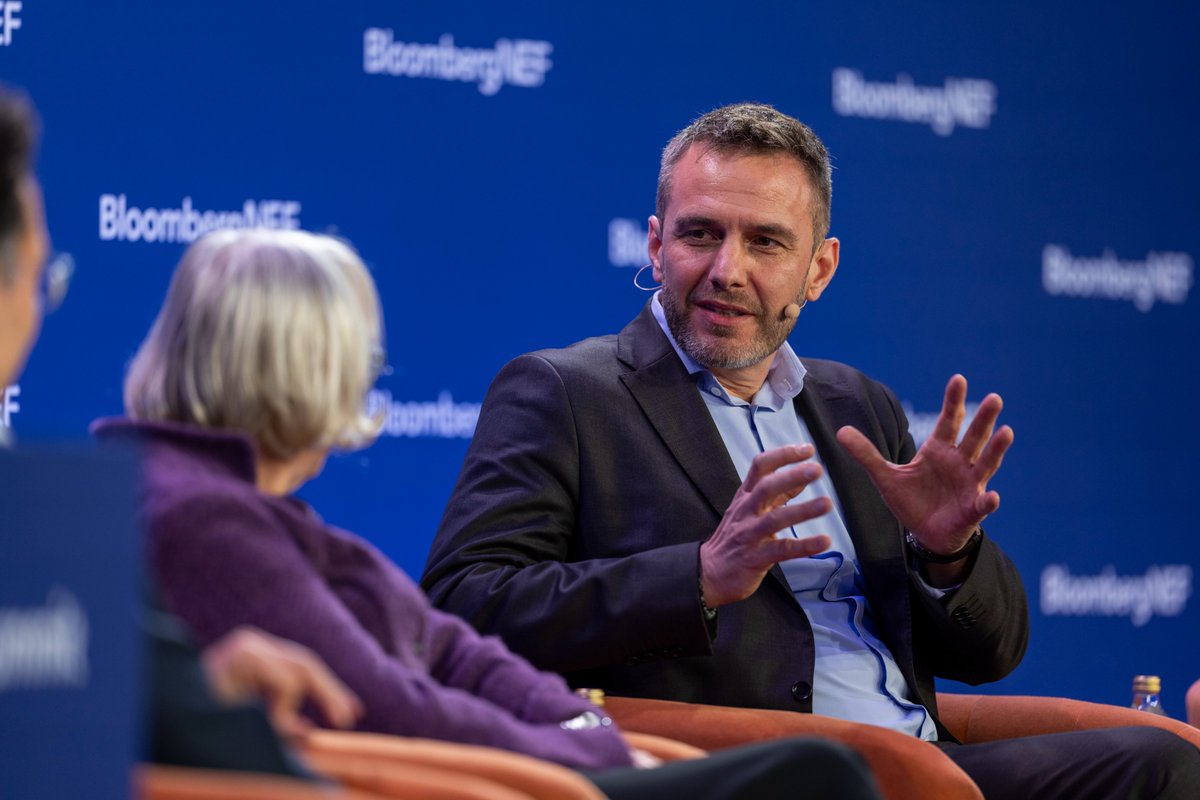
Electricity is how Europe protects its economy from geopolitical shocks. Listen to our Secretary General @kristianruby on Bloomberg’s Zero podcast: https://t.co/D415LodsTX
Kristian joined @AkshatRathi this week to discuss the big questions over Europe’s electrification. His main points:
- Europe’s price picture is more varied than people think. The Nordics, Spain and France have much lower electricity prices. Finland’s wholesale power prices have averaged below €60/MWh, while Title Transfer Facility (TTF) gas is above €100. There, cheap clean power has led to a large build-out of electric boilers.
- Flexibility is the next frontier. Investment is moving towards batteries and hybrid projects. To grow it at scale, Europe needs working markets for services like fast frequency response, and an EU storage strategy.
- Resilience is now part of energy policy. Supply chains are being weaponised and energy assets face cyber and physical threats. Europe needs to de-risk its power system, and an updated EU security strategy can’t come soon enough.
The costs of the transition are costs you cannot afford to not have; the other option is continued dependence on fossil fuels that Europe does not control.
Disclaimer: Figures from the Eurelectric Power Barometer cited in this recording reflect the data available at the time of recording and may since have been updated. For the latest analysis, please refer to our Power Barometer webinar: https://t.co/NUWr4cK2r3. The most recent data is available on Elda, our electricity data platform: https://t.co/Xhg1LT4S5W
Europe needs more electricity demand to make the most of its clean power. https://t.co/0pB3sUTBpT
The #PowerBarometer2026 shows that electrification is progressing, but also that Europe is not yet capturing its full potential.
🚗 EV sales reached nearly 3 million in 2026 YTD, with EVs representing 31% of new car sales.
🏭 At the same time, industrial electricity use remains below its previous trajectory, with energy intensive sectors still recovering from the 2022 energy crisis.
This matters because Europe’s growing supply of clean electricity creates an opportunity to electrify more transport, buildings and industry.
Our priorities are clear:
🔌 Electrify demand through dedicated KPIs and enabling policies
⚖️ Stop the tax penalisation of electricity versus gas
🏭 Support industrial electrification with new funding tools
Electrification is not only about reducing emissions. It can also reduce exposure to imported fossil fuels and strengthen Europe’s industrial competitiveness.
More clean power needs more electrification to unlock its full value.
Read our letter to EU energy ministers ahead of tomorrow’s Energy Council: https://t.co/eIffXgLBdJ
Europe is once again paying the price of its exposure to imported fossil fuels. Bills are rising for households and energy-intensive industries are under pressure.
Our three messages to ministers:
1. Non-distortive relief now, electrification for lasting security – support that acts on the bill, not the market, and no subsidies for gas-fired generation.
2. A post-2030 framework built on electrification – an electrification target of around 50% by 2040, a technology-inclusive approach and a robust ETS.
3. Future-proof network charges and taxation – system-friendly tariffs and electricity never taxed more than gas, so that bills reward clean electrification.
The long-term answer is clear: electrification. Every heat pump, electric vehicle and electrified industrial process replaces imported fossil fuels with clean power produced in Europe. The Commission estimates that reaching its electrification objective would cut EU gas demand by 70%. We stand ready to engage constructively with energy ministers to deliver affordable, secure and clean electricity for Europe’s citizens and industry.
The letter is signed by our President Markus Rauramo, CEO & President of @Fortum , and our Secretary General Kristian Ruby.
@Ireland2026eu | @Teresaribera | @WBHoekstra | @DanJoergensen | @EU_Commission
The Power Proof: dive into the full 2026 Power Barometer at our public webinar. Register: https://t.co/kflCzuPW6a
Following our launch event on 30 September, where we presented the executive summary of our flagship report on Europe’s power sector, we are now inviting energy professionals to join a public webinar on 29 October, 10:00-11:00 CET for a deeper dive into the full study.
Our Market Intelligence Team Lead Mohammed Abi Afthab Olikathodi together with our consultant Andrea Giuseppe Ragno will explore the latest developments in 2025 and 2026.
The webinar will be moderated by Business & Communications Director Marianne Leonet Karu and will focus on:
- Power system resilience: How Europe’s electricity system has responded to recent energy market disruptions and extreme weather events.
- Flexibility in action: What the rapid growth of batteries and demand-side flexibility can teach us, and why Europe needs much more flexibility.
- Electrification – progress and challenges: Where electrification is advancing, where it is lagging, and what this means for Europe’s electricity demand.
- Electricity market trends: How wholesale prices are evolving, including the impact of heatwaves, renewable generation and changing demand patterns.
- Powering resilience across the economy: The role of electrification, grids and flexibility in strengthening Europe’s energy security and competitiveness.
Join us to discover the key insights, country examples and data shaping Europe’s electricity transition.
Find out more here: https://t.co/AYVN5kSAxx
Every new gigawatt of AI computing capacity is another gigawatt of demand on Europe’s power system.
The European Commission expects data centres’ electricity consumption to rise from 99 TWh in 2025 to as much as 408 TWh by 2036.
That is the energy reality behind the 𝗖𝗹𝗼𝘂𝗱 𝗮𝗻𝗱 𝗔𝗜 𝗗𝗲𝘃𝗲𝗹𝗼𝗽𝗺𝗲𝗻𝘁 𝗔𝗰𝘁, and the case Eurelectric Secretary General Kristian Ruby made at last week’s hearing in the European Parliament.
Europe’s digital sovereignty will run on European electricity. The power sector shares the legitimate concern about dependence on a handful of non-European providers for services underpinning critical infrastructure. The question is how to address it while keeping Europe’s energy system secure and resilient.
The Act is an opportunity to get this right. Policymakers should focus on three priorities:
𝗣𝗼𝘄𝗲𝗿 𝗳𝗶𝗿𝘀𝘁. AI acceleration zones must be located where the grid can support them. Grid operators need to be involved from the start, and data centres should be treated as large, potentially flexible consumers — with connections based on readiness and system value.
𝗦𝗲𝗰𝘂𝗿𝗶𝘁𝘆 𝗯𝘆 𝗱𝗲𝘀𝗶𝗴𝗻. Europe’s electricity networks already rely on cloud-based tools for forecasting, maintenance and grid operations. Security requirements must reflect the risks of specific activities and recognise proven technical safeguards. A rushed migration to services that are not yet available at scale could undermine the resilience we want to protect.
𝗣𝗿𝗲𝗱𝗶𝗰𝘁𝗮𝗯𝗹𝗲 𝗿𝘂𝗹𝗲𝘀. Critical infrastructure needs robust protection, but new obligations must be proportionate, implementable and aligned with the long lifecycles of energy assets. Transitions must strengthen security without compromising operational continuity or unnecessarily increasing costs for consumers.
Europe needs both a competitive AI ecosystem and a secure, resilient electricity system. These goals must advance together.
Thank you to MEP Nicola Zingaretti for bringing the energy sector into this important discussion. Europe’s AI ambitions depend on the power system behind them.
Brando Benifei | Reinier van Lanschot | The Greens/EFA in the European Parliament | Thibaut Kleiner
The EU ETS review will shape Europe's investment climate for clean technologies for years to come. Read our joint industry letter here: https://t.co/nbwHWQucqh
Today, ahead of the European Council meeting, Eurelectric and a broad coalition of energy, industry and investor organisations are calling for a predictable, investment-oriented ETS with a meaningful carbon price that can continue to drive decarbonisation, competitiveness and energy security across Europe.
Our joint message highlights four priorities:
- Preserve the integrity of the ETS and its long-term investment signal
- Reinvest ETS revenues into industrial decarbonisation and the energy transition
- Balance climate ambition with competitiveness
- Keep decarbonisation investments in Europe
We look forward to engaging with policymakers shaping the review, including Peter Liese, Mohammed Chahim, Emma Ytterell, Michael Bloss, Li Andersson and Alexandr Vondra, as well as the Irish Presidency of the Council of the EU 2026, European Parliament and European Commission.
We're proud to stand alongside Institutional Investors Group on Climate Change (IIGCC), We Mean Business Coalition, Corporate Leaders Group Europe, WindEurope, nucleareurope, Federation of European Securities Exchanges (FESE), SolarPower Europe, BDEW Bundesverband der Energie- und Wasserwirtschaft e.V., Union Française de l'Électricité (UFE), EAI: Electricity Association of Ireland, aelec, HELAS, Eurelectric Magyarországi Tagozat (EMT), Energiföretagen Sverige, Energy UK, Energy Management Institute (EMI), ELECPOR, Renewables Norway, Green Power Denmark, Verband Schweizerischer Elektrizitätsunternehmen VSE, Energiateollisuus ry – Finnish Energy, Energie-Nederland, Samorka, FEBEG, Oesterreichs Energie in support of a strong and credible carbon market.
With thanks to our colleagues at Eurelectric, Kristian Ruby, Cillian O'Donoghue, Paul Wilczek and Anton Koninckx.
Electricity bills are about more than prices. They require transparent network costs, smarter grid planning, faster connections and tax policies that support electrification and Europe's energy transition⚡
Read our recently adopted Section opinion: https://t.co/dSwyLdK2My
Europe is producing more clean electricity. Now it needs to get better at using it. https://t.co/0pB3sUTBpT
As solar and wind grow, the power system needs more flexibility to balance supply and demand.
The #PowerBarometer2026 shows what this can look like in practice: https://t.co/0pB3sUTBpT
🔋 In Bulgaria, 5.4 GW of batteries helped reduce the gap between its wholesale electricity prices and the EU average, while helping shift solar generation towards periods of higher evening demand.
⚡ In Finland, electric boilers linked to district heating respond to electricity prices, increasing demand when prices are low and reducing it when prices rise.
But Europe still has a significant storage gap.
Utility scale storage stood at 64 GW in 2025. Even with 78 GW of expected additions, Europe remains well below the 200 GW target for 2030.
The policy response should be just as clear:
- Make storage permitting faster and more predictable
- Remove barriers to flexibility on both supply and demand
- Accelerate grid investment and connections
- Let markets reward flexibility
Flexibility is a critical capability for Europe’s clean power system.