Un incontro sospeso nel tempo.
Nell'Annunciazione di Cestello, Sandro #Botticelli traduce in immagine l’istante in cui il divino irrompe nella quotidianità: l’angelo, appena posato a terra, tende il gesto con grazia trattenuta, mentre #Maria si ritrae con umiltà e stupore.
Las Capillas Medíceas, ubicadas en la Basílica de San Lorenzo en Florencia, son un suntuoso mausoleo estatal que alberga las tumbas de la familia Médici.
#FrescoFriday - Fresco with seated Venus, restored as a personification of Rome, so-called “Dea Barberini” (“Barberini goddess”). It dates back to the first half of the 4th century AD and was discovered in a room near the Baptistery of San Giovanni in Laterano during excavations in the 15th century. This enthroned Venus is believed to represent the cult statue originally located in Hadrian's Temple of Venus and Roma.
Palazzo Massimo alle Terme, Rome.
La cabeza gigante del emperador Augusto es un artefacto antiguo notable alojado en los Museos Vaticanos, Ciudad del Vaticano, Roma.
Esta colosal cabeza de mármol, parte de una estatua más grande, refleja la grandeza y autoridad del primer emperador de Roma, Augusto, que reinó desde el 27 a. C. hasta el 14 de la escultura muestra los rasgos idealizados del emperador, haciendo hincapié en su apariencia juvenil y su comportamiento tranquilo, características que simbolizaban su liderazgo y su favor divino.
La pura escala de la cabeza, junto con su fina artesanía, destaca la excelencia artística del Imperio Romano y la importancia otorgada al retrato imperial durante el reinado de Augusto.
#UnJourUneOeuvre/#WorkOfTheDay
🇫🇷 Cette sculpture provient de Cerveteri (vers 520 - 510 av. J.-C.), une cité célèbre à l’époque archaïque pour sa sculpture en argile. Il s’agit d’un sarcophage figurant les défunts tendrement enlacés, à demi étendus sur un lit dans l’attitude de banqueteurs. Pièce maitresse de la collection Campana, ce sarcophage dit des époux a probablement été découvert vers 1845-1846.
La qualité et le modelé des figures et le soin apporté au décor peint font de cette urne monumentale l’une des productions les plus abouties des ateliers étrusques, dont on connait au moins une réplique, légèrement différente, trouvée en 1881.
∴
🌍 This sculpture comes from Cerveteri (c. 520 - 510 BC), a city famous in the Archaic period for its clay sculpture. It is a sarcophagus depicting the deceased tenderly entwined, half stretched out on a bed in the attitude of banqueters. A masterpiece in the Campana collection, this sarcophages, known as the Husband and Wife, was probably discovered around 1845-1846.
The quality and modelling of the figures and the care taken with the painted decoration make this monumental urn one of the most accomplished productions of the Etruscan workshops, of which at least one slightly different replica, found in 1881, is known.
Sculpture d’Amour et Psyché (marbre, IIe s.) retrouvée en 1749 sur l’Aventin à Rome. Le pape Benoît XIV la donne aux musées capitolins où elle est toujours exposée. #MuseiCapitolini
The frescoed loggia of Palazzo Altemps, commissioned by Cardinal Marco Sittico Altemps in the late 16th century, feels like a place suspended in time.
📸 IG maury4023
#VisitRome
✨Maestoso, geometrico, senza tempo.
Il Palazzo della Civiltà Italiana, noto anche come Palazzo della Civiltà del Lavoro, è uno dei simboli più riconoscibili dell’EUR e icona dell’architettura del Novecento romano.
👉 https://t.co/Md3fV8mQVz
📸 IG alessiobruniroma
#VisitRome
Woodcut illustration of the three-headed dragon (Mercurius / Python). Source: Giovanni Battista Nazari, first edition: Metallic and Human Transformation, Brescia, Italy, 1564. Medium: Woodcut. Colored version: Alchemical and Rosicrucian Compendium (c. 1760). Watercolor on parchment. Collection: Yale University Library, Mellon MS 28.
Of all the illustrations in the book, the most famous and widely debated is the three-headed dragon figure I've shared here. In alchemical iconography, this figure is known as Mercurius or spiritus Mercurialis (the spirit of Mercury).
Let's examine the creature's anatomy. Its body is massive, heavy, and completely covered in scales. It stands on two sturdy legs, with feet shaped like cloven, clawed hooves. Just below its belly, on the front of its torso, there's a human face -- an older man with long hair and a beard. In alchemical texts, this face is usually interpreted as the personification of the prima materia (the first matter) or the earth element.
Two large wings rise from the figure's back. The wings' structure resembles a peacock. In alchemy, the term cauda pavonis (peacock's tail) refers to the transitional phase after the nigredo (blackening/putrefaction) stage, where the matter takes on rainbow colors. This phase signals that the transformation has begun and reaching the Philosopher's Stone is near; however, it's also a warning to the alchemist that the work isn't done yet.
The creature's most striking feature is its three necks. These necks rise from the body like serpents and intertwine to form spiral structures. Each neck ends with a radiant face. The three heads represent the three fundamental principles of alchemy and the celestial bodies:
The Sun (Sol): The central head.A radiant sun with a human face. In alchemy, it represents gold, the masculine principle, and sulfur.
The Moon (Luna): The head on the left. An eclipsed crescent moon. It represents silver, the feminine principle, and salt. The eclipse imagery symbolizes hidden meanings and knowledge that hasn't been revealed yet.
Mercury (Hermes): The head on the right. This third head bears bull horns. It symbolizes quicksilver (Mercury) and the union of the Sun and Moon in Taurus (coniunctio Solis et Lunae)- meaning the transition into the House of Venus.
Carl Jung explains this figure as follows: "The spiritus Mercurialis and its transformations have been represented as a massive dragon. This is a quaternity; the fourth element is also the unity of the other three, and this unity is symbolized by the mystagogue Hermes." (Notice the shoes in the figure; it's a nod to the winged sandals (talaria), the symbol of Hermes.)
Luna, Sol, and the coniunctio (union) in Taurus come together to form Mercury.
So why did Nazari name this map of transformation Python?
In Greek mythology, Python was a colossal serpent (or dragon) that guarded the sanctuary of Delphi, and was killed by the sun god Apollo with arrows. The root of the word, the ancient Greek verb πύθομαι (pýthomai), directly means "to rot". According to the myth, after slaying the beast, Apollo left its massive corpse to completely rot under the sun. Alchemists masterfully integrated this etymological detail into their philosophy. Because the absolute first step in creating the Philosopher's Stone is the Nigredo- the phase of putrefaction and blackening.
Quando si parla di Cappella Sistina, il pensiero corre subito a quella in Vaticano, legata a Sisto IV. Ma non tutti sanno che ne esiste una seconda all’interno di Santa Maria Maggiore, voluta da Sisto V tra il 1585 e il 1587.
👉https://t.co/8jDnyr0TSt
📸 IG nalcos980
#VisitRome
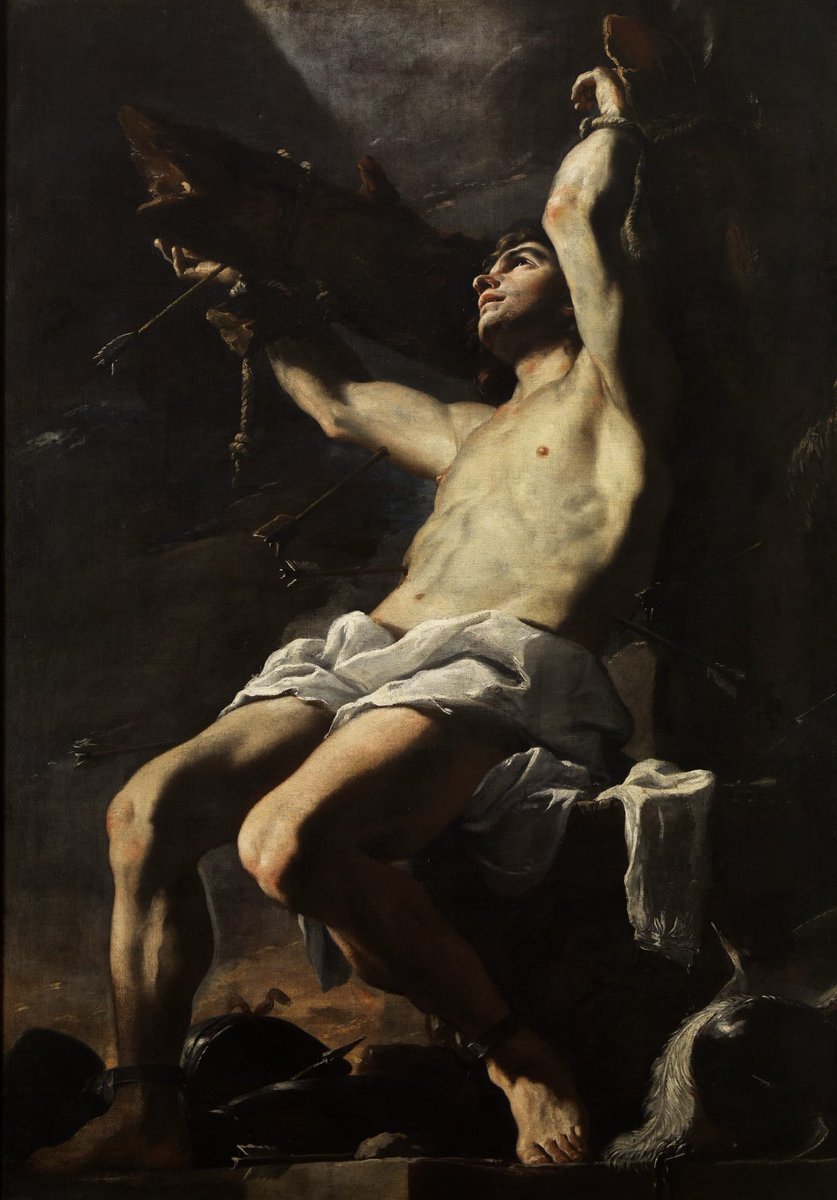
Il #24febbraio del 1613 nasceva a Taverna, piccolo borgo dei monti della Sila, #MattiaPreti
Considerato uno dei più grandi artisti del Seicento, ebbe la nomina a cavaliere di Malta, tanto da esser soprannominato “il Cavalier Calabrese”.
🖼️San Sebastiano
1656 ca.
olio su tela
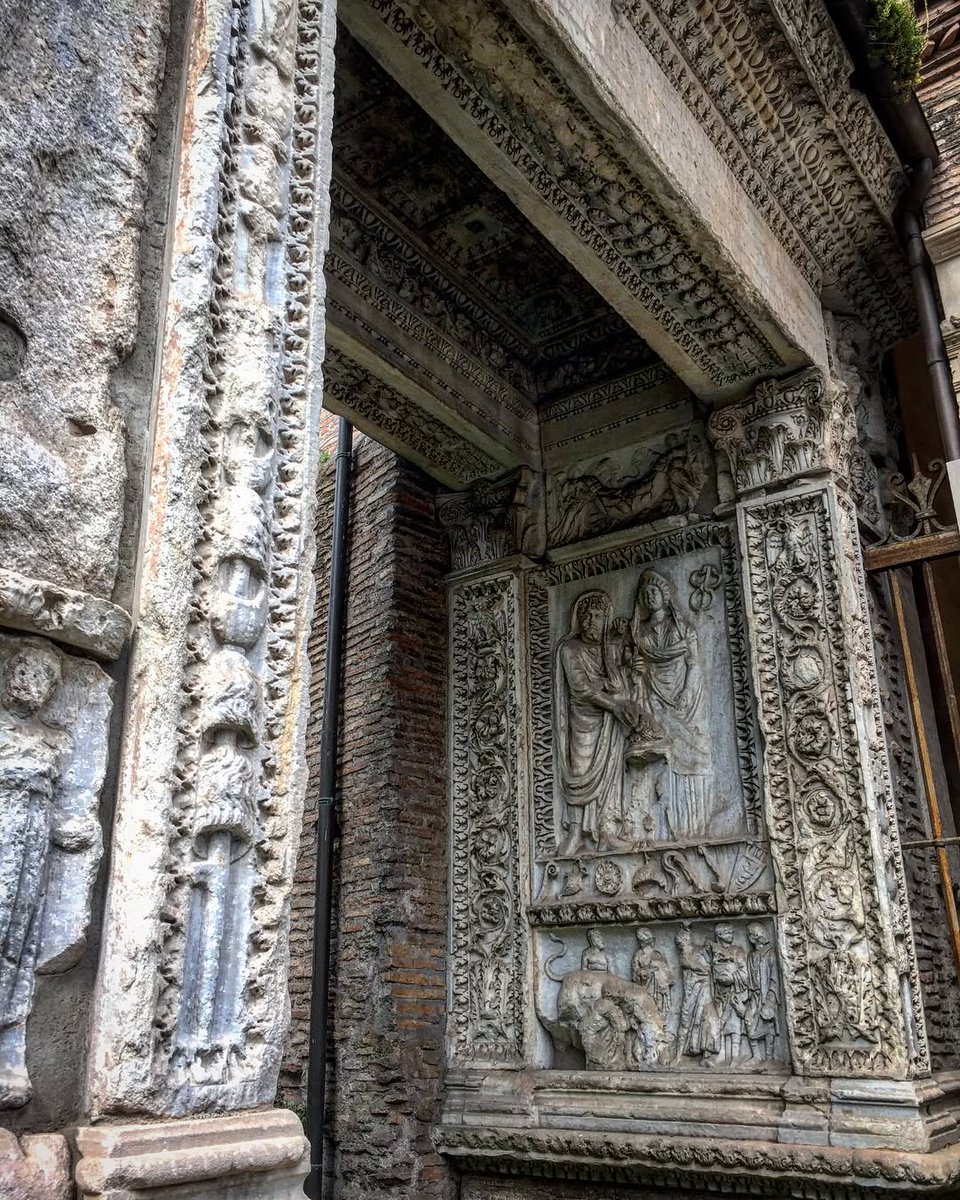
Addossato alla chiesa di San Giorgio in Velabro, il cosiddetto Arco degli Argentari fu costruito nel 204 d.C. dai cambiavalute, banchieri (argentarii) e mercanti e dedicato a Settimio Severo, Giulia Domna e Caracalla.
👉https://t.co/gNDiDp6f1M
📸IG artinthebigcity
#VisitRome
📍Il sacello di San Zenone nella basilica di Santa Prassede è forse il più importante monumento bizantino conservato a Roma.
👉https://t.co/XXEjShA4a2
📸IG alto_basso_medioevo
#VisitRome
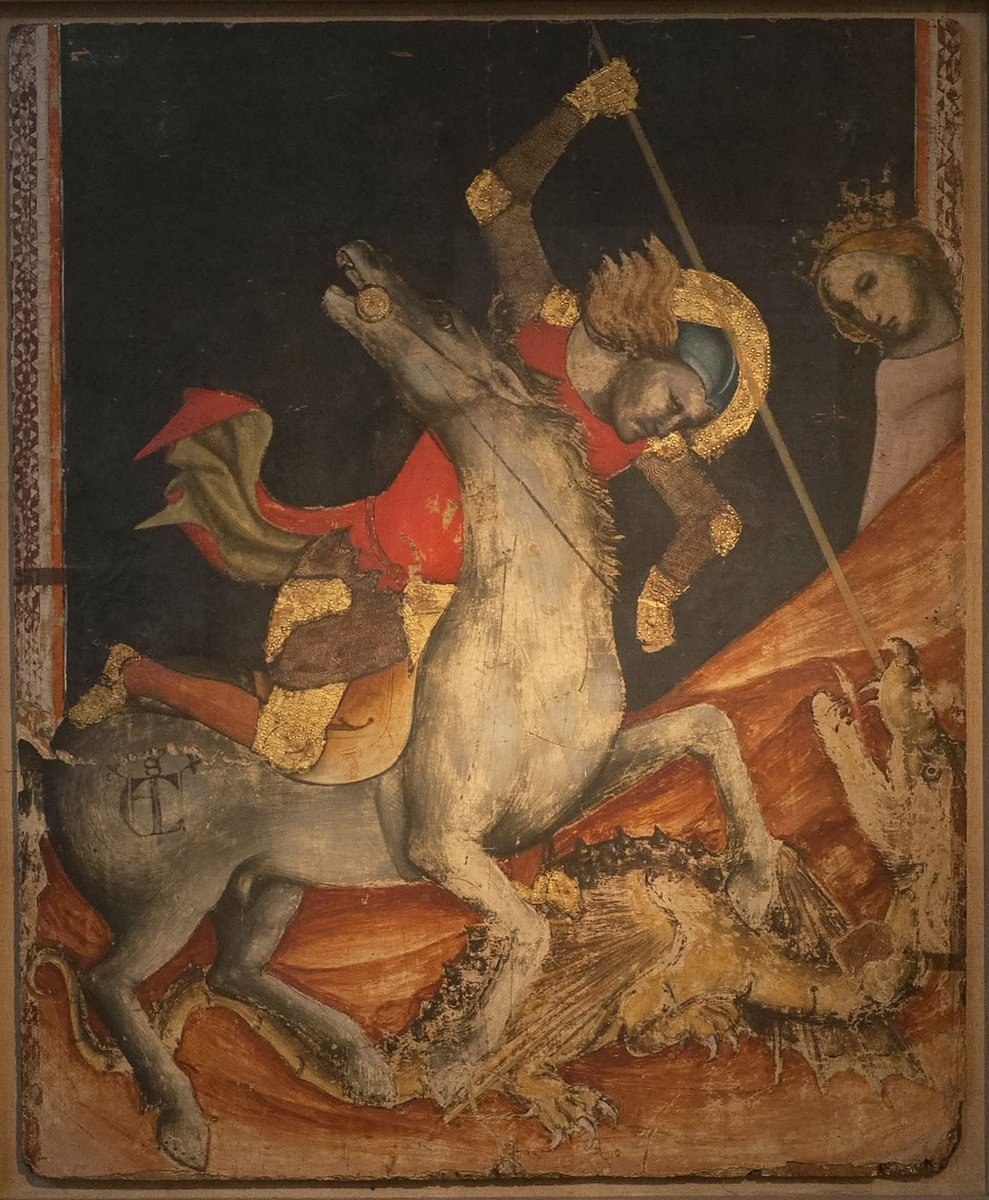
"La batalla de San Jorge con el dragón" 1350 ca.
Vitale da Bologna (alias Vitale di Aymo dei Cavalli o Vitale degli Equi, pintor de escuela boloñesa, Bolonia 1289-1360)
Tempera sobre panel de madera
80×70 cm
Pinacoteca Nacional de Bolonia
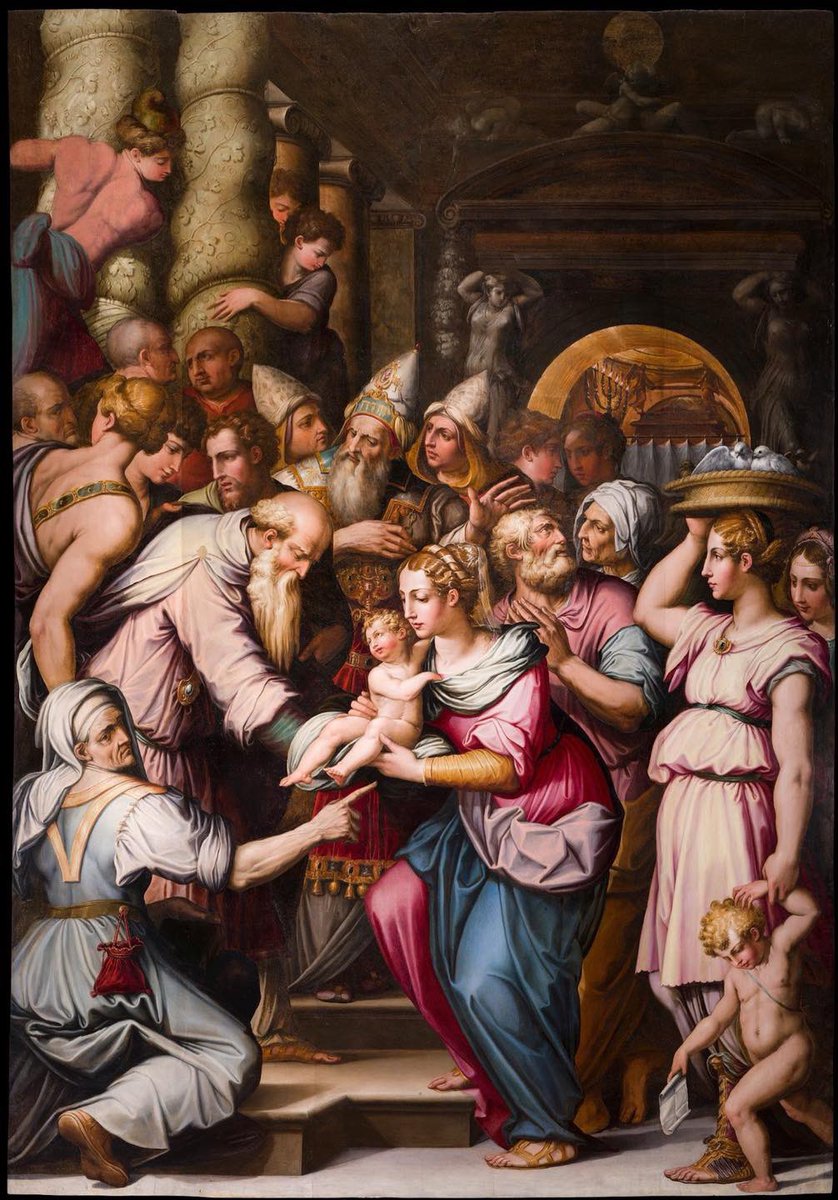
Oggi #2febbraio si festeggia la #Candelora
una festa liturgica cristiana che commemora la Presentazione di Gesù al Tempio
📸 Giorgio Vasari
Presentazione al tempio