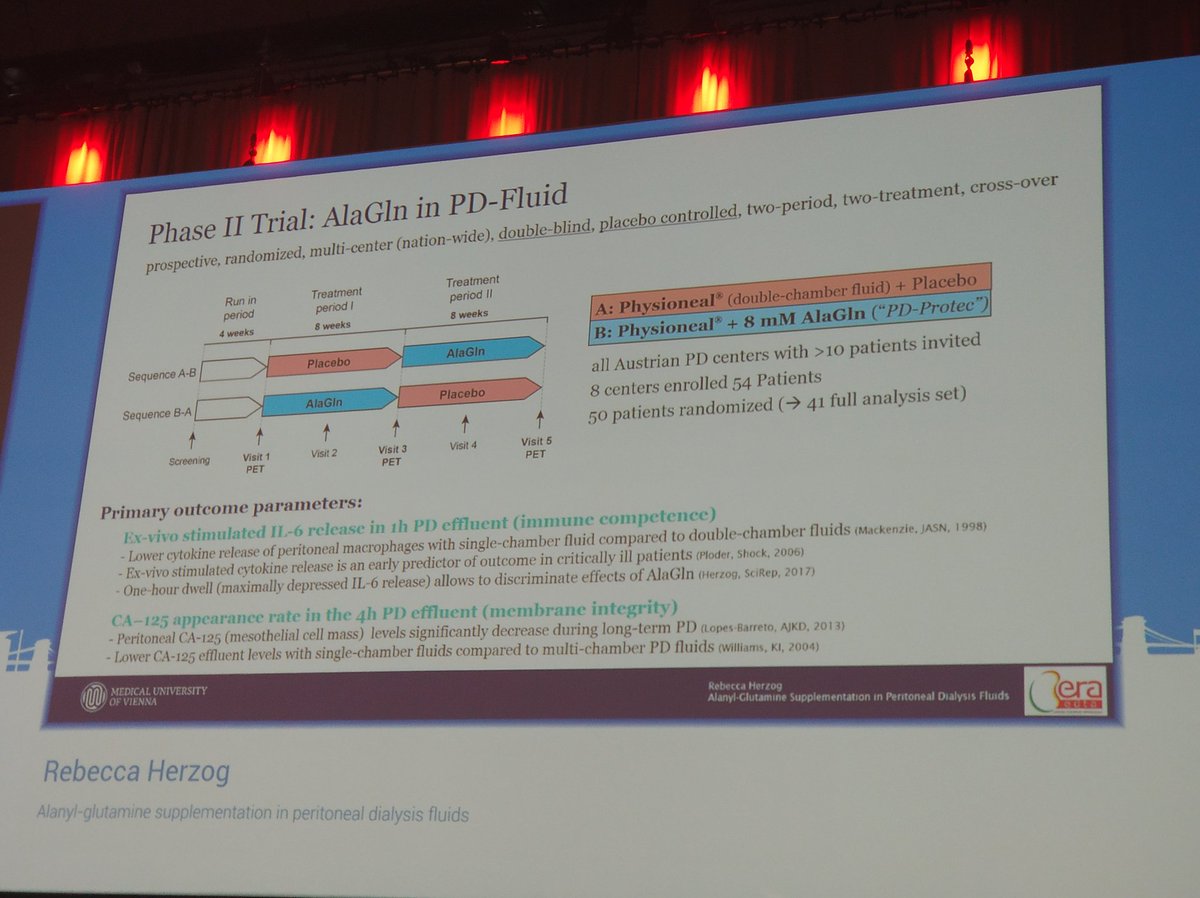
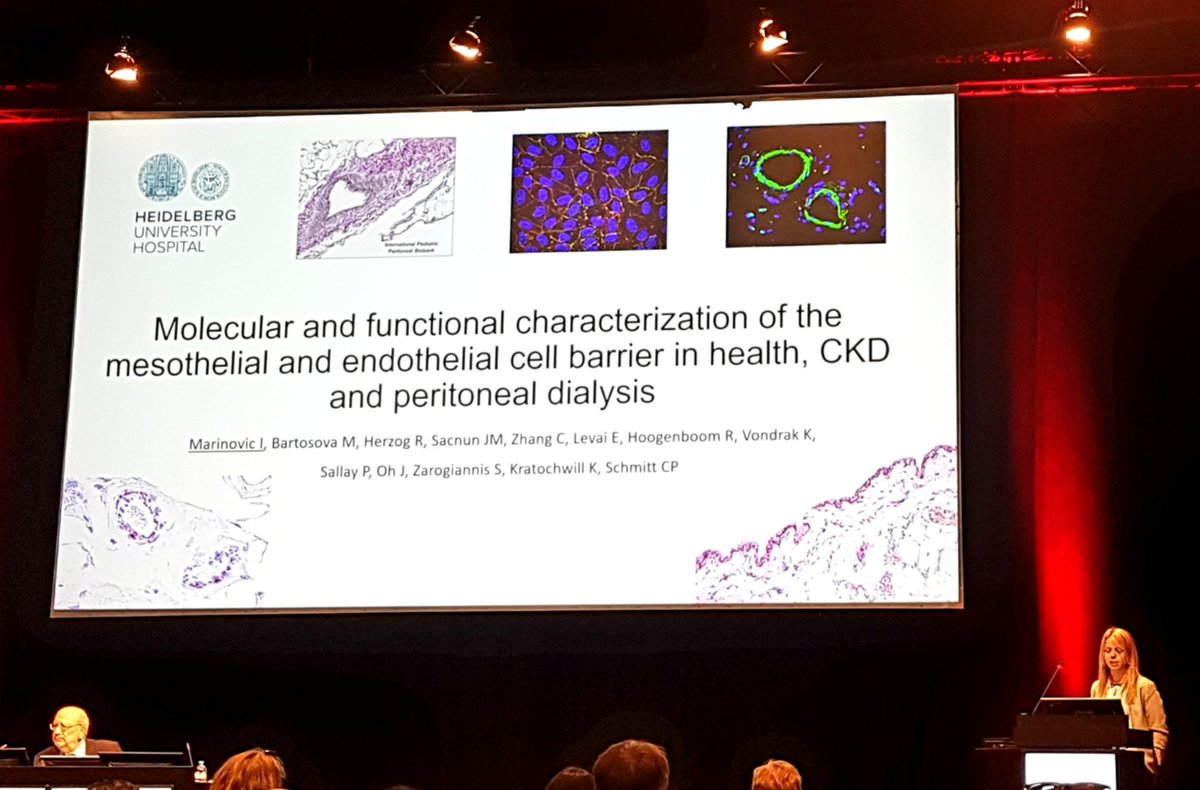
ImprovePD Early Stage Researchers just nailed it in the PD-from bench to bed side session at #ERA22 - 2 travel grants and best abstract by a young author award to Iva Marinović from Heidelberg (ESR2) 👏👩🔬🏆 #improvePD#MSCA
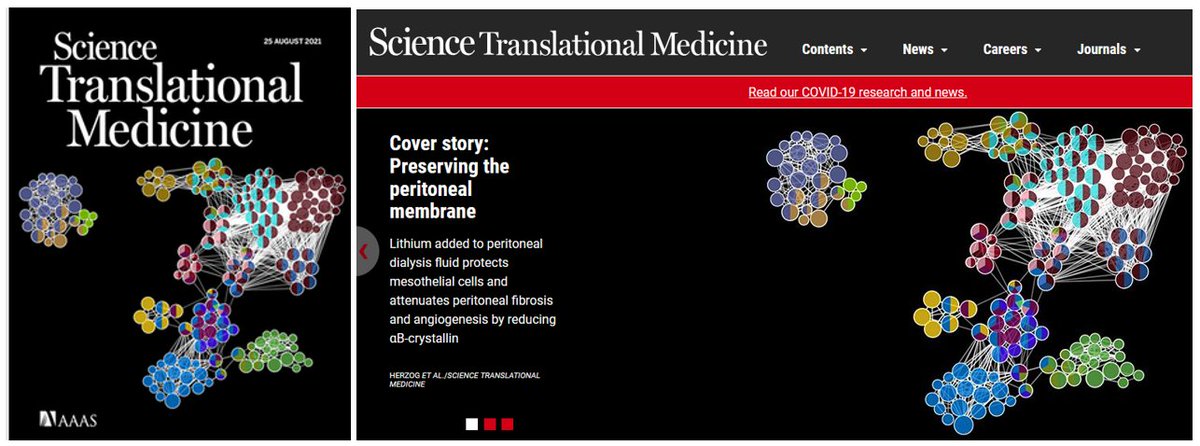
Check out our new paper in this week's issue of @ScienceTM, on Lithium preserving peritoneal membrane integrity by suppressing mesothelial cell αB-crystallin... https://t.co/at7V1w9IY9 @ImprovePd@MedUni_Wien@RebeccaHerzog11
So, can LiCl protect the peritoneum from PD fluid damage in vivo? In a chronic PD model in mice LiCl addition to PD fluid reduced peritoneal thickening, decreased CD31 positive cells in the mesentery, and also αB-crystallin and collagen in the parietal peritoneum. 9/
In an adenoviral-mediated overexpression mouse model αB-crystallin induces peritoneal PD-like remodeling with increased vascularization and fibrosis-inducing SMAD3 phosphorylation. 8/
But is it at all relevant in our PD patients? Looks like! Proteomics of effluent, IF of effluent cells, and IHC of biopsies of paediatric CKD and PD patients and healthy controls all show αB-crystallin abundance is elevated in peritoneal mesothelial cells of PD patients. 7/
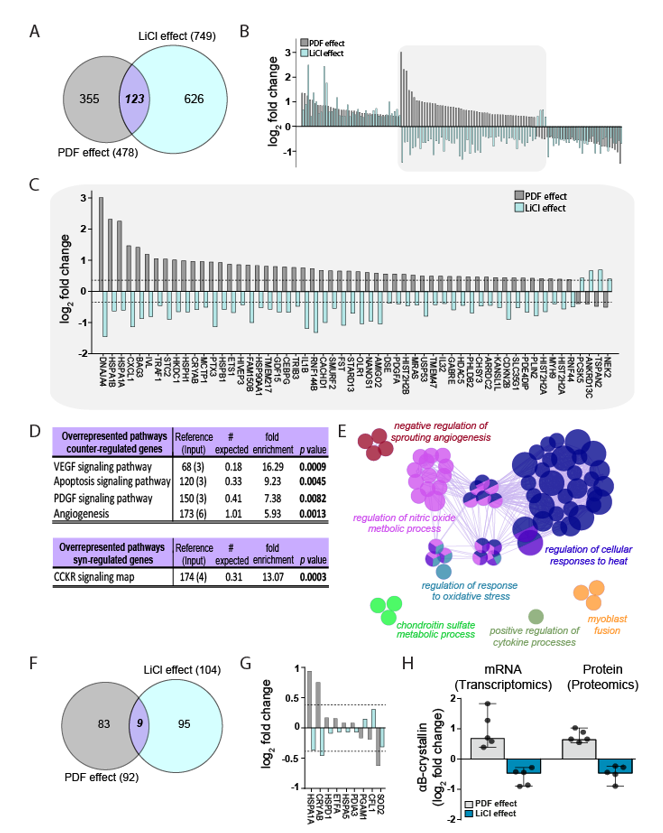
PDF-induced increase in VEGF release is regulated by αB-crystallin expression and LiCl prevents nuclear translocation of αB-c by inhibition of its and upstream phosphorylations, preventing its function to retain SMAD4 in the nucleus and reduce degradation, leading to fibrosis. 6/
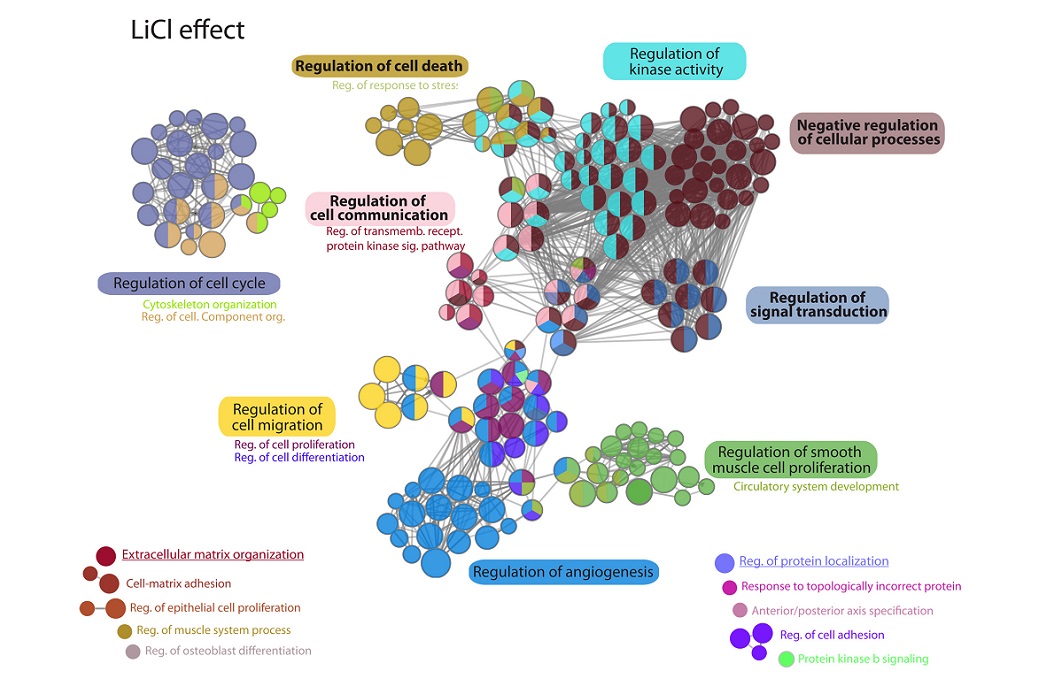
αB-crystallin (CRYAB) was the candidate protein up-regulated in all experiments and counter-regulated in both omics analyses and it was dose-dependently reduced by LiCl. Counter-regulation analysis (PD vs PD+LiCl) revealed consistent involvement of VEGF pathway signaling. 5/
Following our concept of supplementation of PD fluids with cytoprotective additives, we found lithium chloride to improve cell survival of otherwise harmful icodextrin exposure. Repurposing drugs as additives offers accelerated, cost-effective clinical application. 4/
They trigger fibrosis, vasculopathy, and inflammation. We show in a cross omics analysis that icodextrin fluids (used to spare glucose and reduce fluid overload), resemble cellular impairment known from glucose fluids – and therefore are not biologically inert. 3/
Loss of kidney function affects millions from infants to geriatrics. Peritoneal dialysis is the cost-effective, home-based alternative to haemodialysis increasing health-related quality of life. But the used hyperosmotic fluids are the therapy’s Achilles’ heel. 2/
Super excited to finally share our study reporting lithium supplementation of peritoneal dialysis fluid to prevent PD membrane deterioration, just published @ScienceTM#PeritonealDialysis#ImprovePD Highlights 👇, full paper: https://t.co/h3qp7IWDkI 1/14