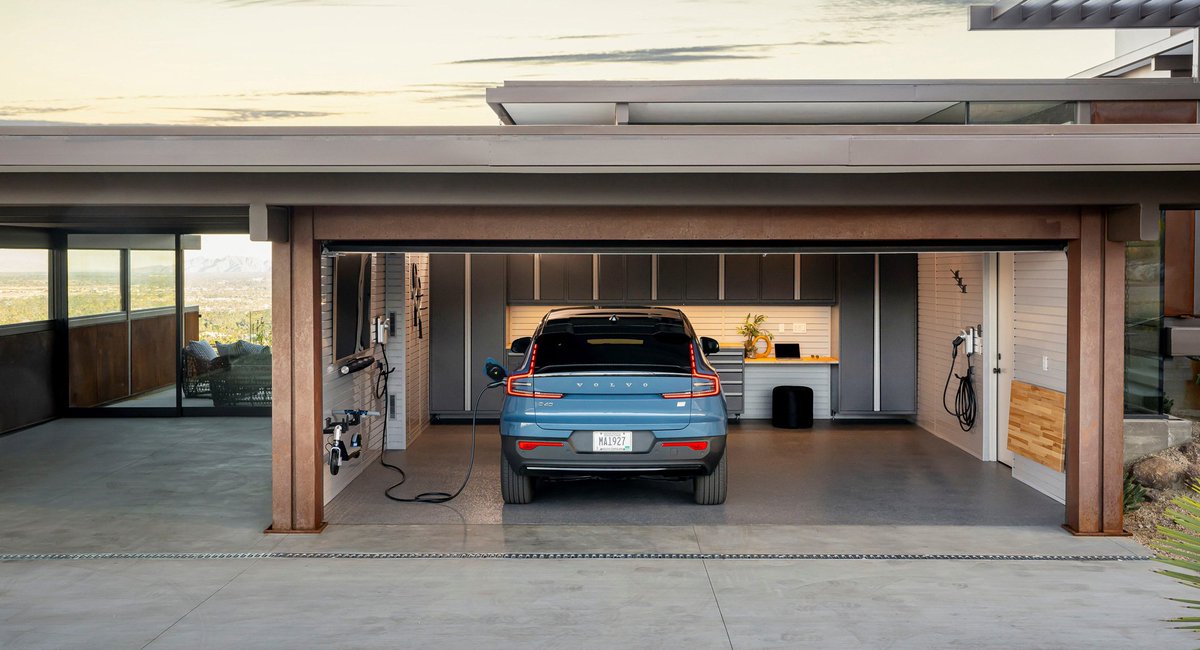
Alrgough EV chargers are becoming more abundant, it's certainly not happening at the same rate everywhere. It all depends where you live. Currently 21 states have right-to-charge laws giving resident the right to install a charger (landlord or HOA cannot prevent you). Many municipalities have building codes requiring new construction to have a certain percentage of EV chargers and/or be EV charger ready.
Here in Boston, we have a right-to-charge law, a city wide curbside charging program, EV chargers in most municipal lots, and all new large developments have to have EV chargers in 25% of parking spaces and the remaining 75% and EV charger ready.
EVs charge where your car already spends 95% of its life: parked and unoccupied. While you sleep, while you work, while you shop. In garages, on city streets, in your driveway.
Gas cars? They can only be refueled at a gas station. They make you stop your life to fill up.
Luckily, that's less of a challenege every day, and no longer an issue in many places. There are a lot of great solutions for apartment buildings and people who park on the street: curbside chargers, pole-mounted chargers, and smart affordable solutions for multi-family housing of all sizes.
What do you think of these analyses?
Grid Integration of Electric Vehicles – Analysis | IEA
https://t.co/mdqfnvxvt3
Electric Vehicle Grid Integration | Transportation and Mobility Research | NLR
https://t.co/MsIxdFiLjr
Vehicles-to-Grid Integration Assessment Report | USDOE
https://t.co/i0MAzwURjn
Impact of Electric Vehicles on the Grid | USDOE
https://t.co/w8sVmApewu
Electric Cars are Starting to Take Over the World:
Despite sluggish EV sales in the U.S., it’s full steam ahead for electric vehicles in most other regions.
By @Dan__McCarthy for @CanaryMediaInc
👇
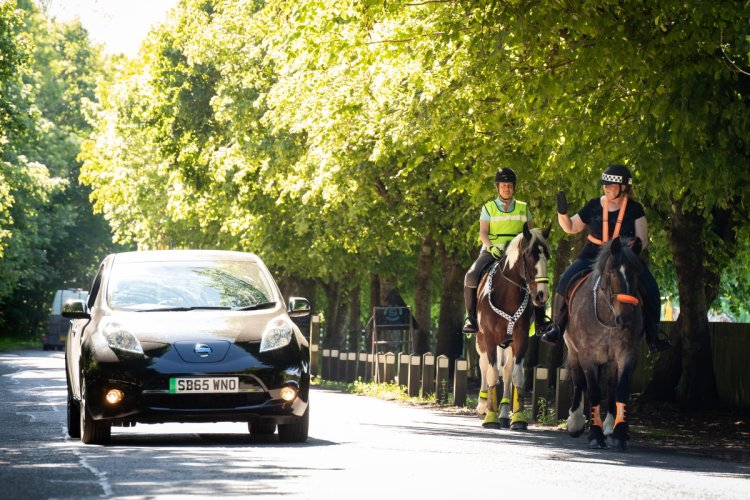
Cars are like horses: people will soon realise EVs are just better, claims VW boss
VW’s sales and marketing boss reckons people will move to EVs organically, just as they did with ICE cars in the early 20th century
@AutoExpress
https://t.co/o2RZRHeJAJ
“Nobody ever banned horses — people just realized cars were better.” The EV shift will play out the same way. When the tech is better, people move on their own.
- Volkswagen's board member for sales, marketing, and aftersales, Martin Sander
🔗👇
The Tesla Model Y just recorded the worst defect rate of any car inspected in Germany in the last decade. 17.3%. Dead last out of 110 models. In its very first TÜV inspection.
Germany's TÜV Report 2026. 9.5 million mandatory inspections. 216 models. Nearly 150 years of institutional history. This is not a consumer survey. Every car on German roads must pass this inspection to remain road-legal. Independent inspectors check brakes, suspension, steering, lighting, tires, body, and diagnostics. No manufacturer can opt out or influence the results.
The EV results are striking.
2-3 year old vehicles (first inspection):
→ Mini Cooper SE: 3.5%
→ Audi Q4 e-tron: 4.0%
→ Fiat 500e: 4.2%
→ BMW i3: 4.6%
→ Tesla Model 3: 13.1% (108th out of 110)
→ Tesla Model Y: 17.3% (110th out of 110)
Average defect rate for this age group: 6.5%. The overall best car: Mazda2 at 2.9%.
Roughly 1 in 6 Model Ys failed on "significant" or "dangerous" defects. And this was the Model Y's first ever TÜV appearance. Last year, the Model 3 held the bottom spot at 14.2%. The Model Y showed up and immediately took the crown.
The defects are not software glitches or screen freezes. They're mechanical basics:
→ Suspension components (control arm bushings) wearing out prematurely
→ Brake discs corroded because regen braking means friction brakes rarely engage, so they rust in Germany's wet climate
→ Lighting defects
Electrek pointed out something interesting: the brake issue has a trivial software fix. Program the car to engage friction brakes periodically, once a week, to prevent corrosion. Display a "brake refresh cycle" icon. The driver wouldn't even notice. Tesla hasn't implemented this.
TÜV notes that both Tesla models average over 50,000 km in 2-3 years, higher mileage than typical. But the report explicitly states that "other vehicles with similar or even higher mileages perform significantly better." High mileage explains some wear. It doesn't explain 17.3%.
The report also flags "deficiencies in service and maintenance" alongside design flaws. Tesla's service network in Germany is thinner than legacy automakers'. Fewer service centers means fewer preventive maintenance visits. The cars accumulate small issues that a dealer network would catch early.
The powertrain itself is solid. Electric motors, battery, inverter: no significant issues. The failures are all in the parts Tesla didn't reinvent: the suspension, the brakes, the lights. The parts that European automakers have been refining through exactly this inspection regime for a century.
Every defect caught at TÜV feeds back into the manufacturer's quality system. Volkswagen, BMW, Audi, and Mini have decades of this feedback loop tightening their mechanical engineering. Tesla is encountering this feedback for the first time at scale. The question is whether they respond with the same engineering rigor they bring to software and powertrain.
A $50,000 EV with a worse defect rate than a $15,000 Dacia Spring. The world's best-selling car with the world's worst inspection results.
@sqwabb@FIFAWorldCup accidentally making a strong case for clean water access wasn't on our bingo card....
the same cost of their $40 water bottles could give one person access to clean water
Drive electric Alabama!
Avg Res electricity rate:
16.18¢/kWh
Avg gallon of regular gas:
$4.06
EV cost/100 miles:
$5.14
Gas cost/100 miles:
$13.54
EV savings/100 miles:
$8.40
DeSantis was studying law in MA when the Florida Election Reform Act of 2001 was passed in response to the Bush–Gore recount.
He wasn't part of the FL gov or even in the state when the core rules that govern FL ballot counting were written into law or went into effect: early processing of mail ballots, early tabulation, mandatory early voting, creation of the statewide voter file, and strict county reporting deadlines. All of them were enacted between 2001 and 2006, long before DeSantis entered politics.
The photo is from the Walden Pond parking lot in Concord, MA. One of the many places you can still charge an EV for free.
⚡️ 100 kW solar photovoltaic carport
⚡️ 4 free Level 2 EV chargers
⚡️ Net-zero energy, LEED Gold-certified visitors center
Freedom panels are my favorite form of new energy.
☀️ Fastest and cheapest to deploy
☀️No fuel to operate
☀️Low maintenance
☀️Reduce dependency on volatile energy sources
☀️Can go almost anywhere
☀️Scale from a garden light to millions in the desert
📍 Good things come in twos. Two new cities added to the map.
Pembroke Park, FL - 10 charging bays at @Wawa, stay tuned for a special announcement 👀
Daly City, CA - 8 charging bays in a foggy city, or as the locals call it..."Karl" 🌫️
We're ready to juice up your weekend!
Would US "wire laws" prevent this or make it extremely difficult and expensive?
⚖️ Utility “single point of delivery” rules prohibit transferring or reselling electricity beyond your own meter.
⚖️ State law treats neighbor‑to‑neighbor power sharing as illegal utility distribution, since only the regulated utility (or a licensed microgrid operator) can move electricity across property lines.
⚖️ NEC §210.25 requires circuits to serve only their own dwelling unit, blocking any legal wiring to a neighboring property.
Could a community battery cut your bills?
We are already seeing the impact in Hook Norton, where a community battery is helping cut costs and make the most of locally generated energy.
We want to see more of this - putting power back into the hands of local communities.