Do you HAVE to file a BOI report?
Most likely.
Even if your business doesn’t need to file a BOI report, you need to file an exemption with the newly formed Financial Crimes Enforcement Network.
Will be holding a free Zoom to talk about it on Thursday, January 11 at 1:00PM EST.
Join here 👇
https://t.co/y9aa0nFsPu
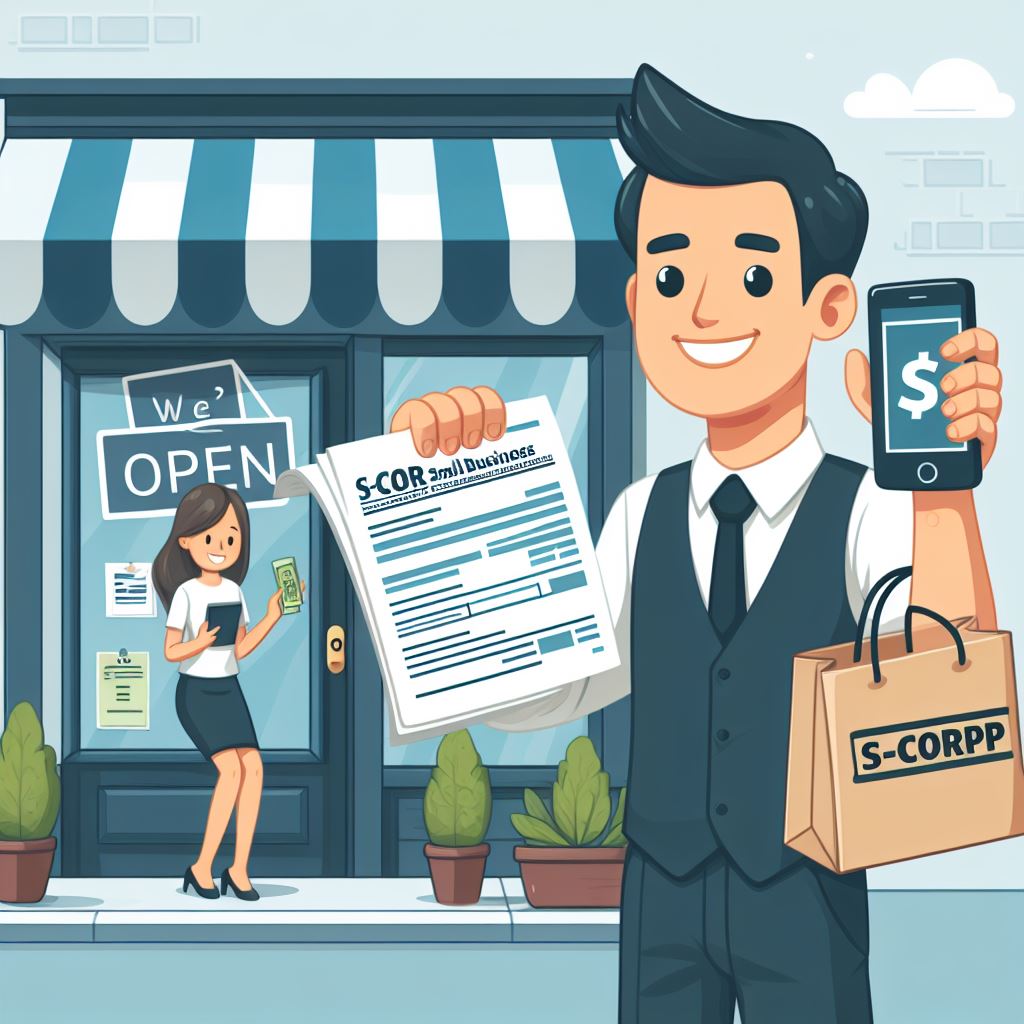
Most people say you should switch your LLC to an S-Corp.
But for 87% of businesses, this makes absolutely no sense and can actually lead to you wasting thousands of dollars a year and in some cases, much more.
Here's my 3-step formula that I've learned over 14 years as a business lawyer to know when and if you should have your LLC taxed as an S-Corp: 👇
(screwing this up could cost you)
But first, we need to know the difference between an LLC and an S-Corp and what the actual benefits of an S-Corp are.
The next step after creating an LLC is to choose how the entity will be taxed.
There are only 4 ways.
LLCs can be taxed as:
• Disregarded, which is the default for single owner LLCs and just means tax like you're an individual.
• Partnership, which is the default for more than one owner.
• S-Corp
• C-Corporation.
Don't confuse tax classification with the type of entity you formed.
An LLC is always an LLC and a corporation is always a corporation.
The S-Corp, which gets its name from the subchapter S of the Internal Revenue Code, is a choice on how the legal entity wants to be taxed.
The major benefit of having your LLC taxed as an S-Corp is that you can save thousands of dollars a year on taxes, but only if your LLC qualifies using my three-step formula.
Joanna has an LLC company selling on Shopify.
The LLC has not elected to be taxed as an S-Corporation.
So by default, LLC is disregarded for tax purposes. Her business makes $100,000 in revenue in a year and the business's expenses are $25,000.
This leaves a profit of $75,000, which Joanna will not only have to pay income taxes on, but also self-employment taxes in the amount of 15.3%, which equals $11,475.
Now what if the LLC elects to be taxed as an S-Corp on the other hand?
Joanna pays herself a reasonable salary of say $50,000 a year and the business expenses are $25,000.
Now, Joanna only needs to pay 15.3% on her salary, which equals $7,650.
That's a $3,800 savings.
When your LLC is taxed as an S-Corp, you're paid in two different ways.
First, you receive a regular salary for the work you do for your business.
The salary has to be reasonable, which really just means similar to others doing similar work in the industry.
Second, you get a distribution for profits your company generates, similar to shareholders getting dividends in a corporation.
Only wages paid as salary is subject to the payroll tax.
All other profits are considered distributions and they're not subject to payroll tax.
Well, this sounds amazing, but what's the kicker, right?
Why wouldn't you elect S-Corp status?
Well, it all depends on 3 factors:
1 - Stage of your business
Did you just start or have you been in business for a while?
If you are just starting out, I recommend waiting until the right time to elect S-Corp status.
2 - Ownership and future goals
How do you own the LLC?
Is it in your individual name or does another LLC or corporation own the interest?
Do you plan to bring on future partners or investors?
The reason this is important is because S-Corps have very strict requirements, including only being able to have one class of membership, only having individuals in certain trusts own the membership interest, and not having more than 100 members in the LLC.
If these restrictions go against your future goals and ownership structure, the S-Corp election may not be right for you.
In particular, most investors don't like being restricted by S-Corps.
And if you have other legal entities for estate planning, for example, S-Corp status may not be right for your LLC.
Also, do you have other wages outside of the LLC?
There's a maximum amount of wages subject to portions of the payroll tax.
So if your other wages already maxes out, there may not be any tax savings for an S-Corp.
3 - Money
Let's take two examples.
Remember Joanna?
Her LLC makes $100,000.
She pays herself a $50,000 salary.
The LLC has $25,000 in expenses and has a profit of $25,000.
If the LLC elects S-Corp status, Joanna could save 15.3% of taxes on the profit, which would be around $3,800.
Now, what if Joanna has a smaller candle company selling on Etsy, for example? Her business makes $50,000 per year.
Her reasonable salary is around $35,000 and expenses are $15,000.
She would end up paying payroll taxes on her entire amount earned.
Filing for S-Corp status wouldn't make any sense. In fact, it would end up costing more in tax returns, a payroll company, and other administrative expenses.
The tax savings from S-Corp status come from only having to pay self-employment taxes on the reasonable salary the owner pays themselves.
If there are profits after all the expenses and a reasonable salary has been paid, then the S-Corp doesn't pay the additional self-employment taxes on the profits.
Some accountants estimate that if you're self-employed and your business generates around $100,000 in revenue, then the S-Corp election makes sense.
But the reality is that 87% of small businesses don't make that much per year.
What happens if you elect S-Corp status and decide it's not best for your business? Can you go back being a disregarded LLC? Yes, you can.
But if you ever want to re-elect S-Corp status to save on taxes in the future, you're going to have to wait five years from the date that you change back.
And of course, none of this matters and you won't even get to decide whether to elect S-Corp status if you missed a step in setting up your LLC correctly.
Thanks for reading!
♻️ Please share this others. I spent a lot of time writing this post and want to make sure it helps as many people as possible.
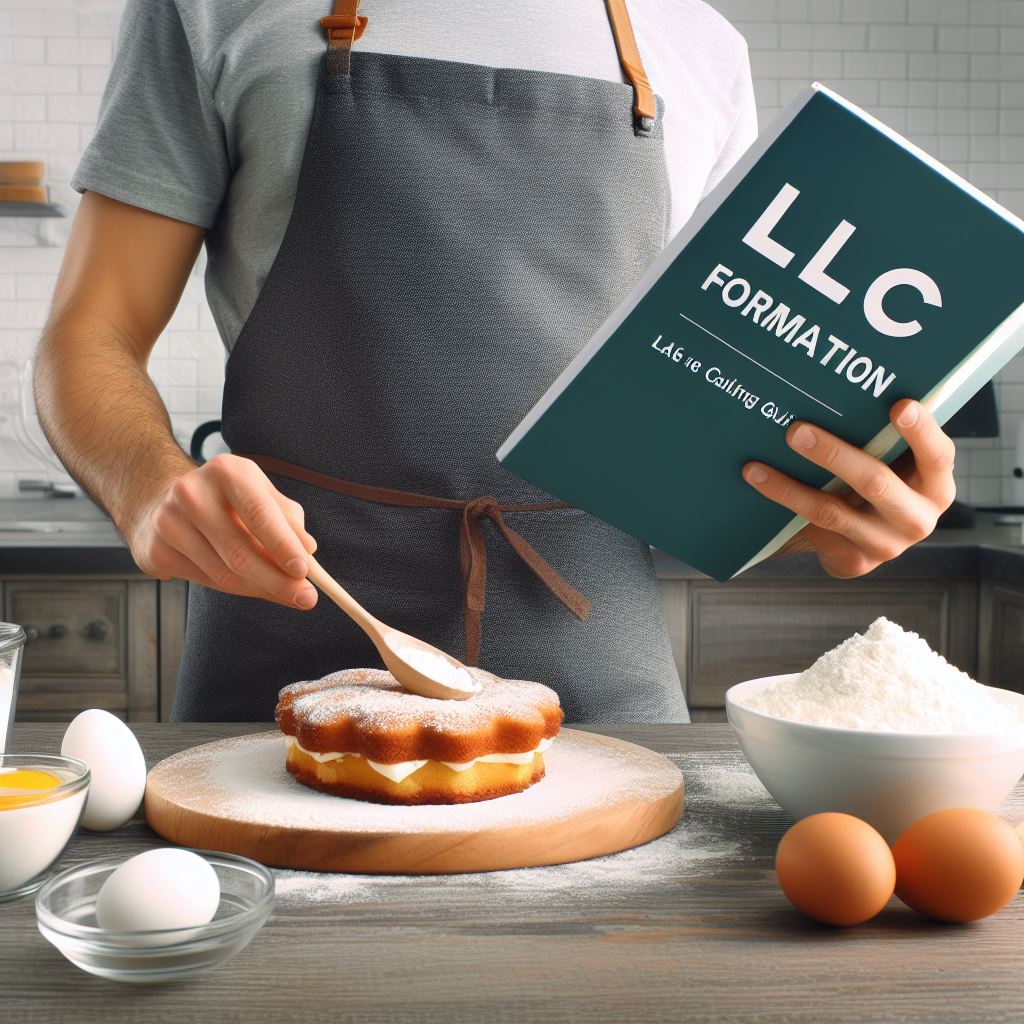
LLC Formation: The Cake-Baking Guide
Ever felt like starting an LLC is like baking a cake without a recipe? 🍰
I remember my first attempt at starting a business.
I was clueless, mixing up legal ingredients with no clear directions.
But guess what?
It's not as hard as it seems.
Here's the simplified recipe:
1. Choose a unique name: Make sure it's not already taken in your state.
2. Select a registered agent: This can be you or a service— someone to handle legal docs.
3. Pick an address: Consider privacy and business type. Virtual addresses are an option!
4. Decide on management: Will it be member-managed or manager-managed?
5. Register and file: Articles of Organization, EIN, bank accounts, state taxes, and licenses.
6. Create an operating agreement: This is your business's rulebook.
Done right, your business is like a well-baked cake, ready to serve up success.
🔔Follow for more guides on entrepreneurship and legal strategies
LLC Formation: The Cake-Baking Guide
Ever felt like starting an LLC is like baking a cake without a recipe? 🍰
I remember my first attempt at starting a business.
I was clueless, mixing up legal ingredients with no clear directions.
But guess what?
It's not as hard as it seems.
Here's the simplified recipe:
1. Choose a unique name: Make sure it's not already taken in your state.
2. Select a registered agent: This can be you or a service— someone to handle legal docs.
3. Pick an address: Consider privacy and business type. Virtual addresses are an option!
4. Decide on management: Will it be member-managed or manager-managed?
5. Register and file: Articles of Organization, EIN, bank accounts, state taxes, and licenses.
6. Create an operating agreement: This is your business's rulebook.
Done right, your business is like a well-baked cake, ready to serve up success.
🔔Follow for more guides on entrepreneurship and legal strategies
@AmznProdigies I've never done it since the GS1 codes are only $30 and they apply to all retail channels. I try not to use Amazon specific bar codes if I can use universal ones, saves headache down the road when expanding to off-Amazon channels.
@Aaron_Cordovez Great insight Aaron. All retail companies are capital intensive. If you don't have a stream on cash from another sourcing, it will be difficult to cover living expenses and grow the business.
3 words.
“likelihood of confusion”
That’s the most common reason for:
• E-com sellers getting sued for IP infringement
• Not getting a trademark approved
Lesson: Do not have similar brand names to people selling similar products.
3 words.
“likelihood of confusion”
That’s the most common reason for:
• E-com sellers getting sued for IP infringement
• Not getting a trademark approved
Lesson: Do not have similar brand names to people selling similar products.
Trademark vs Patent vs Copyright
Here’re the differences:
Trademark: for you brand name and logos
Patent: for the utility and design of your product
Copyright: protects content and the original work of art expression
Common question I get:
Should I trademark my business name?
If your business name is the same as your brand, yes.
Whatever you advertise as to the public is what you need a TM for.