I can't write enough content in time
Topic Selection
- What videos should I make??? I don't know what to talk about
- Growth Videos - videos on other channels with more views than subscribers (aka is growing their channels)
- Viral Hits Videos - taking a proven format in another niche and bringing it to our own
- Culture Videos - what is in the news that you have a perspective on?
- Subscriber Magnets - look at your own data to see what topics, videos, keywords are driving traffic
- $$$ Videos - Use google keyword planner to find videos that are paying a lot of $$$
- Use the title, make your own video (you don't even need to watch their video)
Skeleton Outline
- 5 minute sticky note outline
- Powerful opinion (what do you believe about the topic that other people don't believe?)
- Story (your story, client story, news story, friend story, story from history, story from fiction) - we learn through stories! Your note to yourself should be 1 or 2 words (ie somebody's name)
- Remember that every lesson needs a story and every story needs a lesson
- Advice - what 3 things do I need to know to get out of the situation I'm in / fulfill on the promise of the title - This is where you teach but we need the setup before if you want people to listen to the advice - make this point form
Structure:
- Powerful - 1 sentence
- Story - 1-2 words
- Advice - 3 bullets
- Do it in 5 minutes and speak to it
- (assumes you know what you're talking about)
Time Commitment for 4 videos:
- Topic selection = 20 mins - 1 hour
- Skeleton outline = 20 mins - 1 hour
- If you're taking longer then just trust yourself more
- Filming = 1 - 2 hours
What platform should you use for your YouTube email newsletter?
1. Pick the easiest one. MailChimp is one of the easiest to get in and use. We use AWeber because I've been using it for about 20 years and all of our data is in there.
2. Use what your team knows. If someone on your team is helping you, the tool is usually whatever they already know how to use, instead of having to learn something new.
3. Don't overcomplicate it. MailChimp, Kit, AWeber, they all do the same thing, and you can move people from one list to another.
But you do need a newsletter. Every platform drives people to it, and then you can give them more value and sell them your products and services.
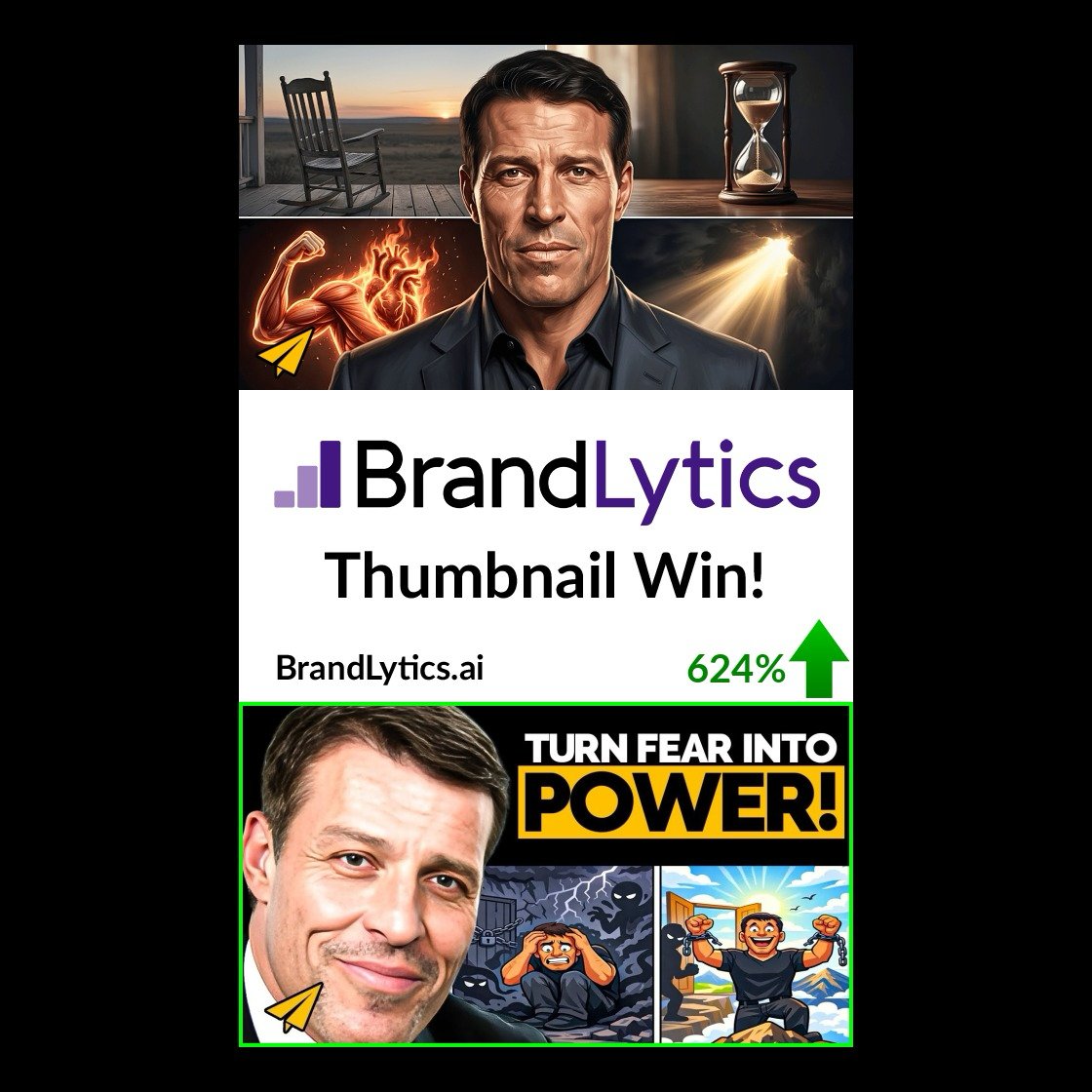
I test every thumbnail on my YouTube channel now. This one on Tony Robbins came back 624% ahead of the original. BrandLytics runs the test for you: https://t.co/WERc4m0Myn
For a small channel with no sponsors yet, the best thing to sell first is usually a service, and the best service is access to you.
1. Usually at the beginning, some kind of service is easier than a product. Actually making a good product from scratch is so much work, that's a major job. If you partner with a local company you love and get a cut of a sale, you're just in the sale side, and that's better.
2. Sell access to you. The people who are following you like you, they connect to you, they want more time with you.
3. Keep it small. Eight to 10 people coming in for two grand each: what are they doing with you? A trip, a restaurant, a wine tour, a food tour, a shopping tour.
One of our Mastermind members lives in Norway and takes people out on a sauna boat on the fjord in Oslo. You go hot, cold, hot, cold, and you get to know the other eight people in the boat. What does the lifestyle version look like for you?
65% lift in click-through after a YouTube thumbnail swap. YouTube was already showing it to people. Get BrandLytics and find yours: https://t.co/WERc4m1knV
The goal of a business show is not viral content, it's the relationship, which leads to sales. The interview with the president of the bank is probably not going to do much on YouTube, but that might be an eight figure deal for you.
1. Do a pre-call before the interview. It eases any anxiety they have about coming on, and you spend more time with them so they get to know you.
2. Film it in person. A podcast studio is better than Zoom, and even better is hiring a local videographer and going to their office. They might give you an office tour, take you to lunch and introduce you to other people.
3. Drip it out. Don't send the full video and all the clips at once, or they forget about you. Send the main video, then every month send them a clip of them looking good so you stay top of mind.
When I started in 2009, people weren't making long form videos. I posted a six minute video and the experts in the industry told me it's way too long. Nobody's going to watch a six minute video. Meanwhile, we're doing three hour videos now that crush.
The first year I was overthinking like everybody else does. I was telling myself I'm introverted, I'm shy, I'm not good on camera. I opened my account in November and sat on it for five months before posting my first video.
We spent a full day filming it. Suit and tie, perfect setup, and I tried to memorize the whole thing. I'm only on camera for 45 seconds out of the six minutes. The rest is B roll because I couldn't get it out. There are still videos on my channel with under 100 views.
Now it's kind of expected that you're on YouTube. The hard part is the pressure. You see all these other people doing well and you think your video should do really well. And then it doesn't. People expect it to be great out of the gate, and it's not.
Everything can always be better. I can look at any video we've done and there's a million things I want to improve. But it has to go out. Having a release date is one thing that's really saved the channel and me as a creator.
It was 350 videos before I could even look at my own content. I'd just post and go. On the 700th video, I inspired myself and I liked it. It was slow progress.
Knowing that a video has to go up tomorrow is super helpful. Post. Do the best you can. Post.
596% more clicks after a YouTube thumbnail test. The video didn't change at all. BrandLytics shows you which of yours are worth testing: https://t.co/WERc4m0Myn
Can you help me figure out what I should do first?
When impressions go up, CTR goes down
What is a "good" CTR? There is no answer because it depends on how many impressions you're getting. More impressions → lower CTR → this is why we built BrandLytics in the first place (to help identify the videos to work on).
Your videos with the most impressions almost always have the lowest CTR → it's reaching a newer, colder audience (which is good!)
Suggested views typically have the lowest CTR
Views from suggested are the best kind of views! They have the longest watch time and are most likely to subscribe as well as buy from you… but they have the lowest CTR.
Gameplan
- At launch, test one title and multiple thumbnails using YouTube Studio A/B testing. You should know what the title is in advance of the video going live. Create a title with intention.
- After 1 week, BrandLytics will surface if it's a problem video to fix or not.
- Once you have data, look at what videos were suggesting traffic to you, since it's your #1 source → if we're showing up against "#1 way to xyz" then we want to make our next video "#1 way to xyz"... provided you ethically have something to say on it.
- For this video, set up an A/B test in Studio and let it run until you get a notification in BrandLytics to test there (7 days after launch).
What we ultimately care about is views, not CTR.
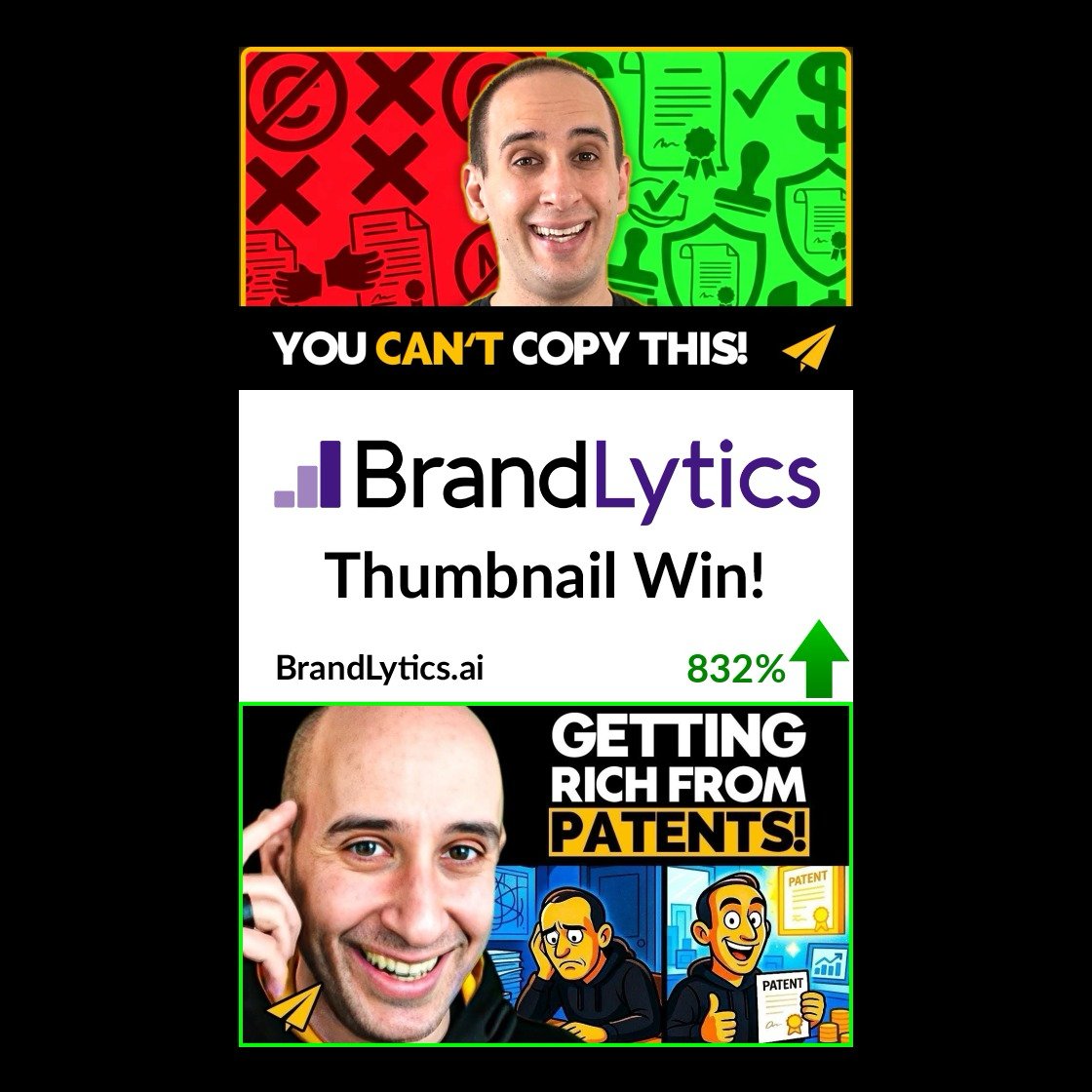
Changed the YouTube thumbnail on one of my videos and clicks went up 832%. Same video, same title, new thumbnail. Try BrandLytics on your channel: https://t.co/WERc4m0Myn
From any platform, the number one thing I would want is to get people on your email list. If you drive people from Instagram to YouTube, it will often hurt the videos. The retention will be terrible. It's seconds versus minutes when people come from YouTube.
So the link in your Instagram bio goes to the subscription page on YouTube. And then the other is email. From email, you build a relationship, and a great way to build a relationship is long form YouTube content.
141% more clicks on my Ed Sheeran video, from one YouTube thumbnail test. The video didn't change at all. Try BrandLytics on yours: https://t.co/WERc4m0Myn
If you're just testing something out, it's okay to put it on the main channel. A lot of times these ideas we have, we scratch an itch and then the itch kind of goes away. I try videos all the time.
It's when it becomes an ongoing thing, something you're going to stay consistent with, and it's a different audience. If you're definitely going to make a hundred videos, cool, then launch your second channel. Having two separate channels, it's not a lot more work, but it's still more work.