Engineers have taught a disembodied robotic hand to walk on its fingers, recover from falls, press keyboard keys, and manipulate objects without an arm. 🎥: softrobotics / YouTube #robots#robotics#technology#technews
One of the most haunting visualizations of September 11, 2001: watch as the skies over the United States suddenly empty as the FAA grounds all flights.
Today we mark the loss of Doctor Yevgeniy Petrov, who while acting as Medical Officer of a Soviet Typhoon-Class Submarine, Lead the evacuation of the crew during a Reactor melt-down onboard the Submarine.
It was thanks to his actions that saved over 100 crew.
RIP Tim Curry
a quite delightful reminder that every boring thing in your day was somebody's life's work. music you can play whenever you want was once someone's idea of the highest human happiness. same with hot water
"it is to humanity’s credit that we remain restless in the midst of all of this progress. we continue to look forward, pushing the frontier further...but our lives today are a gallery of past generations’ heroic efforts to do the same."
https://t.co/wa6tTuf7ui
It's Kiddo the cat! #InternationalCatDay
Kiddo had an eventful flight as a stowaway on airship America in 1910. It lead to one of the first radio communications from an aircraft in flight: “Roy, come and get this ---damn cat.”
The full story: https://t.co/c4GVCqOwxO
There is a diner in the Tennessee mountains where a little girl showed me a book.
She could not have been six. She held it the way grown men hold the deed to a house.
A thin paperback. The cover soft and bent from love. A cartoon bear.
I asked her, to be kind, if it was a good book.
She said, "The Book Lady sent it. She sends me one every month. She knows my name."
Then she went back to her pancakes, as if she had not just described something impossible.
I could not let it go.
All through breakfast I turned it over. A woman who knows the names of small children, sends them books, and asks for nothing. In my country she would have a shrine. Incense. One clean day a year when the town remembers her.
I decided the Book Lady must be a gentle fiction. A story mothers invent, the way we tell children the old mountain is watching, so they behave.
I was wrong.
The Book Lady is real. She is the most famous woman in the state. Her name is Dolly.
I made errors. In a hardware store I called her "your empress." The man thought about it honestly and said, "Close enough."
I asked a waitress if Dolly was still living. She set down the coffee pot with great care. "Honey, Dolly will outlive us all, and then she will send flowers to the funerals."
Then they told me the thing, all of them, in the flat voice this country keeps for facts too large to raise the voice for.
Dolly grew up one of twelve children, in a one-room cabin, in these same mountains. Her father could not read a word his whole life.
So she built the thing that sends the books. Not the clever children. Not the deserving ones. Every child who signs up, from birth until they start school, free, their own name on the cover, whether the family has money or nothing at all.
The children do not know she is famous. They know only the Book Lady. Some will grow old and never learn it was her.
Two hundred million books, a man told me at a gas pump. Then, seeing the number had defeated me, he made it smaller and heavier at once.
"She did it for her daddy," he said. "He never got to read. So she made sure every child after him would."
I would like to tell you what happened in my chest when he said that. I do not have the words, and I distrust any man who claims he does.
I come from eight hundred years of men who wrote everything down. We cut our names into stone so the centuries could not misplace us.
My father was the last of that line before me. A silent man. For forty years I believed his silence was the only thing he ever gave me.
In that diner, I remembered something I had put away as nothing.
When I was a boy, my father worked among machines loud enough to take a man's hearing, and in time they took most of his. He came home each night with nothing left to say. But there was one year, when I was learning to read and ashamed of how badly it went, that every night, however late he came in, he sat beside me while I read one page aloud.
He never said a word. I thought he was only checking that I had done the work.
It took me forty years and a stranger's diner to understand.
He could not hear me. By then he could barely hear anything. He was not listening to the words. He could not have caught one of them.
He was only sitting where a small boy could look up and see that his father had stayed.
I carried that year my whole life as proof my father was cold.
It was the warmest thing anyone has ever done for me. I just never had the book to prove it, so I let myself forget.
There is a bookshop two doors from that diner. I have just bought a thin paperback with a soft-looking bear on the cover. I am mailing it tonight to my father in Japan. He is eighty-one. He still cannot hear.
He will not need to.
Inside the cover I wrote one line, large enough that he can read it without his glasses:
"I finished the page. I always finished the page. Thank you for staying."
The Book Lady learned it from her father, who could not read.
I learned it from mine, who could not hear.
And somewhere in the mountains between us, those two old men would have understood each other completely, and said nothing at all, which is the loudest thing men like them have ever known how to say.
Phil Noble of Reuters (@philnoble1) took the incredible shot that's currently ricocheting all over the internet and the world's media. Let's make sure his name is out there and he's getting the credit he deserves. https://t.co/qLkJMy6vcf
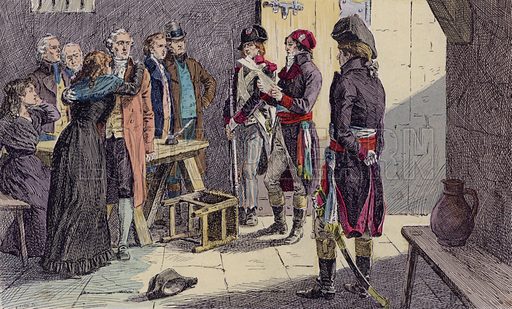
On the eve of execution, the condemned of Revolutionary France were often given paper, ink, and a few hours to say goodbye. No speeches were allowed. No appeals were heard. The blade would fall whether the words were written or not. And so bakers, seamstresses, priests, clerks, soldiers, and widows—people who had never imagined themselves part of history—sat in cold cells and tried to compress a lifetime into a page. Many began the same way: My dear wife, My beloved children, Forgive me. The Revolution that had promised liberty and equality now granted its final mercy only in ink.
I’ve read hundreds of these letters. What makes them so unsettling is how ordinary they are. There is no grand political philosophy, no defiant rhetoric. A father worries about debts and winter coats. A mother apologizes for leaving her children without guidance. A young woman asks that her hair be given to her sister.
One such woman was a Parisian seamstress in her early thirties, arrested after a neighbor denounced her for “lukewarm patriotism.” I don’t know why, but her case struck a chord with me. Her crime appeared to amount to little more than having regularly attended Mass and failing to denounce her brother quickly enough. The night before her execution, she wrote to her sister asking that her scissors be given to their youngest niece and that their mother be told she had died calmly.
Again and again, the writers insist on their innocence—not always of crimes, but of hatred. “I die without bitterness,” one wrote, “and I forgive those who send me to death.” The language is plain, domestic, and heartbreakingly human. The Terror did not slay monsters; but it did produce victims who sounded like us.
Many of the condemned had supported the Revolution at first. Some had cheered the fall of the Bastille. Others had denounced aristocrats, signed petitions, worn the cockade. But revolutions devour loyalty as easily as opposition. A careless remark, a past friendship, a failure to applaud loudly enough could be fatal. In the machinery of suspicion, innocence was not a defense—it was often a liability. As one prisoner wrote, “I do not know what crime I have committed, but I know I am to die for it.”
On execution mornings, carts rolled through Paris streets lined with spectators who had grown accustomed to death as public ritual. The letters were folded, sealed, and handed to jailers or priests, some of whom risked punishment to deliver them. Many never arrived. Others survived by chance, preserved in family trunks or police archives—small scraps of paper that outlived the so-called Republic of Virtue. The guillotine was efficient; memory was not meant to be.
These final letters endure because they expose the lie at the heart of revolutionary extremism: that abstract ideals can replace human bonds without cost. When politics demands total purity, ordinary life becomes treason. In the end, the French Revolution did not silence its victims with the blade alone. It silenced them by convincing enough of the nation that the individual did not matter. History’s task is to read their letters anyway.
#archaeohistories
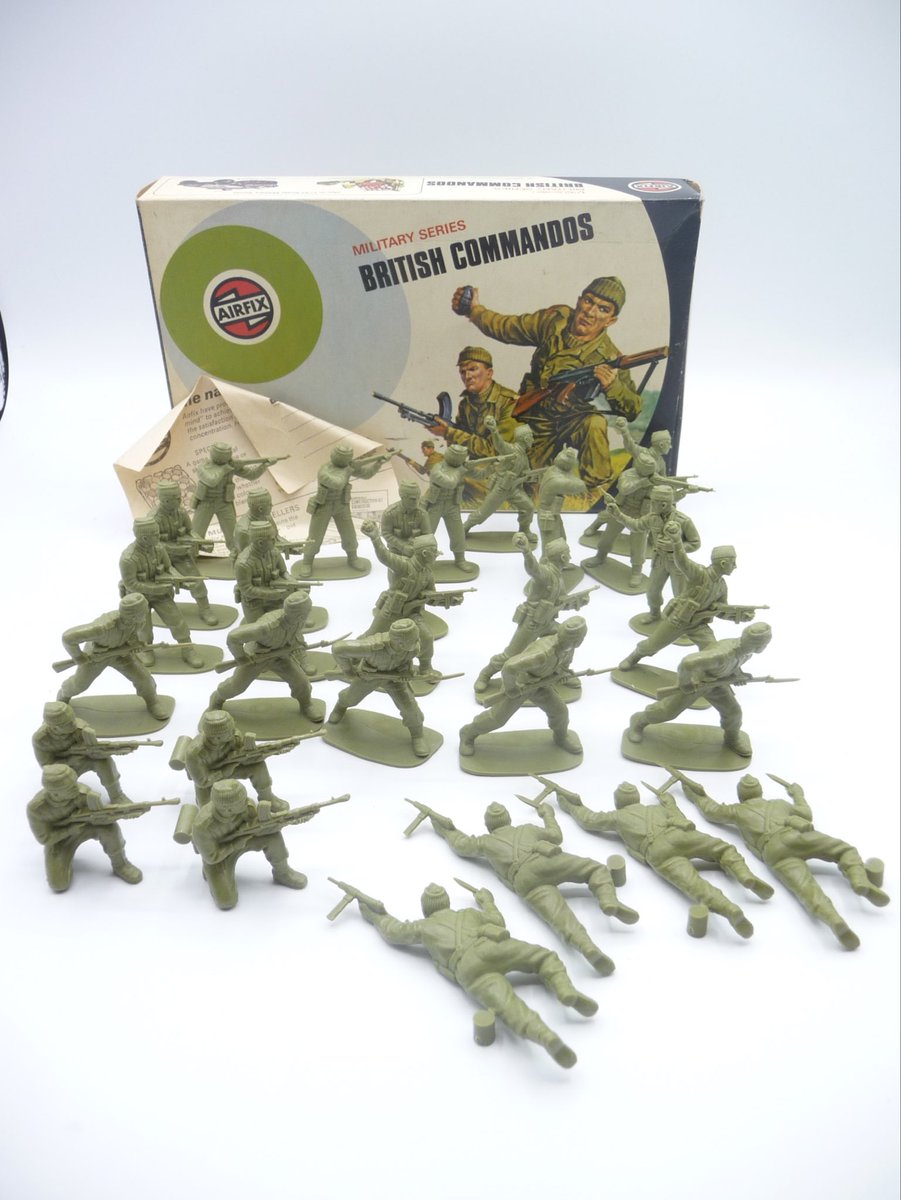
Growing up, these were my boys
They took on every mission to the dry expanse of sandpit, they scaled the forbidding terrain of the rockery and they ambushed Jerry convoys on the hall carpet
There was no mission too dangerous, no enemy too fierce. I miss them. They were good men