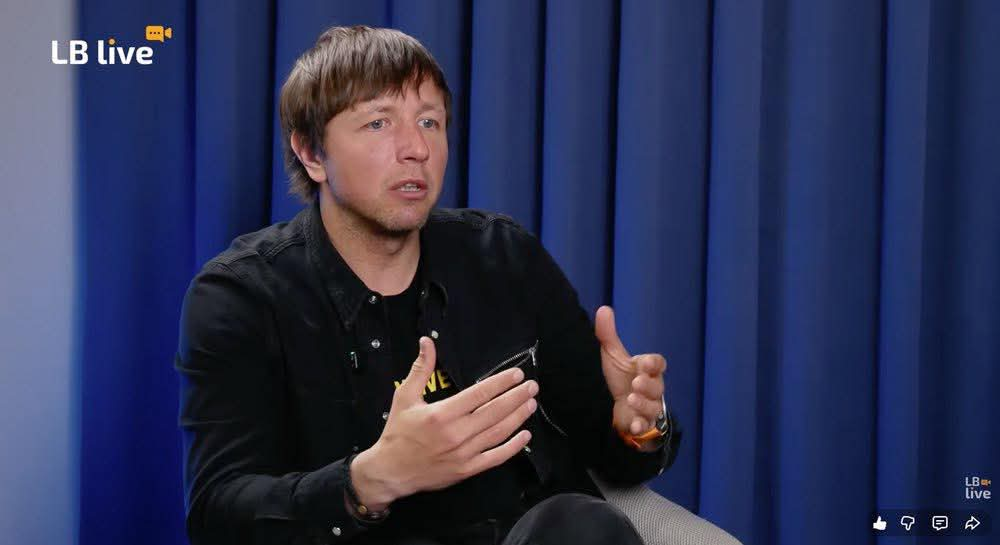
Yevhen Maloletka in the interview for LB:
"I am very sorry that we have to film this. For people, it is incredibly painful, and these emotions at the moment are terrifying.
But this is an important record of what russia has done to us. I am grateful to the doctors and to everyone who helped us survive and work in Mariupol, so that at least a small piece of truth about what happened to the city and its people would remain. This is not an 'exclusive,' as it is sometimes called in journalism. This is a story that could have disappeared. Because if it hadn't been documented, russia would have said that nothing happened.
We saw a woman being carried on a stretcher — she had a severe thigh injury, almost torn apart. They were taking her to an ambulance, and we captured it. But only on March 11 did we learn that Iryna did not survive. There was hope that at least she or the child would be saved… but, unfortunately, no. This is a very difficult story. I still live with that photograph that went around the world. It changed my life, and the life of her husband Ivan. Like the entire story of Mariupol — it changed the lives of so many people. And that is terrifying.
I first saw tanks firing at residential buildings around March 10–11, when we climbed higher and saw them literally dismantling buildings — top floors, middle floors, lower floors — working through each one. And then I saw a tank drive onto the street near our hospital and aim at a building. There is a photograph of that shot — the moment of explosion. Two women died in that apartment because they couldn't get down to the basement. Later, neighbors buried them right next to the building.
How do you count those who were buried right next to their homes? Without names, without records. People died not only from shelling — some from hunger, some took their own lives out of despair. These are also victims of the war, but no one counts them. There were mass graves, but not always. Often people were simply collected from the streets and buried. Volunteers loaded bodies into vans and took them away. That was the reality.
It is important to film. It is important to show. But it must be done with respect for people — that is key. And it is not easy. Because you are photographing people in their most vulnerable state, and then you have to speak with them. And they are not always in a condition to do so. If we do not show a specific person with their name, it becomes just statistics — how many killed, how many wounded. But these are real people. Someone's brother, or sister, someone's son.
I did not create these images. The enemy bombs, and I am forced to document it. And, unfortunately, these images are necessary. They show the truth. If there had been no journalists in Mariupol — there would be no evidence. The world would know much less. There would have been a complete information blackout. And we would have nothing to appeal to in international institutions."