As a new Farmer myself who bought our farm 4 years ago, I can’t tell you how accurate Clarkson’s Farm actually is!
We spent £3.5m buying our farm and subsequently in the past 4 years we’ve had to spend at least £527,000 on farm machinery and much, much more on running the farm. We’ve lost money every year since so far, and have had challenges or refusal from local authorities everytime we’ve tried to diversity, or do something to generate extra income. I cannot stress how difficult it is for farmers who have to rely on farming for their only income.
We don’t get any subsidies or BPS payments at all (because we’re new farmers) and the grant system might as well be in Greek! As a CEO and professional businessman of some note, I felt I could easily apply for the grants myself. I kid you not, you’ve never seen a more complicated form - for ANYTHING!
The farm we bought had been in the same family for 3 generations, but it was sold because it was getting tougher to support the farmers growing family and now I’ve been in it for 4 years I can see why.
It’s a crying shame that more and more food is going to be imported and more skills lost because, for some unknown reason, the government obviously don’t value farmers. Sad.
If Bluesky is excluded from the Government’s proposed under-16 social media ban whilst X is included, it is fair to ask whether political considerations have influenced the decision.
The Government should publish the criteria used to determine which platforms are covered.
@PolitlcsUK@thetimes How can they possibly justify simultaneously lowering the voter age to 16, while cutting all 16 year olds off from non-government media & commentary.
i regret to inform you that personal growth rarely comes from acquiring new knowledge and almost always from:
•getting humiliated
•showing up terrified and doing it anyway
•admitting you might be the problem
NEW: Starmer will announce an ‘Australia plus’ teen social media ban on breakfast TV tomorrow
- Expected to include the same 10 apps as Aus: TikTok, YouTube, X, Instagram among them
- ‘Romantic’ chatbots banned
- 16 + 17 yr olds will have a curfew
https://t.co/vh9nI26jtt
I think to be good at research in bio and biophotonics and comp bio
you need to stop trying to follow instructions on how to be a good researcher
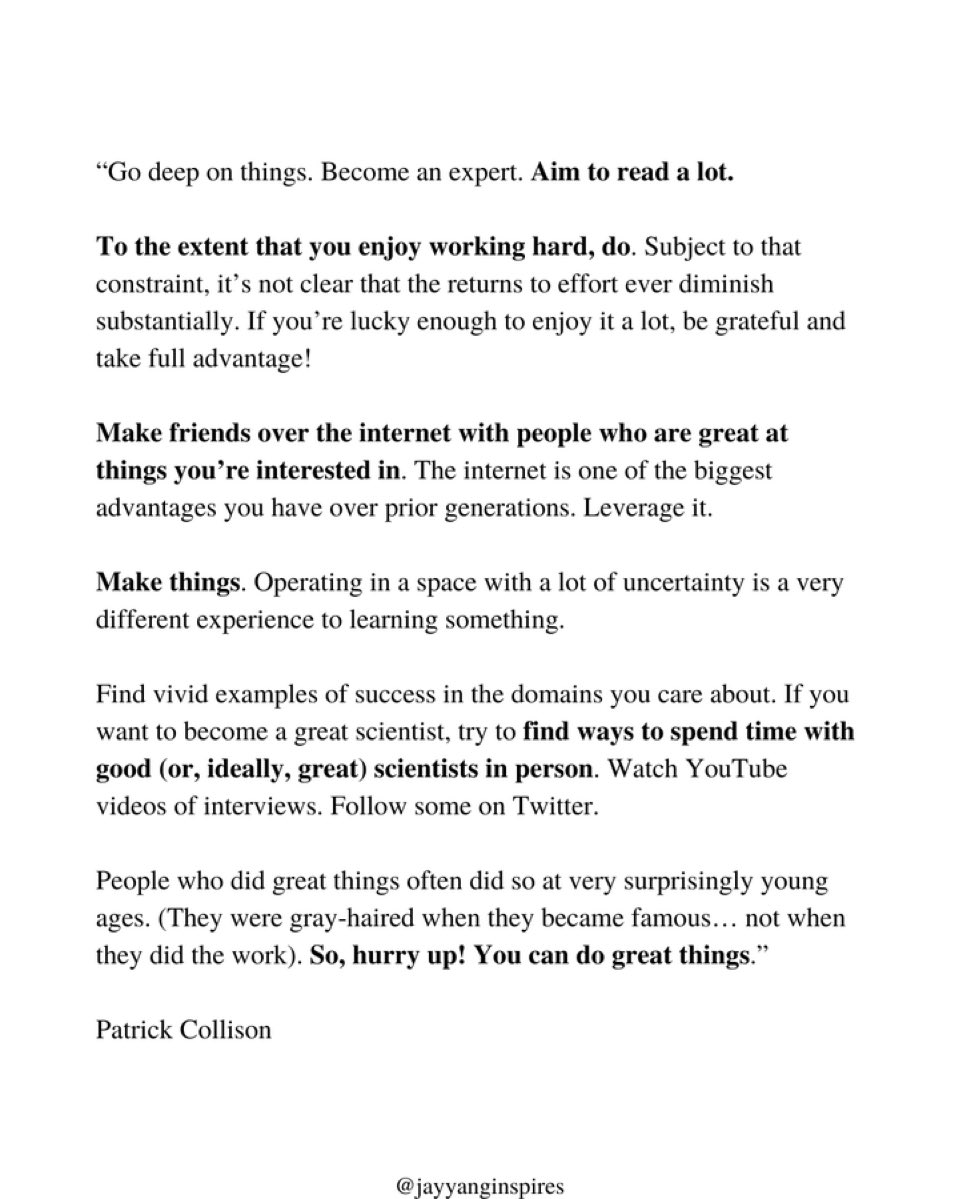
you need to start optimizing for being a great THINKER. after that, let yourself guide you to your research.
- read a lot but choose wisely what you read. a lot of written research in biology is practically lab protocols. if you’re a computational biologist your job is to know how that work is done and do that work, but it is, above all, to stay slightly above the nuances or you drown in them. be highly selective about the papers you truly let IN; some of them may have nothing to do with your particular field, but rare are the papers that aren’t trying to make data, they’re trying to prove and show FRAMEWORKS. hold on to those and understand how to think better.
- study math everyday and make your own models of things. of EVERYTHING.
- learn to be a systems thinker. always choose systems 2 thinking.
- do not get too caught in the bullshit. “it’s a nature paper so it matters” “it’s a stanford paper so it matters” stop thinking like an aristocrat. think like a scientist. when something makes sense, let it click. do not select by huge names and huge institutions. one of my favorite biology papers was written by a guy who has no biology degree.
- go back to the classics. there’s far too much people did back then that no one picked up on. learn the history of science. you’ll realize that a big reason why is because those ideas WERE credible but were made out to be a part of a hype bubble (for instance the cloning hype) and many times the authors themselves didn’t realize the INSANE extent of what they were really putting forth
- do things. this goes without saying. stop limited your imagination to the data online. the data I needed, needed an instrument that literally didn’t exist so we made it. why? because math and physics allowed for it. reality is your only actual constraint. opinions on reality are getting in the way of your science.
Just as sugar settles at the bottom of a teacup, gravity causes sedimentation in protein solutions to make LambdaVision’s artificial retinas, designed to restore vision for people with macular degeneration.
To overcome this 👉 space manufacturing: https://t.co/m1ZX0Uc27s
#ISS
@brandmarkss That misaligned triangle really bugs me, I would get the lines to at least form a proper constrained triangle then fill, I don't think having the gap adds much. Love the animation though!
I think from a younger age, it should be considered a lot more important for kids to investigate and find ways of learning things themselves, and then be exposed to increasingly challenging problem-solving to build techniques that work for them. There also needs to be a shift in attitude on a larger scale that its ok and part of the process to get things wrong as long as you're not going to leave it unsolved. I think if teachers acted more as mentors and experts, rather than relaying set knowledge and essentially reciting a textbook, not only would that allow for better discussions and therefore dissemination of wisdom/information, it would build a much more unique experience for everyone.
There is absolutely potential in everyone to work beyond memorisation; I think it is just building the infrastructure and challenging the Victorian-era pedagogical theory that's even more prevalent now.
The need for it to change is already becoming more apparent with employers and unis prioritising/looking for research experience and programmes like STEM Racing or "passion projects" as a way of showing independent drive, as well as a broader application of knowledge and development of soft skills.
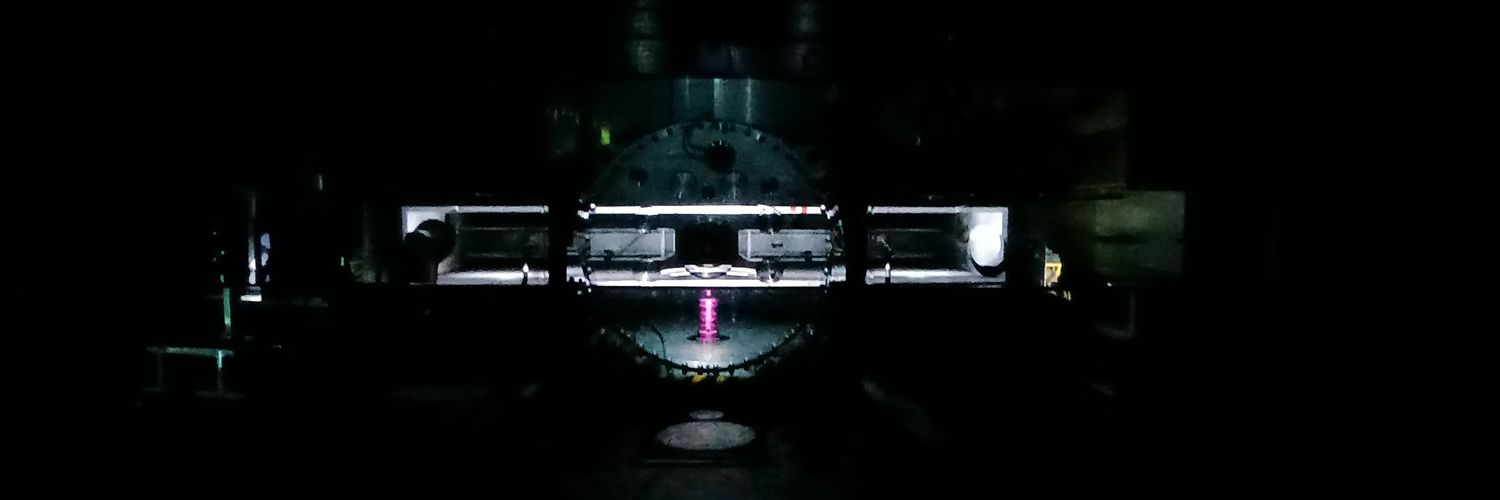
Together with UC Berkeley we are announcing the laser phase plate - a breakthrough in atomic resolution imaging. This is the brightest continuous wave laser in the world, 100 million times the intensity of the surface of the sun.
Phase contrast plays an important role in microscopy, but it was thought close to impossible for electron microscopy, where it would require interfering with an electron beam. Holger Mueller and Robert Glaeser proposed exactly this using a standing wave laser. It has taken over 15 years to make this a reality. Biohub partnered with UC Berkeley and Mueller to support this work and to engineer and build the technology.
Contrast has been the critical barrier to achieving atomic resolution imaging of the cell. In cryo-electron tomography, a cellular imaging technology that uses electron microscopy, the low contrast makes it impossible to resolve anything but the largest proteins within their cellular context. The laser phase plate removes that barrier.
With advances in AI this breakthrough in contrast will start to open up a new frontier in structural biology, that will allow us to see the molecular machines of the cell, and how they assemble into far more complex and dynamic systems, and understand how they work.
I think from a younger age, it should be considered a lot more important for kids to investigate and find ways of learning things themselves, and then be exposed to increasingly challenging problem-solving to build techniques that work for them. There also needs to be a shift in attitude on a larger scale that its ok and part of the process to get things wrong as long as you're not going to leave it unsolved. I think if teachers acted more as mentors and experts, rather than relaying set knowledge and essentially reciting a textbook, not only would that allow for better discussions and therefore dissemination of wisdom/information, it would build a much more unique experience for everyone.
There is absolutely potential in everyone to work beyond memorisation; I think it is just building the infrastructure and challenging the Victorian-era pedagogical theory that's even more prevalent now.
The need for it to change is already becoming more apparent with employers and unis prioritising/looking for research experience and programmes like STEM Racing or "passion projects" as a way of showing independent drive, as well as a broader application of knowledge and development of soft skills.
GCSEs really are not representative of anything but the ability to memorise mark schemes. As someone doing them right now, it is really disheartening to know that, despite knowing everything and more, in terms of the content and concepts, for each of my 14 subjects, my understanding is not what is looked for, rather whether I have spent hours memorising mark scheme-specific terminology.
Instead of just rewarding us for mugging up set phrases, exams should test how we can solve problems with what we know, how we can present and communicate ideas that have been formed in response to stimuli.
We need to stop holding onto the notion that simply knowing things is a measure of ability or achievement, and start encouraging kids to be curious and approach new situations and problems without fearing getting the 'answer' wrong.
Although I haven't been stressed at all for GCSEs, and have been doing as little as I need to, most people that I know have dropped their entire lives to get the best marks possible, which, although normal, is really not the ideal situation for anyone to be in, as not only does it take away from learning through experiences outside of school, through socialising and developing intrests, it maintains a state of burnout through limiting the view of students to their next upcoming exam, putting them into the position where if they do anything but revising, it feels like they are throwing away their future.
I think what a lot of people forget is that anyone can do GCSEs, or any form of linear course that culminates in exams; anyone can reproduce the exact wording of a mark scheme, but not everyone can make connections and think how you, as an individual, do. No one can communicate their thoughts or express their creativity in the same way as someone else, and perhaps, rather than trying to homogenise future generations into thinking and acting the same, this should be cultivated.
Although hats off to the people who will be getting straight 9s this year and any other years, it's not a measure of anything but what they memorised for the exam, and a little bit of luck that that was tested. That 9 probably reflects some dedication, but it doesn't necessarily make them a better student or 'smarter'.
Success should be measured by impact, and impact can only be created through drawing in experience and passion to add something to our understanding of the world or improve it in some way. Never before has anyone had as much access to all we know and have created, so instead of learning by rote a cherry-picked selection of this, we should see what can be built and conceptualised by drawing from it.
My daughter completed exam 22 out of 24 for her GCSEs today. I’ve never seen her so exhausted. Is this really a sensible way of measuring children’s success? #gcses