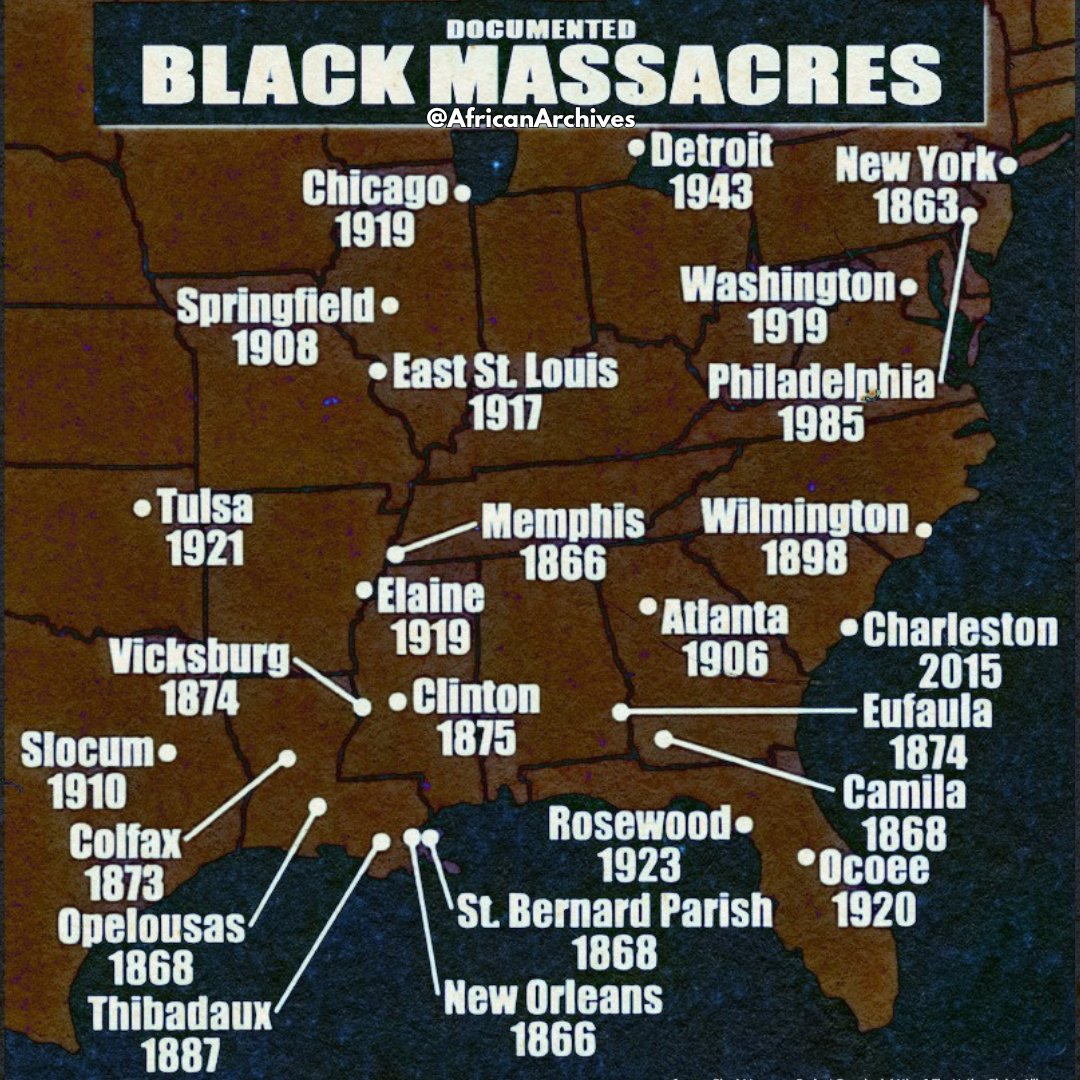
This map highlights just a fraction of the many documented incidents of racial violence that have taken place across the United States from the 19th century into the modern era. Each location represents a moment where Black communities faced organized violence, often with little to no legal accountability for those responsible. While the map cannot capture the full scale of history, it serves as a reminder of how widespread and systemic these events were.
In 1863, New York City witnessed the Draft Riots, one of the deadliest urban uprisings in American history. What began as protests against military conscription quickly turned into targeted violence against Black residents. Homes were burned, people were assaulted and killed, and entire communities were forced to flee. It revealed how racial tensions could erupt violently even in northern cities.
In 1898, Wilmington, North Carolina experienced what is often described as the only successful coup in United States history. A multiracial local government was overthrown by white supremacists through violence and intimidation. Black citizens were killed, elected officials were removed, and many families were forced to leave the city. This event reshaped political power in the region for decades.
The early 20th century saw multiple large scale attacks. In 1917, the East St. Louis Massacre resulted in widespread destruction and loss of life as white mobs targeted Black workers and residents. In 1919, known as the Red Summer, violence spread across several cities including Chicago and Elaine, Arkansas. In Elaine, hundreds of Black sharecroppers were killed after attempting to organize for fair wages. These events showed how economic and racial tensions often intersected with deadly consequences.
In 1921, the Tulsa Race Massacre devastated the Greenwood District, a thriving Black community often referred to as Black Wall Street. Over the course of two days, homes and businesses were destroyed, and many residents were killed or displaced. For decades, the event was largely omitted from mainstream historical narratives, highlighting how easily such histories can be erased or ignored.
Other locations on the map, such as Rosewood in 1923 and Ocoee in 1920, reflect similar patterns of violence where entire Black communities were attacked, leading to displacement and long term economic and social consequences. Even in later years, events like Detroit in 1943 show that racial violence did not simply disappear but continued to shape American cities.
Understanding these moments is important not only for historical awareness but also for recognizing patterns. These were not isolated incidents. They were part of a broader system in which racial inequality was enforced through both law and violence. Acknowledging this history allows for more honest conversations about justice, accountability, and the long lasting impact these events have had on communities across generations.
Civil Rights activist, Gloria Richardson with the greatest “Boy Bye” as she removes the rifle of a National Guardsman from her way during a 1963 Civil Rights Protest. #WomensHistoryMonth
Dr. Sabine Hazan Explains the Early Treatment Protocol She Used on Over 1,000+ COVID Patients
“A thousand patients later, nobody's dying. Even the worst of the worst [with] oxygen in the 70's weren't dying – I treated them at home.”
🎥 @SabinehazanMD
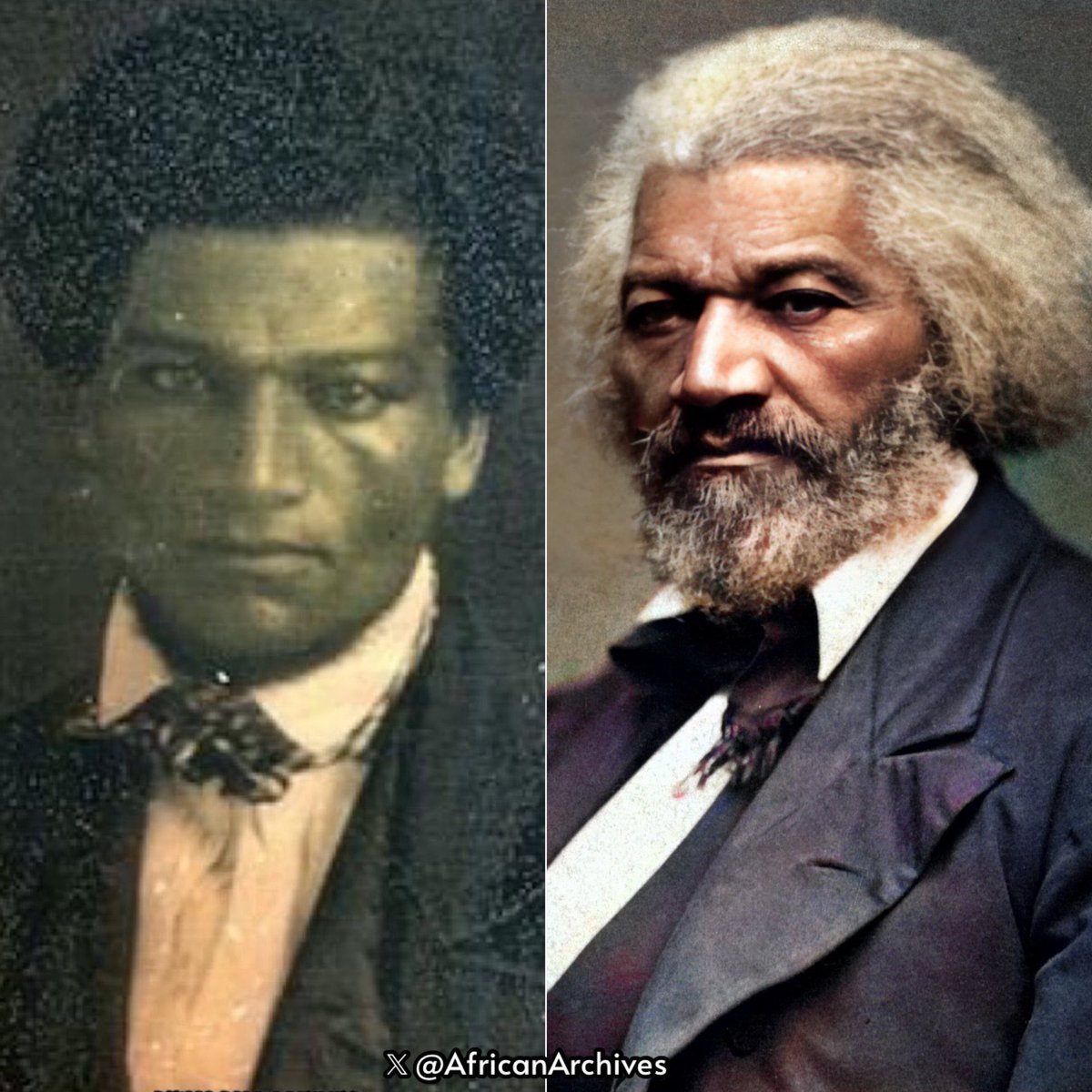
On this day, 1818, Abolitionist Frederick Douglass was born.
Frederick Douglass spent his life fighting for justice and equality. He never knew the date of his birth. This is something he struggled with throughout his lifetime. Douglass believed that he was born in the month of February in 1817. In fact, records show that Douglass was born in February of 1818. He chose the 14th of February for his birthday because his mother would call him her “little Valentine." Unfortunately, Douglass never knew much about his parentage. His mother, Harriet, was sold off when Douglass was but a child, and he only met her a few times before she passed away. Though born enslaved in Maryland, he escaped as a young man and became a leading voice in the abolitionist movement.
In 1838, Douglass escaped to freedom and found his calling as a leading voice in the abolitionist movement. Douglass escaped slavery by boarding a train to Havre de Grace, Maryland. He was dressed in a sailor's uniform, provided to him by Anna Murray, (he married her 12 days later, she was a free black woman in Baltimore) she also gave him part of her savings to cover his travel costs, and carried identification papers which he had obtained from a free black seaman.
He crossed the Susquehanna River by ferry at Havre de Grace, then continued by train to Wilmington, Delaware. From there he went by steamboat to "Quaker City" (Philadelphia, Pennsylvania) and continued to the safe house of abolitionist David Ruggles in New York; the whole journey took less than 24 hours.
Frederick Douglass later wrote of his arrival in New York:
"I have often been asked, how I felt when first I found myself on free soil. And my readers may share the same curiosity. There is scarcely anything in my experience about which I could not give a more satisfactory answer. A new world had opened upon me. If life is more than breath, and the 'quick round of blood,' I lived more in one day than in a year of my slave life. It was a time of joyous excitement which words can but tamely describe. In a letter written to a friend soon after reaching New York, I said: 'I felt as one might feel upon escape from a den of hungry lions.' Anguish and grief, like darkness and rain, may be depicted; but gladness and joy, like the rainbow, defy the skill of pen or pencil."
Frederick Douglass first tried to escape from Freeland, who had hired him out from his owner Colonel Lloyd, but was unsuccessful. In 1836, he tried to escape from his new owner Covey, but failed again.
In 1837, Douglass met and fell in love with Anna Murray, her freedom strengthened his belief in the possibility of his own.
Once he had arrived, he sent for Murray to follow him to New York; she arrived with the necessary basics for them to set up home. They were married on September 15, 1838, by a black Presbyterian minister eleven days after his arrival in New York.
—check out my blog posts on https://t.co/HHs3SgCItN … and subscribe to get my posts on your email.
There it is folks…
🚨 Governor Roy Cooper of North Carolina just confirmed that Certain Areas won’t be Rebuilt and they’re Buying Out Entire Communities Affected by “Climate Change”
“We’ve spent a lot of time on the way we approach rebuilding… in some areas, you just SHOULDN’T Build Back.
And we’ve been able to convince certain communities and people that BUYOTS are better…
• he also says, “we know these events will become more and more intense”
How the hell do they know, unless THEY are causing these hurricanes?
The land grab is REAL.
This is what they mean when they say Build Back Better.
https://t.co/CUjoRwva2a
Byron Donalds STUNNED the Breakfast Club by telling them that Kamala Harris caused all the current inflation. When they didn't believe him, he literally pulled out receipts.
Hosts: "That's not true."
Donalds: "Sure you want to go there?" (pulls out receipts)
Hosts: SILENT
The entire comment section on the episode is filled with black people calling out the Hosts' dishonesty and supporting Donalds. Guys like Byron are breaking the chokehold Democrats have had on black media. Credit to Lenard McKelvey, Jess Moore, and RaaShaun Casey for inviting different-minded thinkers to their show.
On this day in 1944, George Stinney, 14, became the youngest person executed in the US in the 20th century. He was so small they had to stack books on the electric chair.
Due to no evidence, his conviction was posthumously vacated 70 years after his execution!
A THREAD!
To read more on the Louisiana prison system between 1801-1861: https://t.co/G9QlzzN4uR
You can support my history page/project here through donations/tips to keep up on: https://t.co/03zhXZrbdE
In Louisiana, black women were put in cells with male prisoners and some became pregnant.
All children born in the penitentiary to blacks were property of the state.
At 10 years, they would be auctioned off. The proceeds were used to fund schools for white children.
-THREAD-
Throughout history, advertising Agencies used their powers to create an image of Black people, that they wanted to project to white Americans.
White Perceptions of Black Americans were partially created based on these ads.
The hug that saved a life In 1995, the twins, Kyrie and Brielle Jackson, were born 12 weeks premature, each weighing only about 2 pounds. They were placed in separate incubators. One twin was not expected to survive. She went into critical condition. Her heart rate was rising while her oxygen level was dropping significantly. They were about to lose her. It was then that one nurse, Gale Kasparian, went against the hospital rules and standard procedure, putting the healthy twin next to her struggling sister in the same incubator. This decision turned out to be life-saving. Once the twins were close to each other, the struggling sister (Brielle) snuggled up to the healthy sister (Kyrie) who put her arms around Brielle. Almost immediately after, Brielle's vital signs started stabilizing. Her heart rate and oxygen levels normalized. Both twin sisters eventually survived and grew into strong young women. The picture below came to be known as the rescuing hug and would change a part of our understanding of medicine.
Hugging that is coming from the heart is proven to have calming and healing effects. Maybe there is someone in your life that can use a warm and heartfelt hug right now.
@MingHatesSWS@MingHatesSWS I wanted to PM you, but was not allowed to. Thank you for everything that you are doing. Your post are very informative and educational. Thank you for helping to raise awareness of anti-black racism with your comments, post and sources. 👍2 ur honesty & courage.