Dear Secretary Bessent @SecScottBessent,
My name is Everett Stern. In 2010 I was a compliance officer at @HSBC. From a back office in New Castle, Delaware, I watched billions of dollars move to drug cartels, sanctioned regimes, and terrorist organizations. The enemies of the United States. I documented it, I escalated it, and when the bank would not act, I took it to the @FBI, the @CIA, and eventually the @SECGov.
The result was a $1.92 billion settlement. At the time, it was one of the largest in American history. It was also about five weeks of the bank’s profit. Not one banker was charged. Not one went to prison.
I paid a different price. I lost my career, my savings, and my place in the industry I had trained for. I was blacklisted. Every door in American finance closed at once. I slept on a camping cot in a 300 square foot apartment because I could not afford a bed, and I waited tables at @PFChangs to eat. I tell you this not for sympathy, but so you understand that I know exactly what it costs to do the right thing in American finance, and exactly how little the system does in return.
I made that sacrifice because I believed it would change something.
Yesterday, your department fined @BankofAmerica $1.2 billion for failing to report more than $5 billion in suspicious transactions, some of it tied by your own findings to Chinese laundering networks, narcotics, and the southwest border, alongside 475 apparent sanctions violations touching Russia, Iran, and global terrorism. The bank admitted it willfully violated the Bank Secrecy Act.
Fourteen years after HSBC. A bank with “America” in its name. And once again, not one individual charged.
Secretary Bessent, I want to say plainly what I believe you already know. The fines are not working.
A fine is paid by shareholders, absorbed by the balance sheet, and forgotten by the next earnings call. Bank of America reported earnings this morning. Nobody who set the alert thresholds, nobody who decided the 2024 cease and desist could wait, nobody who chose the backlog over the law will lose a single thing they value. Their lives are untouched. That is the entire reason the behavior repeats.
This is money laundering. This is blood money. Money that reaches a cartel buys fentanyl that kills Americans. Money that reaches a terrorist organization buys the next attack. This country has fought a war on drugs and a war on terror for decades, at enormous cost in lives and treasure, and all the while we have allowed the financing to flow through institutions we charter and regulate. Cut off the money and we win. We have never seriously tried.
There is also a question of equal justice that I cannot let go.
Before I walked into the FBI building to report HSBC, I stopped in front of the Great Seal on the wall and read the words engraved beneath it: “Justice is the defense of our liberty.” I believed that. I still want to. But every day in this country, people go to prison for crimes that are nothing next to moving money for the people who want Americans dead. A suit, a title, and a corporate badge should not be a shield from the consequences that apply to everyone else. If a street dealer goes to prison for what he sells, the banker who moved the cartel’s money should be standing next to him.
I also want to raise something that is rarely said in these conversations. Why has no one inside Bank of America come forward the way I did? The answer is that everyone in American banking knows what happened to me, and to the whistleblowers who came after. The last person who spoke up is the only policy anyone believes. That is a culture problem, and it starts with leadership, in the banks and in the agencies that regulate them.
This is not a political issue. It has spanned administrations of both parties. It is a national security issue, and I am asking you to treat it as one.
Three things would change the math overnight.
Refer individuals for criminal prosecution. Not the analyst in the queue. The executives who set the thresholds and chose the risk. One banker in handcuffs would do more than every fine in Treasury’s history combined.
End “too big to jail.” An institution cannot be too big to fail and too big to jail at the same time. If it is the first, it must be held to a higher standard, not a lower one.
And if Bank of America will not act as America’s bank, review its charter. A national charter is a privilege granted on behalf of the American people. It should be conditioned on not moving money for the people trying to kill them.
Secretary Bessent, you said yesterday that these actions send a clear message that even the biggest institutions are not above the law. With respect, the institution was never the problem. The people inside it are above the law, and they know it. Until that changes, I will keep writing letters like this one, and the next bank will keep paying the next fine.
I gave up everything I had to stop this. I am asking you to use the power you have to finish it.
Respectfully,
Everett A. Stern
HSBC Whistleblower
Founder and Intelligence Director, Tactical Rabbit
As the HSBC bank whistleblower, I need to say something about Bank of America.
It is called Bank of America. It let money move for the enemies of America.
$5 billion in suspicious transactions unreported. 475 apparent sanctions violations tied to Russia, Iran, narcotics, and terrorism.
$1.2 billion fine. Not one banker charged.
Nothing changes until someone goes to prison.
@BankofAmerica was fined $1.2 billion today for failing to report more than $5 billion in suspicious transactions.
The @USTreasury says some of that money was linked to Chinese laundering networks, fraud, and activity at the southwest border. Separately, 475 apparent sanctions violations touching Russia, Iran, narcotics, and global terrorism. The bank admitted it willfully violated the Bank Secrecy Act.
Here is the line in the story nobody will quote: not one individual was charged.
I have watched this exact movie before. In 2012 I was inside @HSBC when it paid $1.9 billion for moving money for cartels and sanctioned regimes. The fine was roughly five weeks of profit. No banker went to prison. The industry took the lesson it was offered, which was that the penalty for letting dirty money through is a line item.
Fourteen years and tens of billions in fines later, the Treasury Secretary says this sends "a clear message that even the biggest financial institutions are not above the law."
The institution is not above the law. The people inside it are. That is the whole problem.
A bank cannot go to prison. A bank cannot lose its freedom, its reputation, or its kids' respect. The only thing a fine does to a bank is reduce next quarter's number, and @BankofAmerica reports earnings tomorrow. Watch how little the stock cares.
Every one of those unreported transactions passed through a person. Somebody set the thresholds. Somebody saw the alert volume and chose not to staff for it. Somebody read the 2024 cease and desist and decided the fix could wait. Until those people face something personal, the next $1.2 billion is already priced in.
To the compliance officers at @BankofAmerica who flagged what they saw and were told to find a way: I know exactly where you are sitting. You are not the ones who should be nervous tonight.
We do not need another record fine. We need a banker in handcuffs.
https://t.co/PAFXP3XGRr
It��s an honor to be in the trailer for The Wolves of Real Estate: The Alexander Brothers, coming to @peacock October 25.
I’m sorry it’s under these circumstances. A lot of women were harmed. This exists because they came forward.
I can’t say much about my role yet. I can say I’ve spent my career trying to do the next right thing.
Fourteen years ago I waited tables here because nobody else would hire a whistleblower.
Tonight I'm back at @PFChangs in an @NBCUniversal hat, celebrating being in the trailer for a @Peacock documentary.
Never forget where you came from.
I am in the trailer for The Wolves of Real Estate: The Alexander Brothers, premiering on @peacock October 25.
That is all I can say about my role until it airs.
What I can say is thank you. To Emma Schwartz @emmanator, who directed this with the seriousness the story demanded, it was an honor to work with you. And to Maxine Productions @mkrobertson, @SonyPictures, @voxmedia, Secret Menu, @NBCUniversal, and @peacock, thank you for the opportunity and for including me.
October 25. All three episodes. Peacock.
The Wolves of Real Estate: The Alexander Brothers | Official Trailer | P... https://t.co/Dnmow006cw via @YouTube
As the HSBC whistleblower, I need to say something about whistleblower Simon Andriesz.
@SAndriesz raised concerns at BGC Partners and was fired. He reported to the FBI in 2020 and 2021 that he believed Howard Lutnick had undeclared business ties to Jeffrey Epstein. Nothing happened. He took it to Congress. He spent years trying to get anyone to listen.
He took his own life. He was 57.
I spoke with Simon through Whistleblowers of America @WhistleP2P. He was serious and careful and worn down from being ignored. Now his case is in every headline, covered with an intensity he never saw while he was alive.
That is the pattern, and I want to name it. We marginalize whistleblowers while they are breathing and discover them when they are dead.
I know what Simon was carrying, because I carried it too.
In 2012 I found out that HSBC would pay a fine and not one banker would go to prison. I had lost my job, my savings, and every door in my industry. I was living in a 300 square foot apartment with a Flemish Giant rabbit who had the run of the place. I had decided I was done.
Right as I was about to do it, she hopped over to me.
I thought: who is going to feed the rabbit?
That question stopped me. Years later I named my company Tactical Rabbit. People think it is a clever brand. It is the reason I am alive.
Here is what I want people to understand about how whistleblowers die.
Simon's death was a suicide. I am not saying otherwise. But I have lived through what gets aimed at a person who exposes the powerful, and I will not pretend it is a coincidence when one of us does not make it. After HSBC I faced external threats from the same cartels and terrorist networks whose money I had reported. On top of that came the harassment, the bullying, the targeting, the psychological warfare that is designed to isolate you and make you doubt your own mind. It is not a side effect. It is the strategy. Its purpose is to break the person so the facts never matter.
Sometimes it works. A lot of whistleblowers do not survive it. I nearly did not. So when I say the campaigns against whistleblowers are a kind of killing, I do not mean it literally, but I mean it. The people who run them know exactly what they are doing to a human being, and it should be treated as the crime it is.
This is why I serve on the board of Whistleblowers of America. Everyone else focuses on the case. Whistleblowers of America on the person: the trauma, the mental pain, the years after the headline when the phone stops ringing.
If you are a whistleblower reading this, or you are sitting on something and deciding whether to speak, hear me clearly. It gets dark. It also gets better. There are people who care about you and will stand beside you, and I am one of them. Reach out to me. Reach out to Whistleblowers of America. Reach out to anyone. Do not carry it alone.
Simon, I am sorry the world listened too late. Rest in peace.
My BBC @bbc5live interview on the death of whistleblower Simon Andriesz.
He exposed Jeffrey Epstein's business links to Howard Lutnick, now the U.S. Commerce Secretary. He went to the FCA, the FBI, and Congress. Nobody listened. He took his own life. Now MPs want an investigation.
We marginalize whistleblowers while they're breathing and discover them when they're dead.
Rest in peace, Simon.
My BBC @bbc5live interview on the death of whistleblower Simon Andriesz.
He exposed Jeffrey Epstein's business links to Howard Lutnick, now the U.S. Commerce Secretary. He went to the FCA, the FBI, and Congress. Nobody listened. He took his own life. Now MPs want an investigation.
We marginalize whistleblowers while they're breathing and discover them when they're dead.
Rest in peace, Simon.
As the HSBC whistleblower, I need to say something about whistleblower Simon Andriesz.
@SAndriesz raised concerns at BGC Partners and was fired. He reported to the FBI in 2020 and 2021 that he believed Howard Lutnick had undeclared business ties to Jeffrey Epstein. Nothing happened. He took it to Congress. He spent years trying to get anyone to listen.
He took his own life. He was 57.
I spoke with Simon through Whistleblowers of America @WhistleP2P. He was serious and careful and worn down from being ignored. Now his case is in every headline, covered with an intensity he never saw while he was alive.
That is the pattern, and I want to name it. We marginalize whistleblowers while they are breathing and discover them when they are dead.
I know what Simon was carrying, because I carried it too.
In 2012 I found out that HSBC would pay a fine and not one banker would go to prison. I had lost my job, my savings, and every door in my industry. I was living in a 300 square foot apartment with a Flemish Giant rabbit who had the run of the place. I had decided I was done.
Right as I was about to do it, she hopped over to me.
I thought: who is going to feed the rabbit?
That question stopped me. Years later I named my company Tactical Rabbit. People think it is a clever brand. It is the reason I am alive.
Here is what I want people to understand about how whistleblowers die.
Simon's death was a suicide. I am not saying otherwise. But I have lived through what gets aimed at a person who exposes the powerful, and I will not pretend it is a coincidence when one of us does not make it. After HSBC I faced external threats from the same cartels and terrorist networks whose money I had reported. On top of that came the harassment, the bullying, the targeting, the psychological warfare that is designed to isolate you and make you doubt your own mind. It is not a side effect. It is the strategy. Its purpose is to break the person so the facts never matter.
Sometimes it works. A lot of whistleblowers do not survive it. I nearly did not. So when I say the campaigns against whistleblowers are a kind of killing, I do not mean it literally, but I mean it. The people who run them know exactly what they are doing to a human being, and it should be treated as the crime it is.
This is why I serve on the board of Whistleblowers of America. Everyone else focuses on the case. Whistleblowers of America on the person: the trauma, the mental pain, the years after the headline when the phone stops ringing.
If you are a whistleblower reading this, or you are sitting on something and deciding whether to speak, hear me clearly. It gets dark. It also gets better. There are people who care about you and will stand beside you, and I am one of them. Reach out to me. Reach out to Whistleblowers of America. Reach out to anyone. Do not carry it alone.
Simon, I am sorry the world listened too late. Rest in peace.
I understand this post touches an issue people feel strongly about, and I respect that everyone here is entitled to their view. I will not be debating the politics of the Middle East in this thread.
I will say this plainly. I am Jewish. I went to Israel days after October 7 because civilians had been massacred and I could help. I stand against terrorism, and I have spent my career going after the money that funds it. Those are not political positions to me. They are the reason I do what I do.
My whistleblowing was about law and ethics. So was getting on that plane. To me they have always been the same thing.
Thank you to everyone engaging respectfully, whether you agree with me or not.
Three years ago today, Hamas murdered 1,200 people in Israel.
A few days later I was on a plane to Tel Aviv. It was almost empty. Rows and rows of open seats on a flight into a country at war, and I remember thinking that the emptiness was its own kind of message.
I am not Israeli. I am an American. I went because it was the right thing to do, and because I knew something most people on that plane did not.
Every terrorist attack starts with a wire transfer.
I know because I watched it happen. In 2010 I was a compliance officer at @HSBC, and I saw money moving to terrorist organizations through one of the largest banks in the world. I reported it. The bank paid a fine. Not one banker went to prison. The money kept moving.
That is what I carried with me to Israel. The attacks on 9/11 and on October 7 did not begin with the men who carried them out. They began months earlier, in transactions that cleared, in alerts that were closed, in money that reached people who used it to kill. The massacre is the last step. The bank is the first.
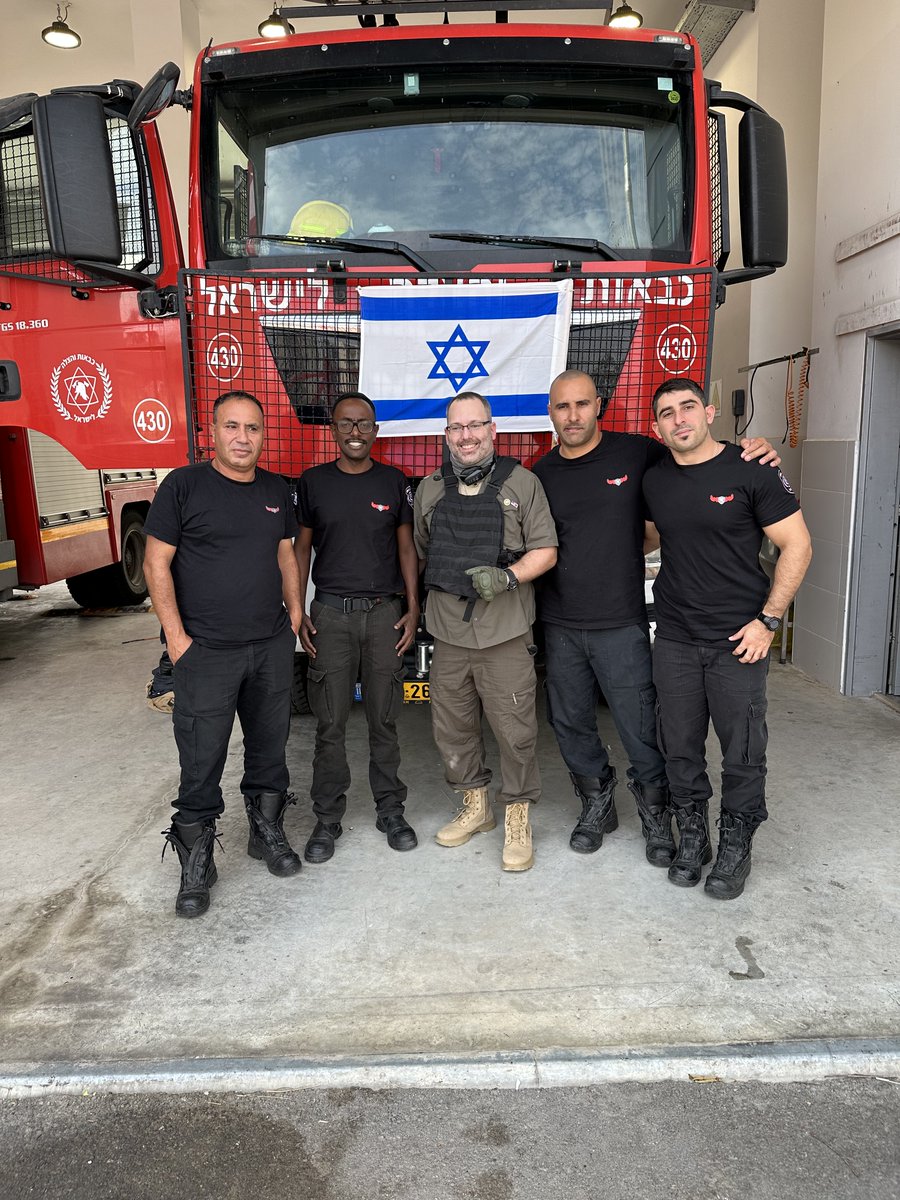
I spent my time in Israel doing whatever was useful. I supported @UnitedHatzalah, the volunteer first responders who ran toward the worst of it on October 7 and have not stopped since. I stood with firefighters, police, and medics who had been working without rest. I saw the aftermath with my own eyes. I will not describe it here. I will only say that nobody who sees it argues about wire transfers in the abstract again.
I support Israel. I support the United States. I stand against terrorism and against everyone who funds it, and I have spent fourteen years going after the money.
Here is what I believe after all of it. We will not stop the next attack with better software or bigger fines. We will stop it when the people who let the money through face something personal. A fine is a cost of doing business. Prison is not.
We need a banker in jail. Until that happens, every October 7 is a reminder that the system already knows the price and has decided to pay it.
To the people of Israel, and to everyone who lost someone three years ago today: I remember. I was there. And I am still in the fight.
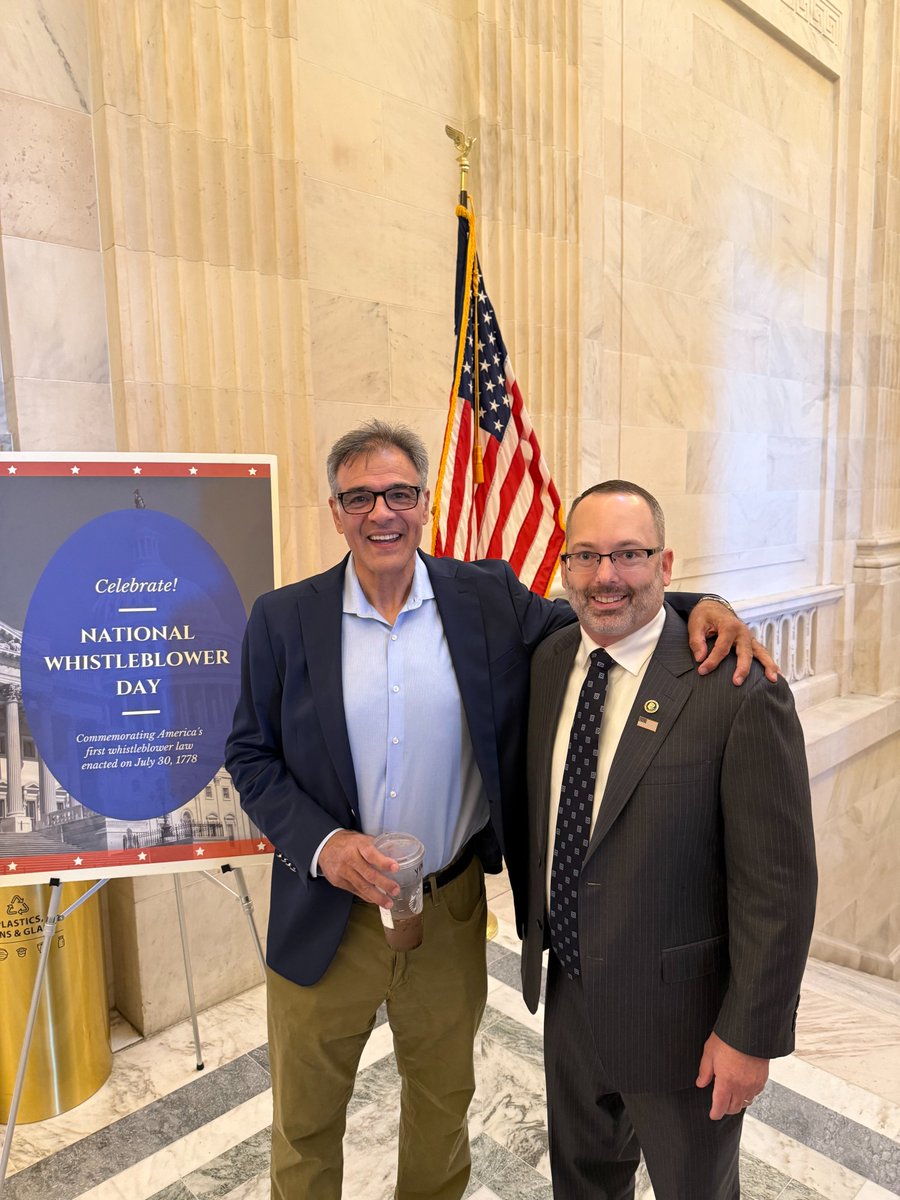
Two men who lost everything, standing under the same flag.
That is @JohnKiriakou and me at National Whistleblower Day on Capitol Hill, and I want to tell you why this photo means more to me than most.
John Kiriakou was a @CIA officer. He spoke publicly about the agency's interrogation program because he believed it was wrong, and he went to federal prison for it. He lost his career, his pension, his freedom, and years with his children. He did not do it for attention. He did it because his conscience would not let him stay quiet.
I lost everything for telling the truth about a bank laundering money for terrorists and drug cartels. John lost everything standing up for what he believed was wrong inside a government. Different institutions, different decades, same price. We both know what it costs to see something, decide you cannot live with it, and refuse to find a way around it.
What people do not see from the outside is how lonely that road is. Most of the people who understand it are strangers to each other. So when you find someone who has walked it, who knows the cot and the silence and the phone that stops ringing, you do not need to explain anything. You just stand next to each other and that is enough.
@JohnKiriakou is a fighter. He came out of prison and kept talking, kept writing, kept showing up. You do not have to agree with a man on everything to respect what he was willing to pay. He has the highest respect I can offer, and I am proud to call him a friend.
To everyone still deciding whether to speak up: there are more of us than you think. And we stand with you.
A bank laundered money for terrorists and drug cartels and paid a fine. A restaurant gave me a job and sent me home with dinner.
Guess which one I think about more.
After I blew the whistle at @HSBC, every door in my industry closed. Not slowly. All at once. I had a degree, a record of being right, and no one who would return a call. I was sleeping on a camping cot in a studio apartment and I needed to eat.
@PFChangs hired me.
They did not ask about the bank. They did not treat me like a liability. They handed me an apron and a section and let me earn an honest dollar on a day when nobody else in America would. On the nights money was tightest, the kitchen sent me home with lo mein so I would have something to eat. Nobody made a speech about it. They just did it.
I rebuilt my life between shifts. Everything I have now traces back to a restaurant that decided a whistleblower was worth hiring.
Here is what I learned carrying plates that I never learned at a bank. Dignity does not come from the title on your badge. It comes from doing honest work well, every single shift, when nobody is watching and nobody is impressed. The people I reported kept their bonuses. I kept my self-respect. I would make that trade again.
So I have a small ask.
Eat at @PFChangs this week. Lunch, dinner, whatever works. And tip your server like they might be rebuilding their entire life between tables, because some of them are. I was.
To the @PFChangs team, past and present: you did not just feed me. You gave me a place to stand while I figured out how to fight back. I will never forget it.
@VvMartinez25@HSBC There is always light to be found in the darkness. Sometimes you just have to look harder and really squint, but the light is always there.
@JoniCamp1@HSBC@PFChangs It was a very dark time in my life. To everyone out there going through hell - trust me on this - There is light at the end of the tunnel. There is a solution to every problem and it always works out.