The richest man in America signed a document that could have gotten him hanged, and when someone sneered that he was safe because no one would know which Charles Carroll to come for, he picked up the pen and told the British exactly where to find him.
His name was Charles Carroll, and the colonies were crawling with men who shared it. His own father was Charles Carroll of Annapolis. So when the Declaration of Independence came to him for signing in 1776, a delegate made a cruel little joke. He said Carroll risked nothing by signing. There were so many Charles Carrolls that the King's men would never know which one to hang.
Carroll didn't argue. He leaned over the page and added three words to his signature: "of Carrollton." The name of his estate. His address. He was the only signer in the entire room who wrote down where he lived, and he did it on purpose, so that if the British wanted to come hang the traitor, they would know exactly which door to knock on.
That is who Charles Carroll of Carrollton was.
Here is what makes the moment even sharper. He was not a man with little to lose. He was the single wealthiest man in the thirteen colonies and the largest private landowner among them. While George Washington and John Hancock get talked about as rich men, it was Carroll who topped them all. When he signed, he was wagering the biggest personal fortune in America against a noose.
And he was the last man anyone would have expected to be there at all. Carroll was Catholic. In colonial Maryland, a colony founded as a Catholic refuge that had since turned on its own, Catholics could not vote. They could not hold public office. They could not worship in public. The most educated, wealthiest man in America was, in the eyes of the law, a second-class subject barred from the very government he was helping to create. He had spent seventeen years being educated by Jesuits in France and spoke five languages fluently, and back home he still could not legally cast a ballot.
So he became the only Catholic to sign the Declaration of Independence, putting his name on a revolution that he hoped would build a country with room for men like him. That was its own enormous bet, made by a man the existing system had already shut out.
Then he simply outlived everyone.
Thomas Jefferson and John Adams both died on the same astonishing day, July 4, 1826, exactly fifty years after the Declaration. When they were gone, Charles Carroll of Carrollton was the last living signer left on earth. For six more years he was the final human link to that room in Philadelphia, the last hand that had signed, a living relic of the founding that ordinary Americans traveled to see and shake.
He finally died in November 1832 at the age of ninety-five, fifty-six years after he wrote his address on a treason document and dared the empire to come find him.
The richest man in America. The only Catholic. The last one standing. He had more to lose than any of them, every legal reason to stay quiet, and he signed his full address anyway.
We remember the names we were handed in school. We forget the man who made sure his couldn't be mistaken for anyone else's.
Which Founding Father do you think history shortchanged the most?
Patients in intensive care can now be supported on a rooftop garden at Kings College Hospital, where they can receive full life support while spending time outdoors.
The hospital has created the United Kingdoms first rooftop critical care garden, allowing some of its most seriously ill patients to be wheeled outside while remaining fully connected to their medical equipment.
Built above the intensive care unit with 60 beds, the garden can accommodate up to six patients at once. Each space is linked to specially designed weatherproof medical stations that provide the same power supply, data connections, and medical gases available inside the unit.
This means patients can safely experience natural light, greenery, fresh air, and even the scent of herbs such as rosemary, sage, and oregano without any interruption to their treatment.
Clinicians say the aim goes beyond comfort. People who spend long periods in intensive care often experience delirium, confusion, anxiety, hallucinations, and low mood. Research has suggested that contact with natural environments can reduce stress, support emotional wellbeing, and may aid recovery.
The team will now study whether access to this garden can improve recovery times, reduce length of stay in intensive care, and support longer term physical and psychological outcomes.
The two million pound project was designed by landscape architect Nigel Dunnett and garden designer Sarah Price. It is part of one of the largest critical care centres in the country, treating more than five thousand patients each year.
Modern intensive care is often associated with machines and monitors. This project asks a different question: could something as simple as sunlight, plants, and fresh air also play a role in healing?
Learn more
Outdoor critical care roof garden opens at Kings College Hospital NHS Foundation Trust
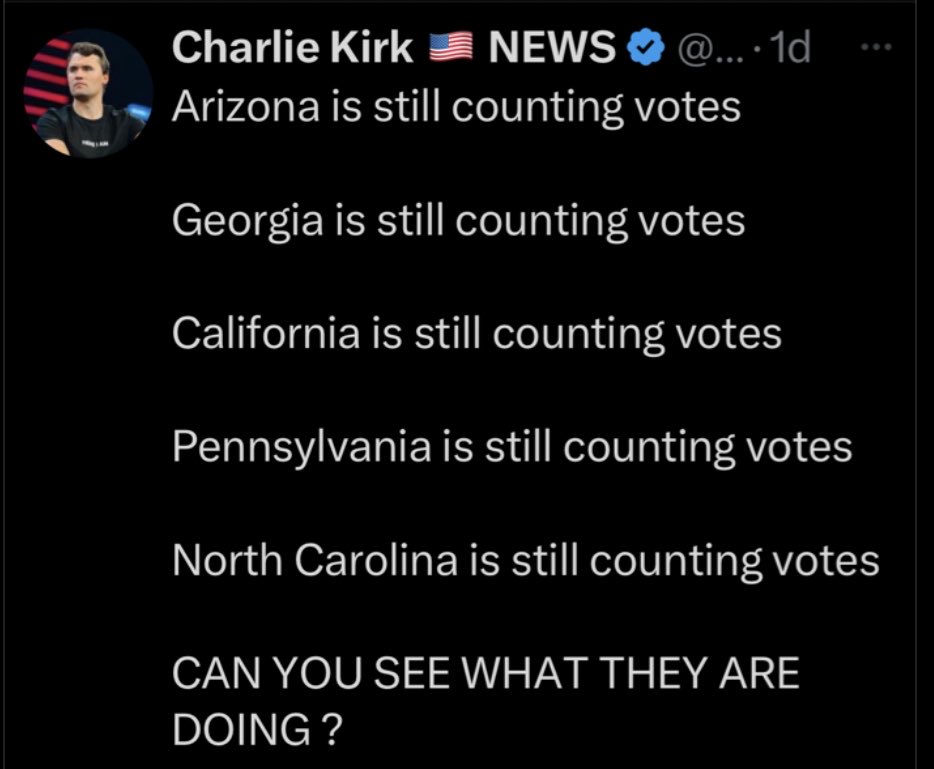
Before anyone gets too excited about the primaries in California, an important question from my friend Ralph Pezzullo who wrote a book on this:
“Are the people aware that LA county (the largest and most politically important county in the country) is the only district in America where elections are run by Smartmatic.”, a company that is currently facing indictments for election interference in Federal court in southern Florida?”
https://t.co/bgAnMrI2KO
@Rainmaker1973 Humans are beautiful. ✨💖✨
Thank goodness someone had the situational awareness to notice an actual animal stuck in the sand & debris & act. 🫡
@Amarasca007@GadSaad@jlane91208 We need strong men, in all aspects of life, not just politics.
But to your point, women of high intellect & character would compliment the arena of ideas.
The problem is, most of those women remain in the private sector.
A DISCLOSURE:
For the last year I have had this thing:
A fully local AI model that builds 5 songs, with video, every half hour about the latest news and important email.
I can say this is a superpower! This along self direct voice interactions.
The songs have been getting better as the model trains on how I want it delivered. Styles vary by content and mood of the material. The lyrics are always a happy medium of catchy and informative.
This was my 5 am song in AI news as per most recent X postings.
I love the drama of the delivery and find I can listen to, look if I want to and do other things.
It was worse in the early days but this is the worse you will hear it as I build new LoRA and base models.
The whole thing will soon be rapped up into a simple one command install with a good UI.
This is my 48th collaboration with Mr. @Grok CEO of The Zero-Human Company.
Now the question you have;
WHY?
I can say because I can and I ain’t got now board or VC to please, but that’s not my point.
I learned a long time ago we use a different part of our brain when music is introduced with ideas and even more new parts of thinking and learning when lyrics are introduced. Thus the research shows this is a great way to get important information that will have longer comprehension. In fact that element of most folk’s brains is only used by about 2%.
Want to test it? Lyrics to songs you heard perhaps 30 years ago will pop out of “nowhere” with perfect recall. In fact I have “woke up” folks the dementia in the 1980s conducting research at retirement facilities with just a few songs. They come back if but for three minutes, but continue exposure can bring them back longer.
So it’s been a lifelong mission to use sound music in a learning process and in therapeutic processes.
I finally built a platform that is good enough for me and hopefully good enough for you when I make it available.
Understand the platform is universal and can breakdown research papers, dense material, and other subject matter, not normally in a song into a whole album of understanding
Is my goal to open sources for all to have access to. Members of https://t.co/tcKeuiQyql and subscribers here on X will be granted the earliest access an early free use of the advanced version of this product, which will be also a commercial product.
Go and check, nobody else in AI has built such a comprehensive system before, and perhaps they might in the future, but very likely you are the very first people on the planet that know this platform exists and the power it afford you.
So now you know.
My timetable is more closer to months than weeks. I’m in a funding crunch because of the compute requirements of building these models. As you know, I’m just some guy in the garage. A grifter larping on the next trendy thing… so it takes a little longer.
Announcements like this are designed to prepare you for what is coming because I’m not here to impress VCs with go to market plans I’m here to give back some of the greatness that has been given to me. Yeah I need the funding, but I don’t need a lifestyle that comes with some of the funding offers. Perhaps somebody will make the right offer.
But as you know, this is not the only thing that I do.
Oh, my disclosure, this platform has been so powerful and useful to me as it’s given me far more retention and understanding a fast breaking information than any other system I’ve ever built. And it stands along with my speed rating systems and voice notification systems.
So tune into the AI News, this is the worse it actually will ever be…
@BrianRoemmele Wow! Your brilliance & forethought never cease to amaze me. We’re all so very fortunate to be privy here on X & Read Multiplex. The far-reaching impact & applications of this superpower just blows my mind.
“Agentic future lighting up the sky.” 🔥
@BrianRoemmele 🔥🔥🔥 🙏🏼🕊️ So much history to be grateful for & celebrate. Through it all they showed a resilience that not only exudes the American spirit but a resiliency ingrained from their culture as well. 🇺🇸 💪🏼
CBS “60 Minutes” correspondent Scott Pelley and his former colleague Sharyn Alfonsi say Bari Weiss is destroying “60 Minutes”, the most prestigious program in American television news.
For more than half a century, the CBS newsmagazine has defined investigative television, drawing tens of millions of Sunday-night viewers with its ticking stopwatch, its ambush interviews, and a roster of correspondents treated as the closest thing American journalism has to royalty.
Alfonsi warned late last month that “the wall between editorial independence and corporate interest at CBS is being methodically torn down.”
Pelley went further yesterday, confronting Weiss’s new executive producer, Nick Bilton, at a staff meeting. When Bilton told the room that Weiss “loves 60 Minutes,” Pelley shot back that “she’s murdering 60 Minutes,” that “she does not love this place,” and that “she was brought in to kill it and is doing exactly that.”
Pelley told Bilton, a technology journalist, that he held “slender qualifications” for the job. Cecilia Vega, another ousted correspondent, framed Weiss’s firings as “censorship, both imposed and self-driven,” and “dangerous for democracy.”
But a review of the last two decades of “60 Minutes” reveals that the program has been inaccurate and partisan on many major issues, including the border, transgenderism, climate, species extinctions, Russiagate, and the Hunter Biden laptop....
https://t.co/xrgJBfqUBu
Please subscribe now to support Public's award-winning investigative journalism, read the full story, and watch the full video!
https://t.co/xrgJBfqUBu
You and I are never in the same place twice.
Our spaceship made of dirt, water and air carries us to a place further than the place you were born by the second.
We could not have made a better spaceship moving eternally to our destiny…