We should all give thanks to the internet because as a student, we work with media every day, and I found that it is easy to get free electric book online. I do not need to go to the library to read through long and turgid books. via @wangwanzhi1
A few days ago, I heard a rumor "If people wanna to get a United States VISA, they need to show their password of social media account what they used in the past five years". If it is true, privacy setting becomes useless. via @wangwanzhi1
I think the way we define community can be drawn to space: "online' and "offline". Both of them are communities and we do participate in them by various self-presentations. via ^MengSengI
Digital exclusion is a worldwide issue that increases the exclusion in the real world because many people living in developing countries can't connect to the internet and they can't access important information such as extreme weather-climate warning. via ^MengSengI
The digital economy is a ‘specific mechanism of internal “capture” of larger pools of social and cultural knowledge.’ For example, the number of views that a Youtuber for a one minute video has may bring more economic benefits than an 8-hours worker via ^MengSengI
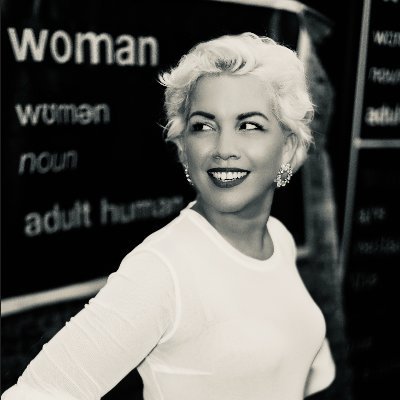
I think the way we define gender is constructed by the context of our society and culture. Gender can be seen as a performance that people do every day for others to define them as a 'man' or 'woman'. via ^MengSengI
The 'Am I pretty or ugly' video on Youtube shows an important issue that how females are defined by others as beautiful. When more and more these types of videos are shown online, it has huge influences on how females choose to customize their self-presentation. via ^MengSengI
I think "the appropriate way to communicate a romantic breakup" depends on how people consider their relationship. If it is usual, electronic media is okay. If it is very important, via non-electronic is the best choice. via ^MengSengI
I find that there are many 'spaces' are mediated with the Wi-Fi. For example, McDonald, or shopping mall. There are always many people spending their whole afternoon sitting on the bench, using free Wi-Fi on these places. via ^MengSengI
Selfies are one of the most common self-presentations on social media. But it breaks the boundary of privacy in some ways, because not everyone is willing to be in selfies. via ^MengSengI
Daniel Trottier uses the term "social media surveillance" to describe the phenomenon that people view others' self-presentations meanwhile their self-presentations are also exposed online. via ^MengSengI
Heated discussions happening in America atm around the end of net neutrality and its impact on the digital divide. John Oliver did a great segment a few years ago analysing this https://t.co/XKiMoodGzU via @Yin_Ada16
Wondering if anybody else can relate - I've found myself sharing a lot less content on my social media since starting this course. Possibly stemming from a hyper awareness of the reasons that made me want to share in the first place via @Yin_Ada16
week 11: as a MECO student, it is great to accept the fact that so much of our effort put online is free and will be free for a long time. Saying that, I do think it is fantastic how we can have even the possibility to work online. via @ZiyuJiang1
week 9/10 : Personally, I think these two topics are worth a lot more attention and resources simply for their ethical importance and the potential damage they can do to such wide range of us, essentially everyone. via @ZiyuJiang1
- algarithium and potentially influencing the type of content existing so it was interesting to see how it plays out in a range of different forms. via @ZiyuJiang1