🚨BREAKING: President Trump just said Karoline Leavitt was such a good press secretary he does not even know if he wants to hire another one.😂👏🏾
Trump told Fox News he is “sort of doing a lot of press myself” and that someone asked him why he even needs a press secretary. He called Leavitt “FANTASTIC” and said she is “a PROBLEM because she was so good.” His exact words: “Who the hell do you put in there?” He also joked that she loves the baby more than she loves him.
Leavitt left the White House on August 27 to spend more time with her family. The podium has sat mostly empty of a dedicated press secretary since then. The White House reportedly hopes to name someone by the end of the year, but Trump is in no rush.
Nobody does it better than 47 himself, Leavitt is a close second.😂👏🏾bKaroline set a standard that is almost impossible to match.
In Oregon's Malheur National Forest, a single honey fungus threads through the soil across about 2,385 acres, and scientists estimate it is somewhere between 1,900 and 8,650 years old. Almost none of it ever shows. The mushrooms that push up in autumn are only the fruit of a life lived underground, in the dark, among roots. Most real growth looks like this: years of quiet reaching that nobody sees, and then one season when it finally surfaces.
We really are in a (temporary?) place where a combination of expertise and being able to work with AI allows people to do incredible things. It is no coincidence that people proving Millennium Problems have all been great mathematicians, the models can't (yet) do it on their own
The Hardness Principle: Why Our Universe May Need to Be Hard to Exist
Here's a strange idea worth thinking about: the laws of physics might be shaped by what they won't let us compute. Maybe the universe isn't just hard. Maybe it has to be hard to exist at all.
The Puzzle Behind the Puzzle
Computer science has a famous unsolved question called P vs NP. In plain terms: if an answer is easy to check, is it also easy to find? A finished Sudoku takes seconds to verify, but solving a hard one from scratch can take far longer. Most experts believe some problems really are fundamentally harder to solve than to check. That belief, P ≠ NP, is part of what keeps your bank account and the internet secure.
P ≠ NP is a math question, the same in every possible universe. But physics decides something else: whether a universe offers a shortcut, some exotic process that solves the hardest problems anyway.
So physicists started asking what the laws of nature would have to look like to build a wall with no shortcuts. The answer looks a lot like the universe we live in.
Seven Bricks in the Wall
1. Quantum mechanics is perfectly linear. Physicists Daniel Abrams and Seth Lloyd showed that even a tiny bend in that linearity would let computers solve the hardest problems quickly. Precise experiments find no bend.
2. The magic number is exactly 2. In quantum mechanics, the odds of an outcome come from squaring a quantity called the amplitude. Scott Aaronson showed that if the exponent were anything other than exactly 2, computers could do things that should be impossible. Nature picked 2.
3. Cause comes before effect. With loops in time, a computer could send its answer back to itself before it started working. Our universe doesn't appear to allow time loops.
4. There's a cosmic speed limit. Nothing outruns light, so no computer can gather information from everywhere at once.
5. Space can hold only so much. Every region of space has a maximum amount of information it can contain, which rules out machines that cheat with infinitely precise numbers.
6. Every step costs energy. No device can do infinitely many steps in a finite time. Nature charges for every operation.
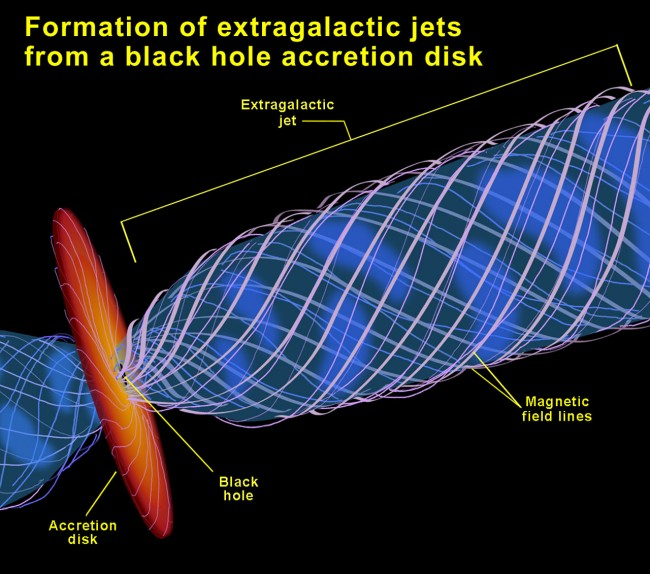
7. Even black holes close their loopholes. Einstein's equations allow strange spacetimes near rotating black holes where a computer could seemingly run forever in a finite time. Every attempt to make them physically real runs into instability or destructive energies.
Take away almost any one of these bricks, and the wall cracks. Our universe has every one of them, and in several cases it sits exactly on the line.
Nature Keeps Getting Stuck
Watch nature tackle a hard problem and you see the wall in action. Stretch a soap film between pins and it pulls itself into a network connecting them, often close to the shortest possible. But when Aaronson tried it with more pins, the soap often settled for a good network rather than the best one. It got stuck, just as a computer program does. Nature is brilliant at good answers. It just can't seem to shortcut its way to the best ones for the hardest problems.
Why Hard Might Mean Possible
Here's where it gets deeper. The features that would make hard problems easy tend to be the same ones that would make a universe fall apart.
Shortcuts and paradoxes come as a package. Around 1990, physicists Nicolas Gisin and Joseph Polchinski showed that nonlinear quantum mechanics, one of the cracks in the wall, would also allow faster-than-light signaling. That opens the door to messages into your own past and tangled cause and effect. Time loops are even more telling: the only way to keep one from producing a paradox, like killing your own grandfather, is for nature to find a self-consistent outcome. Aaronson and John Watrous showed that finding those outcomes amounts to solving extremely hard problems. A universe with time loops would have to solve hard problems just to stay consistent.
Hardness may give time its direction. Breaking an egg is easy. Unbreaking it is effectively impossible. That one-way quality, easy forward and practically impossible backward, mirrors the problems behind encryption. It's also what lets a universe have memory, records and history: footprints stay in the sand, starlight from long ago still reaches us, and you remember yesterday but not tomorrow.
Black holes may depend on it. In 2013, physicists Daniel Harlow and Patrick Hayden found that the universe seems to avoid contradicting itself near black holes because decoding their radiation is too hard to finish in time. If that's right, hardness isn't just a feature of reality. It's part of what holds it together.
Effort may be what makes complexity possible. Evolution, learning and discovery all work through trial and error in a world where good answers have to be earned. In a universe where every problem was instantly solvable, it's not clear that slow, layered things like life and minds would ever build up.
Coincidence or Clue?
Some caution is in order. We have only one universe to study, and "it must be this way because we're here" can explain almost anything. Some of these links are proven, like time loops requiring hard problems to be solved and nonlinearity enabling signaling. Others, like hardness and the arrow of time, are suggestive analogies.
But the pattern is hard to ignore. Every time physicists try to remove the wall, something essential breaks along with it: causality, consistency, a sensible arrow of time. Hardness, cause and effect, and a universe that makes sense seem to come as a bundle.
Our universe lets us recognize brilliant answers much more easily than it lets us find them. That gap may be why we have puzzles worth solving, secrets worth keeping and discoveries that take real effort. And it may be why there's a universe here at all.
So what do you think: is the universe hard by accident, or hard because it has to be?
@Styx666Official One possible answer is hiding in our own recent history: in how fast intelligence seems to change once it gets going, and in where that change might lead.
In 2000, two University of Chicago neuroscientists recorded single neurons in the song system of sleeping zebra finches. While the birds slept, those neurons fired in the same precise patterns they used to sing by day, a silent replay of the song with no sound at all. The researchers proposed that this rehearsal in the dark helps songbirds refine what they sing. I think of it when a sentence refuses to come right at night. Some of the practice keeps going after you put the pen down.