Very gay. Very bad @ Twitter. YIMBY-pilled Castro resident. Work in higher ed but opine on all sorts of stupid things. The geriatric-est of millennials.
GRAND RIVER, MN - Residents Rally Against New Dada Center
"No one knows what the hell it is. It's not Modernist. It's not Brutalist. It's always making weird noises."
"We don't want our children growing up in an environment full of semiotic deconstruction. Who asked for this?"
@jonlovett I feel like all the conversations about who’s a ‘real Angelino’ or ‘real New Yorker’ are basically the way progressives allow themselves to indulge in the same gross nationalistic impulses as MAGA Republicans.
I'm glad that the author of "Rent Control Is Fine, Actually" calls themself Unlearning Economics, bc it's good to just state things clearly, such as the open animosity that many left economic populists have for the field of economics and economists themselves.
Economists aren't gods, and economics isn't a divine truth, but economists are good--better than most--at something critical for making public policy: They're good at identifying tradeoffs. "Rents are too high, so freeze them" is compelling politics. But in the absence of other pro-supply policies, if you make it illegal to increase rents, landlords will stop upgrading units and convert them to condos, which reduces the supply of units for rent, reduces mobility, and drives up rents for everybody else.
The left econ populists have some clear, and clearly stated, policy ideas:
- Rents are too high, so freeze them.
- Electricity is expensive, so stop rate increases.
- Homes are too expensive, so ban institutional investors.
- Power prices are rising, so ban data center construction.
... All these policies feel like solutions because they're brisk, they name enemies, and they take on the most visible source of frustration. But they are much better as villain-naming exercises than they are as a complete public policy. On their own, each creates other problems: less housing built, less clean electricity built, abdicating energy policy by encouraging AI firms to build data centers abroad in unsavory countries with more emissions, etc.
I can't think of a single economic populist idea that wouldn't be helped with a little dose of economics, which is why it's troubling when I see the left participating in, and even celebrating, the great unlearning of economics.
A terrible decision bad for almost everyone. Six quick reasons why:
1. Bad for Intel's long-term viability, as politics, not commercial considerations, increasingly drive its decisions. (SOEs are notoriously slow, bloated, & unproductive.) Foreign govts might also target it.
@mcmill2008@plathiandc In San Francisco, we would probably refer to them as “people experiencing transitlessness” so as not to stigmatize them for their lack of transit.
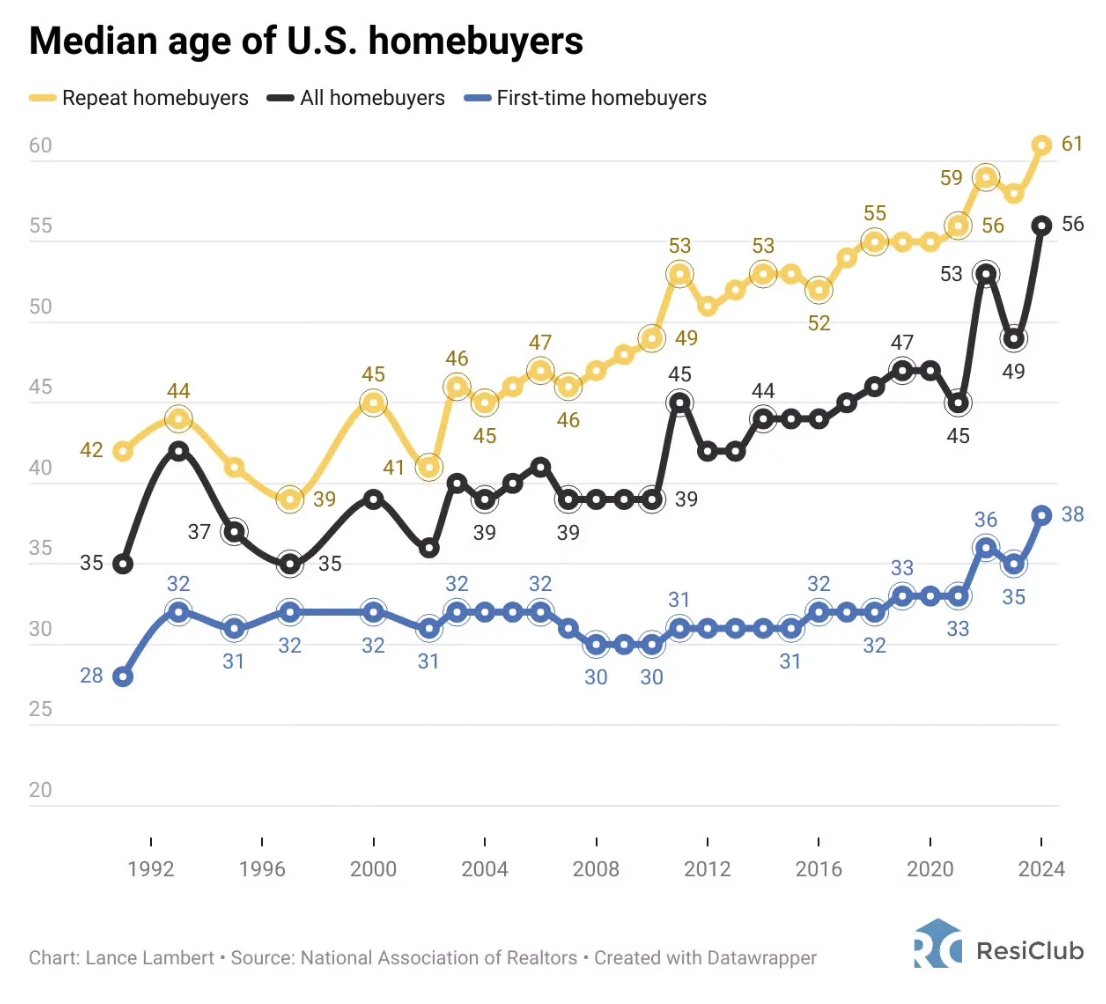
New newsletter: HOW THE HOUSING MARKET FOR YOUNG PEOPLE BECAME A 'TOTAL DISASTER'
In 1991, the median age of first-time homebuyers was 28. Now it’s 38. This is the hardest time for young people (defined, generously, up to 40) to buy their first home in modern history.
The vanishing dream of 20- and 30-something homeownership isn't just an economic phenomenon. It's becoming a political centerpiece. Housing affordability is for voters under 40 what protecting Social Security is for voters over 65.
The cities, states, and national parties that figure out how to talk about and ultimately solve this mess to restore housing affordability to Americans under 40 will have a major advantage in the next few years.
As an American, I am absolutely never again allowed to get this invested in ESC before the finals, because I have NO ONE to wail / complain / cry / rage to about some of these semifinals results.
“No government—regardless of which party is in power—should dictate what private universities can teach, whom they can admit and hire, and which areas of study and inquiry they can pursue.” - President Alan Garber https://t.co/6cQQpcJVTd
“America would be better off if more people worked in manufacturing.”
• 80% of Americans agree
• 20% disagree
“I would be better off if I worked in a factory.”
• 25% of Americans agree
• 73% disagree
• 2% currently work in a factory
👉🏻 https://t.co/fq1rItVKC2