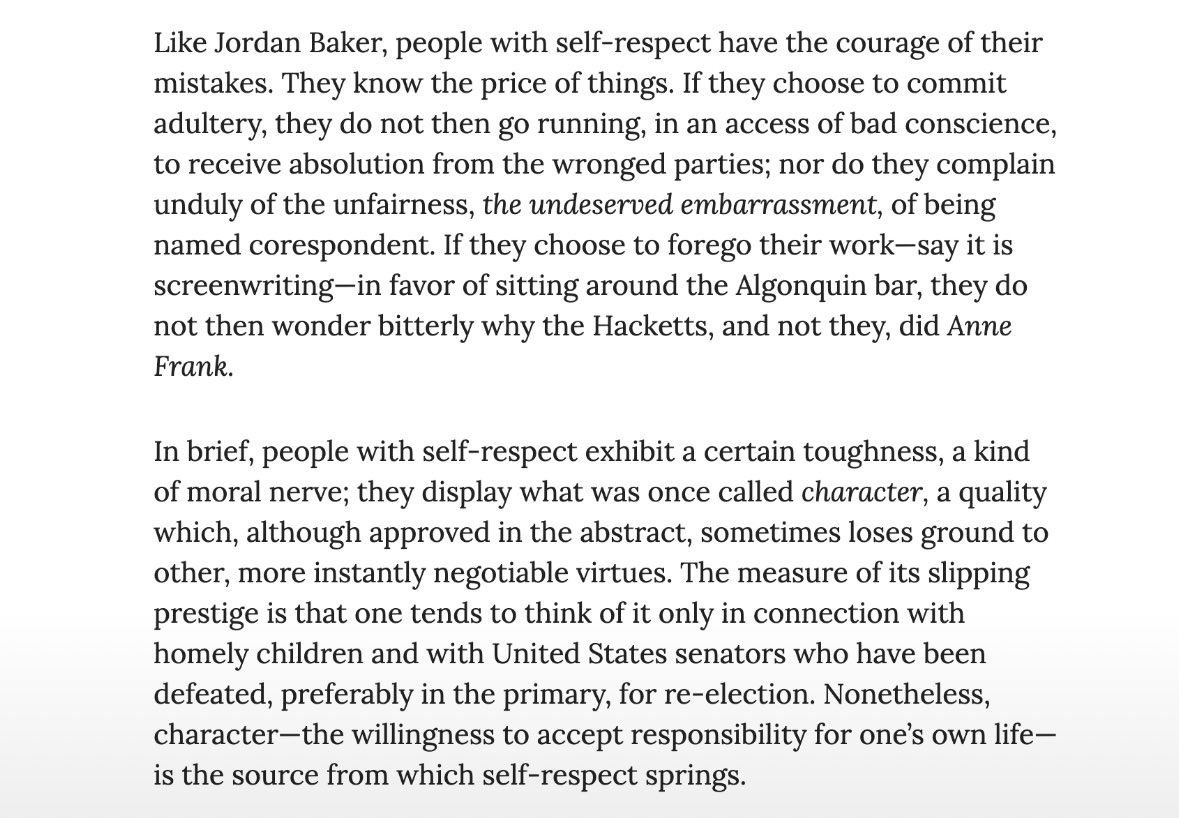
An excerpt below from the brilliant ‘Personality Syndromes’ paper by @JonathanShedler
(reference https://t.co/T8BwVxUhHX )
I think about this often, and it really gets to the heart of what it’s all about. I’m in the infancy of my career in this field,but this is central 4me.
Why did we evolve to have ‘mental disorders’? I’m happy to announce that my first book, based on ten years of research, will be released in Feb 2027! Check it out, pre-order, and glimpse a future where we better understand and support mental health conditions.
In 1689, an Oxford physician described an eighteen-year-old girl who refused to eat; she looked 'like a skeleton only clad with skin'. In early-2010s Los Angeles, a woman who had spent her childhood breaking into neighbours' houses for the thrill of it – with no guilt and no remorse – was counselling others through their emotional problems. And in north-eastern Siberia, where winter temperatures drop to minus seventy-one degrees, an old man could recognise every one of his community's 2,600 reindeer and recite their parentage, medical history and personality. These stories are different faces of the same puzzle: the vast variety of human individuality. My book sets out to put that puzzle together.
So much of James Caan’s character in Thief (1981) is shaped by the fact that he spent the vast majority of his adult life in prison. This informs everything about him and his outlook on life, as Michael Mann explains:
What’s so fascinating about the character is that he’s a wild child. He was plucked out of society when he was 18 and dropped back into it when he was about 31, so he doesn’t know how to work a payphone, how to ask a woman out, what music is current, so that made him a very interesting agent through whom to view life in 1980.
Hence the kind of mechanistic approach because the human impulse – I don’t want to commit suicide, I want to continue to exist. I want my life to be together.
What form should it take? I have no idea. I’m locked out of society. The only thing I have available to me are magazines so that’s what I’ll use.
https://t.co/2CUECWMBD3
I’m thankful for Heat. On this beautiful Thanksgiving, I don’t have any issue stating the obvious: I’m thankful for Michael Mann, Al Pacino, Robert De Niro & Val Kilmer. I pray to God the sequel to this masterpiece is good - I pray we don’t get a Gladiator 2 on our hands. But regardless of what happens next, if we’re talking about things we’re thankful for, I’m thankful this masterpiece exists.
This scene is hilarious, but this is a classic Scorsese moment when he is foreshadowing Jimmy Hoffa's death. Jimmy is about to sleep with the fishes. It's hilarious and disturbing at the same time. Brilliant.
Forget the phones - one of the greatest psychosocial losses in recent decades has been the gradual dissipation of ritual (related to religious attendance; which has many benefits beyond ritual too, of course)
The beauty of Nancy McWilliams writing is how real it is, people aren’t mechanistic and behave and think in coherent ways, there is contradiction and incongruity between thinking and behaviour, there is performance and theatre about way we carry on day to day, and we often act in ways contrary to our best interests.
McWilliams and the many literary icons over the years got this feeling of ‘realness’ (if that’s a word haha!)
This depth is lacking in some ‘therapies’.
One of the best scenes in cinematic history. When Michael lights Enzo's cigarette he realises his hands are steady, that’s when it occurred to him that he can cope with this life, he can lead the family.
Brad Pitt, David Fincher and Quentin Tarantino sit down for a roundtable discussion about THE FURTHER MIS-ADVENTURES OF CLIFF BOOTH.
Coming to Netflix November 30.
Psychiatrists and psychologists will be mining this movie for decades for their teaching.
Every therapist worth their salt has pulled an "Amanda" here on their Billy patient. (not sharing politics, but intentionally provoking).
Breaking past prepared phrases so important.
“In psychoanalysis, when approaching the unconscious—that is, what we do not know—we, patient and analyst alike, are certain to be disturbed. In every consulting-room, there ought to be two rather frightened people: the patient and the psychoanalyst. If they are not both frightened, one wonders why they are bothering to find out what everyone knows.”
Wilfred R. Bion, The Tavistock Seminars