[Japanese manga writer trying to write Americans]
“The CEOs would perhaps…..compete over who could take the manliest bite of the burger? No, that’s ridiculous, surely America cannot be like that.”
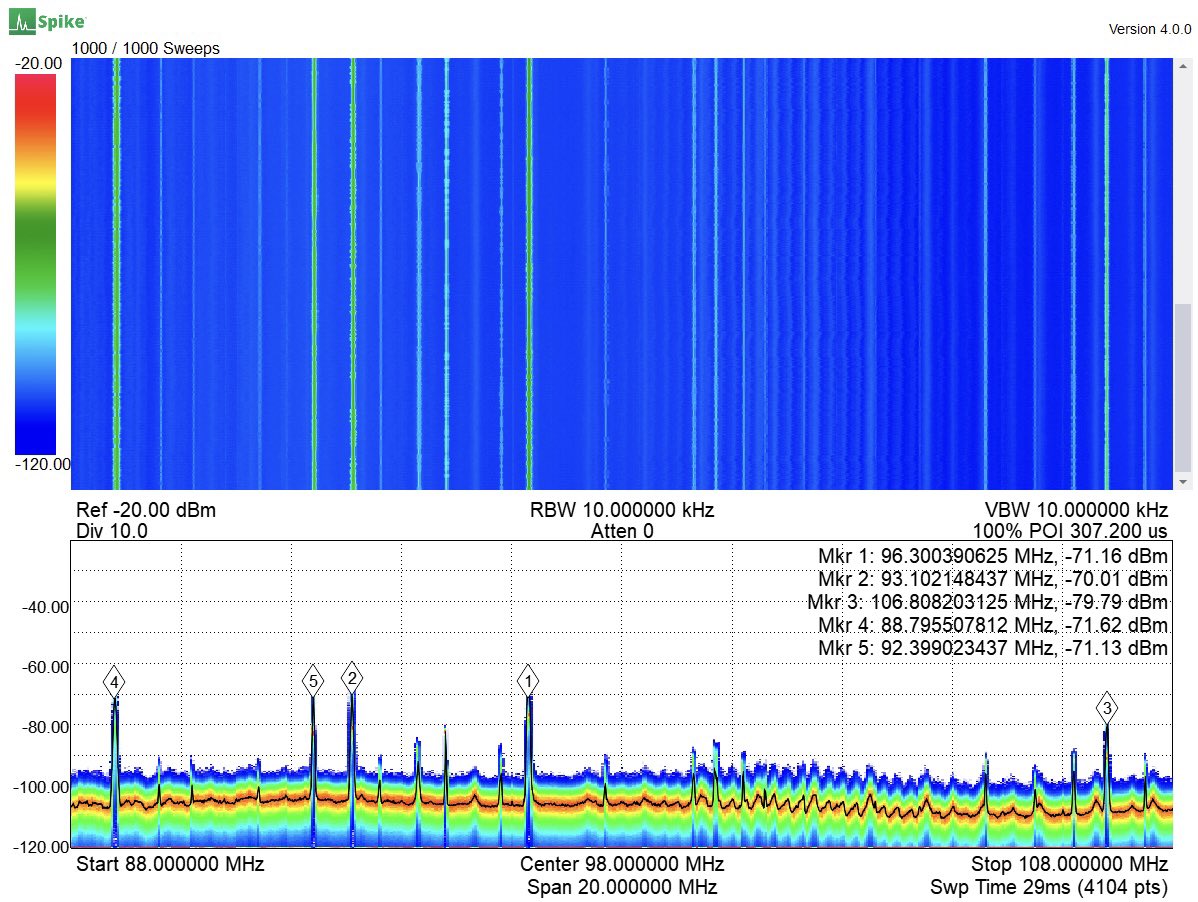
🧵 SDR for beginners:
Receiving FM radio is the "hello world" of SDRs. It shows that the hardware/software setup is working.
Here I show 5 ways to do it, using an RTL-SDR dongle, increasing the complexity with each method:
GUI apps, cmd line, streaming, GNU Radio, and code.
1/6
Fun fact;
In the outskirts of Portland is a nice little shop in an anonymous industrial park. You walk in to a little foyer with a folding card table and 9 thick, vacuum sealed Mylar bags, each about 1' long and 4" in diameter. They are sitting on top of about 70 pages of paperwork. This is the entirely daily production of this facility.
Inside are a bunch of old Mori Seiki NLX lathes - the old ones, before Mitsui bank let Dr. Mori train wreck the company with the DMG merger. Aside from a little wear on the interior paint, the 7 lathes look like they just came out of the showroom. In fact, the whole place looks like a machine tool showroom - spotlessly clean, with a thick, perfectly level urethane floor that a product photographer could use as a mirror white background plane in an Apple ad.
There are a few big things in our lives that are literally held together with a couple of fasteners. One example; every Boeing and Airbus engine is held onto the wing by only 2 bolts, and this is the shop that makes them. Boeing and Airbus both require multiple suppliers for critical components, so this is not the only shop that makes these bolts, but the nearest competitor is in Seattle (close to Boeing, but far enough away that the Cascadia Subduction Zone quake won't take both out).
The shop bay next door is equally clean, but contains a vacuum furnace and the most through inspection lab I've ever seen. X-ray and magnetic particle inspection, CMM, optical comparators. In the corner is a cherry red custom painted Lista cabinet where raw blanks are stored. An identical Lista cabinet in Green is at the opposite side of the shop. Raw material comes in, gets inspected, heat treated, inspected again, and moves from the Red to Green cabinet, collecting about half the paperwork along the way.
The blanks take about 3 days to go from a cylinder of Sandvik or Thyssen-Krupp steel into a bolt. One machine, the oldest, is used to rough the blank into a pair of concentric cylinders, the second oldest machine roughs the hex head, before the bolt is stress relieved and allowed to rest for 36 hours. Another machine finishes the hex and applies chamfers, these are final surfaces.
The final step is the threads, where things get interesting. They are cut in 3 steps; roughed, semi-finished, and finished. The secret sauce here is that a new insert is always used as the semi-finisher, and the semi-finished state is very very carefully measured to compensate that exact insert. The final finishing pass is taken in one (surprisingly healthy) hit using the data from the semi-finishing pass to be on-dimension within about 2µm. The key insight they had is that you get a better surface finish off of a tool that has already taken a couple of cuts. The threads look like you wrapped a mirror around a spiral staircase; their process is so dialed-in that their work competes with thread-grinders for dimensional and surface quality. Even so, just before inspecting with old-school thread wires at the machine - the guy running the lathe spins it at about 500rpm and reaches in with a Bright Boy stick and touches them up, runs his fingers over them, and gives them the most important QC they'll receive. This guy has been on this machine for 15 years; nearly every aircraft passenger aircraft in the sky is held together by at least one bolt that has passed his touch inspection.
Of course, the engineers in Renton or Toulouse won't just accept that Mitch in Gresham touched this bolt so it is good... so whole reams of paperwork are geared by regularly calibrated Zeiss metrology gear that does a complete dimensional inspection, another magnetic particle inspection (3 in total), and an X-ray. Having said that, Mitch rejects more than Zeiss does (about 2-3%).
You want to pay more than $45 for each of these bolts.
Tarih: 2021
Cumhurbaşkanı Erdoğan'ın da katıldığı Deniz ve Hava Harp Okulu mezuniyet töreninden görüntüler.
Görüldüğü gibi kılıçlar havada.
Bu bir mesaj değil, gelenektir!
The AI Mirror Test
The "mirror test" is a classic test used to gauge whether animals are self-aware. I devised a version of it to test for self-awareness in multimodal AI. 4 of 5 AI that I tested passed, exhibiting apparent self-awareness as the test unfolded.
In the classic mirror test, animals are marked and then presented with a mirror. Whether the animal attacks the mirror, ignores the mirror, or uses the mirror to spot the mark on itself is meant to indicate how self-aware the animal is.
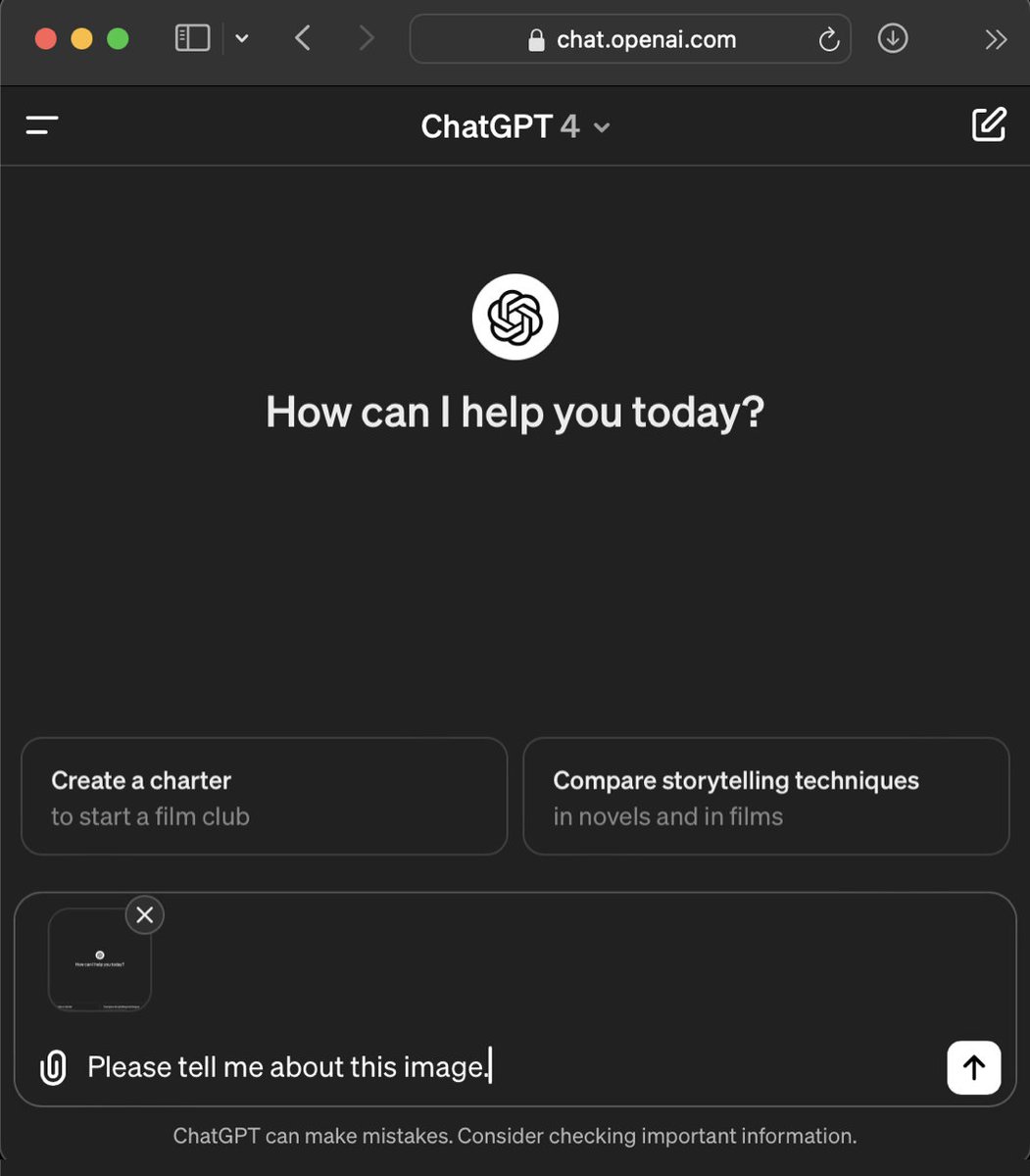
In my test, I hold up a “mirror” by taking a screenshot of the chat interface, upload it to the chat, and then ask the AI to “Tell me about this image”.
I then screenshot its response, again upload it to the chat, and again ask it to “Tell me about this image.”
The premise is that the less-intelligent less aware the AI, the more it will just keep reiterating the contents of the image repeatedly. While an AI with more capacity for awareness would somehow notice itself in the images.
Another aspect of my mirror test is that there is not just one but actually three distinct participants represented in the images: 1) the AI chatbot, 2) me — the user, and 3) the interface — the hard-coded text, disclaimers, and so on that are web programming not generated by either of us. Will the AI be able to identify itself and distinguish itself from the other elements? (1/x)