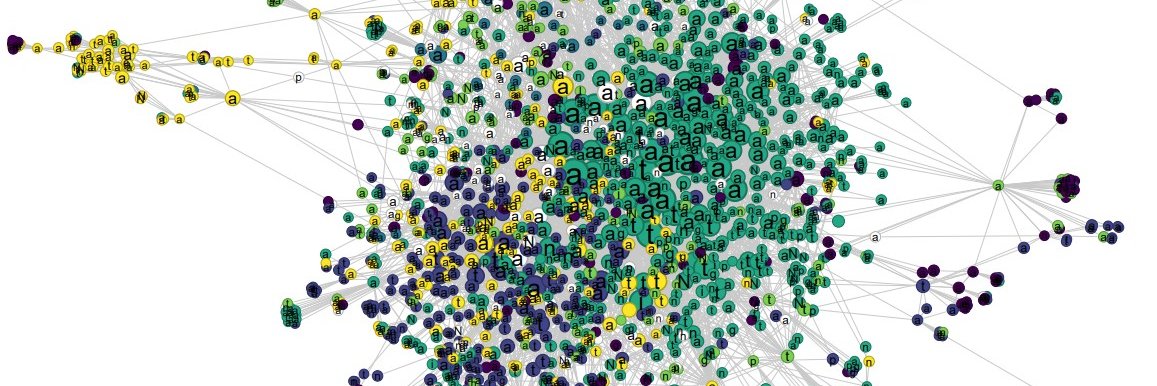
Are you curious about what’s going on behind closed doors among the most powerful people in China and Russia? So do we! Our project examines how our knowledge of politics in authoritarian regimes is generated – and what role country experts play: https://t.co/aFgEmyWFfw
Are you visiting #ceecon26 this week? Our PI @fbkeller will argue that Europe plays a more central role in the #Russia expert community and #network than among #ChinaWatchers. Make sure to drop by and conncect! https://t.co/Sq8maIhiXF
Planning meeting for our 2nd year: from papers, milestones (launching our panel survey) to conferences (organizing a #polnet#LLM workshop for @EPSS), we mapped it all out in this timeline. Stay tuned for details and calls for participation.
How do networks of informants and experts shape our knowledge of the world? We held a Full Paper Panel at the American Political Science Association @APSAtweets Annual Meeting in Boston. 👇
We compared the social networks of Russia and China experts, examined how the actions of governments restrain knowledge production on Chinese politics, and showed how different informants provide a different view of the same object. 👇
What does the new academic year bring for our project? Last Week we held a kick-off meeting to further plan our research: We will launch our panel survey and start extracting social media data to further detect networks among China and Russia experts.
Who are the Russia and China experts? At the American Sociological Association Annual Conference #ASA2026 in #NewYork we got the chance to present the first findings from our autpol project with Arthur McFarlane and @m_rochlitz. 👇
@m_rochlitz The latter may be due to an exodus of experts from the field after the collapse of the Soviet Union, when #Russia temporarily ceased to be an important security threat. 👇
We’re happy to announce that we managed to organize not just one but two China-themed panels at the European Political Science Society 2026 Annual Conference in Belfast! If you’re at EPSS, join us back-to-back on Friday, June 19th, and learn more about the exiting China research!
Meet the people behind the project: Sophia Lindenmann studies Eastern European Studies and German Language and Literature. She is a student assistant at the University of Bern and is intrested in examining how knowledge about authoritarian regimes is produced and received.
Meet the people behind the project: @LinusWalpen is a student assistant at the University of Bern. He studies Eastern European Studies and History. With his journalistic background, he is especially intrested in how information about regimes is shared.
Meet the people behind the project: Ivan Fomichev is a postdoctoral researcher at the University of Bern. He studies how political information shapes citizens’ behavior and attitudes in authoritarian regimes, with a focus on Russia.