If the US leaves Israel and the Gulf to do its "dirty work," that will trigger a massive chain reaction.
Because if Washington walks away, Gulf states may be pushed into the arms of the Chinese Communist Party.
@mdubowitz joins me on EylON the Record
German Foreign Minister
@JoWadephul condemned recent remarks by Turkish Foreign Minister Hakan Fidan, following an appeal by Israeli Foreign Minister Gideon Sa'ar.
"The Turkish foreign minister's recent statements against Israel are entirely unacceptable. Israel continues to face an ongoing security threat in the region, and it has both the right and the responsibility to defend its citizens".
Why don’t world leaders care?
I���m the last person who’d defend Ben Gvir, but when he sneezes, every world leader has an opinion. Here Turkey’s foreign minister goes full Hitler and the same leaders are silent.
The Turkish Foreign Minister goes full-blown Hitler on Israel:
"These people have become a burden that humanity can no longer bear. With these policies and this mindset, humanity cannot carry this burden any longer."
German Foreign Minister
@JoWadephul condemned recent remarks by Turkish Foreign Minister Hakan Fidan, following an appeal by Israeli Foreign Minister Gideon Sa'ar.
"The Turkish foreign minister's recent statements against Israel are entirely unacceptable. Israel continues to face an ongoing security threat in the region, and it has both the right and the responsibility to defend its citizens".
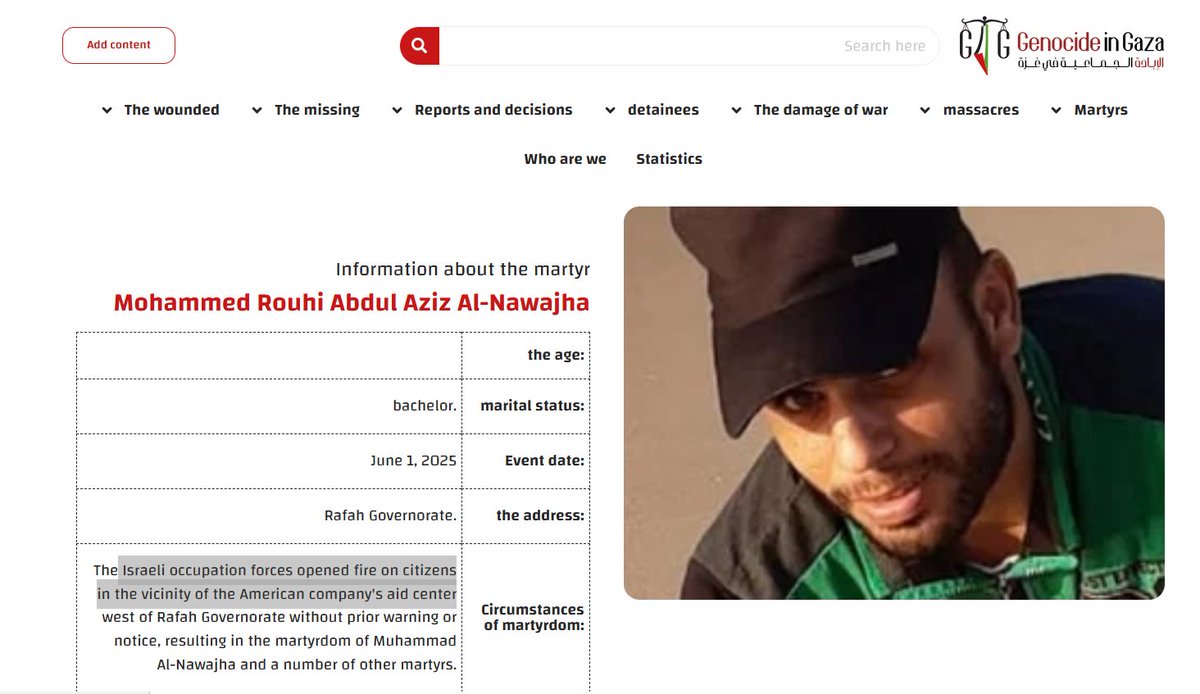
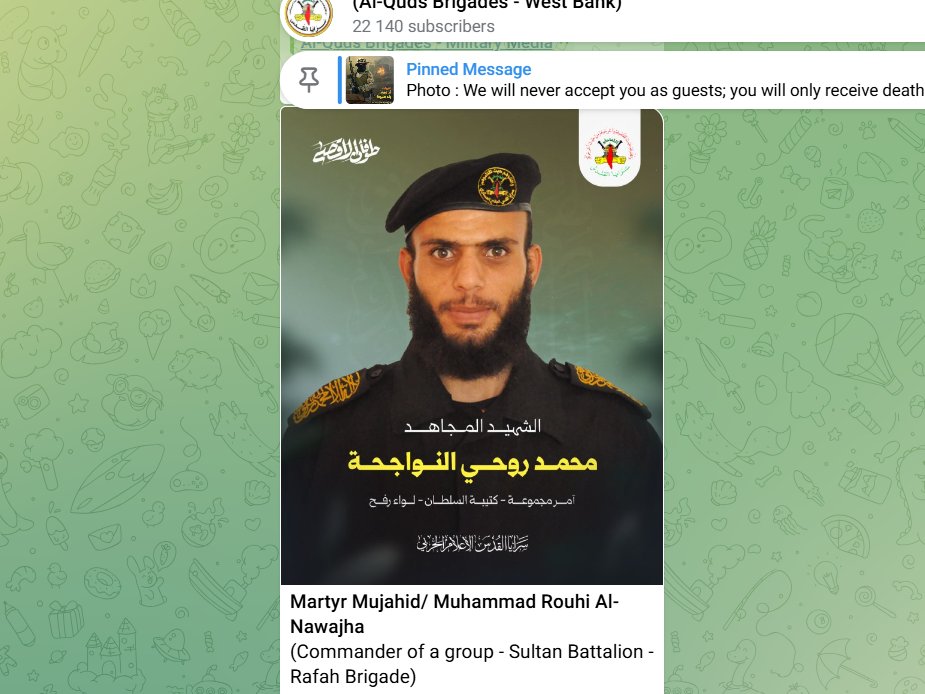
Follow @AdinHaykin1 for some excellent finds of how many “innocent Gazan journalist-nurse-aid seekers” as reported in real time were Hamas or Islamic Jihad terrorists after all.
הצהרות על אי ציות לפסקי דין של בית המשפט העליון פוגעות בליבת האחדות בעם. כבר הבהרתי, ואחזור על זה שוב ושוב - אי ציות לפסק דין של בית משפט הוא קו אדום שאסור לחצות אותו בשום פנים ואופן.
אני לא מכיר את הרקע לפולמוס סביב הרשות השניה, וזה עושה לי כאב ראש להבין מי נגד מי. אני גם לא יודע אם הפסיקה של בג״ץ הייתה נכונה או לא. קטונתי.
אבל דבר אחד ברור:
אף אחד לא ישקיע במדינה בה יש ספק אם הממשלה תציית לפסקי בית המשפט, קרי -- תקיים את החוק.
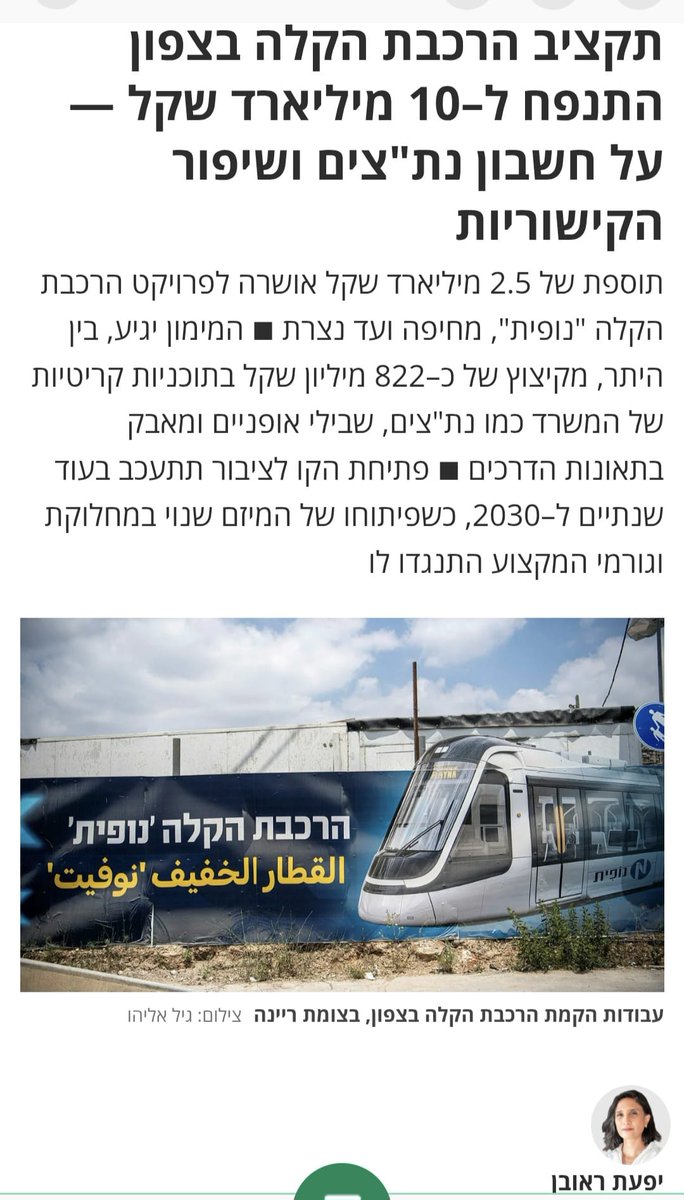
תקציב הרכבת הקלה בצפון (חיפה-נצרת) התנפח ל-10 מיליארד שקל - על חשבון נת"צי�� ושיפור הקישוריות. המימון יגיע, בין היתר, מקיצוץ של כ-822 מיליון שקל בתוכניות קריטיות של משרד התחבורה כמו הוספת נת"צים, סלילת שבילי אופניים, תכנון מתחמי תחבורה ומאבק בתאונות הדרכים.
ברשימת התוכניות שקוצצו יש גם סעיף של "סל איסוף מידע" בסך 30 מיליון שקל - מדובר בסקר שמשרד התחבורה אמור לערוך מדי כמה שנים, הבוחן נתוני טלפונים סלולריים של משתמשי התחבורה הציבורית. הסקר משמש מקור מידע למתכנני התחבורה במשרד, ולפיו אפשר לדעת, למשל, היכן נדרש שיפור בקישוריות בין כלי התחבורה. כיום המשרד נשען על תוצאותיו של סקר מיושן מ-2019! סקר חדש אמנם תוכנן לצאת לדרך השנה, 2026 - אך הוא בוטל לחלוטין.
ובמשרד התחבורה אין מי שיילחם על שימור תקציבים לתוכניות שהן חיוניות לצמיחה הכלכלית של ישראל.
הקמת קו "נופית" הייתה שנויה במחלוקת, ואליו התנגדו גורמי מקצוע עקב אי כדאיות כלכלית, כשבמקומו הוצע קו אוטובוסים מהירים (BRT). הפרויקט מצוי בעיכוב, ובמקום ב-2028, בחברת חוצה ישראל אומרים כי הקו צפוי להיפתח ב-2030 @TheMarker
https://t.co/kKuMV9XvTI
@hebrish זו פשוט עובדה שקיום משק מתפקד דורש אמון בשלטון החוק כדבר בלתי ניתן לערעור. למשקיעים ששוקלים אם יקבלו את כספם בחזרה לא אכפת מי צודק במקרה פרטני כזה או אחר. הם רוצים לדעת שהרשויות מכבדות את פסקות בית המשפט כי זו המשמעות של שלטון החוק.
The world does not realize how close Hamas brought us to Armageddon on October 7, 2023.
It intended to force Hezbollah to commit to a full-scale invasion of Israel from Lebanon, and then to trigger incursions from Syria and Jordan.
With Israel overrun by enemy forces on four fronts, and videos of barbaric atrocities inspiring millions around the world, a West Bank uprising would have erupted the same day - and Iran, the Houthis, and the Iraqi militias would undoubtedly have joined ballistic missile fire.
On October 7, 2023, the threat was existential. And every day Israel has fought since then has been to prevent that existential threat from rearing its head.
One of the enduring mysteries of October 7 is why Hezbollah’s leader, Hassan Nasrallah, chose not to join in. When Hamas’s Nukhba forces flooded into the south, Hezbollah’s Radwan forces were poised for a similar push in the north—but the order never came.
A newly published set of internal Hezbollah documents, analyzed by researchers at the Amit Institute for Terrorism and Intelligence Research, sheds light on years of coordination between the two Iranian tentacles in the run-up to the attack and why Nasrallah ultimately didn’t pull the trigger.
The alliance faced its first real test two years earlier, during the May 2021 conflict, Operation Guardian of the Walls. Internal Hamas documents reveal that during the operation, a joint intelligence war room was established in Beirut, staffed by Hamas, Hezbollah and the IRGC. Through this channel, Hezbollah supplied Hamas with intelligence on request. Khaled Ghanem, then head of Hamas’s overseas military intelligence, wrote in an internal report that the war room was operational from the second day of fighting through the day after it ended, and that Hamas had requested—and received—information on Israeli military deployments, aerial intelligence activity and fighter jet movements.
That wasn’t the only intelligence Hezbollah seemingly had access to.
One of the most striking disclosures involves the Israeli military’s “Metro” operation—a deception designed to lure Hamas fighters into their tunnel network by making them believe a ground invasion was imminent so Israeli forces could then strike underground. According to the same Hamas intelligence report, it was Hezbollah that tipped Hamas off, roughly two hours before the ground assault began, that the operation wasn’t a real invasion at all but a ploy to draw fighters into the open and build a target bank—effectively exposing the Israeli bluff before it worked. A senior Israeli security official who helped command the operation later confirmed to Army Radio that Hezbollah did indeed play a significant role in unraveling that ruse.
The documents also reveal that Hezbollah helped Hamas avoid the targeted killing of Ahmad Ghandour, commander of the northern Gaza brigade (later killed during the current war), by detecting a buildup of Israeli intelligence surveillance over his location in the Jabaliya refugee camp and warning Hamas roughly two hours in advance that an assassination attempt on a senior figure appeared imminent.
Despite this support—along with tacit approval for Palestinian factions in Lebanon to fire rockets into Israel from Lebanese territory—Hamas came away from the operation disappointed. In one exchange, a senior Hamas official abroad pressed Hezbollah’s response coordinator to push for greater involvement in order to tie down Israeli forces in the north, complaining that Hezbollah’s support so far had been limited.
A year later, in May 2022, a pivotal meeting took place in Beirut: senior Hamas officials sat down with Nasrallah and a senior Iranian Revolutionary Guard general. The Hamas delegation argued conditions were ripe for expanding the conflict with Israel into a full-scale, multi-front campaign—pointing to a wave of terror attacks then sweeping the West Bank and Israeli cities, Israel’s fragile political standing at the time (the meeting came just two days after the ruling coalition shrank to 59 Knesset seats and two months before the Bennett-Lapid government collapsed), and a wave of regional normalization that Hamas wanted to derail.
Surprisingly, Nasrallah didn’t embrace the idea. He told the Hamas delegation the concept was sound in principle and worth discussing, but insisted any campaign first needed clearly defined objectives. Did Hamas expect this confrontation to force a complete Israeli withdrawal? Or was the aim something more limited, like simply preventing Jews from entering the Al-Aqsa Mosque compound—a modest goal, he noted, that wouldn’t require war at all? In effect, Nasrallah was asking Hamas to define its strategy and war aims before he’d commit Hezbollah to anything.
Hamas reported back to Sinwar that they hadn’t yet defined clear war objectives and that Nasrallah remained hesitant. Sinwar responded with his plan.
The most ambitious scenario—internally called “The Second Promise” (later renamed the “Jericho Wall” plan behind October 7)—envisioned Hamas striking with full force in a surprise, multi-front war aimed at toppling Israel. Sinwar called it the preferred option, tying its timing to a Jewish holiday—Passover, most fittingly. This is the first evidence that he didn’t originally target October 7 at all; he was initially eyeing Passover 2023. He also sketched softer scenarios involving partial Hezbollah participation, but in every version treated the Jordanian border as key, envisioning guerrilla forces infiltrating from Syria and Jordan.
Nasrallah responded favorably, calling it a realistic scenario, and said he’d bring it to Khamenei for final approval.
By June 2023, Sinwar appeared confident that Hezbollah and Iran were coming around. Addressing Hamas’s political bureau in Gaza, he said recent efforts had succeeded in pulling both out of what he called their lingering psychological trauma from the 2006 Second Lebanon War, and that they were now highly prepared to form an alliance with Hamas for a future campaign.
Two months before the attack, in August 2023, Sinwar addressed Hamas’s Shura Council, sounding even more certain, telling members that if the great strategic campaign broke out, multiple fronts would open against Israel.
Not everyone inside Hamas shared his confidence. An internal military intelligence document from around that time referenced a lingering “psychological barrier” on Hezbollah’s part, along with hesitation within Hamas’s own ranks about how reliable that support would really be.
None of that seems to have shaken Sinwar. At 6:29 that morning, having caught Israel completely by surprise, he sent a letter to Nasrallah apologizing for the lack of advance warning and urging him to join the fight immediately, asking for a concentrated rocket barrage and a major ground offensive. He was met with silence.
In the hours that followed, Sinwar himself appears to have been stunned to find Hezbollah wasn’t joining him. Only a full day later did any assistance arrive—and even then, it was relatively symbolic in scale.
Had Hezbollah joined the fight as Sinwar expected, October 7 would have been incalculably worse. In the end, it was Nasrallah’s hesitation—not Israeli preparedness—that spared the Galilee from a similar fate.
🚨The Iranian regime is plotting with Hezbollah to sabotage the Israeli-Lebanese Peace Process.
Parliament Speaker Ghalibaf told Hezbollah officials:
The link between Iran and the "resistance axis" is unbreakable.
No peace in Lebanon unless it goes through Iran.
Turkey is describing Israel as "burden that humanity can no longer bear" while boasting of new ballistic missiles, trying to buy F-35 jets from the United States, and deepening military ties with nuclear power Pakistan.
How do you think it looks from Israel's perspective?
Hamas documents expose years of coordination with Hezbollah and the IRGC ahead of the Oct 7 massacre. Hamas urged Nasrallah not to “disappoint” Palestinians, while joint Hamas, Hezbollah, and IRGC planning rooms operated years before the attack.
https://t.co/m4AG2kt0lY
Al-Jazeera reports, as breaking news, Israeli PM Netanyahu saying that “no reconstruction in Gaza before Hamas is disarmed.”
What he says is exactly what Israel and Hamas agreed upon (with Qatari mediation and Turkish and Egyptian sponsorship) and was enshrined in UN Security Council Resolution 2803.
Antisemitism has no rhyme or reason.