For an escape attempt by around 50 prisoners, the Germans murdered more than 300 Poles.
On 10 June 1942, around 50 prisoners attempted to escape from the German Auschwitz-Birkenau camp. Only nine reached freedom, including August Kowalczyk, later a Polish actor. The price imposed by the Germans was mass murder.
In his final moments, Henry Nowak told police officers nine times “I can’t breathe” and four times that he had been stabbed.
In response police officer dragged him across the gravel, handcuffed and read him his rights.
It was the last thing Henry heard before he died.
Two convicted. Justice is still missing and more are just as guilty.
They didn't just kill Henry Nowak.
They built a courtroom around his dying body and cast him as the villain.
A staged turban. A fake swollen eye. A stolen phone. A brother on 999 lying while Henry bled. A mother walking away with the murder weapon like she was taking out the bins. A father at the scene. Officers so deep in unconscious bias training they chose a staged hate crime over a dying boy's nine desperate pleas.
This wasn't a stabbing.
It was a production.
And most of the cast walked offstage without a scratch.
Vickrum Digwa. Convicted. 21 years minimum.
His mother Kiran Kaur. Convicted of assisting an offender. Still awaiting sentence.
Now tell me who's at home tonight.
Gurpreet Digwa. The brother. Lied on the 999 call. Named by the judge in open court. Not charged.
The father. Named in court. At the scene. Helped remove the weapon. Not charged.
The officers who handcuffed a dying boy. Six months on. Treated as witnesses. Not suspects.
The system that trained them to hear the word racist and switch off every instinct they had.
Four people built the lie around Henry's body.
A system made it work.
Two are convicted.
The rest are at home.
Henry's father said his family should not have to fight for the truth.
He's right.
We're not done.
Every single one of them belongs in that dock.
Este video es atroz. Un sij persigue y apuñala a un chico británico de 18 años, Henry Nowak, sin motivo. Cuando llega la policía, el sij dice que el chico ha sido racista. La policía esposa al chaval, que se está muriendo, y se burlan de él mientras compadrean con el sij. No llaman a una ambulancia porque creen al asesino. El chico acaba muriendo en el suelo, esposado, ahogado en su propia sangre, mientras los policías le dicen al sij “sabemos que no le has apuñalado”.
Los policías deberían ir a prisión y Keir Starmer acompañarlos junto a todo su gobierno.
Esto no es estupidez y ni siquiera ideología. Esto es un suicidio social. Y traerá mucho más conflicto del que los burócratas están intentando evitar cerrando los ojos al crimen y vendiendo un relato que la realidad desmiente día a día.
Gdy Niemcy zestrzelili go nad
okupowaną Francją, myśleli, że to
koniec.
Kilka tygodni później, po
brawurowej ucieczce przez Pireneje
i Gibraltar, Tadeusz Koc znowu
polował na Luftwaffe w kokpicie
Spitfire'a.
Ponad 500 godzin lotów bojowych.
200 misji nad okupowaną Europą.
4 zniszczone samoloty wroga.
Dowódca legendarnego Dywizjonu
303.
Żołnierz Września 1939.
As polskiego lotnictwa.
Kawaler Virtuti Militari.
Po wojnie na emigracji.
3 VI 2008 odszedł na wieczną
wartę
PŁK PILOT TADEUSZ KOC.
Cześć Jego pamięci!
I've been stabbed!
I've been stabbed!
I've been stabbed!
I've been stabbed!
I've been stabbed!
I've been stabbed!
I've been stabbed!
I've been stabbed!
I've been stabbed!
British-Polish student Henry Nowak told officers “I’ve been stabbed” nine times as he lay dying on the floor in handcuffs.
Henry Nowak’s father: ‘As far as we understand [Vickrum Digwa] was never handcuffed and… whilst under arrest for Henry’s murder, police even took him to the kitchen so he could choose his food. The contrast is unbearable.’
They treated Henry Nowak like a criminal.
They treated his murderer like a victim.
🗓78 years ago today, the communists killed one of the bravest defenders of Polish independence.
The British historian, Professor Michael Foot, called Witold Pilecki one of the six bravest people in the world, fighting in an underground movement during WW2. Despite torture, he remained steadfast and faithful to the motto: God, Honour, and Fatherland.
The man who voluntarily entered Auschwitz to organise resistance and gather intel data – and escaped from this “hell on earth” to inform the world about the Holocaust – certainly deserves to be called a hero. Pilecki, as a soldier of the Polish underground army, undertook a special mission to penetrate Auschwitz to learn the truth about the fate of thousands of people held behind barbed wire. Witold Pilecki was one of the first people to prepare reports on the atrocities committed at KL Auschwitz. His reports were among the first available eyewitness accounts of the Holocaust. After the escape, Pilecki remained in the resistance and fought during the Warsaw Uprising.
After the war, he returned to Poland, where the Soviet occupation began. He built a network of conspirators, thanks to whom he would provide the legal Polish authorities in London with information about the spread of communism and terror in Poland. However, he was arrested and sentenced to death after being tortured.
🔎Visit our website devoted to Witold Pilecki: https://t.co/rPsm1jsorJ
Throughout the People’s Republic of Poland, all information about the achievements and fate of Captain Pilecki was subject to strict censorship. His burial place is still unknown.
The fourth wave of mass deportations of Poles to Soviet Russia began on 21 May 1941.
Up to 1.5 million Polish citizens, including over 200,000 prisoners of war, were deported to the Gulags, where many died of starvation and disease under forced labour.
https://t.co/MmP7BMPiYM
Wieszana na haku z wykręconymi
ramionami i skutymi rękami,
głodzona, kopana, bestialsko bita
batem w twarz i pałką w brzuch,
a w końcu zgładzona zastrzykiem
fenolu przez niemieckich
sadystów.
17 miesięcy nieludzkich tortur
w katowni "Palace"
i na Montelupich.
Józefa Mikowa - niezłomna jak stal
"Królowa Orawy".
Żarliwa Patriotka.
Niezmordowana bojowniczka
o polskość Orawy.
Brutalnie represjonowana i 4-
krotnie aresztowana przez władze
czechosłowackie.
Troszczyła się o rozwój polskiej
kultury i oświaty.
Pomagała ludziom
w najróżniejszych sprawach.
Opiekowała się starymi
i opuszczonymi.
Podczas okupacji organizowała
konspirację.
Współtworzyła Tajną Organizację
Wojskową.
Prowadziła działalność
wywiadowczą.
Rozbudowywała sieć łączności,
prowadziła dywersję.
Główny Kwatermistrz Obszaru
Południowego ZWZ.
W czasie okrutnego śladztwa
nikogo nie wydała.
Niezwykle odważna.
Bohatersko znosiła brutalne tortury.
Absolutnie nieustraszona.
Niewiasta niezłomnego ducha
i wielkiego charakteru.
3/4 V 1941 została
ARESZTOWANA PRZEZ
NIEMIECKICH ZBRODNIARZY
JÓZEFA MIKOWA "RYŚ".
Na zawsze w naszej pamięci!
Czytasz to na smartfonie?
Masz w domu laptopa, w garażu
auto z nawigacją, a na dachu
panele fotowoltaiczne?
Bez tego genialnego Polaka nic
z tych rzeczy nie mogłoby w ogóle
działać!
Poznaj Jana Czochralskiego, bez
którego dzisiejsza technologia
byłaby zaledwie stosem
bezużytecznego plastiku.
Dlaczego świat o nim zapomniał?
Nie Kopernik, nie Skłodowska-
Curie, lecz właśnie on odkrył
przełomową metodę, którą
powstają monokryształy krzemu,
będące w środku komputerów,
smartfonów, paneli słonecznych,
układów scalonych.
A to wszystko stało
się...przypadkiem.
Ten 🇵🇱 chemik pewnego dnia
zanurzył pióro nie w kałamarzu, lecz
w tyglu z gorącą cyną, a na
stalówce zamiast kropli uformowała
się długa, mataliczna nić.
To były narodziny metody pomiaru
szybkości krystalizacji metali, czyli
Metody Czochralskiego, stosowanej
w nowoczesnych mikroprocesorach
i urządzeniach
półprzewodnikowych.
Ten moment i ten człowiek zmienił
wtedy świat, choć jego metoda
została wykorzystana do
hodowania monokryształów
krzemu dopiero po kilku dekadach.
Czochralski stworzył też metal B,
bezcynowy stop łożyskowy, który
pozwala pociągom jeździć szybciej,
dłużej i bezpieczniej.
Zrewolucjonizował przez to
transport kolejowy na świecie.
Patent kupiło wiele krajów.
Stworzył Instytut Metalurgii
i Metaloznawstwa, najlepiej
wyposażone laboratorium w Polsce,
pracujące dla wojska.
Zaprojektował radiomikroskop,
prekursora mikroskopów
skaningowych.
Prowadził prace nad
wprowadzeniem aluminium do
elektroniki.
Odmówił pracy dla Henry'ego
Forda, chcąc pracować dla Polski.
Rozwijał nowatorskie techniki
badania metali.
Inwestował też w kulturę, a nawet
sam pisał utwory literackie.
W czasie okupacji wspierał
struktury AK, ukrywał żołnierzy
i dokumenty, maskował działalność
konspiracyjną, chronił 🇵🇱
naukowców, produkował granaty
dla podziemia, części do broni,
elementy drukarni konspiracyjnej,
pomagał wyciągać ludzi
z niemieckich więzień, ratował
zbiory muzealne, ryzykując
własnym życiem.
Po wojnie aresztowany przez
komunistów.
Jego willę-laboratorium brutalnie
przeszukało UB,
a on sam po kilku dniach doznał
wylewu i zmarł.
Pochowano go w bezimiennym
grobie.
Przez wiele lat pomijany
w wydawnictwach
encyklopedycznych.
Ojciec współczesnej elektroniki.
Zapomniany geniusz.
Najczęściej cytowany 🇵🇱 uczony.
Jeden z najwybitniejszych 🇵🇱
naukowców i najważniejszych
naukowców XX w.
Wizjonerski chemik, który położył
fundamenty pod erę cyfrową.
Człowiek, który wyprzedził czas.
Naukowiec-instytucja.
22 IV 1953 skonał na skutek
komunistycznych represji
PROF. JAN CZOCHRALSKI.
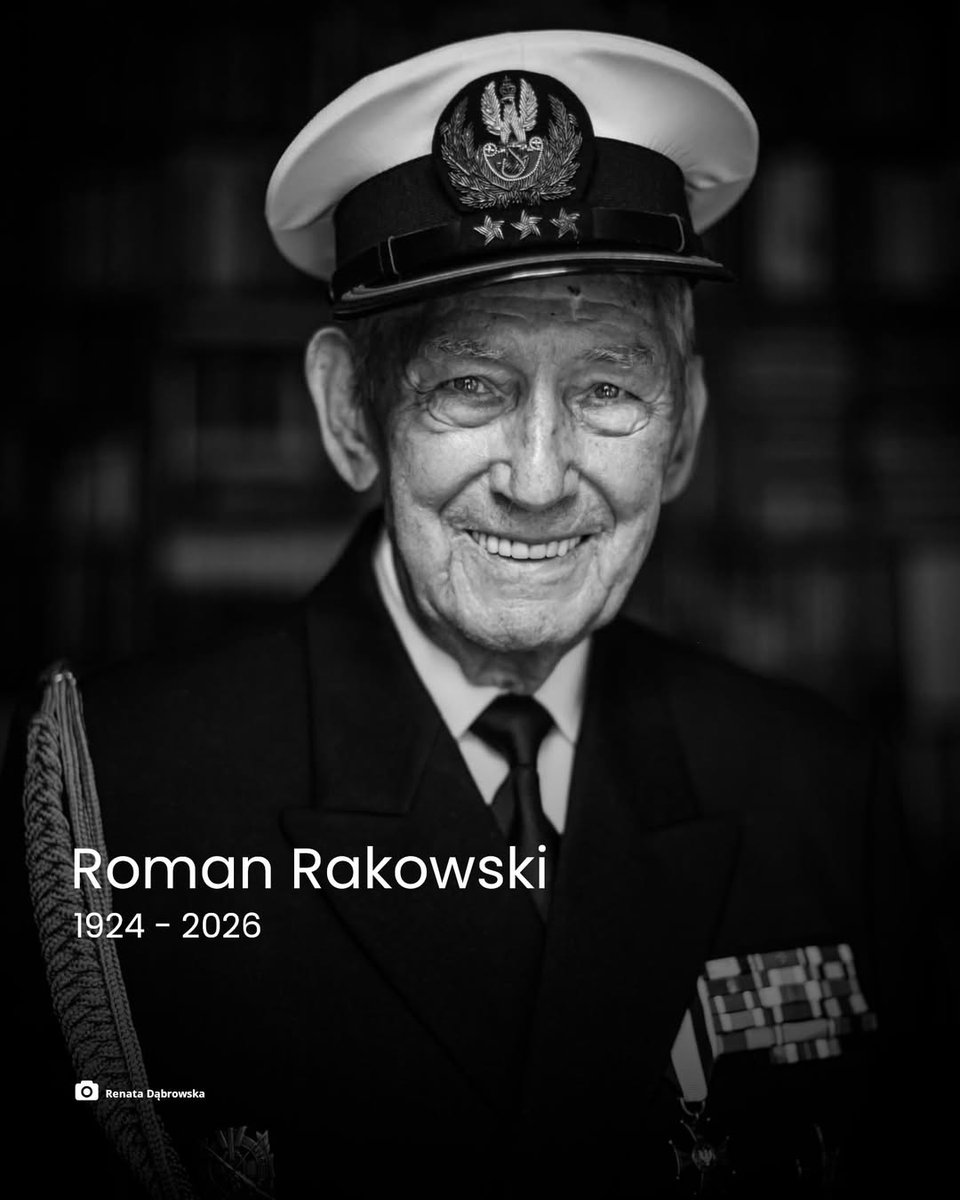
🇵🇱 Captain Roman Rakowski has passed away at the age of 102. He was a member of the Gray Ranks (Szare Szeregi), an officer of the Home Army (Armia Krajowa), and a soldier of the ZWZ and WiN. He was a true hero of the Second World War.
Read more: https://t.co/3bqM0YLYjD
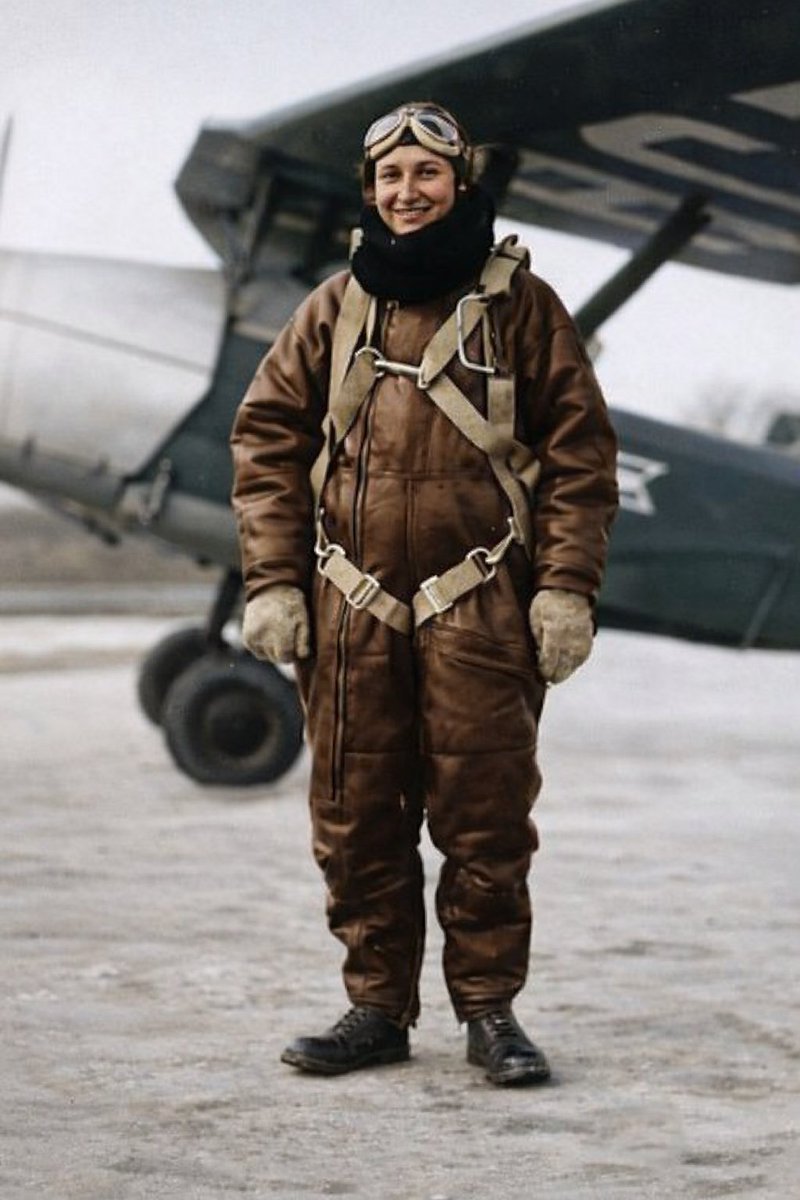
Janina Lewandowska, a Polish WWII pilot and daughter of Gen. Józef Dowbor-Muśnicki, was murdered on her 32nd birthday, on 22 April 1940.
She was the only woman killed in the #KatynMassacre - the Soviet execution of thousands of Polish officers in 1940.
https://t.co/pd4Il5hvPr
#OTD 118 years ago, Janina Lewandowska was born. A pilot and parachutist, she pursued aviation from a young age, joining the Poznań Aero Club as a teenager.
By 1937, she was flying aircraft, and at just 20 years old, she became one of the first women in Europe to parachute from over 5,000 meters.
In August 1939, she was drafted into the Polish Air Force. On September 22, she was captured by Soviet forces and imprisoned in the Kozielsk POW camp.
In April 1940, she was murdered by NKVD in the Katyń Massacre. She was the only woman among its victims.
“We miss terribly...”
Letters were often the only link between Polish prisoners held in NKVD camps - many of them later murdered in the Katyń Massacre - and their families, who vey often became victims of Soviet repression, deported deep into the USSR and subjected to forced labour.
“Every prisoner of war corresponds with his family strictly according to instructions - one letter per month. [...] letters are forwarded to the polit[ical] inspector, for review [...], and then [...]to the postal department”.
- 22 February 1940, Ostashkov. Report by P. Borisovets to P. Soprunienko on the condition of the camp [in:] Katyń. Documents of the Massacre, vol. 1, Warsaw 1995
“Dearest Husband
I received your letter on 18 January our whole house was crying with great joy and Oleś shouted: “Show Daddy”. We miss you terribly. We are all healthy. Bronuś and Maniusia go to school. I live where you left me. I dug up potatoes - there were about 60 sacks. The wheat was nice Dear Stasiu. I do my duty as much as I can If I have enough, it means that I am diligently providing for our dear children and home. Looking forward to hearing from you soon.
I kiss and my warmest greetings to you, your loving Kornela”
- 19 January 1940, Letter found by Stanisław Kułakowski’s remains; it is from his wife, Kornela (The Katyn Museum)
Learn more about the Katyń Massacre: https://t.co/wdld7Doywu
Read the article "To return to the Motherland’s womb. A few words on the deported families of the victims of Katyń": https://t.co/Wy0kC9ohkU
Among the Polish prisoners held in the NKVD camp in Ostashkov - many of whom were later murdered in the Katyń Massacre - were priests who provided spiritual support to fellow inmates.
“Priests in the camp [...] were models for the prisoners. They provided religious consolation, including confessions. They secretly organised talks on religious, historical and tourist topics. In particular, Father Skorel talked so colourfully about the Holy Land and Father Kantak about everything with the knowledge of a professor and an excellent erudite.”
- Behind the Barbed Wire of Soviet Camps. Memoirs, K. Halicki (ed.), Łódź 2016
A prayer recited by the imprisoned:
“From the depths of anguished hearts we cry out to You,
Lord.
Wretched scraps, torn away from our native land by the
lightning of Thy judgment
And with the wind of Thy wrath pressed into a distant land.
Through the intercession of the Most Holy Virgin, Mother of
the Living God,
who for centuries has deigned to pour down on Poland from
Jasna Góra,
Gate of Dawn or from Zebrzydowska Calvary,
We beg You, Lord, for the power of patience and perseverance,
for the possibility of further armed struggle for Poland,
for Thy divine protection, we implore Thee, O Lord, over
a country desecrated by its enemies
For the gift of steadfast faith in the triumph of Thy Name,
For the gift of hope that with our feeble strength we can contribute
to this triumph,
For the gift of active and living love for our anguished
Homeland,
For the gift of mercy for our enemies - we beg You, O Lord.
For a free and independent Poland, we implore You, O Lord.
For a just Poland for all her sons, we beg You, O Lord.
For a Poland of mercy for the poor and the oppressed, we
beg You, O Lord.
For a Poland of clean hands, we beseech You, O Lord.
For a Poland of noble hearts, we beseech You, O Lord.
For a Poland of greatness, government and goodness, we
beseech Thee, O Lord.
For the gift of a great heart and a clear mind for the leaders
of the nation,
And for our fortitude and happy return home and to our
families, we beg You, O Lord.
Through Christ our Lord. Amen”.
- Written by Colonel Czeslaw Wojtyniak murdered in Kalinin [in:] Inventory of Katyń documents kept in the Metropolitan Curia in Kraków, S. M. Jankowski (ed.), A. Roliński, Kraków 2002
Learn more about the Katyń Massacre: https://t.co/wdld7Doywu
Elżbieta Zawacka, one of only two Polish women to hold a rank of a general, the only woman among the Cichociemni and a legendary courier of the Home Army Headquarters, was born #OTD 117 years ago.
She carried secret messages across occupied Europe, crossing borders over 100 times and becoming a legend among couriers. She took part in Poland’s 1939 defensive war and the Warsaw Uprising, and in 1943 parachuted into occupied Poland.
After the war, Elżbieta Zawacka was arrested and imprisoned for four years by the communist authorities. In the 1980s, she was involved in the Solidarity movement. She also became a professor.
Decorated with Poland’s highest honours, including the Virtuti Militari, In 2002, she received the IPN Custodian of National Memory award.
Elżbieta remained active throughout her life in preserving the memory of those who fought for independence. Died in 2009.
Learn more about Elżbieta Zawacka in our video.
Happy birthday to Zofia Pilecka, daughter of Witold Pilecki, the only man who volunteered to be sent to the German death camp at Auschwitz.
Zofia turns 93 today.
Pilecki gathered intelligence, escaped, and warned the Allies about the extermination of Jews, but no help came.
Tragically, the resting place of this Polish hero, executed by the communists, remains unknown.
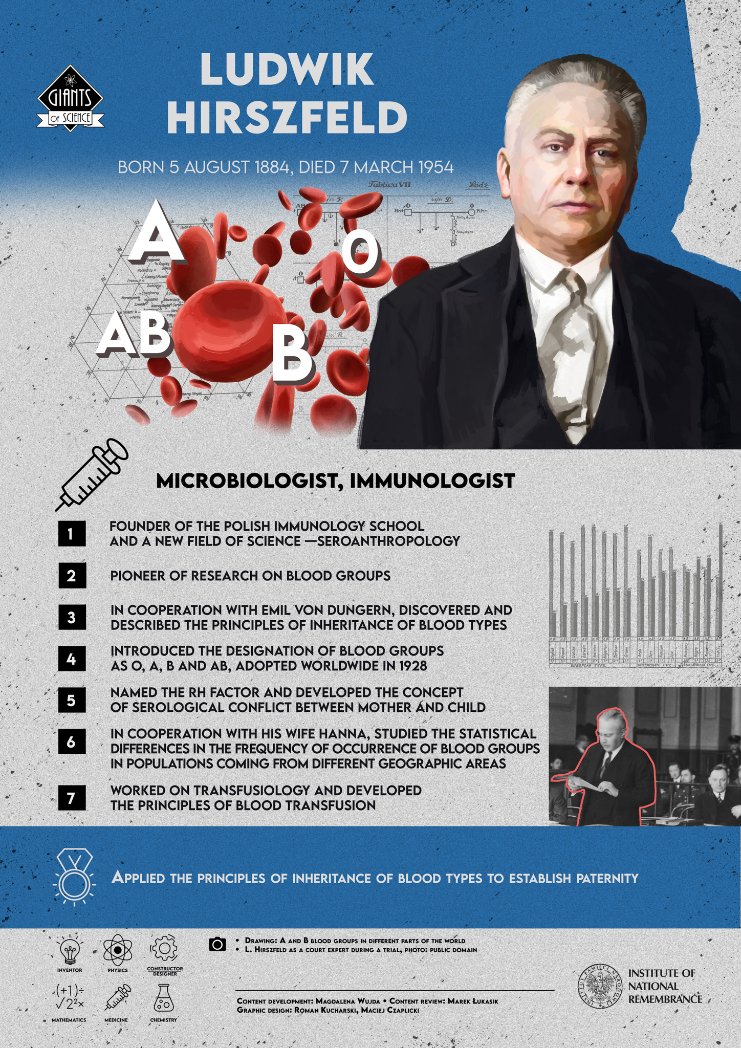
🗓On 7 March 1954, we lost Ludwik Hirszfeld, a pioneer of immunology and co-discoverer of the inheritance of human blood groups.
During WW1, he helped develop blood group typing for military medicine, saving countless lives. After surviving the horrors of the Holocaust, he continued his scientific work in Poland and helped build modern Polish microbiology.
Today, we remember a scholar whose work shaped modern medicine and whose life reflected the dramatic history of the 20th century.
#GiantsofPolishScience
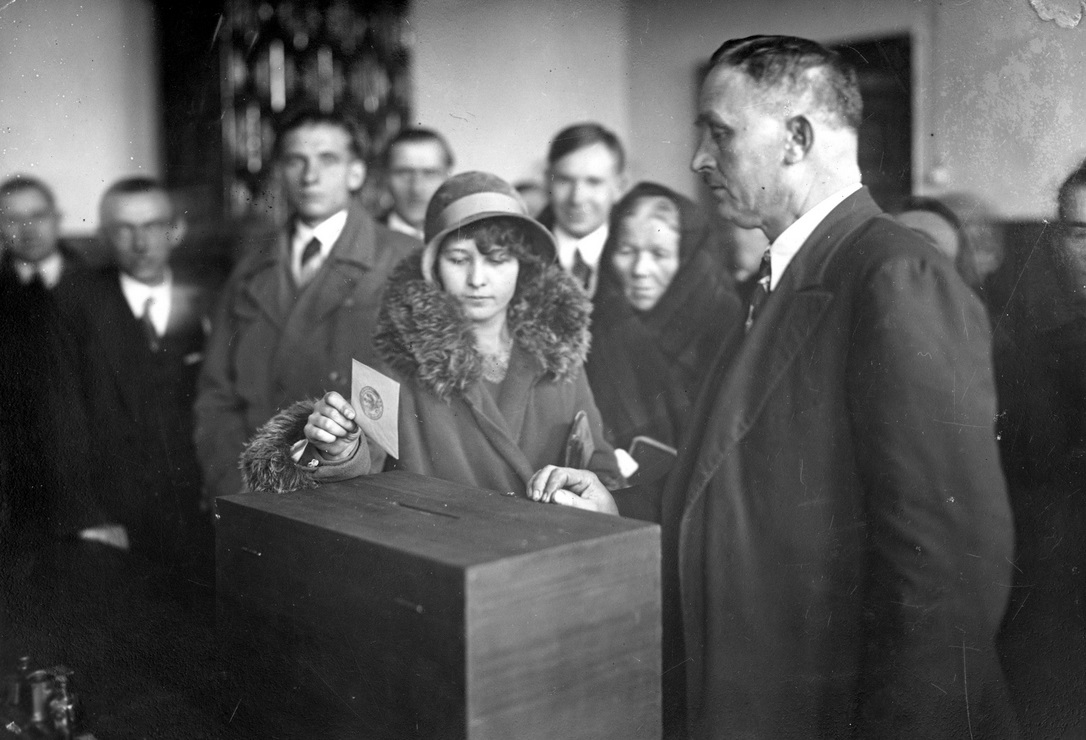
Did you know that Poland was among the first countries in Europe to grant women full electoral rights?
On #WomensDay we recall that in 1918 a decree signed by Józef Piłsudski granted women both the right to vote and to stand for election in the newly independent Polish state.




![britishpoles's tweet photo. I've been stabbed!
I've been stabbed!
I've been stabbed!
I've been stabbed!
I've been stabbed!
I've been stabbed!
I've been stabbed!
I've been stabbed!
I've been stabbed!
British-Polish student Henry Nowak told officers “I’ve been stabbed” nine times as he lay dying on the floor in handcuffs.
Henry Nowak’s father: ‘As far as we understand [Vickrum Digwa] was never handcuffed and… whilst under arrest for Henry’s murder, police even took him to the kitchen so he could choose his food. The contrast is unbearable.’
They treated Henry Nowak like a criminal.
They treated his murderer like a victim.](https://pbs.twimg.com/media/HJzfx32WcAA0ZlL.jpg)


![ipngovpl_eng's tweet photo. “We miss terribly...”
Letters were often the only link between Polish prisoners held in NKVD camps - many of them later murdered in the Katyń Massacre - and their families, who vey often became victims of Soviet repression, deported deep into the USSR and subjected to forced labour.
“Every prisoner of war corresponds with his family strictly according to instructions - one letter per month. [...] letters are forwarded to the polit[ical] inspector, for review [...], and then [...]to the postal department”.
- 22 February 1940, Ostashkov. Report by P. Borisovets to P. Soprunienko on the condition of the camp [in:] Katyń. Documents of the Massacre, vol. 1, Warsaw 1995
“Dearest Husband
I received your letter on 18 January our whole house was crying with great joy and Oleś shouted: “Show Daddy”. We miss you terribly. We are all healthy. Bronuś and Maniusia go to school. I live where you left me. I dug up potatoes - there were about 60 sacks. The wheat was nice Dear Stasiu. I do my duty as much as I can If I have enough, it means that I am diligently providing for our dear children and home. Looking forward to hearing from you soon.
I kiss and my warmest greetings to you, your loving Kornela”
- 19 January 1940, Letter found by Stanisław Kułakowski’s remains; it is from his wife, Kornela (The Katyn Museum)
Learn more about the Katyń Massacre: https://t.co/wdld7Doywu
Read the article "To return to the Motherland’s womb. A few words on the deported families of the victims of Katyń": https://t.co/Wy0kC9ohkU](https://pbs.twimg.com/media/HF3ZGHqWMAAbg9w.jpg)
![ipngovpl_eng's tweet photo. Among the Polish prisoners held in the NKVD camp in Ostashkov - many of whom were later murdered in the Katyń Massacre - were priests who provided spiritual support to fellow inmates.
“Priests in the camp [...] were models for the prisoners. They provided religious consolation, including confessions. They secretly organised talks on religious, historical and tourist topics. In particular, Father Skorel talked so colourfully about the Holy Land and Father Kantak about everything with the knowledge of a professor and an excellent erudite.”
- Behind the Barbed Wire of Soviet Camps. Memoirs, K. Halicki (ed.), Łódź 2016
A prayer recited by the imprisoned:
“From the depths of anguished hearts we cry out to You,
Lord.
Wretched scraps, torn away from our native land by the
lightning of Thy judgment
And with the wind of Thy wrath pressed into a distant land.
Through the intercession of the Most Holy Virgin, Mother of
the Living God,
who for centuries has deigned to pour down on Poland from
Jasna Góra,
Gate of Dawn or from Zebrzydowska Calvary,
We beg You, Lord, for the power of patience and perseverance,
for the possibility of further armed struggle for Poland,
for Thy divine protection, we implore Thee, O Lord, over
a country desecrated by its enemies
For the gift of steadfast faith in the triumph of Thy Name,
For the gift of hope that with our feeble strength we can contribute
to this triumph,
For the gift of active and living love for our anguished
Homeland,
For the gift of mercy for our enemies - we beg You, O Lord.
For a free and independent Poland, we implore You, O Lord.
For a just Poland for all her sons, we beg You, O Lord.
For a Poland of mercy for the poor and the oppressed, we
beg You, O Lord.
For a Poland of clean hands, we beseech You, O Lord.
For a Poland of noble hearts, we beseech You, O Lord.
For a Poland of greatness, government and goodness, we
beseech Thee, O Lord.
For the gift of a great heart and a clear mind for the leaders
of the nation,
And for our fortitude and happy return home and to our
families, we beg You, O Lord.
Through Christ our Lord. Amen”.
- Written by Colonel Czeslaw Wojtyniak murdered in Kalinin [in:] Inventory of Katyń documents kept in the Metropolitan Curia in Kraków, S. M. Jankowski (ed.), A. Roliński, Kraków 2002
Learn more about the Katyń Massacre: https://t.co/wdld7Doywu](https://pbs.twimg.com/media/HF3n89IXcAA0h0q.jpg)