NEW: Amidst a frenzy around public AI investment in Europe, our new report takes us back to the drawing board.
What kind of (digital) future does Europe want? What role can (should) AI play? Who should have a say?
Read expert perspectives: https://t.co/sXh6w9oQbv
1/
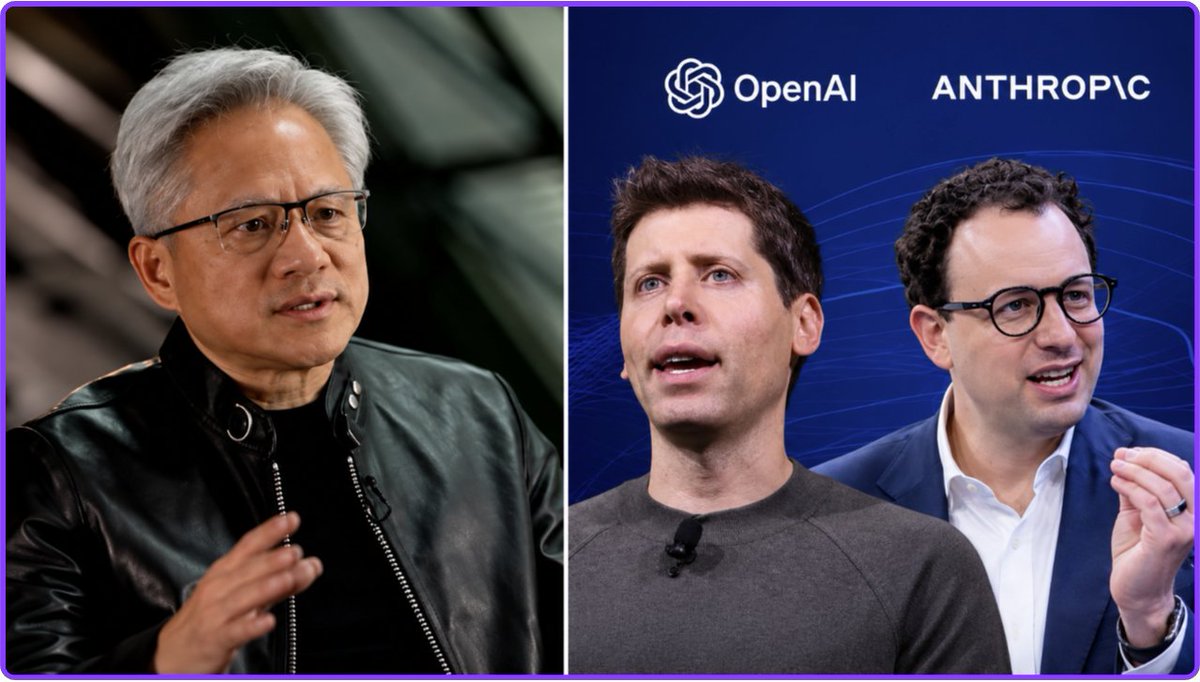
Jensen Huang told CBS News that AI executives like Dario Amodei and Sam Altman promote doomsday scenarios to escape existing legal liabilities. Huang said the public should read between the lines: AI developers aren’t asking for stricter oversight. They’re lobbying to be exempt from existing laws covering product liability, enforcement of contracts and unauthorised access.
I made the same point when the first security incident was reported.
Jensen said that existing laws already cover computer misuse, damage caused by software and system failures. Promoting fear of existential threats is a deliberate public relations tactic because it helps companies replace corporate liability with laws written specifically for AI and approved by governments. Those laws protect developers from responsibility when their systems fail or cause harm.
Politicians reinforce this protection by invoking competition between countries. Ted Cruz uses the AI race against China to excuse harms before they happen, saying that regulatory delays will leave the United States behind its foreign rivals.
I described this as giving tech companies a get out of jail free card for every harm they cause and every law they break in the name of a so-called race against China.
Cruz said if there are going to be killer robots, he wants American killer robots. That treats the prospect of harm as acceptable provided America produces the technology first. By presenting AI development as an urgent national security priority, politicians give tech companies permission to bypass safety standards, disregard environmental damage and avoid legal accountability.
Huang’s statements deserve scepticism because he has his own commercial interests. However, his assessment of executives’ motives is accurate. Tech developers and politicians manufacture fears of existential threats and competition over national security to replace normal legal liability with specially written regulations that protect their power.
Besides this, it's still shocking how many people simply believed OpenAI when multiple mathematicians came forward (with credible evidence) that their work was stolen. It's precisely why we need independent government oversight, and how IP remains central to capabilities claims.
The idea that two or three Silicon Valley companies should act as the creator, gatekeeper, and rulemaker of AI for every government on earth doesn't survive being said out loud. https://t.co/XOo0eXReWE
How is Anthropic pushing regulatory capture? Here they promote METR, a "voluntary" third-party auditor that is not only ideologically and financially tied, but carries out their audits through unscientific means such as "CoT" and cherry-picks evidence to reinforce an idea of AGI.
In this week’s EU AI Policy Monitor, @SaariLeevi and @F_Kaltheuner unpack EU's Google adtech flip flop and why attacks on Europe’s digital rulebook are so effective.
Read it and subscribe: https://t.co/NxBdv3ux61
New from me: Does AI market volatility give Europe a fleeting chance to compete? The truth: Europe was never in the race on US giants’ terms. Instead of magical thinking or an unsustainable spending race, the EU must face reality—this game was rigged from the start
@ips_journal
The much more interesting question has always been whether Europe should, in fact, accept the premises of an AI arms race in the first place. There are convincing reasons not to.
https://t.co/rsaCdrKoiB
'm in Brussels this week and the common sentiment is: with DeepSeek Europe is now finally able to compete on AI! We've unpacked these claims and also analyzed Europe's "tactical silence" in response to Trump's first two weeks in office.
@AINowInstitute@SaariLeevi
A key message: The EU’s dependency on U.S. companies in a highly concentrated market remains a major reason why European AI companies are structurally disadvantaged in the current race for large-scale AI.
https://t.co/XTx1kn8UZE
🚨EXCLUSIVE: The EU's AI Office is closely monitoring @deepseek_ai, citing potential risks such as 🇨🇳 govt surveillance & malicious actors' misuse. The risk of an acceleration of the AI race that would push competitors to cut on safety is also envisaged.
https://t.co/dPrRXIUlfY
The German election is six weeks away. Where do political parties stand on AI, industrial policy, and competition in the German election? We took a close look:
@leevisaari@ainowinstitute
https://t.co/zvLT2n3M0F
This is an excellent primer on some of the privacy dangers posed by large scale AI, from a cybersecurity perspective. Written in clear language, it's the most accessible rundown I've seen yet on these topics. Thank you, @TedOnPrivacy!
https://t.co/4dUjbSkDyr
wow. Upon Court order, incriminating exhibits were unsealed at 3:30am in an AI lawsuit against Meta. Once past a 'fake privilege,' it appears Zuckerberg approved the use of a highly controversial, pirated dataset.
Note OpenAI, too? AI companies with no ethics or guardrails. /1
Re: Musk endorsing far-right AfD in Germany: As I‘ve argued in my @techreview_de column, if 2016 was a wake-up call to confront the health of the digital public sphere, 2024 must be a wake-up call to tackle the dangers of concentrated power in tech.
https://t.co/I615rVPeoR
Is AI a bubble? Will it burst? And what will emerge in its aftermath?
Read about these questions and more in our last EU AI industrial policy newsletter edition of the year
@AINowInstitute@SaariLeevi
https://t.co/hNSEnjg2PZ
Gaza is currently facing what many experts call an “amputee crisis”: it has the biggest cohort of children amputees in history. Now it appears that the last remaining orthopedic surgeon has been killed
🚨 BREAKING: Amnesty’s latest report on digital surveillance in Serbia: new *NoviSpy* spyware discovered; zero days identified and patched; and first evidence showing use of Cellebrite UFED forensic products to unlock phones to then infect with spyware. 🧵
While businesses frequently try to get on an incoming president's good side, the frenzy of tech leaders this week to woo Trump stood out from other industries (New York Times)
https://t.co/6oT47pIi6L
https://t.co/ke4NA6PNU9
https://t.co/ZOzeer2dpR