Today my #BikeLibrary was launched in 20 schools in @DubCityCouncil with the amazing support of @TFIupdates and @BleeperActive . It’s about giving families an alternative to their own private cars, in the hope they would cycle to school rather than drive.
https://t.co/doTTd5jAn7
Participants will also be entitled to use the Bleeper Bike, Fingal Pass, which will give you 30mins free use of Bleeper Pedal bikes in all their operating zones across Dublin.
Expression of interest form below:
https://t.co/ONisxWPMmK
The Fingal ‘Green Commute’ Project is seeking 6 people who currently drive to Balbriggan Train Station and use the train 3 to 5 days a week to take part in a 6-month trial. Free use of an electric bike/secure bike storage at station!
By Fingal County Council, UCD and Irish Rail
Irish University Research is Revolutionising the School Runs
Environmental engineer Prof. Francesco Pilla from University College Dublin has advanced sustainable mobility with the Bike Library, which offers families free access to e-bikes, cargo bikes, and folding bikes during school terms. This project promotes active travel and supports Ireland’s climate neutrality goals.
But to keep making an impact, we need sustained investment. The Research Infrastructure & Talent Development Fund is essential to ensuring Ireland remains competitive and continues to drive meaningful change. Read the proposal:
🔗 https://t.co/BRFHBgddOe
✍️ @IUAofficial@f_pilla
🚲📹 Primary pupils at Harold’s Cross Educate Together NS are taking part in a UCD-led pilot study that encourages children to record their daily commutes on GoPro cameras mounted on bikes, scooters, and backpacks.
Their footage of real-life hazards like speeding cars and dangerous junctions will be used to identify risky spots for young pedestrians and cyclists.
Led by UCD Professor Francesco Pilla of UCD School of Architecture, Planning and Environmental Policy, this citizen science project aims to inform safer urban planning and school route design.
The initiative, launched during National Bike Week, will soon expand to more schools across Dublin.
Children walking, scooting or cycling to school at Harold Cross, in Dublin are wearing cameras to record their journeys and identify risk hotspots where children face danger as they go to school. @colmanos has the story.
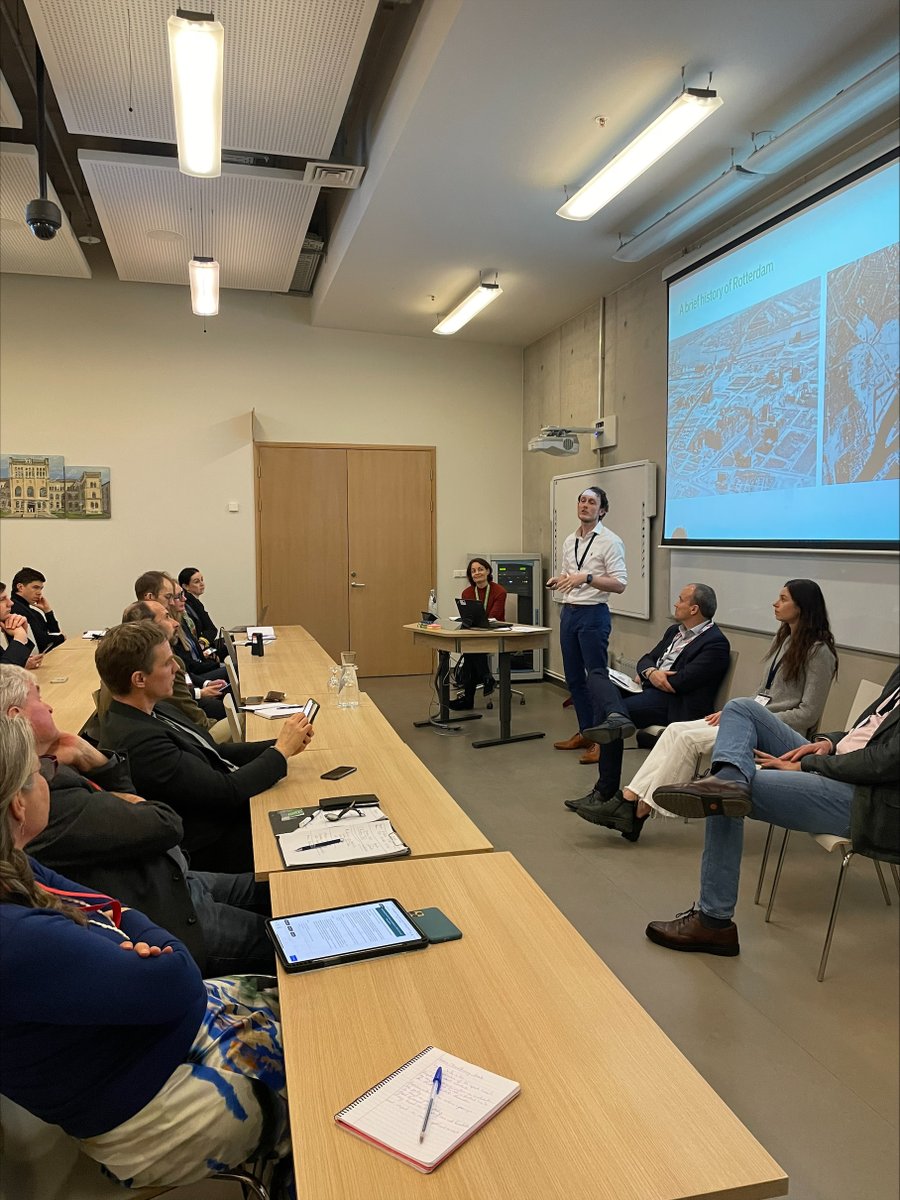
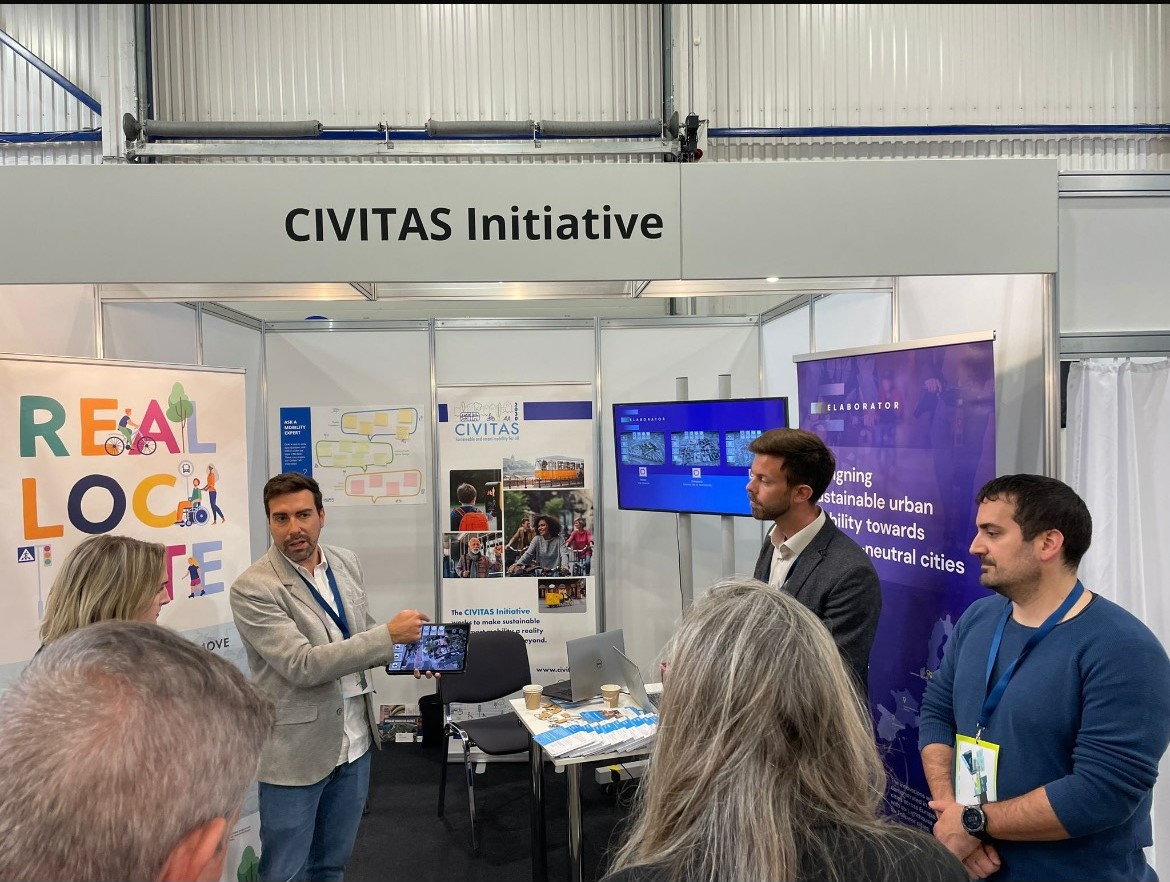
🌿 Day 2 of #CIVITAS Coffee Talks in Vilnius:
@REALLOCATE_EU , @ELABORATOR_EU & AMIGOS shared how street design can drive climate-neutral cities 🚲🚶♀️
We explored:
🔸 Reducing car dependancy
🔸 Engaging communities
🔸 Balancing politics & planning
☕ More talks tomorrow!
Environmental engineer, Prof. Pilla (@f_pilla) from @ucddublin has advanced sustainable mobility with the Bike Library, offering families free access to e-bikes, cargo bikes, and folding bikes during school terms.
@UCD_Research@UCDsustain#BetterIreland
🔗https://t.co/G1ianpBmrg
🚶♂️🚲 Traffic calming measures are transforming our streets—making them safer and more accessible for everyone!
At today’s workshop during the @Eurocities Mobility Forum in Riga, REALLOCATE explored strategies to enhance safety and mobility in dense urban intersections! 🌍 🚲
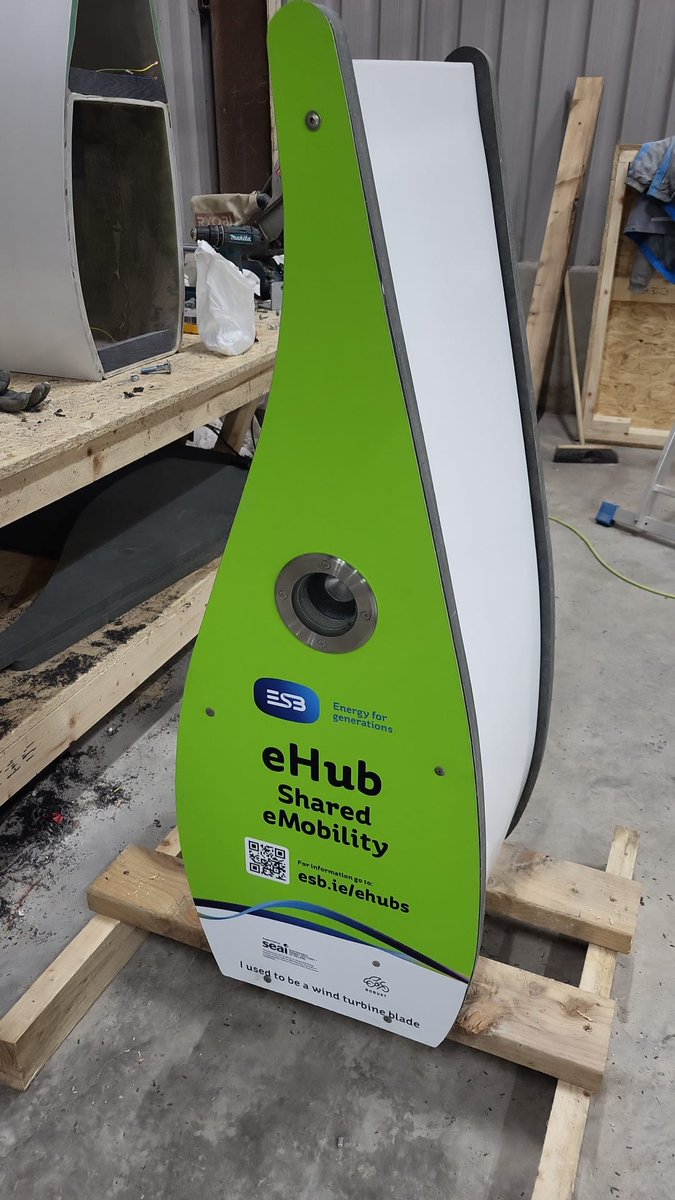
This is part of our mobility hub on its way to Galway for the launch of the first hub as part of our ROBUST project funded by @SEAI_ie in partnership with @atu_ie, @ESBNetworks & @Enterprise. The hub will have shared e-bikes, e-cargo bikes & EV... more info etc soon
🚨New Article
After the Heidelberg Twinning Visit, the Deputy Mayor of Heidelberg shared, "Sustainable development has been a central guiding principle of the City of Heidelberg since 1997... REALLOCATE is a valuable part of this process"
🔗https://t.co/vW5iwIGwOY
🔊 Final Reminder! 🔊
The 'Streets for All: Mobility-as-a-Right & School Streets' webinar is almost here! 💡
🗓 When: Wed, 26 Feb 2025
⏰ Time: 10:00 - 11:30 CET
🔗https://t.co/qp7hEuhkgh
See you there! 👋
BikeHood, a #NationalChallengeFund project, proposes to create Ireland's first cycling neighbourhood. In this week's episode of the @RTEBrainstorm podcast, we take an in-depth look at this project with Dr Gavin McArdle & Prof @f_pilla of @ucddublin. Listen:https://t.co/MDlti56IVO
✨ The REALLOCATE project community wishes you all a lovely and restful festive period! ❄️🎄 We look forward to continuing our journey in the New Year, creating more inclusive, green and safe urban spaces where communities live and thrive 🌍💡
🕵️💨 A UCD-led study identifying ‘hotspots’ of hazardous air pollutants has revealed Dublin's Top 10 Most Polluted Areas 😷👇
🔹 Cork Street, extending from Brabazon Row to Newmarket.
🔹 Saint John’s Road West, from Custom House Quay, running along North Wall Quay to Cardiff Lane.
🔹 O’Connell Street Upper, from Promenade Rode, crossing Bond Drive to Tolka Quay Road and Alexandra Road (Dublin Port).
🔹 The road along the River Liffey extending to Temple Bar, crossing O’Connell Bridge and continuing to the North Wall.
🔹 N81, along the Wood Quay and extends to Harold’s Cross Road and James’s Street.
🔹 Crossroad around Newtown Court way-Clarehall Avenue and Malahide Road-Churchwell Drive.
🔹 The vicinity area encompassing Sir John Rogerson’s Quay and Hanover Quay.
🔹 From Custom House Quay, extends along North Wall Quay to Alexandra Road.
🔹 Cork Street, following Brabazon Row to Newmarket.
🔹 Residential area located at the southeast side of Riverston Abbey; intersection of R101 and N3 (Dalymount) extending along R101 to Chesterfield and North Road of Phoenix Park.
Data collected by University College Dublin and Dublin City University (DCU) researchers shows high levels of nitrogen dioxide (NO2) exceeding World Health Organisation (WHO) guidelines and other fine particulate matter (PM2.5) across Dublin’s inner city.
Areas of particularly high concentrations included Cork Street, O’Connell Street, along the Quays, and in the area around Temple Bar.
The data showed that during the sampling period, 49.4% of days exceeded WHO guidelines for NO₂ levels, with peaks during rush hours, especially in winter.
Collected as part of the Google Air View project over a period of 16 months, using electric Google Street View cars equipped with air sensors, the data showed that during the sampling period, almost 50% of days exceeded WHO guidelines for NO₂ levels, with peaks during rush hours, especially in winter.
Carried out by Dr Jiayao Chen, Dr Anna Mölter, Dr José Pablo Gómez-Barrón and Professor Francesco Pilla, UCD’s School of Architecture, Planning and Environmental Policy, and Dr David O’Connor from DCU’s School of Chemical Sciences, the study suggests the potential of a mobile monitoring approach to investigating hyperlocal air pollutants across cities.
The REALLOCATE newsletter is out!
Our 2nd issue features:
😎 A report on the Barcelona Consortium meeting
📰 Updates from the Cascade Cities
🚲 Laurens Hitman's journey from Lyon to Barcelona
💡 News from our project pilots
... and much more!