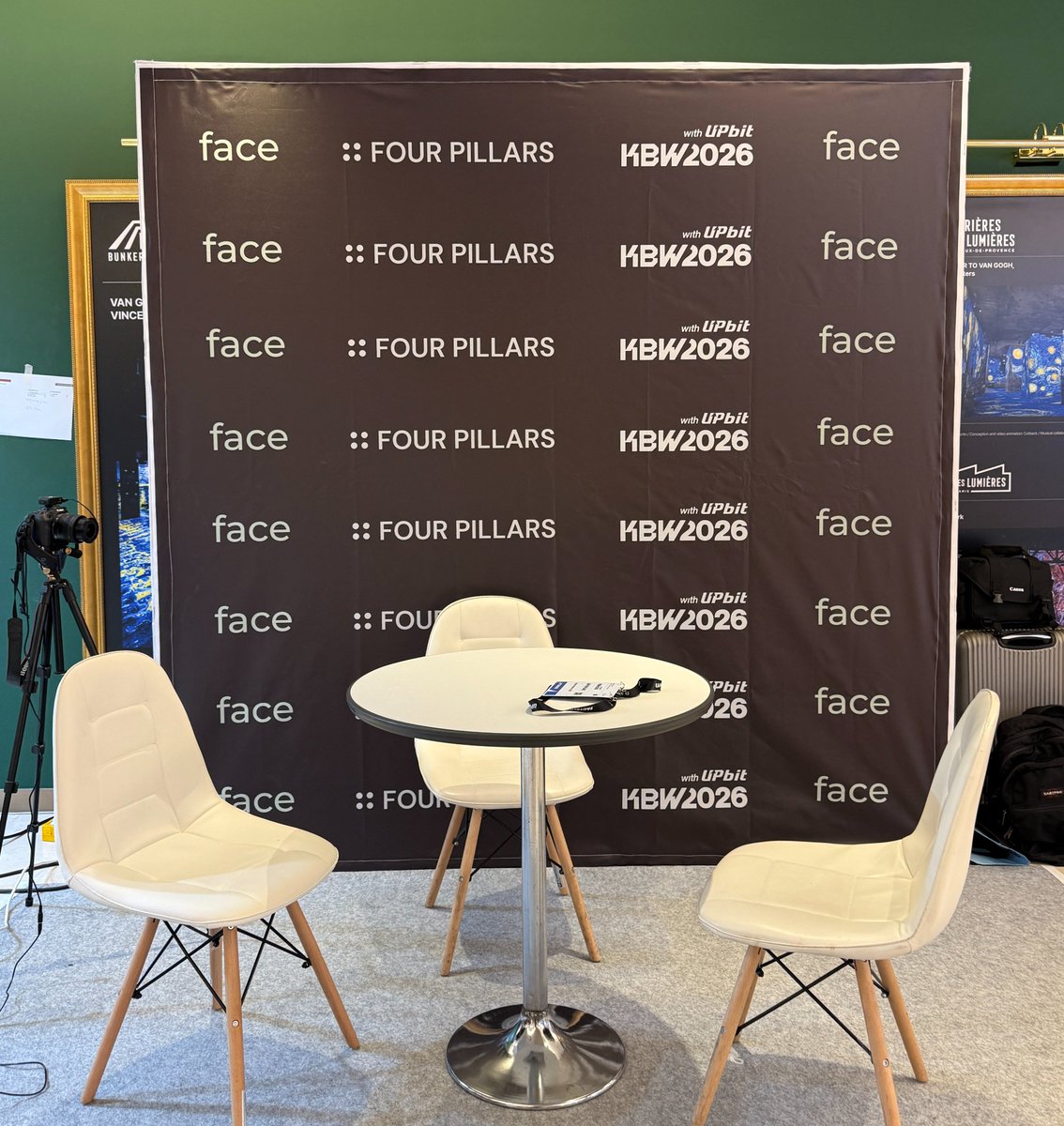
Full conversation with @umia_finance featuring @fra_mosterts and @nftboi_ during Korea Blockchain Week
00:00 Introducing Umia Co-Founders Francesco and NFT Boi
04:31 Opportunities in the Korean Community
08:25 What Is Umia? From Fundraising to Operations Through Tokens
14:33 Ownership Coins: Connecting Company Value to Tokens
19:09 From Hedge Funds to Umia: Francesco’s Founder Journey
27:53 Futarchy Explained: Making Decisions Through Trading Instead of Voting
33:57 How Umia Selects Projects and Its Selection Committee Works
35:58 SlopCash and Shaw’s New Venture
41:38 Why Umia Is Expanding Beyond Base to the Wider EVM Ecosystem
47:13 Is Crypto Talent Moving to AI?
50:59 Can Companies Outside Web3 Use Ownership Coins?
59:16 Why User Acquisition and Community Matter in the AI Era
01:02:24 Addressing the Korean Community’s Token Allocation Concerns
01:07:08 How Galaxy, Draper, and DCG Got Involved With Umia
01:09:49 FOMO and the Role of Angel Investors
01:13:45 Upcoming Project Launches and Umia’s Growth Plans
01:18:03 Can the Korean Community Join the Selection Committee?
01:20:41 A Community Track Where Anyone Can Help Select Projects
01:23:24 Goals in Korea and Singapore and Future Plans
01:26:37 Umia’s Philosophy and Future Collaboration
Se from fomo argues that trading’s “get a real job” problem is an education problem. Even building a billion-dollar product can look like wasting time to someone who doesn’t understand it.
“If your parents don’t know what coding is, they’re going to say, ‘Quit fooling around. Go get a real job.’”
For his own family, that disconnect extends to investing:
“They’ve never invested in their lives. We’ve never had expendable income.”
“So in their minds, the stock market is… gambling.”
“How do you educate them to understand that these are real things that have real value and drive actual tangible results?”
Asked whether fomo would expand beyond its current leaderboard, co-founder @seyong laid out the direction:
“There will be different ways you can use the app.”
“Different asset classes, different portfolio sizes, different ROI types.”
“Maybe you invite your sister, your mom to the platform, and they just want to buy Korean stocks.”
“You should show them who are the best traders in Korean equities, who are the best performers.”
“And that’s the world we want to head towards.”
Every asset is a memecoin. The difference is how much of its price is driven by narrative.
FOMO co-founder Se on what crypto traders understand about markets:
“Even the largest markets, they’re memetic.”
“You’re forecasting what you think is going to happen because of some trend or some cultural shift.”
“The best crypto traders would also be the best stock traders.”
“They understand narrative. They understand where the world is headed.”
I'm incredibly bullish on @face_east_ btw
It is super clear that building professional + relatable + relevant video content (not boomer slop) around crypto / tech generally is a huge opportunity.
These guys are super professional, experienced, and tapped in. Nobody else really doing this for Korea / Asia in general and this team is perfect to win it.
I'm long @Steve_4P@JuhyukB@alexlimasia
We had our first offline meetup today, and grateful there were so many people willing to sit down with us for 4 hours!
Would love to meet everyone visiting Korea for KBW, so if you're in town try to meet us and the main venue.
이보다 더 날 것의, 날 것을 의한, 날 것에 위한, 밋업이 있을까요?
가장 잘하는 걸 업으로 하는 사람, 업으로 할 수 있도록 만들어 나가는 사람을 동경하는데 @face_east_ 호스트분들 보며 많은 자극을 받았습니다.
2026 kbw 사이드 이벤트 중 제 이스터 에그는 이곳에 있었네요.
A crypto project doing $50 million in revenue by selling plushies at Target and Walmart? Pudgy Penguins is proving that the real power of an IP is creating something people want in their daily lives, completely separate from tokens or blockchain.
"Honestly, among current crypto projects, aside from selling tokens, is there any project doing 70 billion won in annual revenue by actually selling plushies and merch IP? I don't think there is."
"The power of this IP is that, even leaving aside coins or blockchain, whether it's a doll or merch, just having it gives you utility and a use case. It has that really powerful force. And the fact that they're running a sustainable business with that is a really meaningful example."
"Pudgy Penguins can now expand into finance, IP, gaming, and entertainment. I think it's a really meaningful project."
Mental health is becoming a massive consumer market, and the stigma is disappearing. The same way coffee went from a niche ritual to a daily chemical dependence for most people, antidepressants and mood-altering supplements are following the exact same path. We're about to see these products do even better as people get more comfortable actively outsourcing their mental well-being.
"I went to a U.S. airport duty-free shop and in the melatonin section they were openly selling stuff labeled for depression, with actual antidepressants in it. That was really shocking. But it's not about being sold at duty-free shops. What matters is that it's a drug you can easily get at Walmart or Target. In Korea, they sell drinks with plant-based melatonin at cafes and convenience stores now."
"We talked about burnout in the last episode, and the stigma around whether it's medication or therapy when I'm struggling mentally... that's not the important part. People are becoming more conscious about actively seeking help from outside."
"Even with coffee, I'm completely dependent on caffeine. I drink coffee every day, but back in the day, that wasn't the case. It's the same with mental health stuff, like antidepressants. Whether it's natural stimulants to give you energy in the morning or medications that gradually lift your mood, I think these drugs will do even better in the future."
The bull market is quietly creeping in, and the obvious question is what to buy. Beyond the obvious crypto plays, there’s a case for looking at pharmaceutical stocks, specifically psychiatric and cancer treatments, which have recently surged. The move in names like Moderna is a clear signal.
"Inside and outside of crypto, I'm bullish on pharmaceutical companies developing psychiatric or psychology-related drugs. Recently, a cancer-related clinical treatment drug went up like crazy."
"Moderna also mooned like crazy."
What if Korea's largest securities firm could launch a perpetual futures exchange on-chain tomorrow? The technical stack is ready. The real obstacle isn't technology, it's regulation that moves painfully slow, keeping the country in a follower position while the US races ahead.
"I'm actually really envious of that. I want to have these conversations with the Korea Exchange, the Hong Kong Exchange, and talk to the Korea Securities Depository. I want to tell the biggest securities firm in Korea, 'We'll give you all the technical support so that the major trading platforms in the US can run a perpetual futures exchange business. You keep doing what you do best, and we'll support the exchange stack for everything on-chain.'"
"This agenda is no longer about whether this coin will do well in 5 or 10 years. It's fundamentally about looking at our break-even point, figuring out how much profit we can make, whether the business needs a complete transformation right now, and why these cases are emerging overseas. We need to logically assess these things and quickly figure out how to adapt. And then there's the legislation we've been talking about in Korea and Asia, which is so painfully slow compared to the US."
"I want our team, our Asian team, to bring in an Asian player who can rival those companies. That's my hope. But increasingly, it's regulation-dependent, and there are times when you have to work really closely with policy lawmakers and even lobbyists, and the political agenda aligns, so things get incredibly delayed and slowed down. That reality frustrates me sometimes."
China may be the manufacturing superpower and the yuan's obvious challenger to the dollar, but it will never actually open finance. The state wants control, and open networks are a risk it won't take. That leaves Japan as the country most likely to move first, because it's trying to make up for two lost decades of fintech in one leap.
"China will never allow private companies to innovate and produce a second Coinbase or Robinhood, because the state wants to control almost everything. A CBDC could still spread through blockchain, but that is completely different from open finance."
"Japan skipped the mobile generation and barely experienced the fintech and mobile revolution, so there's a lot of trauma around being financially left behind. Now they're trying to close that twenty-year gap all at once through blockchain, with companies like SBI and Progmat taking the lead and forming associations to support lawmakers."
"Korea doesn't have a company with enough power to become an opinion leader, and there's a high chance DAT won't even happen there. Japan definitely does, and they've become the central focal point, funding policy initiatives and bringing young people in. Recently Japan moved in the opposite direction, lowering the tax on Bitcoin and virtual asset investments from 50% down to almost 20% because they think this should be encouraged."
The hidden cost of digitizing everything isn't efficiency, it's the slow death of cultural texture. We keep grouping East Asia together, but Japan's self-sufficiency and uniquely obedient society let it preserve an analog world that is vanishing everywhere else. The old man pulling out a physical map seems backward, but maybe forcing a trembling grandparent to scan a QR code is the real failure.
I was in China this May for a month. It's a bit rigid there. Every table has a QR code, and even the translation doesn't work. Old people can't do that. No way. Their hands are shaking while doing it.
My younger sister has been in Japan for about 11 years. She went to register her address with her iPhone out, and some old man at the district office told her not to laugh, opened a locker, pulled out a map, and told them to point with a stick to where they lived. She was shocked because normally you'd just send your address by phone. That gap shows people there have no interest in startup spirit or entrepreneurial change. They just surrender to reality and settle, or positively, good is good. They go about without making any trouble.
Japan is a self-sufficient country. Our population is much bigger, and we absolutely had to export and earn foreign currency to survive, whereas Japan wasn't like that. That difference in the basic economic foundation influenced their sensitivity to change. Japan is the country of kamikaze. If the state tells them to do it, they do it. But our country is a country of civil disobedience.
Even though the yen has been weak for decades, the people have been shaken down by the government and feel no resentment about it. It's taken for granted that individuals sacrifice for the whole. If they just get the direction right, it could be a really scary country, because the people don't push back. Whereas Korea, everyone has an opinion about everything and we constantly check and challenge things.
I keep thinking about the regulatory purgatory in Korea. Mirae Asset bought a crypto exchange but can't do anything meaningful with it because the laws aren't there. So they and other big firms are forced to experiment overseas, just to be ready when regulations finally catch up. It's frustrating, but I think it's just a matter of time.
"Paradoxically, if those bills don't pass and the policy doesn't come out, there's actually nothing they can do after the acquisition. They can only trade existing coins. So this is a huge gamble for Mirae Asset."
"Mirae Asset already has entities in Hong Kong and the US, so they have plenty of entities that can issue and operate offshore. Even if nothing's confirmed in Korea right now, they'd probably try it in Hong Kong or overseas first. And if that works out, then bring it into Korea."
"The longer these things drag on, the slower our country's going to get. Korea's going to take forever to get its regulations and systems in place. BlackRock will already be miles ahead, and Coinbase will be even further ahead. So we're bound to have a lot of frustrating moments. But in the end, it's just a matter of time. This is an unstoppable trend. Eventually, these things will take root in Korea too, and the experiments they ran through foreign subsidiaries will become very meaningful."
I keep coming back to this: the most interesting things in crypto right now aren't the polished pitches but the raw, unscripted conversations. That's exactly what new media is, no suits, no scripts, just people talking with maybe a 1% filter. And it's the same reason crypto keeps winning: permissionless, real, and built on skin in the game.
"New media is the complete opposite of traditional media. With traditional media, you use someone else's platform, dress up in a suit, and say all the politically correct things. With new media, there's no script. We just show up and talk about whatever, with only about a 1% filter."
"Crypto was born for the same reason new media is taking off. It's about solving entrenched problems that have persisted for thousands of years. Polymarket proved prediction markets are more accurate than state media because people have skin in the game. Perp DEXs like Hyperliquid proved trading can operate without permission, just like stablecoins proved money can."
"New media captures the real person. When I put on a suit and give a speech, that's for show. But at home, I'm just in my clothes, taking out the food waste. That's the real deal. New media shows that person, not the flashy version."
I've been thinking a lot about where the real value is as AI automates more and more processes. The scarce resource isn't going to be some complex technical mechanism, it's going to be attention. The traders and platforms that figure out how to capture and monetize that attention are the ones who will win, and right now, Robinhood is making a move that feels like it's pulling directly from the crypto playbook in a way that native crypto platforms somehow missed.
"In the end, if AI automates everything, all the processes computers handle, what's the scarce thing? It's getting people's attention and interest."
"Robinhood is clearly trying to embrace the zeitgeist, which right now is meme coins. But Base didn't do that. So even though Base currently has the upper hand, at this rate, I was actually starting to wonder if we could seriously get wrecked by Robinhood."
"They use the fees from their coin trading to buy those stocks and distribute them to people. So Vlad, the Robinhood CEO, said in an interview that they're creating mechanisms to hand out stocks to anyone who holds meme coins. And now Robinhood is going crazy because of that."
I can't shake this: the market's sudden turn isn't about PCE or NVIDIA, it's a vibe shift, and it feels like the Fed is getting politically squeezed. The idea that Trump is already whispering threats to cut rates is wild, but it explains a lot about why everyone suddenly feels bullish.
"The vibe shift is here now. Our boy Bessent is saying he's gonna do, like, a trillion dollars or something."
"They've all been bought off already. Trump already whispered to them. That devil's whisper has gotten into them now. 'Hey, if you don't cut rates, you know what happens to your family.' That's what they heard."
"Vibe shifts have two directions too, you know."
The most effective way to spread an ideology is not through neutral analysis, but by becoming a passionate evangelist for it. This clip explores the idea that true influence comes from mastering the art of persuasion, treating communication as a tool to commercialize belief and shift the cultural vibe.
"I wanted to build a media company more broadly. And I was really interested in commercializing that thing called influence. That was my dream from the beginning. So even when I was interested in politics, I see politics as the commercialization of influence. How you commercialize your own influence, turn it into power, and make a living off it."
"Watching Reagan's speeches really inspired me. I mean, his nickname was literally 'The Great Communicator.' He was such a great speaker. When you watch him in those presidential debates, the way he took criticism from his opponent and turned it around so gracefully—he'd actually make the other guy feel kind of embarrassed. I just found that so cool and so charming."
"There's this libertarian economist and philosopher I respect named Friedrich Hayek. He was always criticizing Marxism, and when he looked at Marxism to criticize the liberal camp, he said Marxism has a lot of demagogues, but our liberal camp has absolutely none. So he set out to become a demagogue for liberalism."
"If I truly believe my ideology is right, and in the end, persuading others about it is what matters, then I have the confidence to be a demagogue. That's why I'm becoming a crypto demagogue now. I'm willing to become a demagogue for other things too."