@canardenchaine Les DC sont nécessaires à la nouvelle économie, ne vous en déplaise cher volatile. Je les préfère en France, où ils consomment une électricité decarbonée et créent de l'emploi, plutôt qu'à l'étranger.
🇨🇳 🌎 China may be winning the global industrial battle while destroying part of the profitability of its own companies - Nikkei
📉 Chinese companies are trapped in such intense competition that they have to invest more, expand capacity, accelerate technologically and cut prices simply to avoid being overtaken. This has created global leaders in EVs, batteries, solar and electronics but at the cost of enormous pressure on margins. For example, Chinese manufacturers exported 2.3 million vehicles in H1 2026, almost as many as in the whole of 2025, yet sector profits still fell 20% while margins dropped to just 3.8% from 8% in 2017. Domestic demand is no longer absorbing enough of that production capacity, so Chinese companies are looking abroad for growth.
⚔️ However, exports are not necessarily less profitable as Geely says it can make 12,000 to 15,000 yuan of profit on an exported car vs. less than 3,000 yuan in China. Profitability can gradually disappear if all Chinese manufacturers enter the same foreign markets and reproduce the domestic price war abroad. China’s trade surplus, which exceeded $1 trillion in 2025, obviously reflects tremendous competitiveness but also a deeper macro imbalance. Therefore, an increasing share of the rest of the world is being asked to absorb what China does not consume itself, and that has a major consequence for the global economy.
⚠️ When Chinese companies are willing to accept extremely thin margins to gain volume, they force foreign competitors to cut prices or sacrifice margins. Goldman Sachs estimates that the rise in Chinese exports has already reduced goods prices by around 0.6% across major developed economies outside the US. So, China is exporting disinflation for consumers and pressure on industrial profits and jobs elsewhere. Beijing wants to fight involution, restore margins and avoid a global protectionist backlash but local governments continue to support their industrial champions in order to protect jobs and meet growth targets.
The country’s most important export today may be its model of hypercompetition.
*Nikkei link: https://t.co/woaDvf5LZx
VW Group's management could bypass its own supervisory board to push through Europe's biggest industrial turnaround, setting up a potential showdown over job cuts and possible factory closures. https://t.co/vYzeoa4Xt6
🌎 Globalization is often discussed through the lens of tariffs and trade wars but the latest OECD data points that global competition is increasingly between companies backed by states.
📊 In 2024, subsidies received by the large industrial firms tracked by the OECD reached $108 billion (1.3% of revenue), the highest relative level since the global financial crisis. Back on 2029, the ratio spiked largely because of emergency support for Western automakers and collapsing revenues during the crisis. Today, the increase is more structural as governments are once again directly supporting strategic industries such as semiconductors, solar and steel. 1.3% of revenue may sound small but for a company operating at a 5% margin this would represent more than a quarter of operating profit which is enough to completely reshape the economics of an industry.
🇨🇳 China is where the phenomenon is most pronounced as the Chinese firms received three to eight times more public support than competitors in developed economies. Moreover, around 60% of the relative market-share gains achieved by Chinese firms can be associated with subsidy intensity versus roughly 22% for all firms that gained market share.
📈 These subsidies appear to increase market share without significantly improving productivity or profitability. Their purpose is not necessarily to create the most profitable companies today but to allow firms to invest more, maintain excess capacity, tolerate lower prices and accept returns on capital that private competitors could not sustain for as long. Typical of what we are seeing in solar for example.
⚠️ Now, this is no longer just a Chinese story as the US, Europe, Japan and South Korea have all relaunched industrial policies. The current trade war is in fact becoming a balance-sheet war between governments. Therefore, for investors the implication is important because we can no longer analyse some industries using only traditional concepts such as margins, ROIC and financial discipline. If a competitor can tolerate ten years of poor returns because its government sees the industry as strategically important, its own economics become much more fragile.
In that environment, understanding who finances an industry at what cost and for what strategic purpose becomes almost as important as understanding the company itself.
*OECD link: https://t.co/4uizkSMYFL
🇯🇵 When i look at SoftBank, I tend to believe that AI is becoming an enormous financial plumbing system being built by Wall Street.
💰 SoftBank is now discussing a 20bn dollars bond offering to refinance part of the 40bn dollars bridge loan used to fund its OpenAI investment. The group is mainly trying to replace short-term borrowing with longer-term financing which is actually quite sensible from a financial perspective. For the moment, SoftBank is expected to have invested close to 65bn dollars in OpenAI and is now financing that strategy through almost every possible channel (bridge loans, dollar and euro bonds, Japanese retail debt, margin loans and financing backed by its own holdings such as ARM Holdings).
✅ The system behind is quite obvious. If OpenAI and Arm rise, SoftBank’s NAV rises then its borrowing capacity increases and more capital can be raised then reinvested into AI. As long as valuations keep rising and credit markets remain open, this is powerful. SoftBank is not necessarily close to blowing up as its LTV remains around 13% but the real risk comes from the composition of its balance sheet because a huge share of its NAV now depends on Arm, Vision Fund 2 and indirectly OpenAI.
⚠️ The reverse scenario is frightening. If we get an AI correction, we get a lower Arm and private-market valuations which lead to lower NAV, mechanically a higher LTV, a weaker financing capacity, potential collateral calls or early repayments on some facilities and eventually asset sales. Moreover, SoftBank is paying a high price to keep this machine running as its 10-year dollar debt issued in April carried an 8.5% coupon.
🤷♂️ As long as credit markets stay open, Wall Street can allow the sector to spend far beyond what near-term cash flows would naturally support. We are currently building the financial architecture capable of extending the boom but the system progressively becomes more fragile as the risk is beginning to migrate toward banks, high yield, private credit and bondholders.
The longer the chain between valuations, collateral and debt becomes, the more interesting the day the music stops will be.
*Bloomberg link: https://t.co/eqedIOuD9z
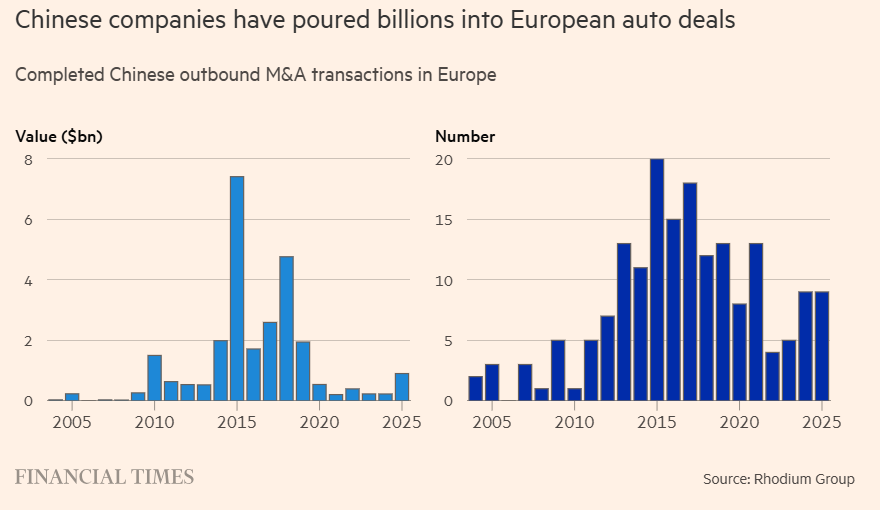
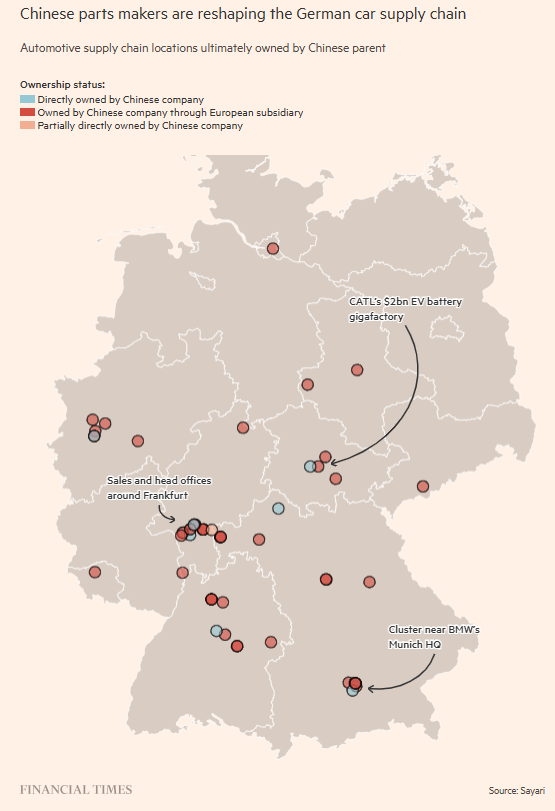
Economists say plans by Chinese automakers to build cars in Europe could bring car assembly jobs without creating industrial value. https://t.co/WsdfY9zQda
🚨 I think this news around Ox Alpha is much more important than it looks because its emergence says something much deeper about the actual state of the AI industry.
📈 Ox Alpha appeared anonymously on OpenRouter with around 1 million tokens of context, multimodal capabilities and extremely generous free access. It quickly attracted developers to the point where Stripe CEO Patrick Collison described it as “very impressive.” Some of the spectacular figures initially circulating were based on tiny samples, while broader evaluations are much more nuanced. However, an unknown player can now release a model for free that is good enough for the community to seriously wonder whether it comes from Google, Microsoft or one of several Chinese labs. Two years ago, that would have been hard to imagine.
🇨🇳 If Ox Alpha does turn out to be Chinese, market will wonder how many Chinese companies are now capable of operating close to the technological frontier. This clearly suggests that US semiconductor restrictions, while still highly constraining, are not preventing China from partly compensating through algorithmic efficiency, inference optimization and better use of available compute.
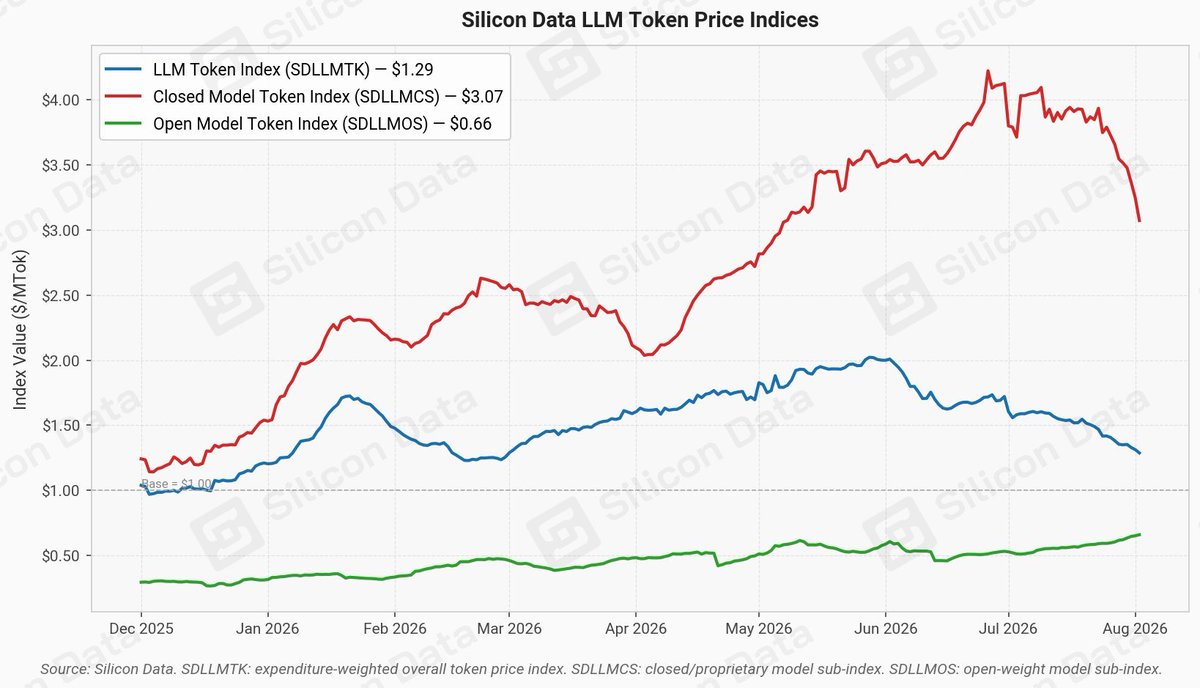
⚠️ For investors, the story becomes huge. If, in a few years, ten models can deliver sufficiently similar performance for 90% or 95% of use cases, the foundation model itself gradually becomes a commodity. A company will not pay ten times more for a few extra points on a benchmark as it will route requests toward the cheapest or most suitable model. The moat then shifts away from the LLM itself toward distribution, agents, proprietary data, software, cloud infrastructure and enterprise integration. This inevitably raises questions around the massive valuations of some pure-play AI companies, whose value still partly rests on the assumption that they will maintain a significant technological lead for a long time.
🤔 I think Ox Alpha is probably being underestimated because it may be another sign that the technological frontier is becoming increasingly crowded and that the cost of producing highly capable intelligence is falling much faster than expected. If we eventually find out that Ox Alpha is Chinese, uses materially less compute than comparable Western models and operates at extremely low inference costs, then it would be fair to ask whether the US AI industry is spending hundreds of billions of dollars building something whose economic rents are being commoditized far faster than anticipated.
At that point, it would no longer be just a technology story as we would need to start reconsidering how value is distributed across the entire AI value chain.
*Bloomberg link: https://t.co/O9MVAOdhZG
*Feedback from Patrick Collison: https://t.co/m57sRWYtMl
*Youtube: https://t.co/YJBFm0JvlV
*Open Router link: https://t.co/V3dSmyulG7
European and Japanese manufacturers including BMW, VW and Nissan have slipped further behind U.S. and Chinese EV makers because of slow adoption of AI, according to Gartner’s 2026 Digital Automaker Index. https://t.co/V7WiU0ZjVH
🇩🇪 Nearly 190,000 German companies ceased operations in 2025, around 10% more than a year earlier. However, only a small share of these closures were actual bankruptcies which means a growing part of the problem is now structural.
📉 Many companies are shutting down because costs are too high, because they cannot find skilled workers, but also because their owners are reaching retirement without finding anyone willing to take over. This is particularly problematic for the Mittelstand, the vast network of family-owned SMEs that forms a crucial part of Germany’s economic model. Many business owners are aging while the country is already short of engineers, technicians, tradespeople and other skilled workers. Therefore, the German economy can remain weak while still suffering from labour shortages. The problem is no longer only a lack of demand but also a lack of available supply capacity within the economy.
⚠️ The government can inject huge amounts of money into infrastructure, defence, energy and digitalisation, and that will obviously support GDP, but creating demand is much easier than creating productive capacity. If too much money starts chasing too few workers and too little productive capacity, part of the stimulus could therefore end up in wages, construction costs and prices rather than in higher real output.
Fiscal stimulus can restart the German cycle, but rebuilding the country’s potential growth will take much longer
*Bloomberg link: https://t.co/fQ98BoeAFU
Très pédagogique debunk de la théorie de J.B. Fressoz et Jancovici selon laquelle, au niveau macro, la transition énergétique n'a pas lieu (énergies "additives"). Janco a une théorie similaire "prouvant" l' échec du numérique pour décarboner.
À montrer à vos potes décroissants.
🇨🇳 Many Chinese cities have refined their local subsidy policy for car consumption such as simplifying the claiming procedure or qualifying more products for the scheme, in order to further stimulate domestic car sales to grow again, according to a report by the Economic Information Daily.
*Places in Shandong, Shanxi and Shaanxi provinces have streamlined the process to claim rebates, such as removing a lottery for the trade-in subsidy and a three-month validity limit. Xi’an city has increased the subsidy to 2,000 yuan for purchases valued between 90,000 yuan and 150,000 yuan, the report said.
*Link (Chinese): https://t.co/KrMAOaIsM7