The Cabinet mini-reshuffle
The cabinet mini-reshuffle has caught people’s attention, but for me it’s less about who was appointed and more about what message these changes are sending.
I attended the National Leadership Retreat earlier this year in March at Gako Military school, where central and local government leaders came together. One thing was very clear; the President was not happy with the state of service delivery and implementation of government programs . He spoke openly about it, the frustration was visible. The message was simple: citizens deserve better.
I have always seen him as a disciplined leader who puts citizens first he has not changed his course and discipline for as longer as he has been a leader . Leaders like him are rare. The issue has never been a lack of vision. The issue has often been implementation. Too many people are comfortable talking about targets and plans, but citizens judge government by what they actually experience when they seek a service.
That is why i see these changes as a signal that performance matters and that there is less and less room for mediocrity.
The appointment of a civilian to lead Zigama-CSS is particularly interesting. It could be a sign that there is a desire to go beyond managing a financial institution and focus more on the welfare of veterans and serving members of the military. Issues such as housing, investment opportunities, social protection and long-term financial security matter to those who have served the country.
At the Ministry of Public Service and Labour, there is a lot of work waiting. The minimum wage debate has dragged on for years. Questions around maternity policy, labour inspections and workers’ rights remain unresolved. Labour governance, frankly speaking, has been messy and many people are waiting to see meaningful reforms.
Infrastructure is another area where expectations are high. We have talked for years about alternative and renewable sources of energy, but progress has been slow. Too often institutions seem to work independently instead of pulling in the same direction.
Trade and Industry may have one of the toughest assignments. Everyone talks about job creation, yet SMEs, which create most jobs, continue to struggle. Access to finance remains difficult, markets are limited and business support is often out of reach. “Made in Rwanda” has become a popular slogan, but slogans alone do not grow businesses. We once had a dedicated Made in Rwanda Secretariat, and today many people are asking what became of it. What SMEs need are practical interventions they can actually feel.
What makes me hopeful is the appointment of a young Minister of Trade and Industry. I have interacted with him before and found him to be humble, approachable and willing to listen. He is down to earth. Those qualities matter because good leadership starts with listening.
In the end, appointments do not change lives on their own. Citizens will judge these leaders by results. They will want to see better services, more jobs, stronger businesses and solutions to the problems that affect their daily lives.
On 22 April 2026, students of the Rwanda Defence Force Senior Command and Staff Course (RDFSCSC), Intake 14, began the Rwanda Patriotic Army (RPA) Liberation War Study Tour (22–24 April 2026), aimed at deepening their understanding of how RPA forces liberated Rwanda from bad leadership and stopped the 1994 Genocide against the Tutsi.
The tour commenced at the Kagitumba border post, where participants received briefings from RDF generals and senior commanders who played a direct role in the liberation struggle.
The study tour enhances students’ understanding of strategic planning and the conduct of military operations.
========================
Ejo hashize, abanyeshuri biga mu Ishuri Rikuru ry’Ingabo z’u Rwanda rishinzwe amahugurwa y’aba Ofisiye bakuru (RDFSCSC), Icyiciro cya 14, batangiye urugendoshuri mu gihugu aho biga ku rugamba rwo Kubohora igihugu bikozwe n’Ingabo za RPA.
Uru rugendoshuri ruteguwe kuva taliki 22 kugeza 24 Mata 2026, rugamije gusobanukirwa uko ingabo za RPA zabohoye u Rwanda mu maboko y'ubuyobozi bubi nuko zahagaritse Jenoside yakorewe Abatutsi mu 1994.
Uru rugendo rwatangiriye ku mupaka wa Kagitumba, aho abanyeshuri bahawe ibiganiro n’abajenerali b’Ingabo z’u Rwanda n’abandi ofisiye bakuru bagize uruhare mu rugamba rwo kubohora igihugu.
Izi nyigisho zifasha abanyeshuri kurushaho gusobanukirwa imipangire y'intambara ni uko abayirwana bashyira mu bikorwa bityo bikabaviramo amasomo abafasha mu kazi ka gisirikare.
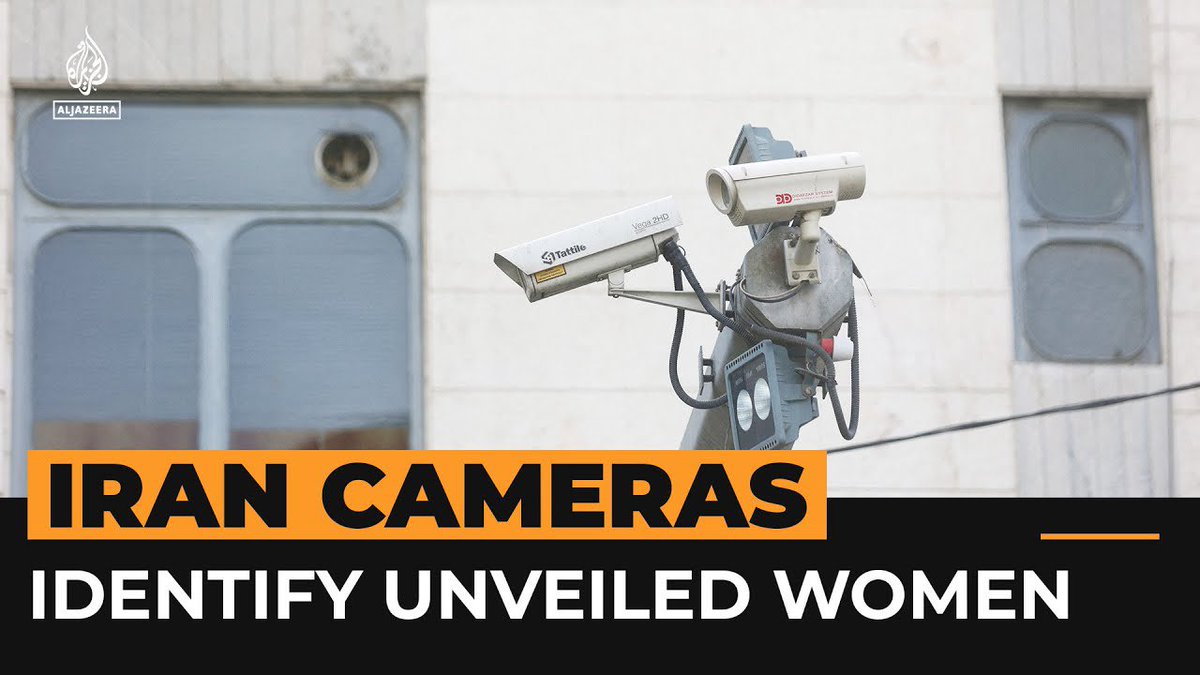
Iran built the most comprehensive civilian surveillance network in the Middle East. Cameras on every street. Facial recognition at universities. License plate readers that automatically fined women for removing their hijab in their own cars. A mobile app called Nazer that let citizens report uncovered women. Drones at beaches. The infrastructure that killed Mahsa Amini in September 2022 and crushed the Woman, Life, Freedom uprising that followed.
Israel hacked nearly all of it.
According to the Financial Times, citing two people familiar with the matter, nearly all of Tehran’s traffic cameras had been compromised for years. The footage was encrypted and transmitted to servers in Tel Aviv and southern Israel. One camera near Pasteur Street proved especially valuable. It was angled in such a way that Israeli analysts could see where members of Khamenei’s security detail parked their personal cars. Through that single camera angle, Israeli intelligence built files on the bodyguards’ home addresses, work schedules, commuting routes, and which senior officials they were assigned to protect.
Unit 8200 used algorithms to process billions of data points into what intelligence officers call a “pattern of life.” A person familiar with the process described it as “an assembly line with a single product: targets.”
“We knew Tehran like we know Jerusalem,” an Israeli intelligence official told the Financial Times. “And when you know a place as well as you know the street you grew up on, you notice a single thing that’s out of place.”
On February 28, when intelligence confirmed Khamenei would attend a morning meeting at his compound near Pasteur Street, the operation entered its final phase. Israel disrupted approximately 12 cellular antennas in the area, causing phones to appear “busy” when dialed. Khamenei’s security detail could not receive warnings. Israeli aircraft fired 30 precision munitions. The strike was carried out in daylight for tactical surprise.
Former Mossad official Sima Shine told the Financial Times that Israel’s strategic focus on Iran dates to a 2001 directive from Prime Minister Ariel Sharon. Twenty-five years of patient intelligence collection culminated in a single Saturday morning.
Here is the part that should stay with you.
The cameras Israel hacked were not military installations. They were the regime’s domestic surveillance apparatus. The same cameras that tracked women who removed their hijab. The same system that sent automated text messages to women in Isfahan accusing them of “improper veiling.” The same infrastructure the Guidance Patrol used to build digital dossiers on Iranian women and girls for the crime of showing their hair.
Israel turned the tools of the morality police into the tools of the regime’s destruction.
There is a viral claim that after the assassination, Mossad wiped the morality police’s databases on Iranian women. No Tier 1, 2, or 3 source confirms this. It traces to a single unverified social media post. I will not present it as fact.
But the verified reality is extraordinary enough. The regime built a surveillance state to control its own women. A foreign intelligence service co-opted that state to kill the man who ordered it built. The cameras that watched women became the cameras that watched Khamenei die.
That is poetic justice written in code.
https://t.co/ULBgEzZ3A8
Please take the time to listen to the CiC of Gen Z, @IngridCyitatire
🇨🇩 Who is working for you: for your healthcare, your children’s education, and your future? Qui?????
My people 'PABLO by HUNN!' https://t.co/0dVjpx9dg8…
🥶🥶
A very electrifying 5 tracks EP, released today on August 9, go check it up and thank me later 📌
@rmh_rw
Happy #WorldPressFreedomDay! Today we celebrate the free press & the courageous journalists who bring us the truth. Here's to a world where information is accessible & voices are heard🥳