@mccarthymt7 You are Michael, I am in no doubt. But plenty of our peers aren't. I work hard in Australia and I assumed my colleagues are doing the same in Ireland, but my recent experience has not been this at all.
@CormacLucey@mccarthymt7@Conor1960 I agree with you. My experience of recent Irish hospital consultants has been invisibility, zero accountability and untouchability. As an Irish medical trainee I am disgusted and can understand how cases like the one above has happened.
@mccarthymt7 You might be doing 168 hours oncall, but plenty of others are double dipping and committing fraud, as has been exposedto be fair Michael I work in Australia and I am oncall every night after my list (I am an anaesthetist) and just view that as extended care towards my patients.
“Can I bring my baby to the interview?”
The message came in at 11 PM:
“Hi, I have an interview with you tomorrow at 2 PM. My childcare fell through. Can I bring my 8-month-old? I understand if you need to reschedule.”
Old me would have rescheduled.
Unprofessional. Distraction. Red flag.
New me replied:
“Absolutely. See you tomorrow.”
She showed up with her baby on her hip.
She apologized three times before even sitting down.
Ten minutes in, the baby started crying.
She tried to soothe him while answering questions.
She apologized again.
I stopped the interview and said:
“Hey. You’re managing a fussy baby, answering complex questions, and staying calm under pressure. That’s literally the job. Handling chaos while staying professional. You’re already proving you can do it.”
Her eyes filled with tears.
We hired her.
She’s been with us for a year now.
The most reliable team member we have.
Why?
Because when you’re used to handling a screaming infant at 3 AM and still showing up to work the next day, workplace stress feels like nothing.
Working parents, especially mothers, are some of the most organized, efficient, and resilient people you’ll ever hire.
Yet we lose them because our hiring processes are built for people with zero caregiving responsibilities.
If your interview process can’t accommodate a parent facing a childcare issue, you’re not filtering for professionalism.
You’re filtering for privilege.
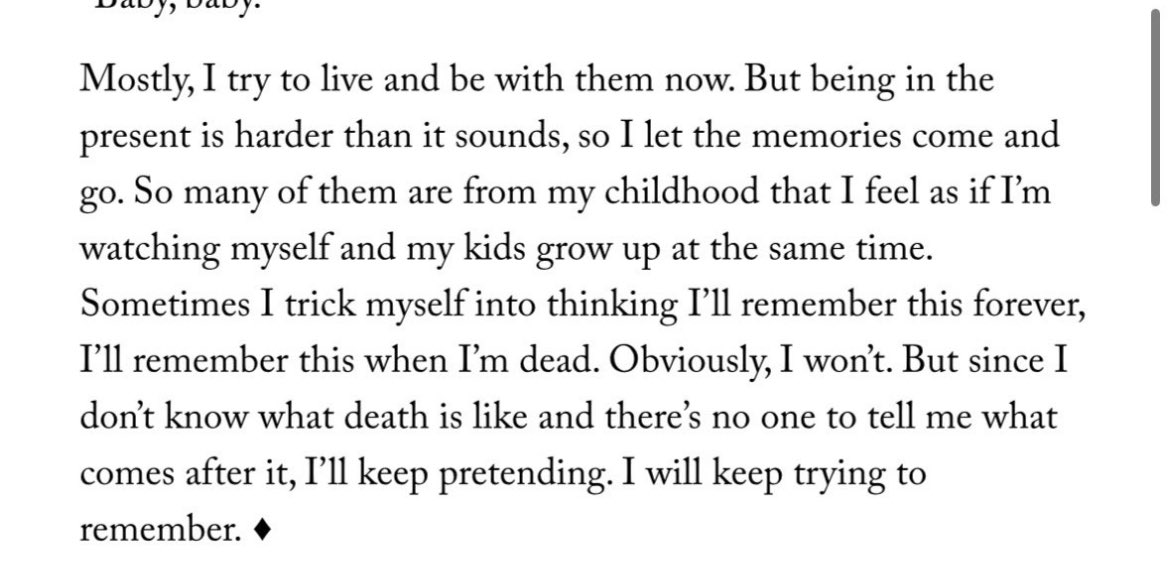
“When you are dying, at least in my limited experience, you start remembering everything.” Tatiana Schlossberg, the daughter of Caroline Kennedy, writes about receiving a terminal diagnosis. https://t.co/cqpafPbNOj
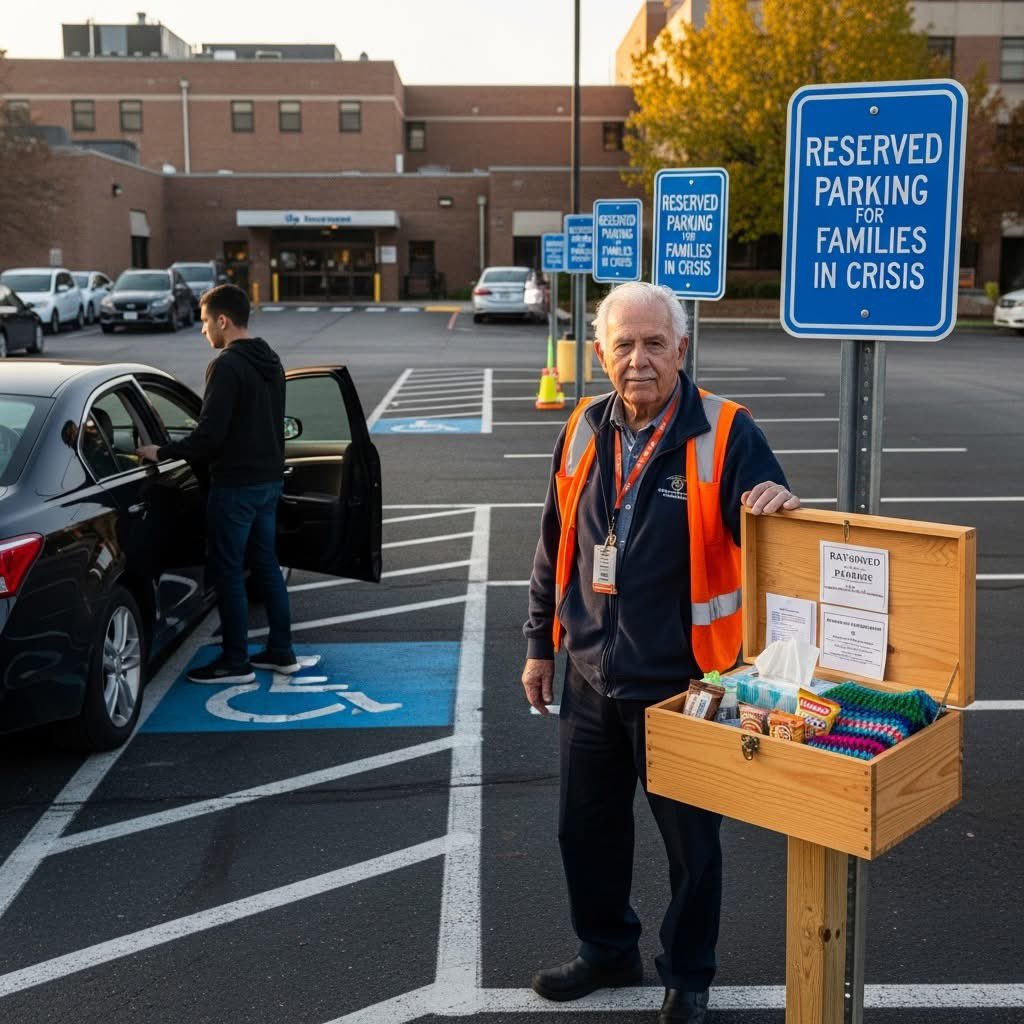
"My name's Raymond. I'm 73. I work the parking lot at St. Joseph's Hospital. Minimum wage, orange vest, a whistle I barely use. Most people don't even look at me. I'm just the old man waving cars into spaces.
But I see everything.
Like the black sedan that circled the lot every morning at 6 a.m. for three weeks. Young man driving, grandmother in the passenger seat. Chemotherapy, I figured. He'd drop her at the entrance, then spend 20 minutes hunting for parking, missing her appointments.
One morning, I stopped him. "What time tomorrow?"
"6:15," he said, confused.
"Space A-7 will be empty. I'll save it."
He blinked. "You... you can do that?"
"I can now," I said.
Next morning, I stood in A-7, holding my ground as cars circled angrily. When his sedan pulled up, I moved. He rolled down his window, speechless. "Why?"
"Because she needs you in there with her," I said. "Not out here stressing."
He cried. Right there in the parking lot.
Word spread quietly. A father with a sick baby asked if I could help. A woman visiting her dying husband. I started arriving at 5 a.m., notebook in hand, tracking who needed what. Saved spots became sacred. People stopped honking. They waited. Because they knew someone else was fighting something bigger than traffic.
But here's what changed everything, A businessman in a Mercedes screamed at me one morning. "I'm not sick! I need that spot for a meeting!"
"Then walk," I said calmly. "That space is for someone whose hands are shaking too hard to grip a steering wheel."
He sped off, furious. But a woman behind him got out of her car and hugged me. "My son has leukemia," she sobbed. "Thank you for seeing us."
The hospital tried to stop me. "Liability issues," they said. But then families started writing letters. Dozens. "Raymond made the worst days bearable." "He gave us one less thing to break over."
Last month, they made it official. "Reserved Parking for Families in Crisis." Ten spots, marked with blue signs. And they asked me to manage it.
But the best part? A man I'd helped two years ago, his mother survived, came back. He's a carpenter. Built a small wooden box, mounted it by the reserved spaces. Inside? Prayer cards, tissues, breath mints, and a note,
"Take what you need. You're not alone. -Raymond & Friends"
People leave things now. Granola bars. Phone chargers. Yesterday, someone left a hand-knitted blanket.
I'm 73. I direct traffic in a hospital parking lot. But I've learned this: Healing doesn't just happen in operating rooms. Sometimes it starts in a parking space. When someone says, "I see your crisis. Let me carry this one small piece."
So pay attention. At the grocery checkout, the coffee line, wherever you are. Someone's drowning in the little things while fighting the big ones.
Hold a door. Save a spot. Carry the weight no one else sees.
It's not glamorous. But it's everything."
Let this story reach more hearts....
Credit: Mary Nelson
@NicholasChrimes Totally agree with you @NicholasChrimes. I adore TIVA and use it as much as I can, but I have a couple of habits to try to avoid awareness in my own practice. And not inducing with a pump is one for sure...
@maffygirl@DrNeilStone Yep, just like you Mary Ann I would have not survived natural labour (despite desperately wanting vaginal deliveries) and needed caesarean sections for my children. I am desperately grateful for modern medicine. In a hospital.
If you feel like you're bad at your job and it's making you depressed, just consider that, as the investigation of the recent heist revealed, the password to access the Louvre's videosurveillance system was "Louvre".
Narcissistic leaders truly ruin departments. They spread toxicity, they have no insight and they lose staff. Plus they surround themselves with admirers, so they can reinforce their daft, narcissistic views. Truly awful.
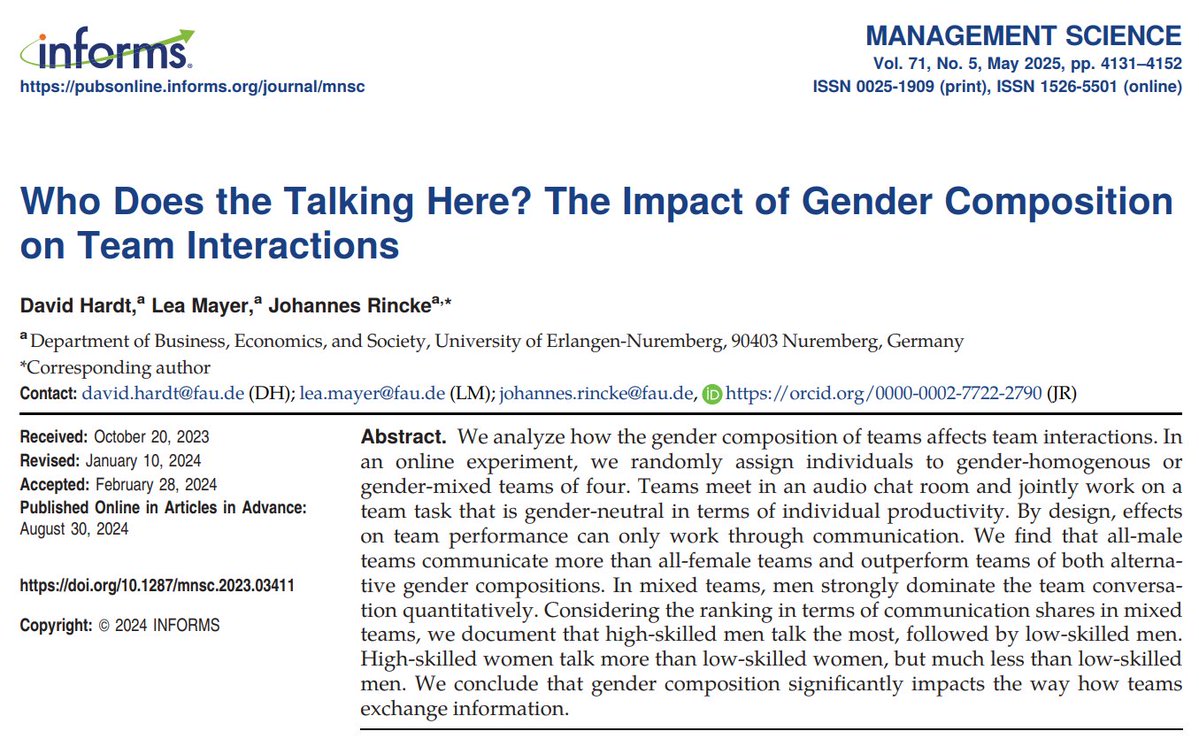
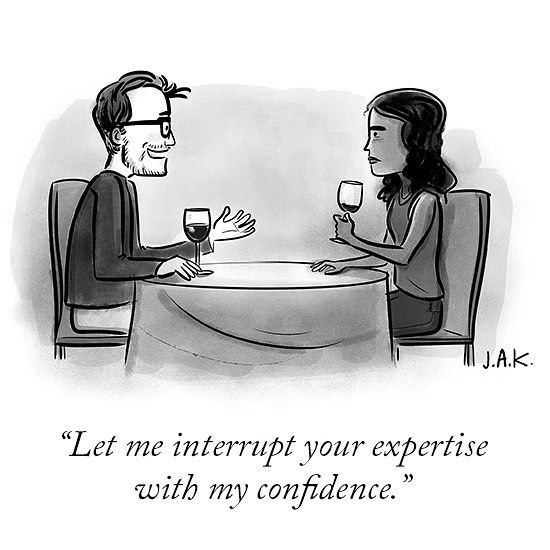
Too many mediocre men talk over capable women.
Study of problem-solving teams: Men dominate the conversation, taking 50% more turns and saying 69% more than women. Men with low skill speak more than women with high skill.
It's long past time to value competence over confidence.
Hotel review: ‘My jaw hits the floor before my case’ at one of Ireland’s best three-stars | Irish Independent.
Thank you @poloconghaile and @Indo_Travel_ for your amazing review. We are so proud! https://t.co/delUDHIkTx