Rindu betul aku dekat tempat ni bila tengok membe2 up video. Sesuai untuk yg enjoy slow hike mellow sambil dengar sigur ros silalah dm @radpackertravel kt sini atau dm dekat ig dorang. Ada open trip. 5d4n disconnect dgn dunia luar.
Hampta Pass, Manali India.
@twt_outdoor
The untold story of Malaysia's role in SpaceX's survival.
Malaysia was instrumental in keeping SpaceX alive in its early years. One could argue it helped save Elon during his lowest financial period.
Falcon 1's first three launches, 2006 to 2008, all failed. The company was nearly bankrupt — grown men were weeping after the third failure. The fourth flight in September 2008 finally reached orbit with a dummy payload, RatSat. But still, no paying customer.
SpaceX needed a real commercial customer to prove the business was viable.
That customer was Malaysia.
Malaysia was looking to launch its satellite, RazakSAT, and needed a reliable, cost-effective option. Dr Ahmad Sabirin first give Elon a call on Christmas 2003 to explore the possibilities of launching of satellite to the low equatorial orbit and met in El Segundo, And after many discussions, they agreed to launch from Omelek Island in the Kwajalein Atoll.
On July 14, 2009, RazakSAT flew — the fifth and final Falcon 1, and SpaceX's first-ever commercial launch. The Malaysian flag Jalur Gemilang was painted on the side of the rocket.
That payment helped SpaceX make payroll through its hardest stretch. And it put Malaysia in orbit. Win win.
For old times' sake, Elon should drop by Malaysia. Ask someone to hold his teh tarik for one more handshake.
Dr Ahmad Sabirin & Elon, 2004.
Mahkamah Tinggi menyatakan bekas Perdana Menteri, DS Najib Razak tidak pernah menunjukkan rasa kesal atas salah laku yang menyebabkan Malaysia mengalami kerugian kewangan besar.
Hakim Collin Lawrence Sequerah berkata 1MDB yang asalnya ditubuhkan untuk merangsang pertumbuhan ekonomi negara akhirnya menjadi antara skandal rasuah kewangan dan pengubahan wang haram terbesar abad ke-21.
Kredit Gambar: Bernama
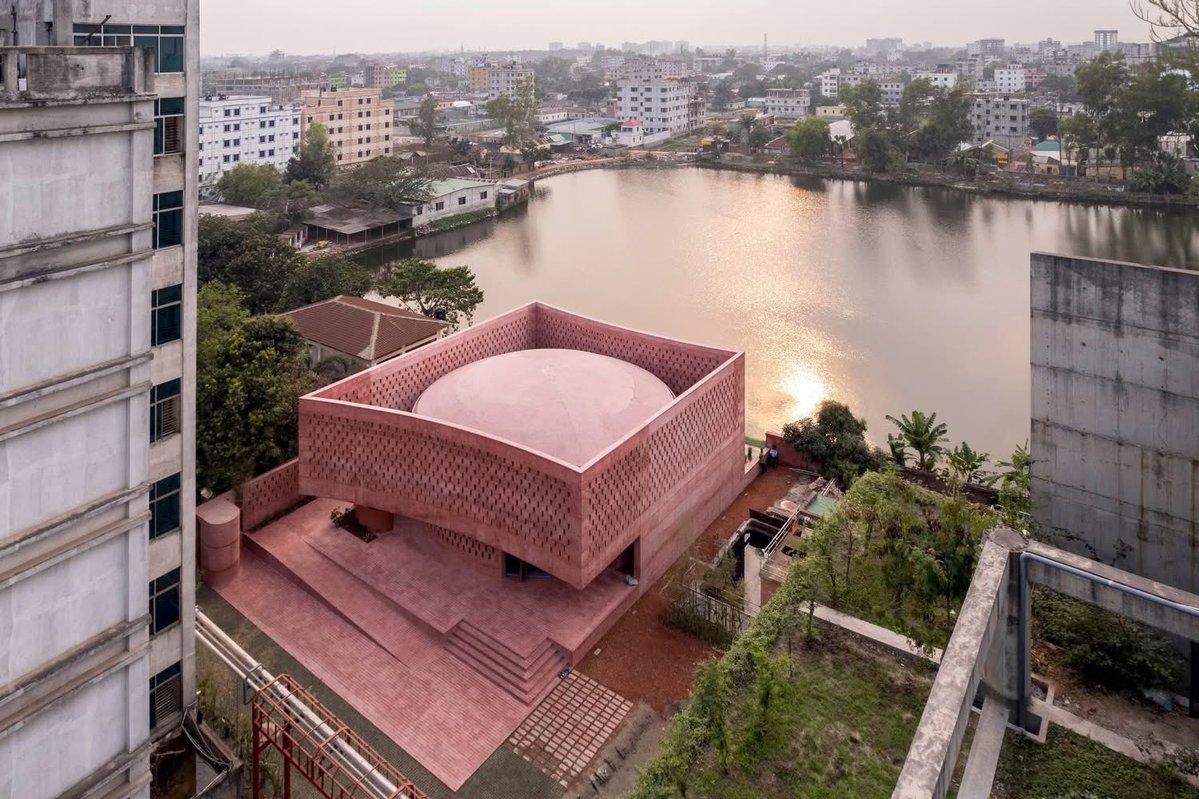
A factory owner in Ashulia, Bangladesh, wanted to build a mosque for his workers. He gave the commission to a Bangladeshi architect. Not an imported name. Not a foreign firm. A local architect who understood the land, the climate, and the culture she was building for.
In 2025, Time Magazine named it one of the greatest places in the world, the first Bangladeshi building to ever appear on that list.
The entire structure is one material. One colour. Pink-pigmented concrete, perforated with small rectangular voids that filter light into the prayer hall the way hanging lanterns did in old mosques. A dome floats unsupported over the circular prayer space. The high plinth references the Bhiti, the earthen mound that Bangladeshi homes have been built upon for centuries in the deltaic floodplain. The building knows where it comes from because the architect did.
Across Africa, clients with the same resources make a different call. Foreign firms. Imported aesthetics. Buildings that could exist anywhere. The brief gets fulfilled. The opportunity gets wasted.
Trusting a local architect with his mother’s name just made global history. That should mean something to us.
Zebun Nessa Mosque, Ashulia, Bangladesh 🇧🇩 | Studio Morphogenesis | Lead Architect: Saiqa Iqbal Meghna | 6,060 sq.ft | 2023 | 📷 Asif Salman, City Syntax