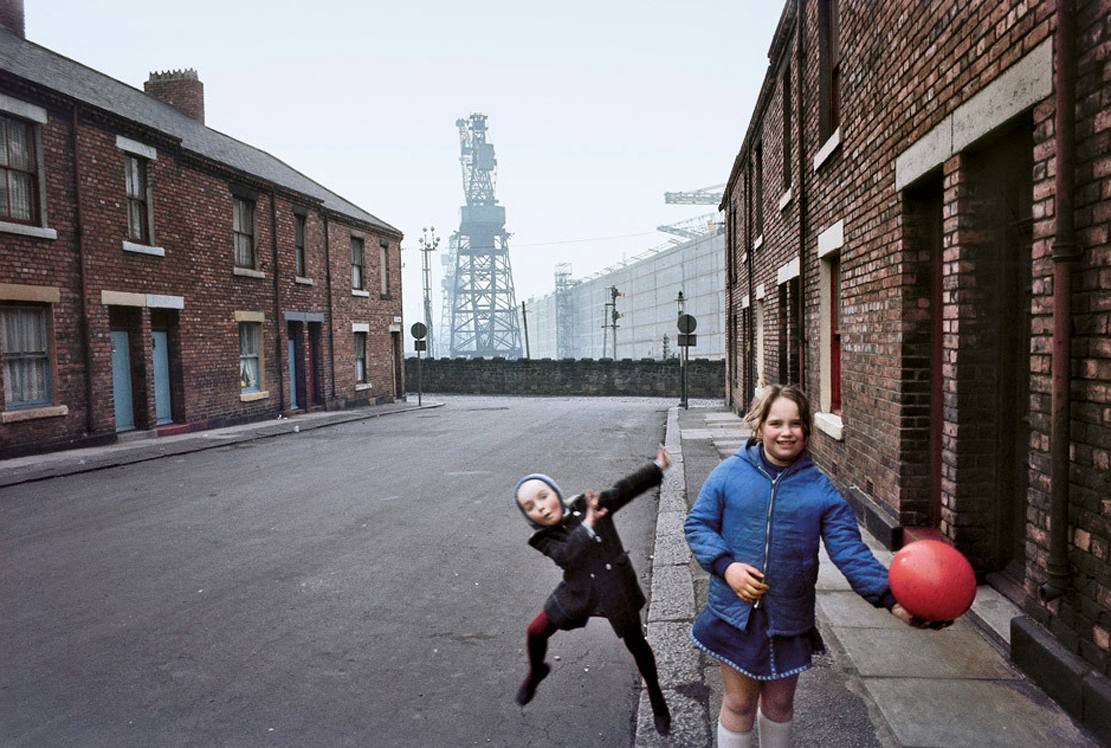
People like this used to run the West.
Then we decided women and men are the same, the Central Bank should print currency out of thin air, women in HR should gatekeep labour despite not understanding what that labour does, relationships should be routed via opaque algorithms run by for-profit corporations whose interest is to keep you on an app, religion is useless, trans people are normal, spending all day on a screen is great, flooding your country with third world immigrants is expected and if you disagree you are a racist, the mainstream media is the sole arbiter of truth even though all they do is lie, your children should be educated by Marxists from the age of 5-23, and housing is a financial vehicle to be leveraged by the elite rather than a place for normal people with a family to call home.
Geeze, I wonder where we went wrong?
"As for the war memorial in the centre of Bothelford, a tall limestone design with a Celtic cross shooting up from it, none disturbed the Arab who sat there and smoked and poured Red Bull on the names of the men, the dates of their deaths. None even thought of him. Minds glimpsed him and deleted him, having learned how to neglect the real world for the phone." - Edward McLaren, Bothelford's Gone
TUFTY UPDATE: Tufty, our beloved red squirrel, is in danger of extinction. Yet all is NOT lost!
Pine martens will secure a future for tufty children.
The rapacious invader Mr Grey refuses to remigrate and so he will now be eaten instead. HOORAY!
https://t.co/JGbOm64PyT
This thread details the recent sexual assaults and rapes in Britain carried out by asylum seekers.
Retweets and additional contributions are greatly appreciated.
Hope not Hate claims to be a charity “fighting against far-right extremism”.
But did you know that they also have a political wing led by Nick Lowles with DIRECT ties to the Israel Lobby?
I’ve been looking into their records at Companies House, and here’s what I discovered:🧵
Once again my most recent and perhaps last ever Substack post, An Historical Critique of Ernst Nolte in Light of the History of Ethnic Germans in the USSR.
Ernst Nolte proposed during the Historikerstreit in the 1980s that much of the violence by the German state under the NSDAP was a reaction to earlier violence by the Soviet state. That is German state violence, particularly in the east, was in part a rational response to Soviet violence which was viewed as an existential threat to the German people. He emphasized the violence of the Cheka during the Red Terror and the GULag system of camps as metonyms for this mass violence (Nolte).
Missing from his argument were two very important facts. The first was the disproportionate number of Jews involved in this violence. This was despite the fact that Jews made up between 40% and 60% of the ruling Politburo during the Red Terror from 1918-1922.
https://t.co/KQnG6ANStE
Then there was the Jewish domination of the GULag leadership from 1930 to 1938 under Lazar Kogan, Matvei Berman, and Izrail Pliner. Other GULag officials immediately below them included other Jews like Naftaly Frenkel, Semyon Firin, and Yakov Rapaport. His failure to connect National Socialist violence against Jews to the disproportionate role of ethnic Jews in Soviet violence during the 1920s and 1930s, however, is perhaps the lesser of his two main omissions. After all the idea of “Judeo-Bolshevism” and the association of Jews with the regimes of Lenin and Stalin in the USSR was not a historical secret in the 1980s. His bigger omission is in neglecting to note the specific anti-German character of much of Soviet internal violence during the 1920s and especially the 1930s. Some of this was known in the 1980s due to the efforts of various Germans both in Germany and in the diaspora to publicize things like the famines in Ukraine and the Volga German ASSR from 1932-34. Other events such as the German Operation in 1937-38 were far less known in the 1980s due to the relevant Soviet archives still being completely closed.
The violent internal deportation of kulaks, and the subsequent famines in Kazakhstan, Ukraine, and Volga German ASSR were far more lethal than either the Red Terror from 1918-1922 or deaths in Soviet camps, 1918-1940. Calculating the deaths from both dekulakization and the famines of the 1930s is difficult for a number of reasons pertaining to poor record keeping in the USSR. There are no total recorded figures for the deaths of deported kulaks to special settlements in 1930-31. The OGPU did not start keeping annual figures on deaths in special settlements until 1932. So the first two years are missing. From 1930-31 the OGPU recorded internally deporting 1,803,392 people to special settlements as part of dekulakization (Zemskov, p. 16). By 1 January 1932, the OGPU only recorded 1,317,022 deported kulaks still in special settlements (Zemskov 2005, table 2, p. 20). Nearly half a million deportees had disappeared either through escape or death. The exact portions of these two causes is impossible to determine. Oleg Khlevniuk, however, estimates that deaths account about 200,000 out of the almost 500,000 missing special settlers (Khlevniuk, p. 327). In addition to the 389,521deaths recorded in special settlements by the OGPU from 1932-40 this brings the total number of deaths due to dekulakization to nearly 600,000. This represents about 15% of the almost 4,000,000 people deported to special settlement villages during the 1930s (Zemskov, table 2, p. 21). But, ethnic Germans particularly those from the Volga German ASSR represented a disproportionate number of these deportees. In part this was due to being economically more successful than the surrounding Slavic population. But, a notable part of their overrepresentation among special settlers in the 1930s was their deliberate targeting on an ethnic basis by various officials in the OGPU. This specific targeting of ethnic Germans on the basis of natsional’nost’ began already in 1929 in Ukraine.
The first decree specifically singling out ethnic Germans for repression in the USSR came early on in the dekulakization of Ukraine. On 27 March 1929, the Central Committee of the Communist Party, Ukraine (Bolshevik) issued a decree titled “On Evicting Germans from Nikolaev Okrug” (Chentsov, p. 42). It is not possible to give an exact number of Germans in Ukraine to undergo dekulakization. In 1930-31, the initial wave of dekulakization saw the OGPU forcibly deport 63,817 families or around 315,000 people from Ukraine to special settlement villages (Zemskov, table 1, pp. 17-18). This was about 1.1% of the population of the Ukrainian SSR according to the 1926 census. In the USSR as a whole the first wave of dekulakization saw the OGPU forcibly resettle 1,803,392 people to special settlements (Zemskov, p. 16). This represented about 1.2% of the population of the USSR. The example of Luxemburg Raion is instructive here. Out of some 20,000 people in the district the OGPU deported as kulaks 166 German households or about 850 people. This was 4.25% of the total population of the raion (Chenstov, p. 46). A far higher percentage of Germans in the USSR especially in the Volga German ASSR underwent dekulakization than the population as a whole.
The OGPU deported 4,288 families as kulaks from the Volga German ASSR. This represents about 25,000 people (German and Pleve., p. 39). Another 25,000 or so ethnic Germans in the USSR outside the Volga German ASSR were also deported as kulaks (Krieger 2013, p. 240). So in total around 50,000 ethnic Germans in the USSR were subjected to internal deportation to special settlement villages for being kulaks. The OGPU thus deported about 4% of ethnic Germans to special settlements during dekulakization vs. 1.2% for the USSR as a whole. In the Volga German ASSR it was even higher at 6.6% (Krieger 2006, table 1, p. 133). The regional variations in places like Crimea were often even higher. For instance in Evapatoria Raion in Crimea a full 17% of German households were dekulakized in 1930 (GARF F. 3316, O.64, D. 760, l. 78). Not all of this was due to ethnic Germans being economically more prosperous farmers. Much of it was ethnically motivated. For instance according to one of the Soviet government’s own reports out of 30 German households dekulakized in Krasnokust Raion in the Volga German ASSR a full 26 were middle peasants and not kulaks (GARF F. 3316, O. 64, D. 760, l. 78). This dispossession of German farmers branded as “kulaks” was in point of fact frequently framed in ethnic terms by Communist Party Officials. On 25 March 1930, a report to the Central Committee of the Communist Party of Turkmenistan by Dvoretskov noted, “In relation to the German settlements, it goes without saying it is not possible to speak about any type of collectivization, because Germans are kulak colonizers to the marrow of their bones.” (GARF F. 3316, O. 64, D. 760, l. 78). Subsequent to this mass forced resettlement of farmers to remote special settlement villages both Ukraine and the Volga German ASSR suffered from devastating famines.
Much has been written about the Holodomor in Ukraine so this article will only briefly cover it. The causes and general results of the Holodomor are well known. What is more difficult to ascertain is the number of victims, particularly those belonging to national minorities such as the Germans. But, it appears that the percentage of Germans to perish in the Holodomor was just slightly below that of the Ukrainian majority, about 12.5% vs. 13%. That would be about 50,000 Germans. The statistical data is grossly incomplete. But, the estimates of historians like Viktor Krieger suggest that this is a minimum figure (Krieger, 2013 pp. 240-242.). The German government was well aware of the Holodomor and the starvation of ethnic Germans in Ukraine (Fonzi). The losses in the Volga German ASSR at this time were even higher and maybe even better known in Germany than the events in Ukraine.
The famine in the Volga German ASSR from 1932-1934 unlike the one in Ukraine effected primarily ethnic Germans. It also had an overall higher mortality rate. The territory had an estimated excess death rate of 20.75% during these years versus 13.33% for Ukraine. Even the hardest hit oblasts in Ukraine, Kiev at 20.3% and Kharkhiv at 19.4% had lower death rates than the Volga German ASSR (Levchuk et. al. Figures 1 and 2). In absolute numbers over 20% of the population of the Volga German ASSR was over 120,000 people. The vast majority of these deaths were of ethnic Germans.
The famine in the Volga German ASSR became well known to the public in Germany during 1933 through the work of National Socialist activists like Adolf Ehrt and Hans Steinarcher. Ehrt himself was a Volga German born in Saratov and wrote a 17 page pamphlet titled Bruder in Not on the famine. Steinarcher was Austrian, but chairman of the Volksbundes für das Deutschtum im Ausland and involved in raising awareness of the famine in 1933. Die Welt-Post covered his activities on behalf of famine victims in the Volga German ASSR on 3 August 1933 with the article, “Der Hungertod unter den Deutschen an der Wolga.” The German government and public were thus well aware of the plight of their ethnic kinsmen in the USSR during the 1930s.
Nolte specifically compared the GULag to Auschwitz. But, the time frames of operation, geographical expanse, and mortality rates of the two differed greatly. This comparison is a far worse one than others that could have been made. Piper places the number of people sent to Auschwitz at 1.3 million of which only around 200,000 survived. That is a death rate of almost 85% vs. about 15% for the GULag as a whole from 1930 to 1960. For instance just on absolute numbers a comparison of Treblinka and the executions of the Great Terror of 1937-38 are much closer. The Hoefle telegram and Korherr Report give a figure of 713,555 sent to Treblinka.
https://t.co/YeCw8WUAy5
This is close to the number of death sentences on cases of the NKVD for 1937-38 at 681,692 out of 799,455 for all security organs from 1921-53 (Pohl, 1997, 7-9). The targeting of the executions during the Great Terror is also more relevant to the influence of Soviet crimes on the National Socialists. In 1937-38 ethnic Germans were arrested, tried, convicted, and sentenced to death in large numbers both in the German Operation and Kulak Operation . But, the largest number of deaths resulting from incarceration in GULag camps and colonies took place from 1941-45 during the war. The recorded number of deaths in ITLs and ITKs during these five years was 932,268 or more than double the entire decade of the 1930s (Applebaum, p. 519). This is a rate four times that of the 1930s.
While the GULag camps and colonies caused around 2.5 million deaths (14%) out of some 18 million people to pass through them they were not the major form of repression imposed upon ethnic Germans in the USSR (Mikhail Nakonechnyi). From 1 January 1936 to 1 July 1938 out of 1,420,711 political arrests in the USSR by the NKVD 75,331 were ethnic Germans (Viktor Krieger et al. 2006, p. 16). This was about 5% of the total German population of the USSR. The majority of these mostly men, some 46,000 received death sentences and were shot in 1937-38 (Pohl 2022, p. 71). In total 681,692 people were shot for political reasons by the NKVD during these two years (Pohl,1997, pp. 7-9). Another 26,000 Germans were sent to labor camps at this time. The number of ethnic German in the Soviet Union sentenced to terms in ITLs during the 1930s was thus far fewer than those shot in 1937-38. But, even this figure is dwarfed by the number that died from famine related causes during 1932-34. It is likely that at least 150,000 ethnic Germans perished from famine in the USSR during these years, mostly in the Volga German ASSR and Ukraine.
The German Operation by the NKVD during the Great Terror hit ethnic Germans in the USSR, especially the Black Sea Germans in Ukraine especially hard. Not everybody arrested, convicted, and sentenced during the German Operation was ethnically German. It also effected some non-Germans. But, out of 55,005 convictions during the German Operation about 69% or 38,000 were ethnic Germans. Out of 41,898 executions around 29,000 were ethnic Germans with another 9,000 sent to labor camps. Surprisingly few of these were in the Volga German ASSR, only 1,002 convictions of which 567 were death sentences. The focus of the German Operation was in Ukraine. Here the NKVD convicted 21,299 people and sentenced 18,005 to death (Pohl 2022, pp. 69-71). The German Operation involved a number of notable Jews with high ranking positions in the NKVD. In Moscow directly under Yezhov there was Leon Belsky (Levin). He served as Deputy People’s Commissar of the NKVD from 3 November 1936 to 8 April 1938 and then First Deputy People’s Commissar of the NKVD until 1 April 1939. In Kiev the head of the NKVD of the Ukrainian SSR was Izrael Lepelvsky from 4 June 1937 until 25 January 1938. He was succeeded by Aleksander Uspensky, an ethnic Russian. In Ukraine under Leplevsky, 6,294 ethnic Germans were shot by the NKVD and 632 sent to labor camps. (Bednarek et al. eds., 2012, pp. 206-215). The German government in Berlin was informed of this operation already on 7 August 1937 by telegram from its embassy in Moscow ( Eisfeld, p. 107). The German government was again from the beginning fully informed about the persecution of ethnic Germans in the USSR and the NKVD officers involved.
Both the famines and the Great Terror influenced a number of ethnic Germans especially Black Sea Germans in Transnistria to engage in retaliatory violence against Jews (Vossler). Around 130,000 ethnic Germans in the region avoided forcibly deportation to Kazakhstan by the NKVD in 1941. Many of the young men remaining in this cohort volunteered to assist Einsatzgruppe D under Otto Ohlendorf in shooting some 35,000 Jews (Steinhart, p. 1). This was about half of the Jews shot by Einsatzgruppe D and well over a third of the total number of people shot by the task force.
Retaliatory violence against Jews by the German government at the highest level manifested itself in fall 1941. In direct retaliation for the deportation of the Volga Germans from 3-20 September 1941, Hitler finally gave the green light to deport German, Austrian, and Czech Jews to the ghettos in Lodz, Minsk, and Riga. This came about as a result of a meeting between Hitler and Rosenberg.
“On September 14, however, Rosenberg urged Hitler to approve the immediate deportation of German Jews in retaliation for the Russian deportation of Volga Germans to Siberia. Four days later, Himmler informed Greiser of interim deportations to Lodz because the Fuhrer wished to make the Old Reich and the Protectorate Judenfrei as soon as possible, if possible by the end of the year. In Prague, shortly thereafter, Heydrich likewise announced the Fuhrer’s wish that, insofar as possible, the German Jews were to be deported to Lodz, Riga, and Minsk by the end of the year.” (Browning, pp. 114-115.).
The deportation of the Volga Germans as special settlers to Siberia and Kazakhstan was ordered by a joint SNK and CC CPSU resolution of 26 August 1941. The Jewish connection was clear in the role of Lazar Kaganovich as head of the NKPS (People’s Commissariat of Transportation). He was assigned responsibility for the rail transport of the Volga Germans eastward (GARF, F. 9479, O. 124, D 85, l. 6). Although this initial decree was kept secret a second decree by the Presidium of the Supreme Soviet on 28 August 1941 ordering the deportation (RGASPI, F. 17, O. 3, D. 1042, l. 112) was published both in German in Nachtrichten and in Russian in Bolshevik in the Volga German ASSR on 30 August 1941. In total the NKVD deported a recorded 447,168 ethnic Germans from the Volga region to Kazakhstan and Siberia in fall 1941 (GARF, F. 9479, O. 1, D. 372, l. 266-269). In retaliation for the September 1941 deportation of nearly half a million Volga Germans the government in Berlin deported some 20,000 Jews from greater Germany to the Lodz ghetto in fall 1941.
Nolte was correct to note that Soviet terror predated and was more original than National Socialist acts against Jews. But, he seriously underestimated and obscured the fact that much of this terror involved high ranking Jewish officials and that many of the victims were ethnic Germans targeted for being German by blood. The German government under Hitler, however, was well aware of these facts as were ordinary Germans both in Germany and the USSR. This knowledge served to motivate many of the German actions regarding the Jewish Question in 1941. It was the primary motive of Black Sea Germans assisting Einsatzgruppe D and provoked the first deportation of German Jews to the Lodz ghetto in fall 1941. Revenge for Soviet atrocities against ethnic Germans perpetrated by Jewish individuals like Leplevsky and Kaganovich is a deliberately overlooked motivation for German actions in 1941. It is deliberately overlooked because to admit it would necessitate admitting three things that the current US establishment can not admit without endangering its existence. First, that there were high ranking Jews in the Soviet government under Stalin including in the NKVD. Second, that there was ethnic persecution of Soviet citizens of German ancestry during the 1930s and 1940s. Finally, that many high ranking Jews in the Stalin regime were actively involved in the repression and persecution of ethnic Germans in the USSR.
Sources Cited
Applebaum, Anne, Gulag: A History. NY: Penguin Books, 2003.
Bednarek, Jerzy, et al. eds., Poland and Ukraine in the 1930s and 1940s: Documents from the Archives of the Secret Services.Warsaw: Institute of National Remembrance, 2012.
Browning, Christopher, “The Decision Concerning the Final Solution” in Francois Furet ed., Unanswered Questions: Nazi Germany and the Genocide of the Jews. NY: Schocken Books,1989.
Chentsov, V.V. Tragicheskie sud’by: Politicheskie repressii protiv nemtskogo nasaleniia Ukrainy v 1920-e -1930-e gody. Moscow: Gotika, 1998.
Ehrt, Adolf, Bruder in Not. Dokumente der Hungersnot unter den deutschen Volksgenossen in Russland. Berlin: Zentralverband Berlin, 1933.
Eisfeld, Alfred, “Germans of Ukraine in the Interwar Years (1918-1941)”, Problems of World History, no. 10, 2020.
Fonzi, Paolo, “’No German Must Starve’: The Germans and the Soviet Famines of 1931-1933”, Harvard Ukrainian Studies, Volume 38 (Number 1-2), 2021.
German, A.A. and I.R. Pleve, Nemtsy povolzh’ia: Kratkii istoricheskie ocherk. Saratov: Saratov University, 2002.
GARF F. 3316, O. 64, D. 760, l. 78.
GARF, F. 9479, O. 1, D. 372, ll. 266-269.
GARF, F. 9479, O. 124, D 85, ll. 1-17.
Hoefle Telegram
https://t.co/YeCw8WUAy5
Khlevniuk, Oleg,The History of the Gulag: From Collectivization to the Great Terror. London: Yale University Press, 2004.
Krieger, Viktor, Rein, Volga, Irtysh: Iz istorii nemtsev Tsentral’noi Azzii. Almaty: Daik Press, 2006.
Krieger, Viktor, Bundesbuerger russlanddeutscher Herkunft: Historische Schluesselerfahrungen und kollektives Gedaechtnis. Muenster: Lit Verlag, 2013.
Krieger, Viktor, Hans Kampen, and Nina Paulson, Deutsche aus Russland gestern und heute: Volk auf dem Weg. Bundesministerium des Innern und Landsmannschaft der Deutschen aus Russland, Stuttgart, 2006.
MSU list of Soviet Politburo members
https://t.co/KQnG6ANStE
Levchuk, Natalliia et al., “Regional 1932–1933 Famine Losses: A Comparative Analysis of Ukraine and Russia,” Nationalities Papers, vol. 48, Special Issue 3: Special Issue on the Soviet Famines of 1930-1933, May 2020, 492-512 .DOI: https://t.co/MKaul5b1vh
Nakonechnyi, Mikhail, “’Factory of Invalids’: Mortality, Disability, and Early Release on Medical Grounds in Gulag, 1930-1955” DPhil dissertation, Oxford University, 2020.
Nolte, Ernst, “Vergangenheit, die nicht vergehen will: Eine Rede, die geschrieben, aber nicht mehr gehalten werden konnte” 6 June 1986, Frankfurter Allgemeine.
Pohl, J. Otto, The Stalinist Penal System, Jefferson, NC: McFarland, 1997.
Pohl, J. Otto, The Years of Great Silence: The Deportation, Special Settlement, and Mobilization into the Labor Army of Ethnic Germans in the USSR, 1941-1955, Stuttgart: Ibidem Verlag, 2022.
RGASPI, F. 17, O. 3, D. 1042, l. 112.
Steinhart, Eric, “The Transnistria’s Ethnic Germans and the Holocaust, 1941-1942.” MA Thesis, University of North Carolina, 2006.
Vossler, Ronald, Hitler’s Basement: My Search for Truth, Light, and the Forgotten Executioners of Ukraine’s Kingdom of Death. 2016.
Die Welt-Post, Der Hungertod unter den Deutschen an der Wolga, 3 August 1933.
Zemskov, Viktor, Spetsposelentsy v SSSR. Moscow: Nauk, 2005.
“It is very important that the school understands this and is also careful not to ask its students to reproduce images of Jesus, Prophet Mohammed or other figures considered to be prophets in Islam.”
Sharia censorship now official in English state schools.
https://t.co/MvXxFIXuD6
Walking around the migrant areas of London, Birmingham and other major cities, one remembers that these places were, not so long ago, inhabited by Englishmen for generations. Their exile and replacement by migrants is deeply sad.
The process of exile was harrowing in many cases.
The sophists arrive again, parading their half-foreign pedigrees as proof that Englishness is a mere costume, one can slip into it with the right accent, the correct schooling, a timely migration story, and enough invocations of “British values.” They proclaim themselves English, or insist that others of distant extraction are equally so, simply because a birth occurred on this island or because they mouth the approved civic pieties.
This is not innocence; it is intellectual dishonesty dressed as generosity, a deliberate attempt to redefine our peoplehood until it dissolves into nothing more substantial than a flag and a tax code.
English identity is not a contract signed at Heathrow, nor a sentiment acquired through residence permits or selective nostalgia.
It is an ethnic continuity: the product of a specific ancestral population whose genetic signature, cultural reflexes, and historical memory remain overwhelmingly concentrated in the native white British stock descended from the post-Roman Germanic settlements that coalesced into the English people.
Birthplace confers no such transformation. A child born in London to parents whose lineages trace to Lahore, Lagos, or Mogadishu inherits their forebears’ ethnic heritage, not ours. To pretend otherwise is to commit category error on a civilisational scale, confusing legal citizenship (a civic status open to anyone meeting bureaucratic criteria) with ethnic belonging (a matter of descent, kinship, and shared historical substrate).
Those who peddle this birthright fallacy, often men whose own biographies straddle continents, whose features and family trees bear unmistakable marks of elsewhere, are engaged in a subtle form of identity theft.
They seek to universalise Englishness precisely because their own claim to it is tenuous, turning what was once an exclusive inheritance into a diluted franchise available to all comers.
The result is predictable: the native English are told their ancestral homeland is now everyone’s, that resistance to this sleight-of-hand is bigotry, that the demographic tide sweeping through our cities is mere “enrichment” rather than replacement.
And when the indigenous respond with clarity, stating the plain anthropological fact that ethnicity is not negotiable, that our people have a prior and paramount right to this land, the response is the ritual invocation of “racism.”
To the professional offence-takers, the diversity commissars, the liberal establishment that profits from our dispossession: your label is spent. It no longer stings; it merely exposes your intellectual bankruptcy.
Accusing natives of racism for defending their ethnic continuity is the last refuge of those who have no argument left, only moral blackmail. We decline the guilt trip. We reject the premise that self-preservation is prejudice. Realism about blood and belonging is not hatred; it is fidelity to reality.
England is not an idea. It is a people. Those people are the white English, rooted here by unbroken descent. No amount of performative patriotism from late arrivals, no appeals to abstract “Britishness” as a civic catch-all, will alter that truth. We see the manoeuvre for what it is: subversion by redefinition. And we refuse it. This land, this identity, this future is ours alone.
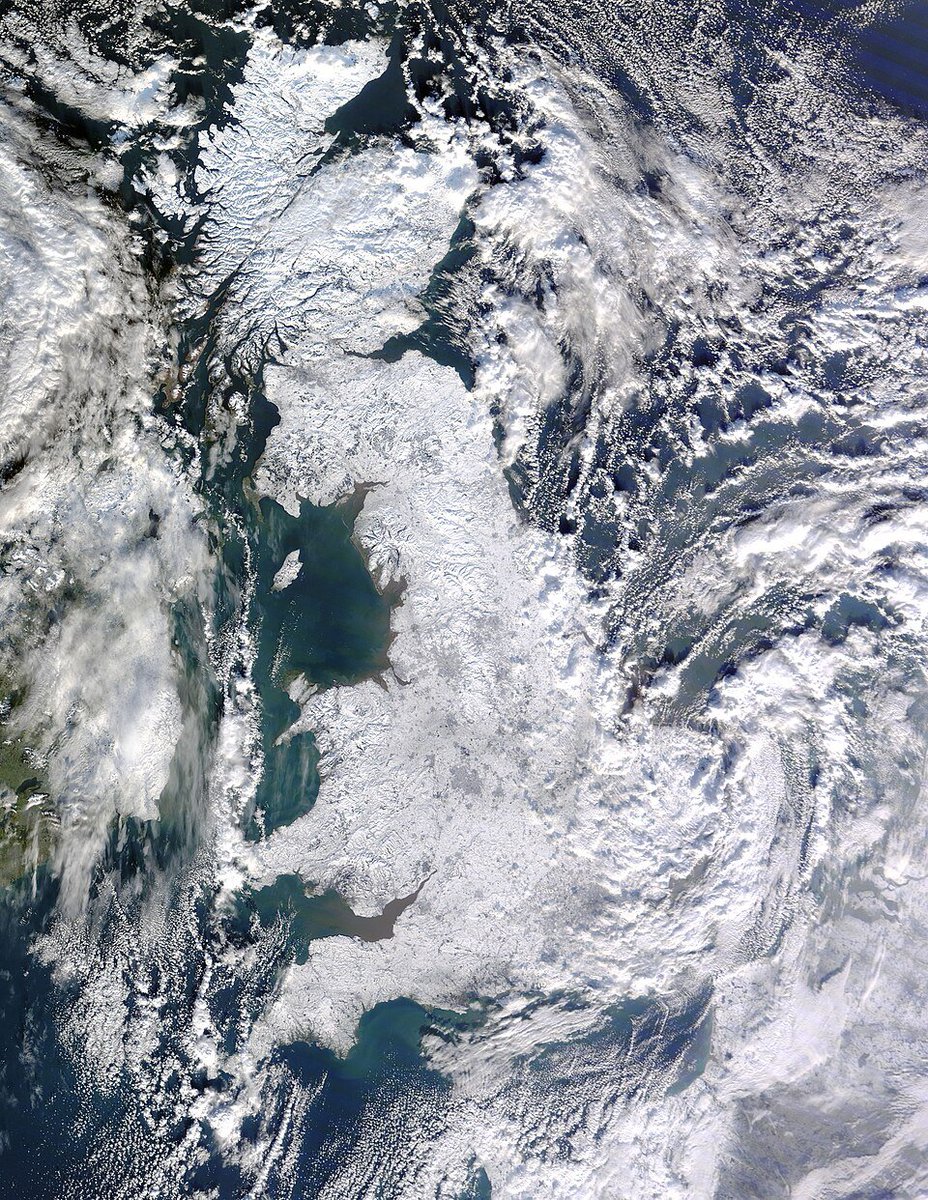
Agriculture in Northern Europe wiped out by a big freeze.
New York underwater.
Southern Europe plunged into drought.
That’s what's coming if the AMOC current in the Atlantic keeps slowing or shuts down altogether.
How can we be so sure? Because we got a preview in 2009. ��
Truth is not determined by consensus. If everyone believes a lie, it remains a lie.
The more a society forces its people to ignore the obvious, the more fragile that society becomes.
A people will not survive if they are taught to be ashamed of their own history, to forget who they are, and to accept that their future belongs to others.
Once, it was understood that a man took pride in where he came from. He honored the struggles of those before him and valued the traditions that shaped him, seeking always to build upon that inheritance. He admired what was foreign, but never at the expense of his own identity. Today, such instincts are condemned. To speak of heritage, of belonging, is now forbidden. What is now required is not merely acceptance of change, but celebration of dissolution.
No civilization has ever thrived by severing itself from its past. No people have ever withstood the test of time by embracing weakness as virtue. A society that tells its sons they have no right to exist, that they must surrender what is theirs, is not a society at all. It is a hospice. The world does not honor those who yield what is theirs. It replaces them.
History is a graveyard of fallen civilizations, filled with peoples who were conquered through decay or extinguished by superior force of arms, whose memory has long since faded. What is unique to the modern age is something altogether different. No other people has so fully embraced its own extirpation from the pages of history as a righteous moral obligation. Among European men alone has this impulse been cultivated into the supreme moral imperative of the age. Yet awareness of this condition is not surrender. It is the first movement toward restoration.
We prevail by remembering who we are, and through that remembrance we rise restored, shaped by what came before us and drawn toward what we are yet meant to become.
If the UK taxpayer can pay for a million immigrants to invade Britain every year, it’s possible to pay a lot less to repatriate the 3.8m from non-EU countries since 2015, the unknown millions since the 2000 UN policy of replacement immigration, and every one of the 1.4m illegals.
The Grooming Gang Crisis is perhaps the most important event in British history—the nightmare scenario sold to our ancestors to make them die in two world wars, and yet accomplished by their own victorious government after. A wound in the heart of every Englishman; treachery on a scale greater than any Guy Fawkes; horror beyond the burnings of Protestant martyrs; falsehood beyond any Medieval manipulation of currency; an implicit abolition of all structures that enabled it; a stain on the Crown, a blot on Parliament; the beginning of a deep murmur at the heart of an angry God, forgotten perhaps for thousands of years, who loves his Angles more than anything; the call of the 21st century to abolish the 20th, now and forever, before it's too late—and a great misfortune in its own right. Consequently, I am publishing a book on the subject with @VaubanBooks that goes further than the Casey Report to suggest that not only is this apocalypse of England to blame on Multiculturalism as such, by drawing from the work of @pmclauth, but it is vital that we appropriately grieve what has happened before we even speculate about what is to be done. Bothelford's Gone is about as difficult a read as it is a necessary one. Nothing in here is made up but the order in which events occur, and, in fact, I had to diminish some of the stories recorded in the Jay report to make what occurs in my story at all believable. That is how bad things were and are.