MIT scientists filmed around 600 raindrops in slow motion to figure out why old houses smell like rain and modern ones don't. The answer is in the floor. Whether you can smell rain at all depends on what your floor is made of.
A raindrop hits something soft and porous like wet soil, clay tiles, or lime plaster, and tiny pockets of air get trapped underneath. Those bubbles pop up through the drop and burst out the top like champagne, sending hundreds of even smaller droplets into the air in a split second. Each one is carrying a molecule called geosmin, which soil bacteria produce. This is what we mean by the smell of rain.
The MIT team published this in Nature Communications. They tested 28 different surfaces. Light and moderate rain produced the most spray, far more than heavy downpours. On sealed, non-porous materials, almost nothing came off at all.
The cement used in modern buildings is about ten times harder than lime plaster, and barely porous at all. A raindrop hitting it releases almost nothing, and the same goes for vinyl flooring, acrylic paint, and glass. An old courtyard home works the opposite way. Thick walls of lime plaster, clay tiles on the floor, and an open courtyard in the middle, so the rain falls inside the house. The drops hit porous earth, and the smell goes straight into your lungs.
Your nose is built for picking this up. Humans detect geosmin at five parts per trillion, an almost impossibly small amount. Sharks detect blood in water at one part per million. That makes us roughly 200,000 times more sensitive to the smell of rain than a shark is to blood. We probably evolved that sensitivity because finding fresh water and fertile ground meant staying alive.
A modern apartment is built to keep weather out: sealed concrete, double-glazed windows, recycled air conditioning, and hundreds of chemicals coming off the paint, vinyl, and carpet. Your nose never gets close to anything wet or breathable. The smell of rain hasn't gone anywhere. Modern architecture just doesn't let your nose near it anymore.
This is why the shift to everyone hating each other has been so hard for millennials.
Many of us went to diverse schools where everyone basically got along. Sure, jokes were made & bad people existed, but there was a general code of respect.
Social media + rage bait ruined that
A psychiatrist named Jan Fawcett tracked 954 depressed patients. He found that one symptom predicted who would die by suicide within a year, no matter how bad their depression was otherwise: losing interest in everything. Doctors call it anhedonia.
It shows up on brain scans. A small region deep in the brain called the reward center quietly stops working, and the brain releases less dopamine, the chemical that makes things feel good. Around 70 percent of people diagnosed with major depression report this loss of interest. A 2024 review in the International Journal of Neuropsychopharmacology found that patients with anhedonia are much more likely to end up with depression that doesn't respond to medication.
The most prescribed antidepressants often fall short on anhedonia. SSRIs like Prozac, Zoloft, and Lexapro mainly raise serotonin, but anhedonia is mostly a dopamine problem, so the standard prescription is aimed at the wrong chemical.
Four treatments have actual evidence. Ketamine, and a nasal spray version called esketamine approved for stubborn depression, can lift anhedonia in hours. Standard antidepressants take weeks. A 2025 paper in the journal Neuron traced this to specific changes inside the brain's reward center. Behavioral activation therapy, where patients schedule small pleasurable activities and force themselves to do them even when they don't feel like it, slowly teaches the reward center to fire again. Exercise releases a brain-repair protein called BDNF that helps rebuild dopamine pathways over weeks. And a treatment called TMS, which uses magnetic pulses on the front of the brain, has shown strong results in recent trials for anhedonia specifically.
There is also a newer research area called digital anhedonia. Brain scans of heavy social media users show the reward center lights up strongly for notifications and feeds but stays quiet for ordinary pleasures like food, conversations, and walks. The reward bar gets reset so high that normal life cannot reach it.
The brain heals. With proper treatment, many people improve within weeks, and the reward system can rebuild over months. So losing interest in everything is treatable. And the first medication doctors usually prescribe is rarely the one that fixes it.
Let me get this straight.
Trump, the only president since Nixon not to release his tax returns, and who promised he would release his tax returns when he was president, is suing the government for $10 billion dollars in "damages" for leaked tax returns which reveal his corruption.
And his DOJ, which is run by his personal lawyer who he appointed as "Acting AG," is going to settle.
So the American people are now gong to personally pay a corrupt president $10 billion of our hard earned tax dollars, because his feelings got hurt when his shady tax returns were leaked?
Got it. 👌
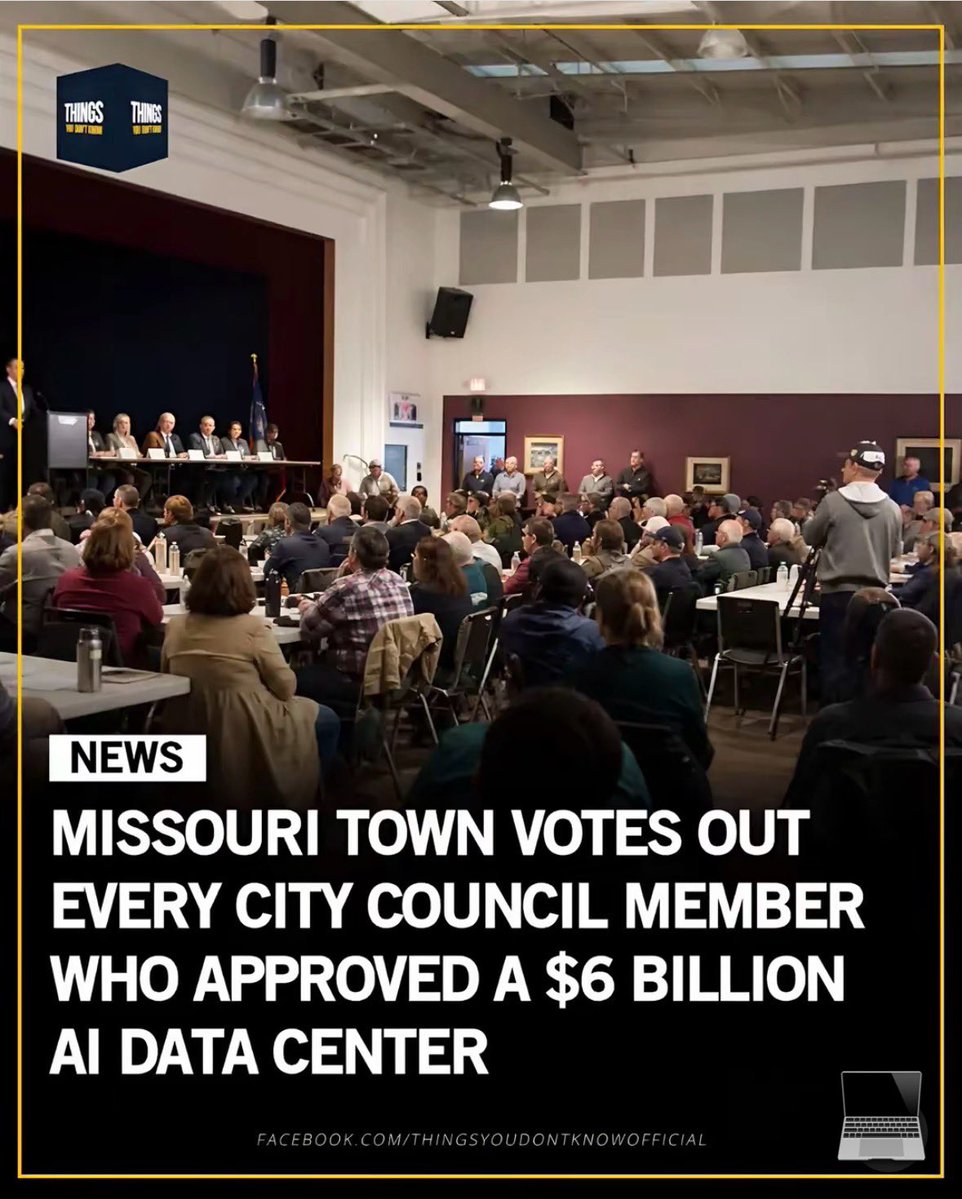
This is what local accountability looks like:
In Festus, Missouri, a town of about 14,000 people, the city council quietly approved a $6 billion Ai data center to be built on 360 acres just north of Highway 67.
Residents say they were never properly heard. Meetings were held in private. Documents were released too late. A week after the approval, the town held a regular election. Voter turnout jumped 129 percent.
Every single council member who had voted yes lost in a landslide. A 70-year-old first-time candidate beat an 8-year incumbent by 40 percentage points.
Now a recall petition is circulating to remove the mayor as well. The lawsuit against the city is already filed.
Has your local government ever been held accountable like this? 🔥
King Charles III quietly did something genuinely moving during his state visit to the United States. A lifelong environmentalist who has championed conservation for over five decades often at the cost of ridicule from the British press the King ended his trip by visiting Shenandoah National Park in Virginia.
There, he sat with park rangers, swore in a new group of Junior Rangers, met Buddy the bald eagle, and unveiled a new partnership between Shenandoah and Scotland’s Cairngorms National Park. This is the same man who converted his own estate to organic farming back in 1986, long before it was fashionable.
A foreign monarch showing up with real curiosity and respect for America’s public lands felt refreshingly sincere. And yet, it barely made a headline.
That silence is telling. When a visiting head of state reminds us of the value of our own national parks more visibly than our own leadership, something has gone wrong.
For decades, King Charles has put his credibility on the line for the natural world.
Meanwhile, America’s public lands have faced aggressive rollbacks: the weakening of protections like the Roadless Rule, opening tens of millions of acres of national forests to logging and mining, and efforts to sell off large portions to private interests.
It’s a stark contrast. One man has spent a lifetime planting trees and defending nature.
The other treats the outdoors primarily as a backdrop for golf courses.
Our public lands deserve better than being viewed as a development opportunity. They belong to all of us and they’re worth protecting, not selling.
The most annoying thing about being human on Earth right now is the absolute waste of potential.
Brilliant minds and artists could be solving world hunger, climate change, and ending cancer, etc.
We could house, feed, clothe, and care for everyone.
But instead, we’ve decided to let a handful of asshats become billionaires, start wars, murder and imprison people, and keep the majority in poverty while ruining the climate.
It’s so stupid. The wasted ingenuity hurts to think about.
In 2011, a neuroscientist at MIT named Dr. Li-Huei Tsai made a discovery that should have been on the front page of every newspaper on Earth.
She exposed mice with advanced Alzheimer's disease to a flickering light pulsing at exactly 40 Hz — forty flashes per second. Nothing else. No drugs. No surgery. Just light at a specific frequency.
Within one hour, the amyloid-beta plaques in their brains — the protein deposits that define Alzheimer's — began to dissolve. Not slow. Not gradually. Within sixty minutes.
After seven days of daily 40 Hz exposure, plaque levels dropped by 50%. The mice regained memory function. Their neurons began firing in synchrony again. The brain's immune cells — microglia — activated and started clearing the toxic buildup like a cleaning crew that had been asleep for years.
The study was published in Nature. The most prestigious scientific journal on the planet. Peer-reviewed. Replicated. Confirmed.
That was 2016. It is now 2026.
40 million people worldwide have Alzheimer's. The pharmaceutical industry generates $13 billion per year from Alzheimer's drugs that do not reverse the disease. Not one of them. They slow it. Maybe. Temporarily. At $26,000 per year per patient.
A 40 Hz light costs less than a dollar to produce.
Dr. Tsai is still at MIT. Her research continues. Phase III human trials are underway. But you will not see this on the evening news. You will not hear your doctor mention it. You will not find it in any pharmacy.
Because a frequency that costs nothing cannot sustain a $13 billion industry.
The light is 40 Hz. The frequency is real. The science is published. And 40 million people are still waiting for permission to use it.
And just like that, it’s completely VANISHED from the media.
A sitting congressman, Ted Lieu, said on the record the Epstein files are being blocked because they show Trump raped and threatened to kill children.
Let’s keep this in the spotlight every day




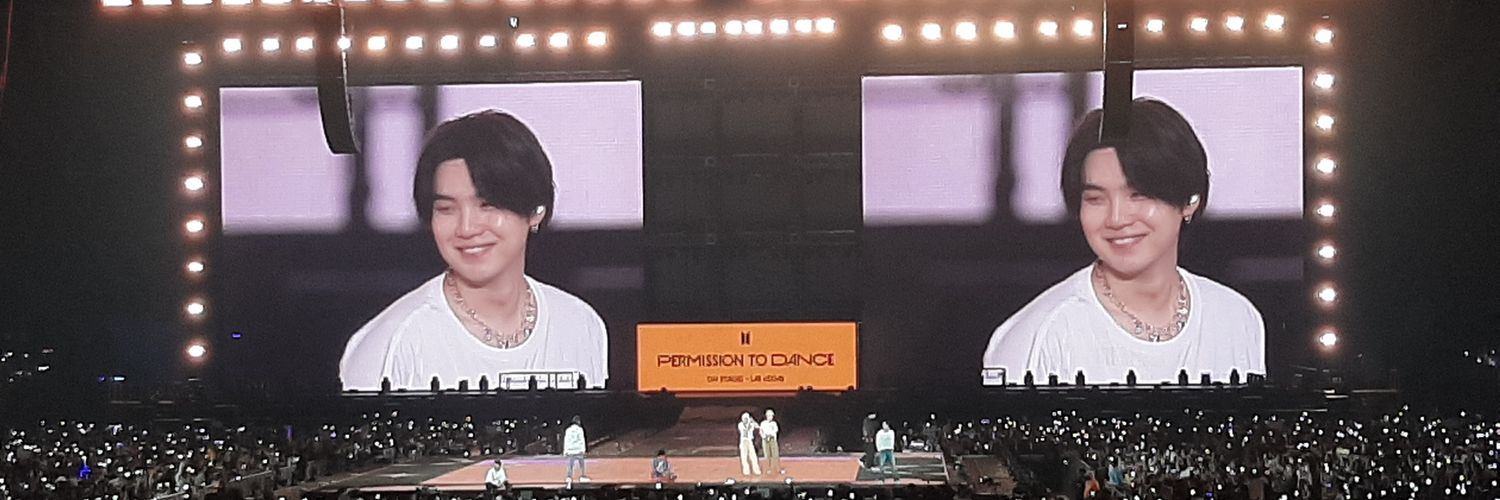
![bts_bighit's tweet photo. [#오늘의방탄]
260426 BTS WORLD TOUR 'ARIRANG' IN TAMPA
#방탄소년단 #BTS #BTS_WORLDTOUR_ARIRANG
#BTS_WORLDTOUR_ARIRANG_NA
#BTS_WORLDTOUR_ARIRANG_TAMPA https://t.co/wJCoPKaCCW](https://pbs.twimg.com/media/HG4auvSaIAANQpl.jpg)
![bts_bighit's tweet photo. [#오늘의방탄]
260426 BTS WORLD TOUR 'ARIRANG' IN TAMPA
#방탄소년단 #BTS #BTS_WORLDTOUR_ARIRANG
#BTS_WORLDTOUR_ARIRANG_NA
#BTS_WORLDTOUR_ARIRANG_TAMPA https://t.co/wJCoPKaCCW](https://pbs.twimg.com/media/HG4auvPasAAzIQe.jpg)
![bts_bighit's tweet photo. [#오늘의방탄]
260426 BTS WORLD TOUR 'ARIRANG' IN TAMPA
#방탄소년단 #BTS #BTS_WORLDTOUR_ARIRANG
#BTS_WORLDTOUR_ARIRANG_NA
#BTS_WORLDTOUR_ARIRANG_TAMPA https://t.co/wJCoPKaCCW](https://pbs.twimg.com/media/HG4auvPaMAAtX_1.jpg)
![bts_bighit's tweet photo. [#오늘의방탄]
260425 BTS WORLD TOUR 'ARIRANG' IN TAMPA
#방탄소년단 #BTS #BTS_WORLDTOUR_ARIRANG
#BTS_WORLDTOUR_ARIRANG_NA
#BTS_WORLDTOUR_ARIRANG_TAMPA https://t.co/ULBTNrEKYV](https://pbs.twimg.com/media/HGzSUU4bMAAn3n1.jpg)
![bts_bighit's tweet photo. [#오늘의방탄]
260425 BTS WORLD TOUR 'ARIRANG' IN TAMPA
#방탄소년단 #BTS #BTS_WORLDTOUR_ARIRANG
#BTS_WORLDTOUR_ARIRANG_NA
#BTS_WORLDTOUR_ARIRANG_TAMPA https://t.co/ULBTNrEKYV](https://pbs.twimg.com/media/HGzSUUxbcAApuOB.jpg)
![bts_bighit's tweet photo. [#오늘의방탄]
260425 BTS WORLD TOUR 'ARIRANG' IN TAMPA
#방탄소년단 #BTS #BTS_WORLDTOUR_ARIRANG
#BTS_WORLDTOUR_ARIRANG_NA
#BTS_WORLDTOUR_ARIRANG_TAMPA https://t.co/ULBTNrEKYV](https://pbs.twimg.com/media/HGzSUUwbAAAiG2e.jpg)




![bts_bighit's tweet photo. [#오늘의방탄]
260426 BTS WORLD TOUR 'ARIRANG' IN TAMPA
#방탄소년단 #BTS #BTS_WORLDTOUR_ARIRANG
#BTS_WORLDTOUR_ARIRANG_NA
#BTS_WORLDTOUR_ARIRANG_TAMPA https://t.co/wJCoPKaCCW](https://pbs.twimg.com/media/HG4auvUawAExGHi.jpg)
![bts_bighit's tweet photo. [#오늘의방탄]
260425 BTS WORLD TOUR 'ARIRANG' IN TAMPA
#방탄소년단 #BTS #BTS_WORLDTOUR_ARIRANG
#BTS_WORLDTOUR_ARIRANG_NA
#BTS_WORLDTOUR_ARIRANG_TAMPA https://t.co/ULBTNrEKYV](https://pbs.twimg.com/media/HGzSUVdbkAAklki.jpg)


