Very nice book
Highly recommended!
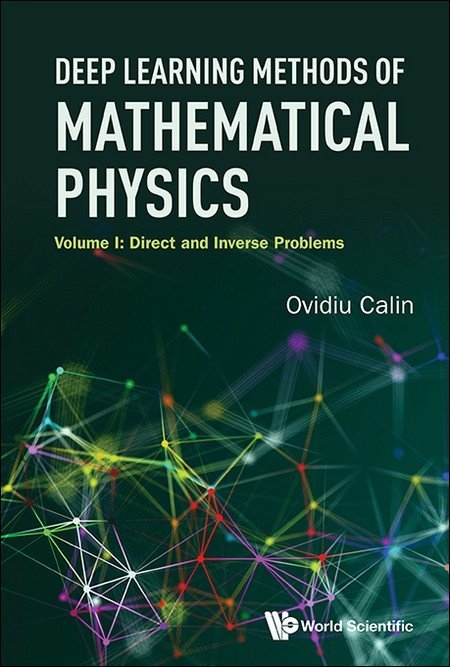
Deep Learning Methods of Mathematical Physics:
Volume I: Direct and Inverse Problems
Lots of short codes, do not need massive datasets nor GPU to run snippet NN codes.
معمولا برای بچههای فلسفهعلم از این نقطه شروع میکنم، که چرا باید بر تاریخ علم این دوره متمرکز شد و اتفاقاتش را مورد مطالعه درونمتنی عمیق قرار داد. چراکه در دوره به ظاهر تاریک و ایستای قرون وسطی، تحولات عمیقی درتغییر نگرش بشر به مفاهیم علمی رخ داده.
https://t.co/NNe8oo7AC8
A surprising number of people have asked me versions of "Is the Physics Nobel Prize today really for Physics?"
What counts as a field is surprisingly complicated. As a rough and incomplete classification, a field can be:
1. Based on exploration of and development of a set of agreed-upon deep principles. The Maxwell-Lorentz equations, quantum field theory, general relativity, and quantum computing are each (separately!) examples of fields in this sense
2. Based on exploration of some (more or less) agreed-upon set of questions. The search for a basic fundamental theory and quantum information are both examples of fields having this flavour. The questions tend to shift over time, sometimes substantially, and such fields sometimes fission or fusion or change substantially as a result
3. A group of people investigating a common domain of application. Examples of fields with this flavour are atomic physics, optical physics, and condensed matter physics. This can be viewed as a case of 2. It's striking how much internal variation there can be - understanding (say) the fractional quantum Hall effect is very different than understanding spin glasses, yet both are part of condensed matter physics. In some sense the question behind condensed matter unifies many different fields of type 1
4. A philosophical, organizational, and political treaty among fields of types 1-3. That's what "Physics" is, in the sense of the prize. It's interesting that antenna design is currently not regarded as part of Physics (it's more EE), while quantum computing to some extent is part of Physics. That's partly a contingent choice: it could have been different if history had just been a tiny bit different. However, to some extent it also represents some general philosophy of "what Physics is about". Ideas like quantum error-correction and topological quantum computers required deep fundamental insights into physics. My guess - it's just a guess - is that, over time, quantum computing will become more detached from Physics, as it becomes more and more commercial, and more and more engineering
Today's Physics prize falls outside the usual type 4 philosophical, organizational, and political treaty of "what physics is". People at Caltech used to tell me that John Hopfield had "left physics", and that's why he'd gone to Princeton (from Caltech). But then, a lot of physicists in the 1990s didn't think quantum computing was part of physics. I'm sure some still don't. So: it really is somewhat contingent
My own point of view: there is just one nature. I'm delighted when people have and share deep insights into nature, and I don't care so much what we label it. I'm especially delighted by the incredible progress in the past few decades in developing the design sciences. That is: understanding the fundamental principles underlying the incredible systems latent in nature, and which we humans are gradually learning to build. John Hopfield and Geoff Hinton have made enormous contributions to understanding what possibilities lie latent in nature. It so happens that their work falls largely outside the usual Nobel classification, but I am happy to celebrate them for their remarkable contributions, and physics seems as apt an area as any
Congratulations to them both!
In 1890, Henri Poincaré proved the non-existence of the uniform first integral of the three-body problem and the sensitive dependence to initial conditions of its trajectories.
Yet, stable solutions to it do exist and these are some of them.
https://t.co/haECKnWsfp
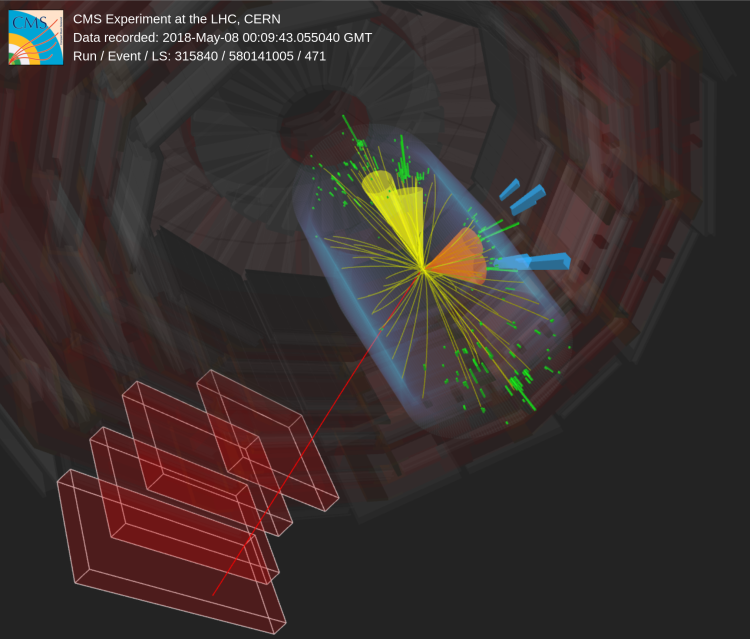
🥰Quantum long-distance relationships work fine between top quarks and their antimatter partners: CMS observes, for the first time, spin entanglement between top quarks and top antiquarks flying away from each other at a very high speed!
Read more: https://t.co/OihoBubYEc
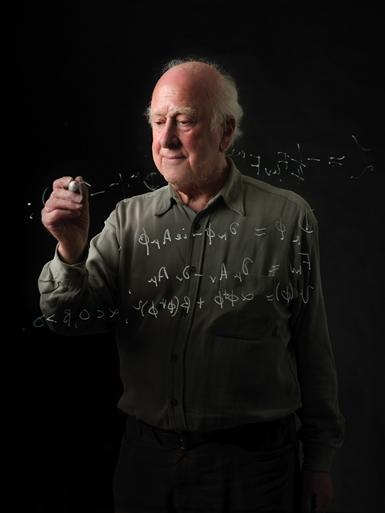
“Besides his outstanding contributions to particle physics, Peter was a very special person, an immensely inspiring figure for physicists across the world, a man of rare modesty, a great teacher and someone who explained physics in a very simple and yet profound way. (1/2)
📢 CMS just released a massive amount of real data from 2016 proton-proton collisions! Over 70 TB of data and 830 TB of simulations are now accessible for anyone to explore.
Read more about the largest 13 TeV dataset released by any experiment: https://t.co/8vsHeq4a3z
#opendata
Narrowing down the properties of the tau lepton: discover how CMS beat a 20-year-old record in measuring the anomalous magnetic moment by analysing when taus are produced from light!
🔎Read the latest briefing here: https://t.co/CYKfiw7kBa
#CERN#Moriond#PhysicsNews#physics
💢 ثبتنام دوره آنلاین مقدماتی نسخهشناسی
👤 مدرس: دکتر بنفشه افتخاری
@beftekhari
🔺 معرفی دوره:
دوره مقدماتی نسخهشناسی گام نخست از مطالعه روشمند نسخ خطی است که کسب مهارت در مواجهه با منابع دست اول تاریخی را افزایش میدهد.
ثبتنام از طریق:
https://t.co/LEqCikAawF
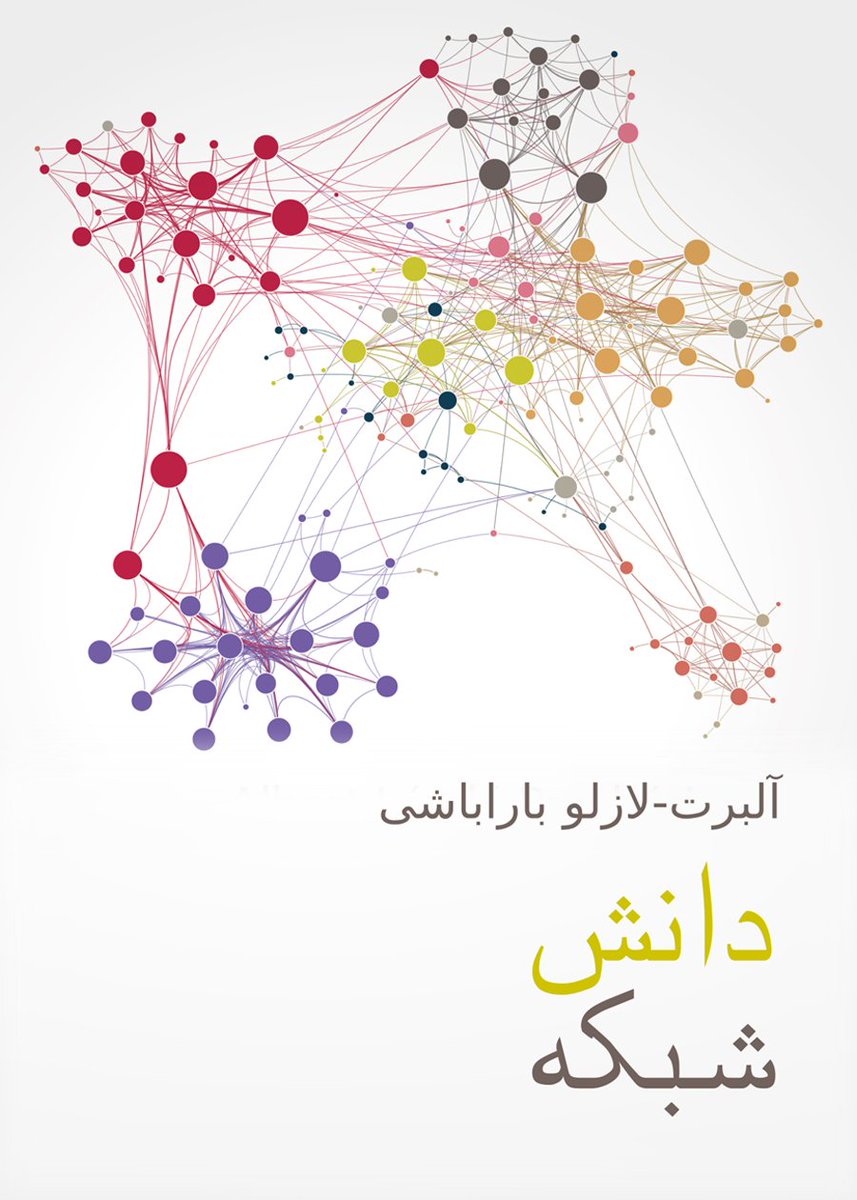
Persian version of Network Science is out online: https://t.co/6QtfDjObRZ and select the Persian link!
Big thanks to the Persian translation team led by Dr. Ali Kamandi at the Dept. of Engineering, University of Tehran.
Happy Holidays from Budapest!