Mauchie (adj): warm, damp, muggy weather. Shares cognates with other Germanic forms: Danish ‘mug’ meaning mildew, Norwegian ‘muggen’ meaning fusty and English ‘muck’ meaning wet and decaying #UlsterScots
“The whin is out afore the short day’s turnin’; Och but the whin is brave!” Florence Wilson (1874-1946). 'Whun' (noun): gorse (Scots form). ‘Whun-Lintie’ or ‘Whunny-Grey’ – the common linnet #UlsterScots
Yirp (verb): to chirp loudly (The Hamely Tongue, J. Fenton). Onomatopoeic and similar to English 'chirp'. Often used to describe the alarm call of the blackbird (‘merle’ in Ulster-Scots) and all the more common when wee scaldies (nestlings) are in the nest #UlsterScots
Coagle (verb): to rock or wobble. Coagly (adj.) rickety, wobbly. Origin unknown but perhaps imitative of 'joggle' and cognate with 'shoggle' from Old Scots 'schogg' to shake and Modern German 'schaukeln' to rock e.g. Schaukelpferd (rocking horse) #UlsterScots
Braw (adj): fine, fair e.g. weather. Old Scots records braw, bra meaning fine, splendid, excellent; considered a variant of 'brawf', brave, cognate with Irish Gaelic breá meaning fine #UlsterScots
Cappy (noun): a pet pig. Short for cappy-pig e.g. a pig fed by hand from a shallow wooden bowl (cap in Scots). Via Old Northumbrian ‘copp’ and Norse ‘koppr’ #UlsterScots#Scots
Slunk (noun): a bog-hole. Also ‘slonk’. WH Patterson’s 'Glossary of Words & Phrases from Antrim & Down' (1880) includes ‘slonky’ (adj.) having muddy holes e.g. ‘That slonky road.’ #Scots#UlsterScots
Dag (noun): Also ‘deg’. Fog, mist, or drizzling rain. Cognate with the Old English déaw meaning dew. Scots records a ‘daggie’ day – a day characterised by mist or rain #Scots#UlsterScots
Ganzy (noun): a sweater, jumper or pullover. Either a corrupted or altered form of the word ‘Guernsey’ or derived from the Old Scandinavian word ‘genser’ meaning a knitted jumper. Appears as 'geansaí' in Irish. But where does Jersey come from? 🙂 #UlsterScots
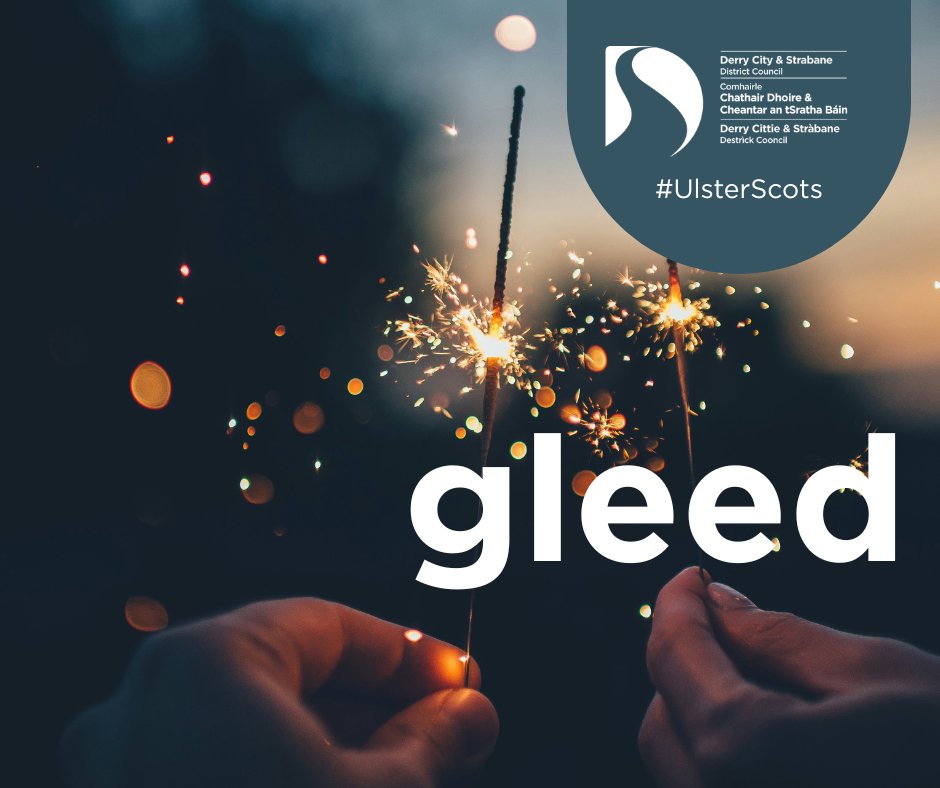
Gleed (noun): a spark, flame or ember. Often used figuratively in the phrase “she/he hasn’t a gleed” meaning lacking in sense. From the Middle English 'glede' meaning a burning coal #UlsterScots
Teem (verb & noun): a downpour, (n) or to pour with rain (v). “Get caught in the teem” (J. Fenton). Recorded in Scots, Northern English and Hiberno-English. Cognate with Irish ‘taom’ meaning to empty of water which is possibly a loan word from Norse #UlsterScots#LanguageLinks
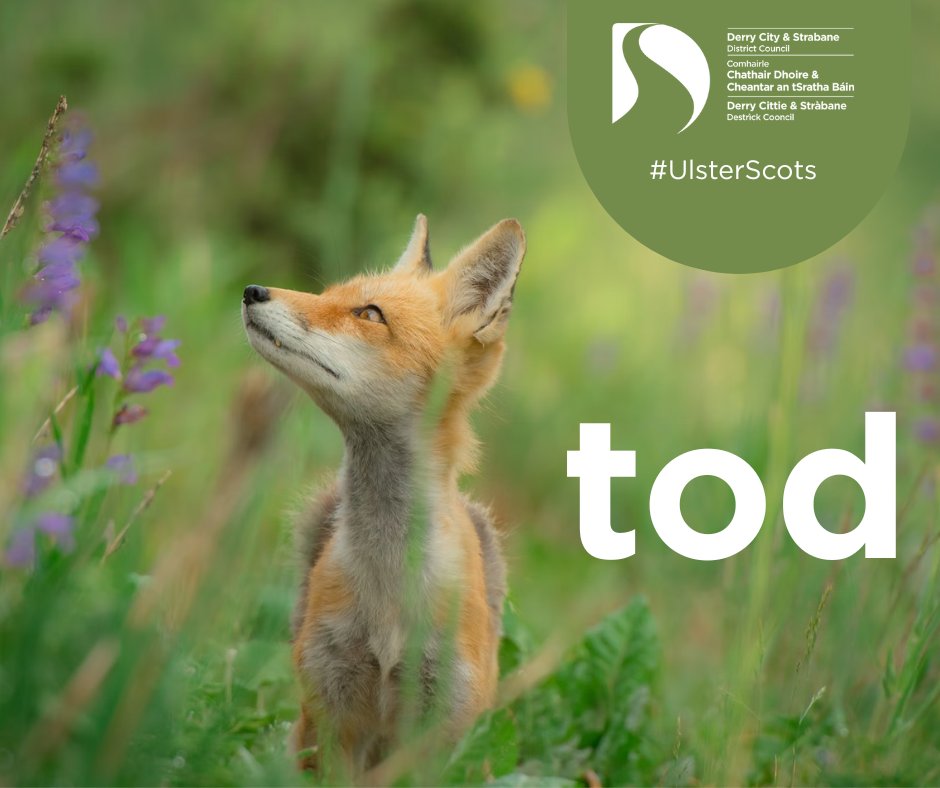
Tod (noun): a fox. Lowland Scots and Northern English. Features in the proverb "when the tod preaches tak' tent o' the lambs’" and used by Beatrix Potter to name the vulpine protagonist of her 1912 novel 'The Tale of Mr Tod' #UlsterScots
Tha Wee Schuil
by Anne McMaster
This evocative short film in #UlsterScots created by writer and poet @Rosehill_girl to celebrate #LeidWeek 2025 is a haunting and deeply felt tribute to Moneydig primary school, its weans, and their stories...
https://t.co/1XImG4wEt8
If Headstones Could Speak - a short film narrated by Seamus Breslin of Friends of Derry City Cemetery @FODCC1853 exploring the lives and stories of past generations of #UlsterScots in the city. Available to view online at https://t.co/8cNZJJxcEu from Monday 24 November 2025
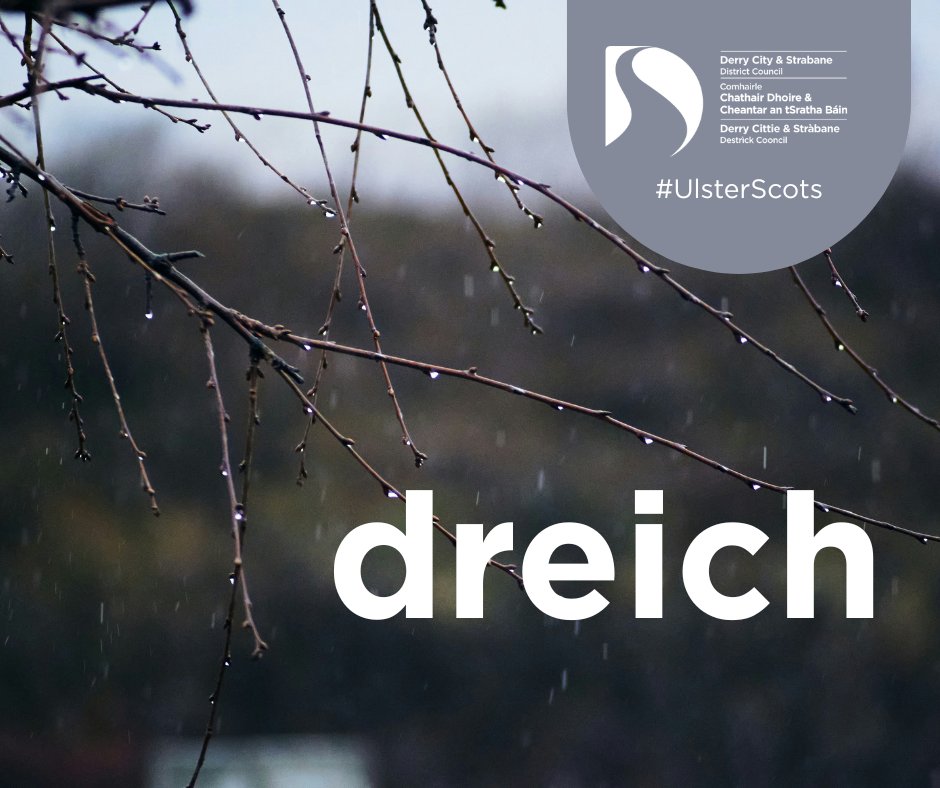
Dreich (adj.): Gloomy, bleak e.g. weather. Also dreary e.g. ‘A lang dreech road’ (Fenton) or long, wearisome, tedious. Recorded in Scots and Northern English. Believed to be from Middle English and related to the Old Norse drjūgr meaning lasting #Scots#UlsterScots#TaakThaLeid