University of Wisconsin-Madison scientists are studying “Agrivoltaics” - a concept that brings together solar panels and food production in the same field, in a way that allows the two to work together. For example, some crops and livestock can benefit from the partial shade the panels provide.
https://t.co/3RszRXnFYB
We Energies’ new solar and battery storage facility in Kenosha County is addressing one of renewable energy’s biggest challenges: the mismatch between daytime solar production and evening electricity demand. With more than 500,000 solar panels and on-site battery storage, the facility serves nearly 60,000 customers and stores excess midday energy for use after sunset when homes and businesses still need power. It’s a practical, scalable solution for integrating renewables into our grid.
We Energies plans to invest $12.5 billion in similar solar, wind, and storage projects in the years ahead, signaling serious momentum toward cleaner Wisconsin energy.
https://t.co/Los0pgQoWC
Wisconsin utilities are lining up at the PSC with the same ask: make data centers pay their own way. Xcel Energy’s latest filing joins We Energies and Alliant Energy in proposing that developers cover all infrastructure costs, not ratepayers. The commission has been clear on this point. Customers shouldn’t subsidize data centers. Period.
https://t.co/cEdf1nDi7G
As the weather warms up, solar salespeople are once again fanning out across Wisconsin neighborhoods, and consumer advocates say you should think twice before signing anything at your front door.
Two founders of Waukesha-based Sun Badger Solar are facing felony charges in Dane County after customers reported losing thousands of dollars for solar panel projects that were never completed.
https://t.co/uIxyoGAAXU
Wisconsin’s approach is deliberate. Regulators, utilities, and consumer groups spent months getting this right because the public trust demands it. The data centers coming to Wisconsin will create jobs and expand the tax base. They should be welcome—and customers who were here long before them can be confident that they will not be stuck with an unwelcome bill.
Wisconsin’s skilled trades are gaining momentum, and it’s no accident. During National Apprenticeship Week, new data highlights growing interest in hands-on careers that power our economy—from energy infrastructure to advanced manufacturing.
As demand rises, investing in workforce development and modernizing our grid isn’t just smart policy—it’s essential to keeping Wisconsin competitive for the long haul.
https://t.co/KpK57WMRuj
Wisconsin business leaders say no comprehensive accounting has been done. But just three Wisconsin companies have already amassed more than $1 billion in data center-related business.
Wisconsin just set a strong precedent: data centers will pay 100% of the utility costs they create.
The Public Service Commission of Wisconsin’s approval of We Energies’ new tariff ensures that powering AI and hyperscale growth won’t raise bills for families or small businesses.
No cost shifting. No subsidies. Just smart planning that protects customers while supporting economic growth.
https://t.co/AUIuBsgEGc
Wisconsin utilities are moving forward with major investments in solar and battery storage, expanding clean energy and strengthening grid reliability.
While transitioning away from coal requires higher upfront costs, these investments reduce exposure to fuel price volatility and lower operating costs over time.
The result is a more stable, predictable energy system that supports long-term affordability and economic growth across the state.
https://t.co/7PQmHCoZ9r
We Energies is strengthening its commitment to protect customers by ensuring the infrastructure needed to serve large energy users—like data centers—is paid for by those driving the costs, not residential ratepayers.
It’s a straightforward approach that prioritizes fairness, accountability, and Wisconsin’s long-term energy future.
https://t.co/AZYq1hXQuX
Wisconsin regulators have approved two new solar projects from We Energies, expanding the state’s commitment to clean, renewable power. Investments like these help diversify our energy mix, reduce emissions, and move Wisconsin toward a more sustainable energy future—while supporting local infrastructure and long-term reliability.
https://t.co/kqxdil0HfO
Wisconsin regulators have approved utilities’ purchase of a solar and battery project in Rock County, adding more renewable generation and energy storage to the state’s grid. Projects like this help make Wisconsin’s energy system cleaner while strengthening reliability and supporting the transition to a more modern electric grid.
https://t.co/y7uS1luZ6s
Demand for electricians in Wisconsin continues to grow, driven in part by major projects like utility-scale solar farms and new data centers.
Enrollment in the Construction Electrician Apprenticeship Program at Mid-State Technical College has climbed to 191 students, up from 156 three years ago. The IBEW–NECA apprenticeship partnership alone now includes more than 90 apprentices, helping train the next generation of skilled electricians.
As Wisconsin builds new energy and technology infrastructure, union electricians will be essential to getting the job done and powering the state’s future.
https://t.co/QVl0PIT1id
It's encouraging to see bipartisan leadership in Wisconsin recognizing the growing role nuclear energy can play in meeting rising electricity demand, strengthening grid reliability, and supporting economic growth. From exploring new technologies to reexamining sites like Kewaunee, policymakers from both parties are engaging in the serious, forward-looking energy discussions Wisconsin needs.
https://t.co/eH9bSABVdw
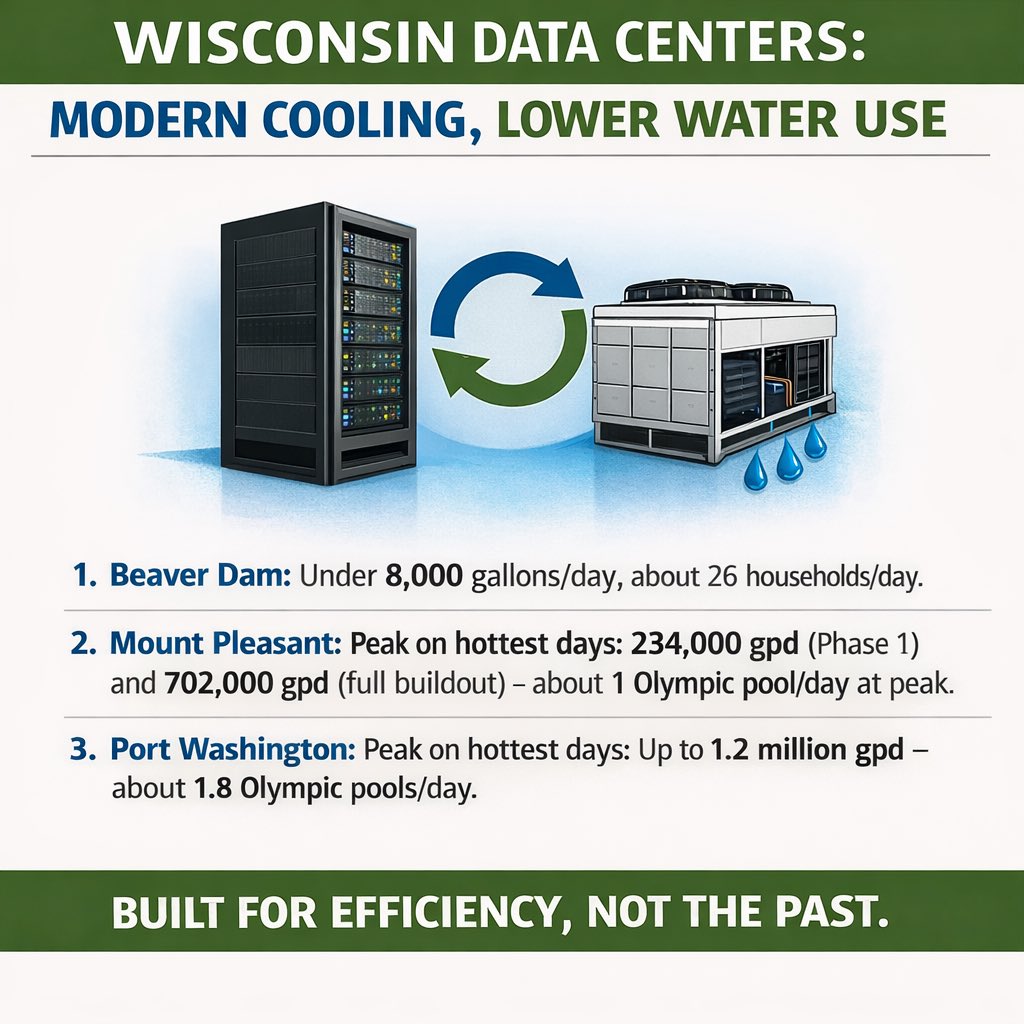
Older data centers could use huge amounts of water. But the projects being built in Wisconsin are using newer cooling designs that dramatically reduce ongoing water demand.
Under-construction projects and water figures:
• Beaver Dam: under 8,000 gallons/day, mostly normal building use (about 26 households/day).
•Mount Pleasant: peak 234,000 gpd (Phase 1) and 702,000 gpd (full buildout), roughly 1 Olympic pool/day at the top end; the company says newer closed-loop designs avoid constant water-for-cooling use.
• Port Washington: cap up to 1.2 million gpd on peak hot days, about 1.8 Olympic pools/day.
Bottom line: ask for transparency, but don’t assume Wisconsin’s new data centers are the water-heavy designs of the past.
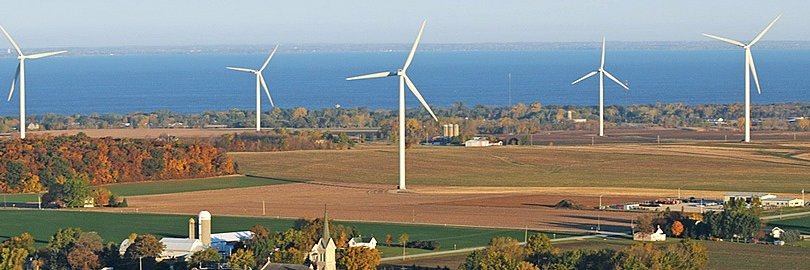
We Energies' 88-turbine Blue Sky Green Field Wind Center in northeastern Fond du Lac County, Wisconsin, can produce up to 145 megawatts of power.
https://t.co/eSDccQKiOR
Wisconsin continues building a stronger workforce! For the fourth year in a row, our state’s registered apprenticeship program set a new record—with 18,524 apprentices and over 3,000 employers participating in 2025. These earn-as-you-learn pathways are helping train talent for today’s in-demand careers and keep Wisconsin competitive.
https://t.co/RSNdp10Yhy
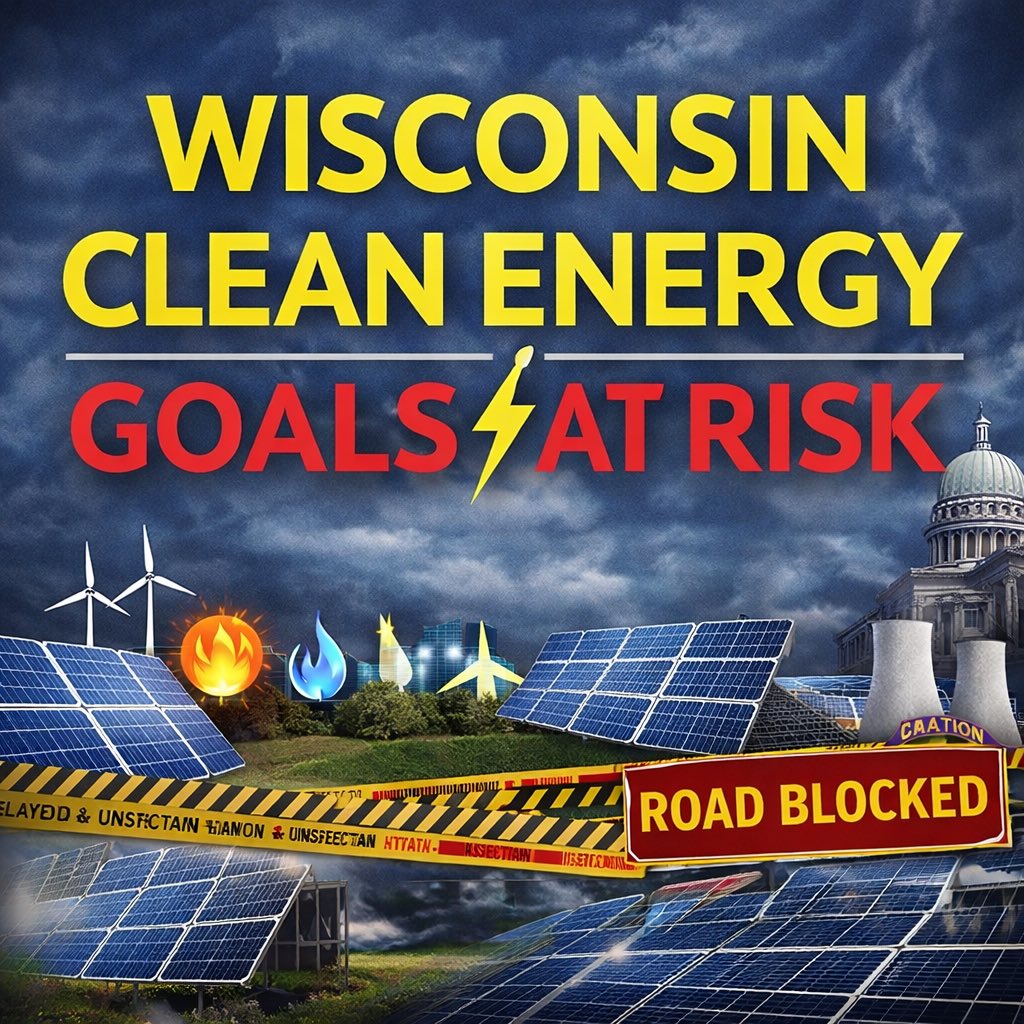
The Assembly Agriculture Committee just passed an amendment targeting large-scale solar, putting Wisconsin’s clean energy goals at risk.
Wisconsin’s 2050 carbon-free goal depends on building major energy projects (solar, wind, natural gas, nuclear) to keep power reliable and affordable as demand grows. This amendment weakens PSC oversight, creates uncertainty, and could delay needed investment.
Community solar can play a role, but it can’t meet future demand alone. Blocking utility-scale solar means higher costs and makes the 2050 goal almost impossible to reach.
Wisconsin needs an all-of-the-above energy strategy and the ability to build.