Practice-changing in colon cancer?
Adjuvant immunotherapy + chemo cuts recurrence risk by 50% in stage III dMMR colon cancer.
ATOMIC trial delivers.
👥 Study population
Resected stage III dMMR/MSI-H colon cancer
⚠️ ~54% high-risk (T4/N2)
⚔️ Arms
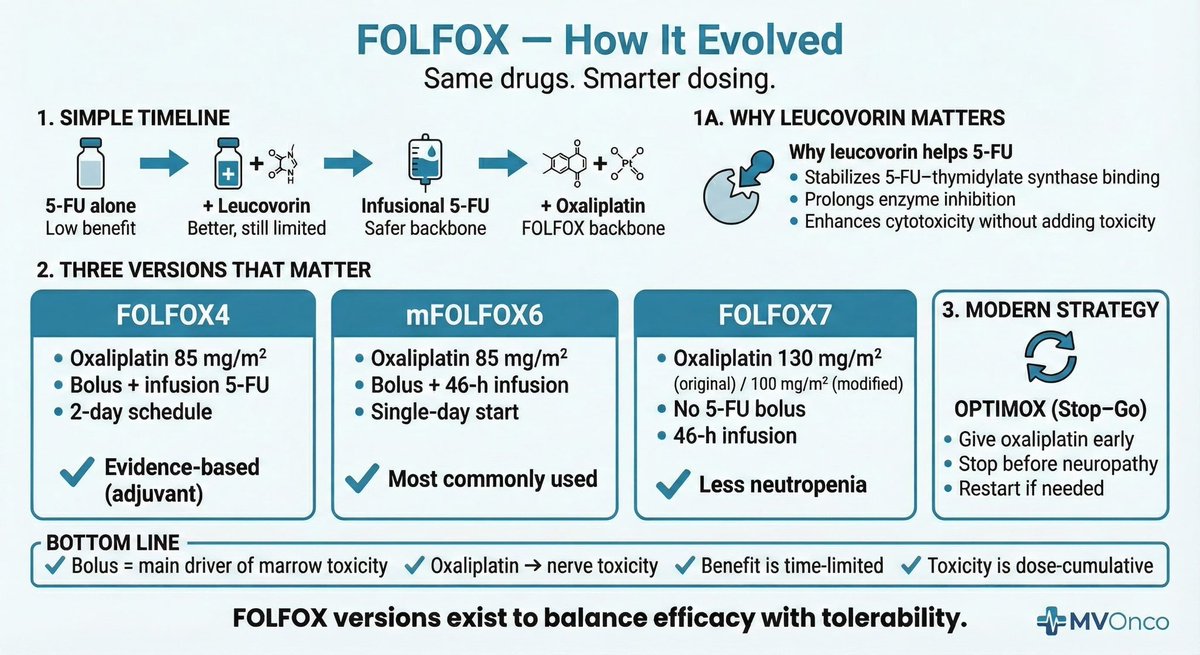
🟦 Atezolizumab + mFOLFOX6 → atezo maintenance (1 year total)
⬜ mFOLFOX6 alone (6 months)
📊 Key results
•3-year DFS: 86.3% vs 76.2%
•HR: 0.50 (P<0.001)
👉 ~10% absolute gain
⚠️ Toxicity trade-off
•Grade 3-4 AEs: 84% vs 72%
•More immune AEs (thyroid, colitis, hyperglycemia)
❗ OS immature
🎯 Clinical takeaway
For stage III dMMR colon cancer,
👉 IO + FOLFOX is likely the new adjuvant standard
🔬 Test MMR in ALL colon cancers. This now directly impacts adjuvant therapy.
📖 Full paper in comment ⬇️
#OncoTwitter #MedTwitter #ColorectalCancer #GIOnc @OncoAlert@myesmo@esmo_open@asco
Just in: Good news for the myeloma field.
FDA approves teclistamab plus daratumumab (Tec-Dara) combination for myeloma for patients who have had at least one prior line of therapy.
Note: Always use Tec-Dara with monthly IVIG. It’s not optional.
That was fast! And this is unprecedented curve is why.
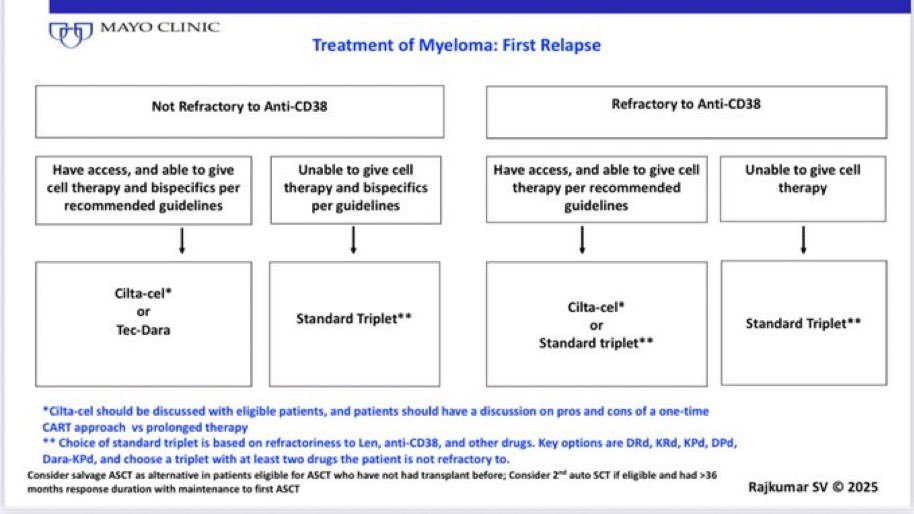
This changes how we approach first relapse.
In Dara sensitive patients: Tec-Dara or Cilta-cel are the top two choices.
If Dara refractory: Bispecifics alone or Cilta-cel are the main options.
CART and Bispecifics both need close monitoring and specialized care and certain requirements. So for some patients, we may still use triplets.
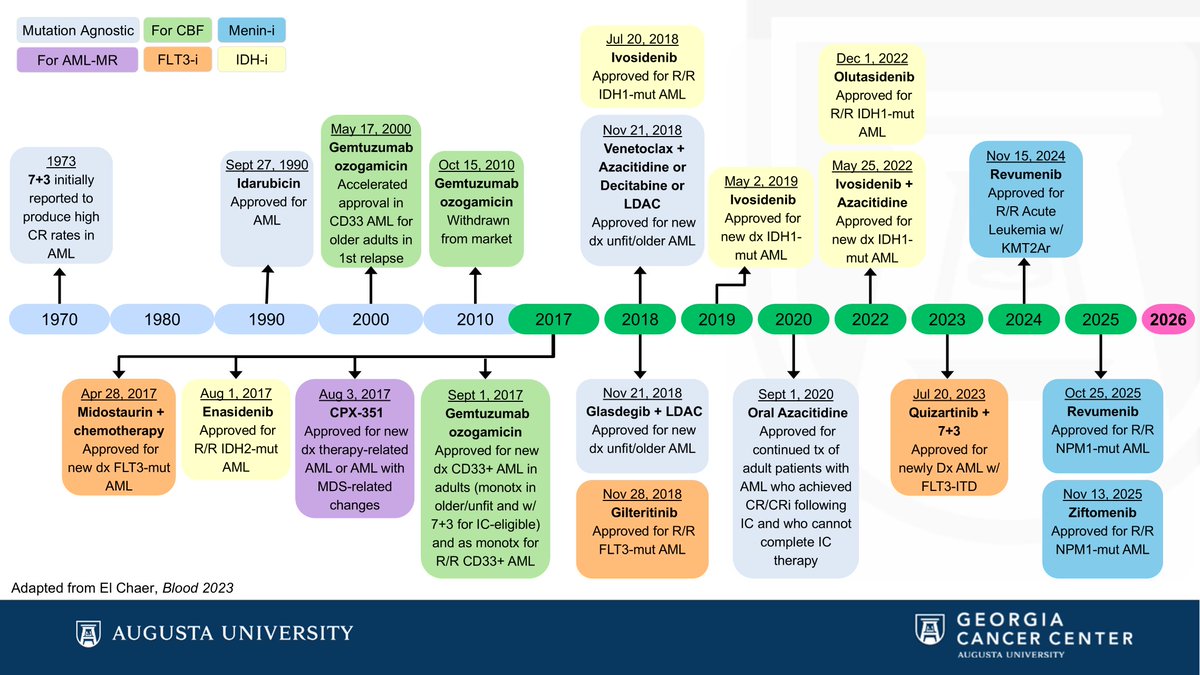
Amazing to be a leukemia MD in this day & age. This is the timeline of new💊approvals in AML that I get to show our @MCG_AUG Heme/Onc fellows. The last decade has sure been exciting. What's next? #leusm#MedEd
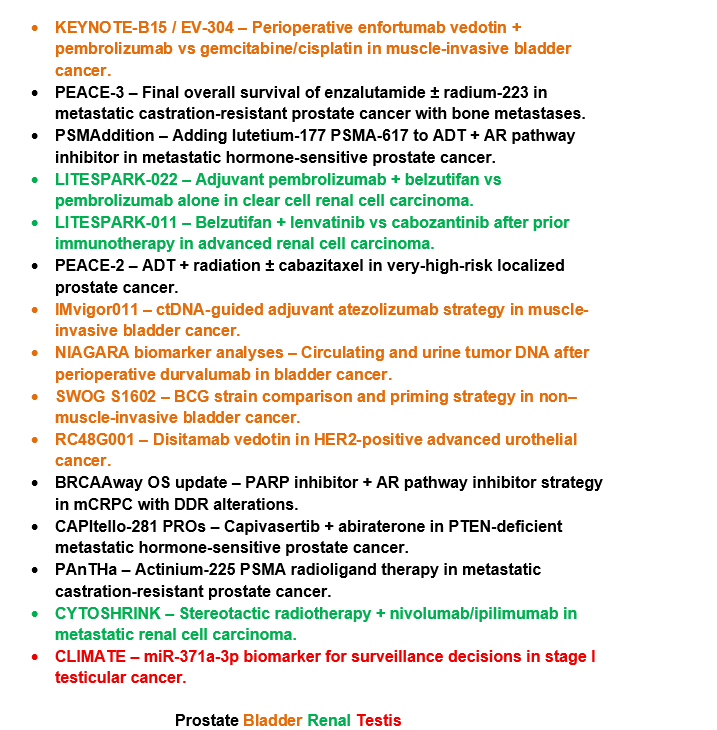
🚀 #ASCOGU26 is almost here! What might the data show?
• Practice-changing perioperative IO?
• ctDNA precision?
🤖 Note: These are only AI predictions.
👀 Watch out for the final readouts!
#MedTwitter#GUOnc#MVOnco
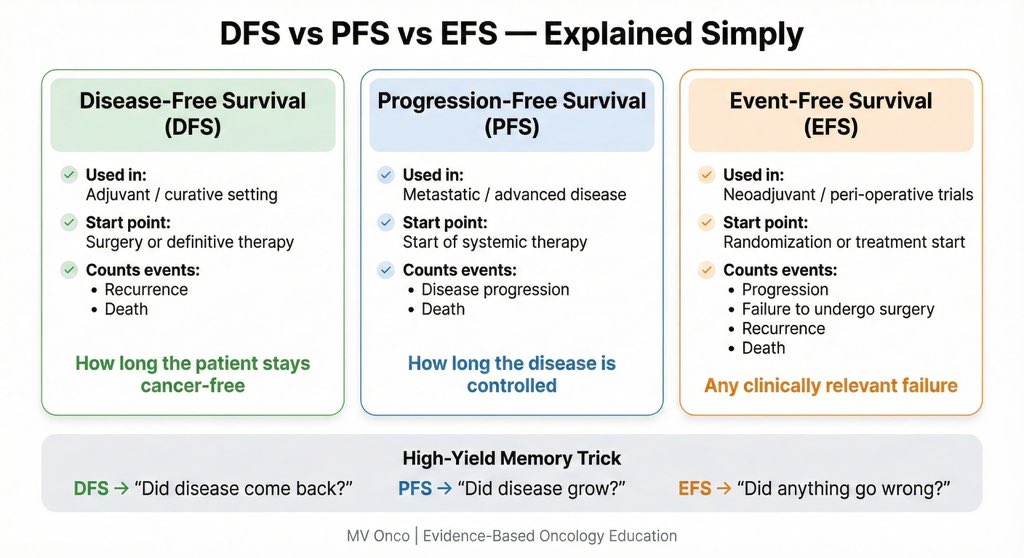
𝐏𝐅𝐒 ≠ 𝐃𝐨𝐑.
PFS asks: How long does treatment control disease — for 𝐞𝐯𝐞𝐫𝐲𝐨𝐧𝐞?
DoR asks: How long does the response last — for 𝐫𝐞𝐬𝐩𝐨𝐧𝐝𝐞𝐫𝐬 𝐨𝐧𝐥𝐲?
Same endpoint framework. 𝐕𝐞𝐫𝐲 𝐝𝐢𝐟𝐟𝐞𝐫𝐞𝐧𝐭 𝐜𝐥𝐢𝐧𝐢𝐜𝐚𝐥 𝐪𝐮𝐞𝐬𝐭𝐢𝐨𝐧𝐬. 🧠
#OncologyEducation #ClinicalTrials #ExamPearls #MVOnco
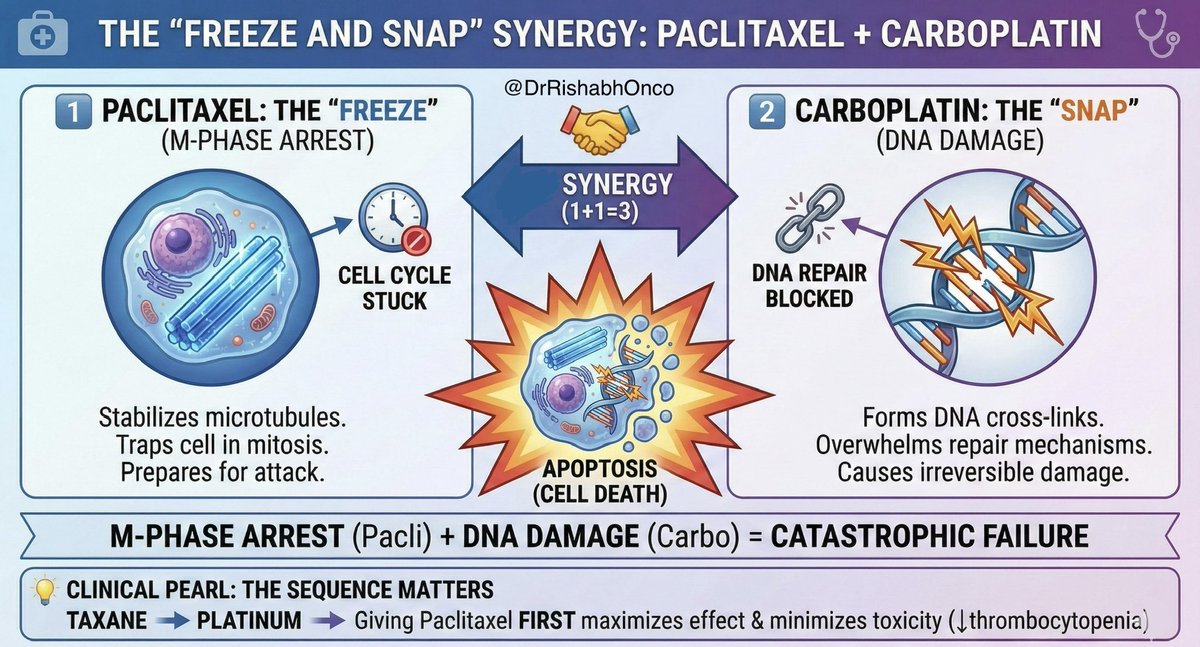
The Paclitaxel + Carboplatin "CarboTaxol" doublet is the bread and butter of oncology for a reason. 🍞🧈
But why does this specific combo work so well?
It’s all about the "Freeze and Snap" synergy. ❄️💥
1️⃣ The Freezer (Paclitaxel):
Paclitaxel stabilizes microtubules, preventing depolymerization.
It freezes the cell’s skeleton in the M-phase (Mitosis). The cell tries to divide but gets stuck. 🛑
2️⃣ The Snap (Carboplatin):
While the cell is arrested and stressed, Carboplatin slides in.
It acts as an alkylating agent, forming reactive platinum complexes that bind to DNA (cross-linking). 🧬🔗
🤝 The Synergy (Why 1+1 = 3):
The magic lies in the timing.
Paclitaxel arrests cells in the G2/M phase.
Cells in this phase are less efficient at repairing the DNA damage caused by Carboplatin.
The "Freeze" prevents the "Repair," leading to accumulation of DNA damage ➡️ Apoptosis (Cell Death). ☠️
💡 Clinical Pearl (The Sequence Matters):
This is why we often administer Taxane before Platinum.
Giving Paclitaxel first avoids the antagonistic effect where Carboplatin might inhibit the uptake or cytotoxicity of the taxane.
It also reduces thrombocytopenia! 📉🩸
#Oncology #MedTwitter #OncTwitter
@OncoAlert@myesmo@esmo_open@asco