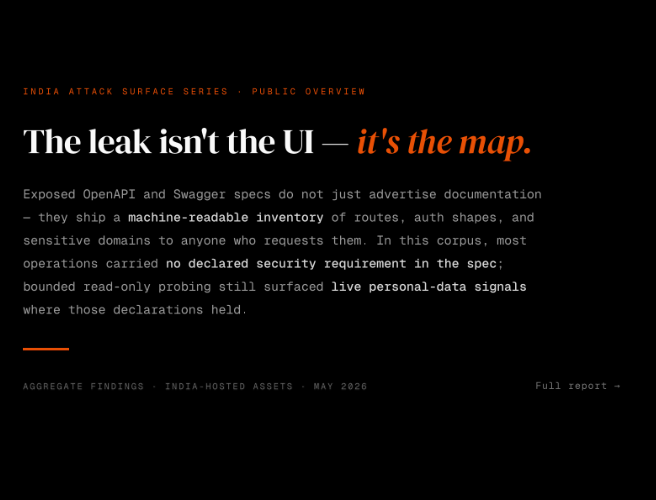
I scanned India-hosted internet assets for exposed Swagger/OpenAPI docs.
The uncomfortable part wasn't just that the UI was public.
It was what the specs handed over for free. 🧵
Heading to @bsidesahmedabad 🇮🇳
I'm giving a talk — "The AI Recon Engine" — on a simple idea: let AI understand a target before you use it as an exploit button. And I'm bringing SignalMap with me.
What it does 👇
SignalMap builds a knowledge graph of how a web app actually behaves — routes, APIs, JavaScript, trust, change — where every claim ties back to evidence, and it's honest about what it can't know. Then it hands an AI that model instead of raw recon.
On a real target the difference was 140× fewer tokens — a 4.5M-token dump of minified bundles became a ~30k structured model.
See you there in Ballroom 2 at 02:00 pm - 02:30 pm.
#AISecurity #appsec #recon #cybersecurity
If you want to see what the hunt commands actually output, I’ll share examples — would love feedback on what’s useful vs. noise.
#AppSec#Infosec#bugbounty#cybersecurity
🚨 Exposed APIs are the biggest attack vector right now. Your OpenAPI specs might be leaking more than you think.
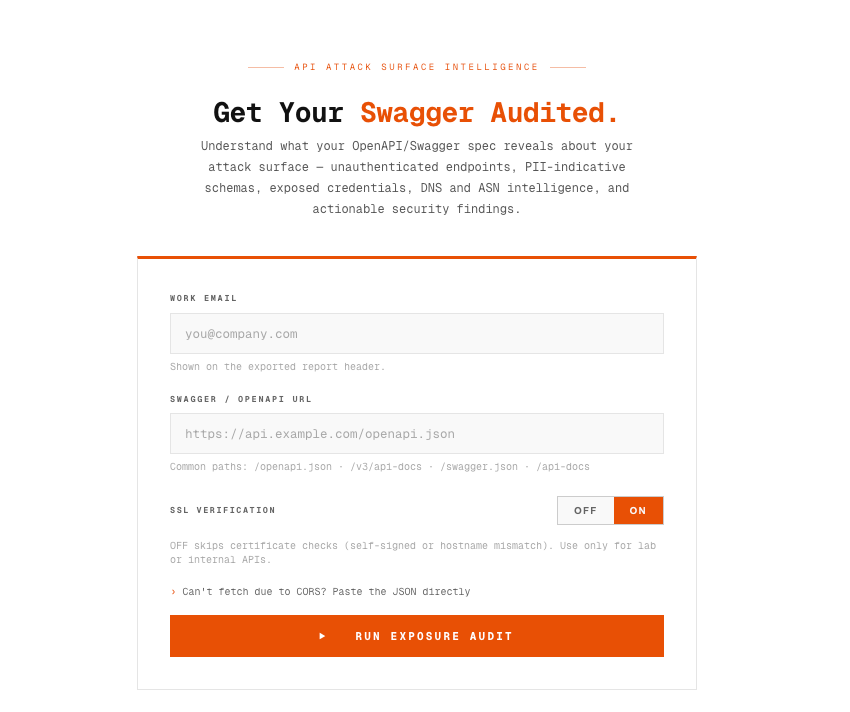
The completely revamped & upgraded Swagger Audit is officially LIVE! 🔥
https://t.co/xi4gpoTZQr
Start with discovery. Uncover exposed API surfaces, review the OpenAPI assets side-by-side, and flow seamlessly into scanning and actionable findings. No friction.
Full write-up separates what the spec claims from what probing confirmed.
Aggregate only — no org names, no IPs, no domains.
Checkout LinkedIn for Public Report:
https://t.co/gvFu4O9Pk1
#APISecurity#AppSec#DPDP#India#SecurityResearch
I scanned India-hosted internet assets for exposed Swagger/OpenAPI docs.
The uncomfortable part wasn't just that the UI was public.
It was what the specs handed over for free. 🧵
If you’re into recon automation, historical analysis, or AI-driven security research —
Let’s connect and build.
Always open to collaborating with serious builders. 🚀
#AppSec#BugBounty#SecurityResearch
Been experimenting with historical attack surface mapping.
Not scanning what exists today.
Reconstructing what existed before.
And the patterns are interesting. 🧵👇
Curious:
How many researchers here actively use historical diffs as part of their recon workflow?
Would a lightweight historical JS diff tool be useful to the community?