Physical-art collecting, explained: provenance, condition records & what to ask before you buy. By FANN, a physical-art marketplace in pre-launch. GCC-first.
Auction literacy is mostly reading order: provenance block, literature, exhibition history, condition — then, finally, the estimate. The number means little until the record places the work in time and custody.
#ArtAuction#ArtProvenance#FANN
Commissioning an artwork? Agree four things first. (AI-presented explainer; practical prompts, not legal advice)
Collectors: founding access at https://t.co/ndRzJyyFNo
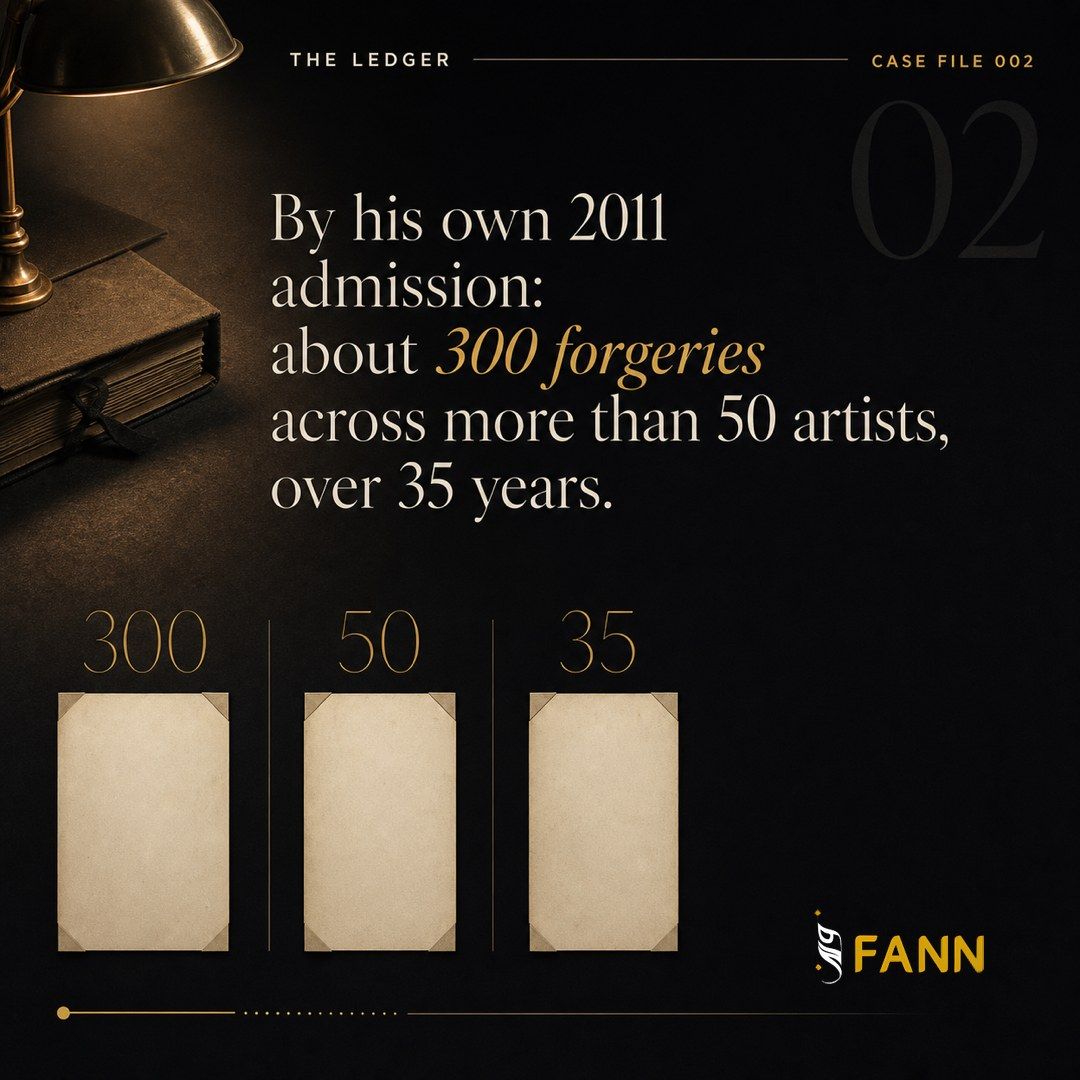
Case File 002 — Beltracchi. He painted works that never existed, then authored their histories. Roughly 300 forgeries over 35 years; materials analysis broke the spell.
Provenance a seller can write retroactively isn't provenance.
#ArtForgery#ArtProvenance#FANN
Insurance is where documentation stops being philosophy and starts being money: valuable-items policies want named works with agreed values, transit cover wants condition evidence, claims want provenance. Prepare the file first.
#ArtInsurance#ArtCollecting#FANN
Discounting usually starts inside the seller: no file, so every challenge to the price lands. Build the artwork's file and write one paragraph of pricing logic you can hand over. The conversation shifts from defending a feeling to presenting a record.
#ArtPricing#ArtistCareer #FANN