Captain Ibrahim Traoré stood before his nation and spoke a truth that had been buried for over a thousand years. He named the Arab slave trade. Not in whispers. Not in academic papers. But in a televised address, to a country that is overwhelmingly Muslim.
"The people came, first the Arab-Muslim conquests. That is over a thousand years of slavery in Africa," he said. He spoke of men castrated so they could not father children. He named the year 1962, when the last slave market closed in Medina. He refused to let silence protect a historical crime.
This was not an attack on Islam. Traoré is a Muslim himself. This was an act of reckoning. He was saying what the entire continent had been afraid to say: that Africa was enslaved by two systems, and only one of them is allowed to be remembered. The West's crime is taught in schools. The East's crime is erased.
The reaction was swift and fierce. Gulf states condemned him. Some clerics called it Islamophobic. But Traoré pressed forward. He announced that Burkina Faso would recall hundreds of students studying Sharia law abroad, warning that some returned with teachings incompatible with national unity. He declared the state secular, and no religious law—Islamic or otherwise—would govern it.
Why does this matter? Because the Sahel is burning. Jihadist groups are recruiting with a distorted version of faith, and that distortion has been imported and funded from outside Africa for centuries. By naming the Arab slave trade, Traoré severed the spiritual authority that foreign clerics have held over African Muslims. He asked a question that should echo across the continent: "Are we cursed?" His answer was no. Africa was not cursed. Africa was conquered, colonized, and enslaved by two different powers. And the only way to break free is to name it, teach it, and refuse to let it be silenced.
Over the past ten months, I have consistently highlighted five major obstacles to the US peace-for-minerals strategy proposed for the DRC in December 2025.
1. Unresolved structural causes of violence in eastern DRC.
I had warned that state-sponsored insecurity, ethnic animosity, and unresolved structural causes of violence in eastern DRC pose significant risks to the sustainability of US investment. Based on my existing political economy analysis on the DRC, I suggested that, without a sound understanding of these conflict dynamics, US investment initiatives was very likely to face political, security, and operational obstacles that undermine their long-term effectiveness. Addressing the root causes of conflict is therefore essential to mitigating investment risks and creating the conditions for sustainable economic engagement.
2. Conflict dynamics and political risks
The ongoing conflict in eastern DRC constrains the government’s capacity to support investment, as security priorities and political sensitivities divert attention and resources from other sectors. The government’s focus on political survival and on mobilising domestic and international support may also shape how investment initiatives are prioritised and implemented. Furthermore, the politicisation of relations with Rwanda complicates regional cooperation and increases the risk of inconsistent policies. These dynamics, I have argued, were to expose US investment to political uncertainty and undermine the stability required for long-term commercial engagement.
3. Institutional fragmentation and weak governance
Overlapping mandates and competition among government ministries, public institutions, and central and provincial authorities contribute to fragmented decision-making and blurred accountability. Parallel decision-making structures involving presidential advisers and political elites do further complicate investment approvals, delay project implementation, and create opportunities for undue influence. Inconsistent public messaging from senior officials also weakens policy coordination and institutional credibility, making it more difficult for international investors and development partners to assess government commitments and anticipate regulatory changes.
4. Regulatory complexity and corruption risks
The DRC’s investment environment is further undermined by fiscal complexity, cumbersome licensing and registration procedures, opaque procurement practices, and inconsistent regulatory implementation. There are more than 80 taxes, duties, and levies which increase compliance costs and administrative delays. Culture of embezzlement, overcharging, retrocommission arrangements, and demands for informal payments to politically influential individuals raise additional concerns about transparency and the integrity of commercial transactions.
5. China has a head start and can use unethical channels that US investors would not.
China’s entrenched position in the DRC’s mining sector, particularly in copper and cobalt, presents a significant strategic challenge for US investment. Through long-term concessions and major projects such as Tenke Fungurume, Kamoa–Kakula, and Sicomines, Chinese companies have secured substantial commercial interests that they are unlikely to relinquish voluntarily.
Furthermore, China’s established networks and ability to navigate opaque political and commercial arrangements give it a competitive advantage in the DRC. US investors, constrained by stricter anti-corruption and compliance requirements, may be unwilling to use similar channels, creating an uneven investment environment.
I had recommended that the US should not assume that a minerals agreement linked to diplomatic mediation of the eastern DRC conflict will secure access to Chinese-held assets. Instead, US strategy should focus on new investment opportunities, transparent partnerships, diversified supply chains, and infrastructure development, supported by credible conflict analysis, governance safeguards, and protection of the rights of communities in mineral-producing regions.
Implications for US investment strategy
These interconnected risks suggest that investment promotion alone will not be sufficient to secure sustainable outcomes in the DRC. US investment initiatives require a robust assessment of political and security conditions, stronger institutional coordination, greater transparency in public procurement, and predictable regulatory enforcement. They should also account for the structural drivers of conflict and the regional political dynamics affecting eastern DRC. Integrating these considerations into investment planning would help mitigate exposure to corruption, institutional dysfunction, and political instability while improving the prospects for durable economic engagement.
@etrehumainx Merci Être Humain pour cette lucidité et ce pragmatisme. Rwandais et congolais seront toujours voisins, apprenons à nous connaitre et à nous respecter. Les médias occidentaux oeuvrent à la division des africains, les UNs et les organisations des Droits de l’Homme ont leur agenda
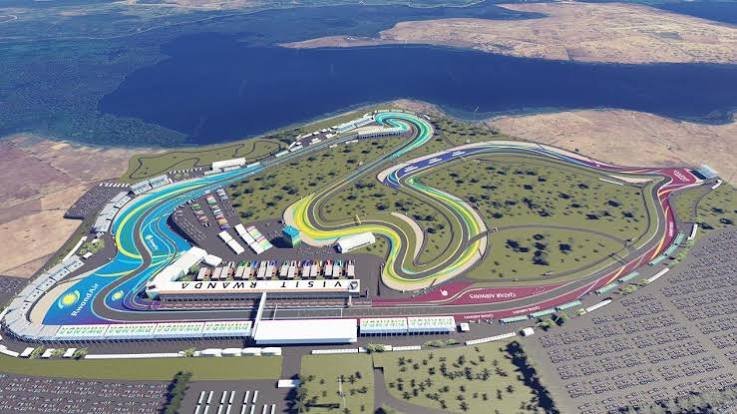
If I were Rwandan, I would vote to keep President Kagame as life president, he has shown the rest of Africa that size has no limitations, Formula 1 is returning to Africa Rwanda in 2030🔥🔥🔥
Surprised that of US$ 926.66 million already spent by various donors to Congo to help fight the current Ebola epidemic, $700 million had disappeared? This is why one of the world's richest countries in mineral wealth also has some of the poorest people!
https://t.co/N2UcsXQaWQ
@BBCAfrica, why does every major achievement by Rwanda 🇷🇼 seem to become a controversy in your coverage? From Rwanda hosting UCI cycling events to the #VisitRwanda partnerships with European football clubs, BAL, and now the prospect of hosting Formula 1, the pattern of criticism is hard to ignore.
Whenever Rwanda makes progress, some are quick to label it “sportswashing.” But investing in sports is also about tourism, job creation, attracting investment, developing local talent, and putting Africa on the global stage.
Rwanda deserves fair, balanced journalism that recognizes its ambitions and achievements rather than reducing every success to suspicion.
People are not defending Kagame. They are defending themselves. As long as Rwandans keep perceiving that Kagame has their best interest at heart - that is, he protects/serves the common good - they will defend him. But he is incidental in all this. They defend him because in so doing they are defending themselves.
APRÈS LA #BELGIQUE, LA #SUISSE VIENT À SON TOUR DE CONFISQUER HUIT MILLIARDS DE DOLLARS DE LA FAMILLE @TSHISEKEDI. L’ARGENT ETAIT GARDÉ DANS L’UNE DES PLUS GRANDES BANQUES SUISSES.
⏺️RAISON ÉVOQUÉE, AUCUNE TRAÇABILITÉ DAND L’ACQUISITION DE CETTE IMMENSE ET INJUSTIFIABLE FORTUNE DE FÉLIX TSHISEKEDI. LE SIGNE INDIEN NE LÂCHERA PAS TSHISEKEDI.
⏺️TOUT L’ARGENT VOLÉ EN RÉPUBLIQUE DÉMOCRATIQUE DU CONGO BEL ET BIEN RÉCUPÉRÉ. PENDANT CE TEMPS, TOUTE LA FAMILLE PRÉSIDENTIELLE NE SAIT PLUS OÙ DONNER DE LA TÊTE.
⏺️DÉBANDADE, PANIQUE ET PAGAILLE.
🚨🚨🚨🚨
#RDC-#MINES :
#SCANDALE DU SIÈCLE - 93 MILLIARDS EXPORTÉS, 3,8 MILLIARDS RESTÉS
*Par Ali Masi - Analyse*
*93,2 milliards de dollars.* C'est ce que la RDC a exporté entre 2023 et 2025.
*54,4 milliards déclarés comme rapatriés.* C'est ce que les miniers disent avoir ramené au pays, grâce au Code Minier.
*3,8 milliards seulement.* C'est ce qui est réellement resté dans nos banques en dépôts supplémentaires en devises.
La question que le Gouverneur de la BCC lui-même pose est historique :
> "Comment expliquer qu’un pays qui figure parmi les plus grands producteurs mondiaux de minerais stratégiques continue à faire face à des contraintes aussi importantes dans la mobilisation des ressources financières destinées à son propre développement?" 169a
*L'ANALYSE PROFESSIONNELLE - OÙ EST PARTI L'ARGENT?*
Selon le Code Minier de 2018, les miniers doivent rapatrier 60% de leurs recettes pendant la période de récupération de l'investissement, et 100% après. Mais dans la pratique :
*1. Le trou de 38,8 milliards :* Sur 93,2 milliards exportés, 38,8 milliards n'ont même jamais été déclarés comme rapatriés. Ils sont restés à l'étranger en toute légalité.
*2. Le trou de 50,6 milliards :* Sur les 54,4 milliards déclarés rapatriés, seulement 3,8 milliards sont restés en banque. Où sont passés les 50,6 milliards restants?
La BCC évoque elle-même les mécanismes : paiements effectués à l'étranger, mécanismes de préfinancement, relations financières entre maisons mères et filiales. En clair : surfacturation, dettes artificielles, et transfert de bénéfices. 4f08
*CONSÉQUENCE DIRECTE :*
Pendant que le cuivre est à 14.000$ la tonne et le cobalt à 55.000$, le Congolais n'a pas d'eau, pas d'électricité, pas de routes. Nos banques sont vides à 90% dollarisées, nos réserves faibles, et l'État ne capte que 6 milliards sur 38 milliards d'exportations minières annuelles. 0ebc
*CE QUE NOUS EXIGEONS :*
1. Publication immédiate de la liste de toutes les entreprises qui n'ont pas respecté le rapatriement de 60%.
2. Audit indépendant sur les 50,6 milliards évaporés entre le rapatriement et le dépôt bancaire.
3. Application stricte de la réforme du change annoncée par la BCC : payer les sous-traitants en Francs Congolais.
Ceci n'est plus une mauvaise gestion. C'est un système organisé de pillage.
Le Gouverneur a parlé. La Justice doit maintenant agir.
*#RDC #Mines #BCC #Wameso #PillageMinier #AliMasiMedia*
@actualitecd@France24_fr@wembi_steve@leParrainRDC
He makes leadership look so easy 🤌🏿
A leader is not Icecream to be liked by everyone!! You make decisions and let history/results judge not Twitter Characters!
Our analysis on the “Diplomatic Rehabilitation of the FDLR: How the Anzulini family advanced anti-Tutsi genocidal objectives from Zaire to DRC” with @TEDDYMAZINA via @Conspiracygl
https://t.co/ShBLTfYHVZ
I’m sorry but we stood no chance 😭 You look at the calibre of people other countries appoint as ministers and then look at South Africa. Rwanda has a Sports Minister with a degree in Economics and a Master’s in Economic Policy Management. Ours his background includes a criminal conviction with no qualifications. We even have a Minister of Defence with no military rank. The difference in the standards we accept for public office is staggering.
@Reuters Reuters always distorts the true story somewhere. Bombs and bullets were coming from the M23 only? If you can not fact check, stop being soo bias
#RDC: @NewsNation , In Minembwe, South Kivu—where Tim Kennedy was shot—there is no gold; he was bombing civilian villages, killing women and children, in order to get paid by the Congolese government.
Rwanda is building a track completely from scratch, and Formula 1 is so sure they will deliver that they have already put pen to paper on a 10-year contract.
Meanwhile, South Africa, with an existing track that has fallen out of shape, isn't trusted to get anything done because the South African risk premium is simply too big.
Global capital now views South Africa as a dangerous, untrusted hazard while treating Rwanda as the absolute gold standard for institutional trust.
Formula One Group does not sign a decade-long agreement on raw hope.
They signed with Rwanda because Kigali has built an unshakeable reputation for flawless executive execution.
When the Rwanda Development Board guarantees a timeline, the regulatory red tape is liquidated overnight by a disciplined, single-window executive.
Global capital knows that a promise made in Kigali is a mathematical certainty.
Rwanda turned a blank plot of dirt in Bugesera into a low-risk, elite-aligned asset. Conversely, modern South Africa has become a dangerous, volatile bet that international investors simply refuse to underwrite.
Having the physical layout of Kyalami means absolutely nothing when your entire state apparatus is viewed as a structural liability. You cannot invite a multi-billion dollar global enterprise to a country crippled by terminal municipal decay, and deep institutional rot.
F1 teams cannot run their multi-million dollar telemetry systems on the gamble that local public utilities won't collapse mid-race.
South Africa's existing track falling out of shape is just a symptom of a much larger, systemic pathology.
The state is so deeply fractured by bureaucratic infighting, political posturing, and chaotic policy vectors that it cannot provide a credible, bulletproof sovereign financial guarantee to underwrite hosting fees.
The institutional decay is so severe that South Africa can no longer be trusted to manage, maintain, or secure projects of this level of complexity.
In the brutal arena of global statecraft, historical prestige is completely worthless if you are priced out of the market as an operational danger.
Rwanda won this contract because it aggressively engineered international trust, while South Africa mismanaged its massive head start into total structural irrelevance.
F1 didn't bypass South Africa because of politics, it bypassed South Africa because of math.
#DRC 🇨🇩 … and #US 🇺🇸 lobbyists … and the invisible Congolese People…
What this statement illustrates is precisely the problem with Washington’s political ecosystem, where lobbying, the revolving door between public office and private interests, and foreign-policy networks can shape the way events are interpreted - and how political decisions are subsequently justified.
To claim that Joseph Kabila’s alleged involvement in a new political configuration proves that the United States was right to sanction him is circular reasoning.
A political allegation does not become established fact simply because it fits a previous government decision.
What is the independently verifiable evidence establishing that Kabila supports or directs the M23? If such evidence exists, it should be presented and scrutinized rather than replaced by assertions that reinforce an existing narrative.
There is also a broader political context that this framing conveniently overlooks:
The M23 has already entered into a political alliance with Corneille Nangaa through the AFC/M23 coalition. Any further rapprochement involving Joseph Kabila would have to be examined in that wider context, rather than reduced to a simplistic story about who is supposedly taking over an insurgency.
Let us also remember the history.
Joseph Kabila and Corneille Nangaa were central figures in the 2018 electoral process that led to Félix #Tshisekedi assuming the presidency through a transfer of power. The political relationships emerging today cannot be understood without considering that history, the breakdown of political consensus, and the escalating conflict that followed.
The renewed M23 conflict escalated in late 2021.
The subsequent regionalization of the war, the involvement of foreign military forces, the FDLR question, and the engagement of private military actors - aka #MERCENARIES - all deserve serious scrutiny.
Accountability cannot be selective, nor can the history of this conflict be reduced to allegations against one political figure.
And then comes the revealing expression: “the strategic critical-minerals-rich country.”
Rich for whom?
Where, in this description, are the Congolese people? Where are the millions displaced by war, the families living in insecurity, the communities whose land contains these resources, and the citizens who have yet to see their country’s extraordinary mineral wealth translated into peace, dignity, and prosperity?
The DRC is not merely a strategic mineral deposit on a geopolitical map. It is a sovereign country inhabited by people whose lives, rights, and aspirations must matter more than the strategic calculations of foreign powers.
This is why the influence of former diplomats, lobbying networks, and private interests deserves scrutiny whenever political narratives are used to justify sanctions or foreign-policy decisions. The issue is not whether the United States has the right to impose sanctions; it is whether the evidence is transparent, the reasoning is sound, and the same standards of accountability apply to everyone.
The Congolese people must not remain invisible in discussions about their own country. Their suffering must not become a footnote to the competition for critical minerals, and allegations must never substitute for evidence.
Les gens qui ignorent les théories raciales qui ont accompagné justifié les pillages des Suds - de l’esclavage à nos jours - ignorent également la raison pour laquelle tout le monde se contrefout qu’Erik Prince ait annoncé face caméra que son entreprise paramilitaire n’est que pure recolonisation.
Une recolonisation des peuples qui « ne peuvent se gouverner ». Un aveu ouvert et transparent tandis qu’accessoirement l’usage des mercrenaires va à l’encontre de toute règle du droit international (🙄🥱).
Encore une fois ; pardon de déranger les gens « plus sérieux qui ne voient pas les idéologies et tout ce qu’elles ont factuellement accompli dans l’histoire de la modernité » :
Le Congo se situe en DEHORS de l’humanité, RIEN de ce qu’il se passe sur ce sol n’est étudié sous le même prisme et avec les mêmes règles morales et politiques que s’agissant des Nords - et du reste des Suds. Parce-que le cœur de l’Afrique « bantoue » a été racialisé, fixé ainsi : le dernier palier avant le monde animal. Une zone de non droits.
Tandis que si cela avait été le Rwanda ? Embauchant l’armée privée d’Erik Prince ? Envoyant un ancien joueur combattant UFC AMÉRICAIN blanc quasiment à la mort parce-que, well il a été payé de toute façon ? Cela ferait toutes les unes de CNN à la BBC en passant par France 24, RFI etc. Et non de manière accessoire - des petits brèves en passant - non non, non. Cela relancerait de grandes enquêtes à la « forbidden stories » pour comprendre ce « sombre et puissant pouvoir ».
Pourquoi ? Parce-que le Rwanda - le leadership rwandais a été identifié, fixé dans les imaginaires collectifs comme « malin » « plus proches des blancs », entre le peuple « Sémite et Hamite » ; le dangereux mélange nègre-non-nègre qui inquiète de par ses appartenances (soi disant) multiples et donc insaisissables.
Mais en l’occurrence non, c’est le Congo qui agit de la sorte. Et comme ce ne sont que de pures nègres dans l’imaginaire colonial - raciste - moderne ; circulez il n’y à rien à voir, qu’ils tuent d’une manière ou d’une autre importe peu.
Let’s assume that what she is saying is true. What is wrong with defending our country or responding to the lies spread by these anti-Rwanda individuals?
So, does Michela Wrong have any other known job besides constantly writing articles that disparage Rwanda? Who pays her? Does she do it for free?
Does she believe she has the right to criticize and tarnish Rwanda’s image while Rwandans have no right to respond to her?
That reflects a cheap, white-supremacist mentality.
@Nadia_MUGUNGA1@SamuelBaker_B@FGoloobaMutebi