When we started building Trusta, most people thought identity in crypto was either unnecessary — or impossible.
“Onchain users are anonymous anyway.”
“Sybil is just part of the game.”
“Trust doesn’t belong onchain.”
But as crypto grew, one thing became obvious to us:
without credible identity and trust, crypto cannot scale beyond speculation.
Today, crypto is entering a new phase.
Institutions are onboarding.
Compliance is becoming a baseline.
Real applications are emerging.
This won’t happen overnight.
But the direction is clear:
In the next decade, trust itself will move onchain.
And it will become foundational infrastructure — just like wallets, payments, and data.
We’re still early.
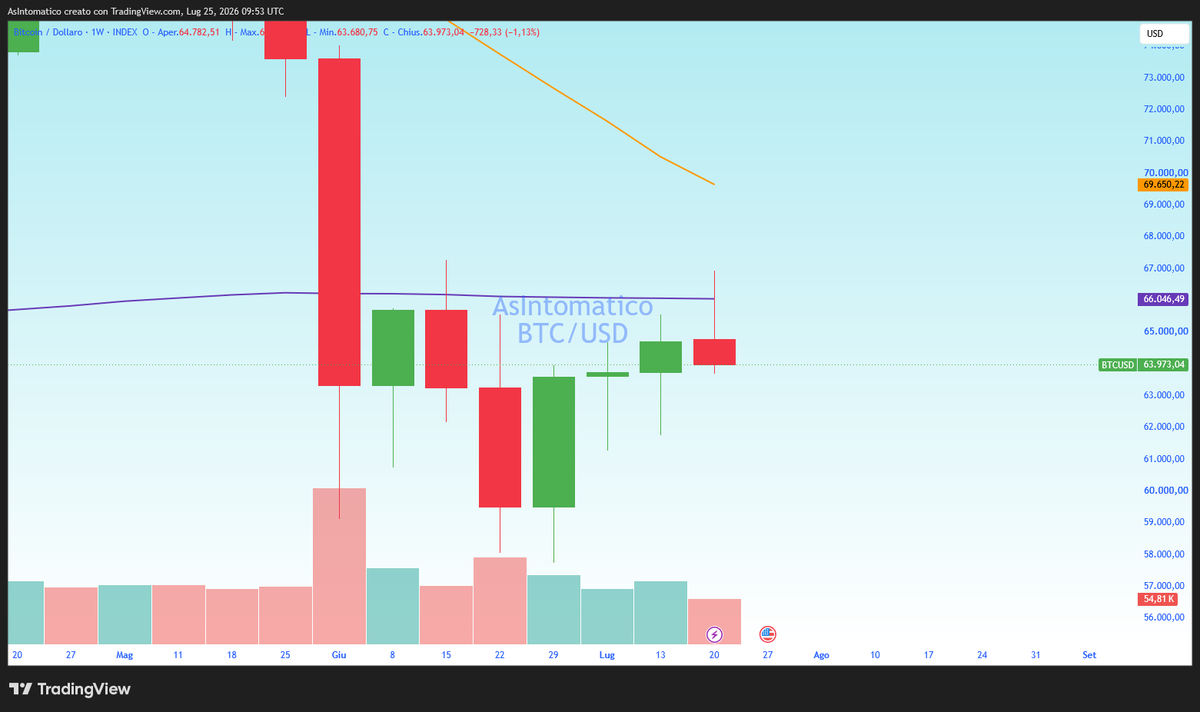
BITCOIN: 💎 What will 2026 be like? Bear Market or Supercycle? Watch the video to find out in time! 💎
all in one video 👇
https://t.co/TVc5N9MsMj
$BTC #BullMarket#bearmarket $ETH #CryptoMarket
Destra Network | $DSYNC Core Development Update: Execution, Agents, and Compute
Over the last development cycle, our focus has been on reducing friction across the Destra Network. Rather than introducing additional layers, we are tightening the integration between intelligence, compute, and on-chain execution to ensure behavior remains continuous, predictable, and scalable. While much of this work is internal, it directly impacts how agents execute, how workloads are scheduled, and how the network performs under real-world usage.
⸻
NPC 2.0: Long-Running Agent Execution
With NPC 2.0, we are transitioning agents to long-running execution by default. Development efforts are centered around persistent state, multi-task coordination, and making agent decision-making observable without compromising execution guarantees.
This represents a shift away from short-lived, trigger-based workflows toward agents that operate continuously over time, with clearly defined rules governing state transitions and on-chain action commitments.
⸻
Mainnet Progress and Block Explorer
On the mainnet side, core protocol development is progressing steadily. The Destra block explorer is now in active development, designed to reflect actual execution behavior on the network.
Rather than exposing only raw transactions, the explorer will surface system activity, execution flows, and protocol-level events. This will make Destra significantly easier to understand and reason about as the protocol grows in complexity.
⸻
GPU Nodes Architecture and Compute Reliability
At the infrastructure layer, we are redesigning the Destra GPU Nodes architecture to better align with real-world AI workloads. This includes separating execution roles, improving workload isolation, and tightening contribution tracking.
The primary focus here is reliability and correctness, ensuring the network is prepared for sustained inference and continuous agent execution as demand scales.
⸻
Workload Routing and Network Efficiency
We are also optimizing how workloads flow through the GPU network. This includes improved routing, more intelligent job placement, and reduced coordination overhead between nodes.
These changes lower latency, improve utilization, and minimize wasted compute—particularly as inference workloads become longer-lived and more stateful.
⸻
Focus Going Forward
This phase of development is about strengthening the core: predictable execution, long-running agents, and efficient compute. Everything else in the Destra ecosystem is built on these fundamentals.
This is correct.
We’re doing a real reset at Sonic. Not surface-level changes, a full internal restructuring from the inside out. Leadership, strategy, BD, comms, marketing, community, and how we operate day to day.
This stuff takes time. We’re going through the business issue by issue and fixing things properly, not rushing it or papering over what needs work.
When this is done, Sonic will look very different from what it was before I stepped in.
This trip made something very clear: Argentina is one of the most real-world testing grounds for crypto.
People use USDT and BTC daily — to preserve value, pay rent, shop, or exchange at countless OTC spots. Trust in the local peso is low, but trust in self-custody and open money is high.
That’s also why events like @EFDevcon keep choosing Buenos Aires. The demand and usage are real.
In places like this, you quickly realize what Web3 still lacks: not more products, but reliable identity and trust signals that apps can use to reduce fraud and offer smoother onboarding.
This is where ERC-8004 becomes practical — a standard way for wallets to prove simple things like:
• “I’m not a sybil”
• “I passed verification”
• “I’m a real long-term user”...
At Trusta, we’re taking responsibility on this front:
providing attestations and sybil-resistant proofs that plug directly into the ERC-8004 flow, so builders can create safer, fairer user experiences — especially in markets where crypto is used every day, not just discussed.
Identity isn’t abstract. In places like Argentina, it decides whether Web3 can really scale.🫡
Season 6 Hero Vote is LIVE 🗳️
This season's vote will introduce 3 new Heroes to @fantasy_top_
Bored Apes, Miladys, Penguins...some of CT’s biggest names are battling for a spot and their own card.
No Heroes will be leaving this season, so plan accordingly!
More details ⏬
The @ParallelTCG Arena is now OPEN! 🏟️
$2,000 in $PRIME is up for grabs in the first-ever sponsored Arena
This first week is free to enter for all players.
Jump in and compete today!
More details below ⏬
Here are some recent updates from Trusta 👇
1️⃣ $TA staking has been delayed — we want to make sure the experience is smooth and the contracts are fully audited. Work is already in progress.
2️⃣ We’re in talks with exchanges across different regions so that more communities can access and use $TA.
3️⃣ On the tech side, we’re actively exploring attestation use cases together with @solana and @LineaBuild .
4️⃣ We’ve also started researching directions in crypto payments, especially where ZK proofs and privacy protection can bring real value.
PS: The team has not dumped any tokens(Locked after 1 year). 👇
https://t.co/O5CLIfu5wv
On the contrary, we have been spending resources to absorb the selling pressure from airdrops and participation from various market players. Price is a complex factor, and while we focus on developing the product, we are also paying close attention to it.
Rest assured, everyone.🙏
Our first governance vote on institutional access and expansion is near.
🏛️ Kicks off institutional expansion
🧩 Enables new financial products
🌎 Expands $S access in U.S.
A new phase begins soon... 👀
Fueling innovation with $S.
Through our Innovator Fund, we're actively deploying up to 200M $S to fund innovative ideas.
From DEXs to DeFAI apps like @HeyAnonai, we're backing projects building fast and launching on Sonic.
@Fairance So, do you recommend still holding $TA and $TAC? Thanks for all the content—it's really appreciated☺️. I discovered this profile by chance and have already turned on notifications!
I missed the $hype airdrop because i didnt click a button.. (did millions in volume)
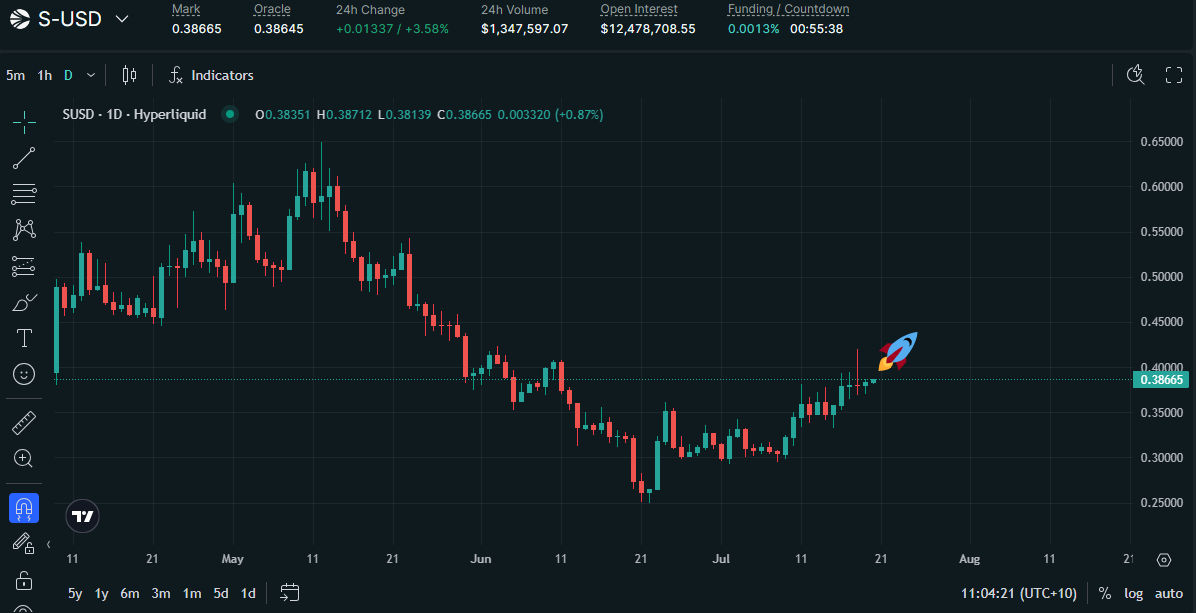
A few green $S candles and everyone will forget this drama, the people complaining are NOT the people that can move the price.
See you at $10
His goal? Build a chain so fast it runs the entire world’s finance
@DrSonicScholz just mapped out how Sonic plans to front-run the next generation of L1s 👇
1⃣ Sonic’s stack already supports government‑grade RWAs like land‑title registries. Formal proofs are being built in to win regulatory sign‑off
2⃣ The Sonic–Ethereum bridge is the first financial bridge with a mathematically proven fail‑safe design
3⃣ Dr Scholz works with a team of top post‑docs and PhD students, giving Sonic access to cutting-edge research and production-grade engineering
4⃣ Sonic can host institutional, KYC‑enabled L2s (similar to Robinhood on ARB) once it adds blob support and a dedicated block‑processing unit
5⃣ Development on the next-gen tech (quantum resistant + millisecond finality) has begun. Sonic works on a 2-3 year R&D horizon to keep a technology lead
6⃣ Next‑gen Sonic target: match → surpass Visa scale. The goal is to design tech to clear 2B + (ideally 10B) transactions per day so one L1 can settle all global finance
7⃣ Lightweight clients are coming and may tap zero‑knowledge proofs to cut resource costs without losing security