Thank You & Closing Soon: The Line That Forgot Its Name
Curated by Xumeng Zhang
Designed by Minglu Zhong
Chinese American Arts Council | Gallery 456
Thank you for the reviews🌹
Sing Tao Daily
Using painting to trace the paths of emotion and memory
“Bringing together works created between 2021 and the present, the exhibition explores the transformation of personal experience, emotional memory, and self-awareness through lines, traces of writing, and emotionally charged symbols… Two works created during the same period reveal strikingly different emotional states. According to Lin, one emerged from conflict and disappointment within an intimate relationship, expressing doubt about her own role and identity. The other reflects feelings of being loved and protected, carrying a far more positive emotional energy. Together, they reveal the complexity of love while also reflecting Lin’s belief that kindness and darkness coexist within human nature.”
World Journal
Reexamining the transformation between writing and the body
By Hangyu Fan
“Centered on the motif of the ‘line,’ the exhibition explores how marks can bridge language and emotion while drawing upon the artist‘s experience with art therapy to reconsider the fluid relationship between writing and physical expression… Curator Xumeng Zhang, whose background includes art therapy, believes the exhibition embodies the collaborative process of redefining an artist’s creative language. ‘Artists’ interpretations of their own work are often subjective and fragile. Working with a curator felt like traveling together,’ Lin says.”
Whitehot Magazine
After Language Withdraws
By Shuhan Zhang
“When Susan Sontag wrote these words in Against Interpretation, she was resisting modern culture’s persistent pursuit of meaning. Looking is often understood as an act of decoding; we approach artworks through analysis, classification, and interpretation, as though their value ultimately resides in a conclusion waiting to be extracted. Yet before The Line That Forgot Its Name, Fanyu Lin’s solo exhibition curated by Xumeng Zhang and presented at Gallery 456 in New York, this mode of viewing quickly begins to falter…”
Exhibition Archive: https://t.co/Jyl5lqYUcX
#art #show
Thank you for Shuhan’s review of my solo show “The Line That Forgot Its Name” curated by Xumeng at Gallery 456 🌹
#art#exhibition#review https://t.co/iX6yYWOkn7
🌹Join us for the opening reception of The Line that Forgot Its Name on June 5 at the Chinese American Arts Council / Gallery 456 in New York. The exhibition explores the moment when a line moves beyond language and becomes memory, gesture, and feeling.
I’m deeply grateful to curator Xumeng Zhang for shaping this exhibition with such thoughtfulness and care, and to designer Minglu Zhong for bringing its visual language to life. Thank you as well to the Chinese American Arts Council for creating space for this conversation.
Opening Reception
June 5, 2026
6–8 p.m.
Exhibition on View
June 5–26, 2026
Chinese American Arts Council / Gallery 456
456 Broadway, 3rd Floor
New York, NY 10013
More information: https://t.co/xIQDTPxp6d
“Life Can’t Be Stopped: Rauschenberg’s Artistic Legacy and Contemporary Resonance”🌹
What does it mean for art to matter in human life?
In this edition of the Global Leadership Conversation series, I spoke with Courtney J. Martin, Executive Director of the Robert Rauschenberg Foundation, on why Robert Rauschenberg remains one of the most urgent artists of our time.
Rauschenberg once wrote, “I don’t think about being great.”
Before “social impact” became institutional language, Rauschenberg was already confronting a more difficult reality: art cannot claim to care about humanity while remaining indifferent to human lives.
From founding Change, Inc. in 1970 to provide emergency medical aid for artists, to pioneering collaborations between artists, engineers, and scientists through E.A.T., Rauschenberg consistently pushed art beyond aesthetics and into lived reality. He believed art should not only transform perception, but also reshape the conditions in which people survive, create, and relate to one another.
This conversation is not only about artistic legacy. It is about whether art can still help people remain human in a world increasingly shaped by fragmentation, speed, performance, and external measures of value.
Perhaps this is why Rauschenberg still feels so contemporary today: he did not spend his life trying to prove the importance of art. He spent it making sure life itself would not be abandoned by art.
Link to the full feature: https://t.co/J883NZ4auC
#artist #art #Rauschenberg #RobertRauschenbergFoundation #business #leadership #SocialResponsibilty
🌹 Welcome to read and listen to my latest feature on FT Chinese,
“In Conversation with Artist Qiu Xiaofei: What Does Art Do When the World Can No Longer Be Told?”
When language fails and narratives collapse, how do we continue to relate to a world that can no longer be fully understood? Fragments suspended between grand narratives and lived experience no longer take the form of stories. Art renders visible what cannot be explained by language or reason. Through it, we perceive the world and recognize ourselves.
In this conversation with artist Qiu Xiaofei, recorded during his solo exhibition Qiu Xiaofei: The Theater of Wither and Thrive at Hauser & Wirth New York, we explore how art operates in the space where experience resists explanation. Moving between personal memory and larger historical forces, including the long shadow of the Cultural Revolution that shaped his parents’ generation, Qiu reflects on fragmentation, childhood as a formative structure, and time as a recurring, spiral process rather than a linear progression.
For Qiu, painting is not a means of solving problems, but a way of allowing unresolved experience to surface. It becomes a form of perception, what he describes as a kind of synaesthesia, through which individuals recognize one another not through clarity, but through shared incompleteness.
Drawing on references from Paul Klee and Walter Benjamin to lived encounters with birth, loss, and psychological rupture, the conversation considers how art can hold what cannot be articulated. Rather than offering answers, it creates a space in which the unresolved can continue to exist.
At its core, this is a reflection on the role of art when certainty dissolves, and on what remains when language can no longer make sense of who we are.
Link to the full feature: https://t.co/enOOLysTow
#art #artist
Materialism is now open at the Suzhou Museum for Contemporary Art!
The exhibition will be on view through March 8th, before reopening later this summer for the grand inauguration of the Suzhou MoCA.
📸 Justin Szeremeta & Suzhou MoCA
“I never thought of becoming a businessman,” Jorge M. Pérez told me when we sat down at El Espacio 23, the contemporary art space he founded, during Art Basel Miami Beach for this edition of the Global Leadership Conversation series. “I thought I was either going to be a social changer in Colombia or a professor.” He introduced himself as “HOR-hay,” lingering on the syllables with a precision that made clear how closely he holds his Latin American roots. As a major developer and one of the most visible cultural philanthropists in the United States, he speaks as someone who has built an empire yet still measures himself by where he began.
What shaped a man who became a billionaire developer without ever aspiring to be one? And how does that tension illuminate his philosophy on wealth, art, and social responsibility?
Welcome to read and listen to the full feature on FT Chinese “Behind the Skyline: Jorge Pérez on Cities and Art”
🌟 https://t.co/LW4zfkcTid
Images:
1. Pérez Art Museum Miami, Photo by Armando Manny
2. Jorge M. Pérez
3. Pérez Art Museum Miami, Photo by Robin Hill
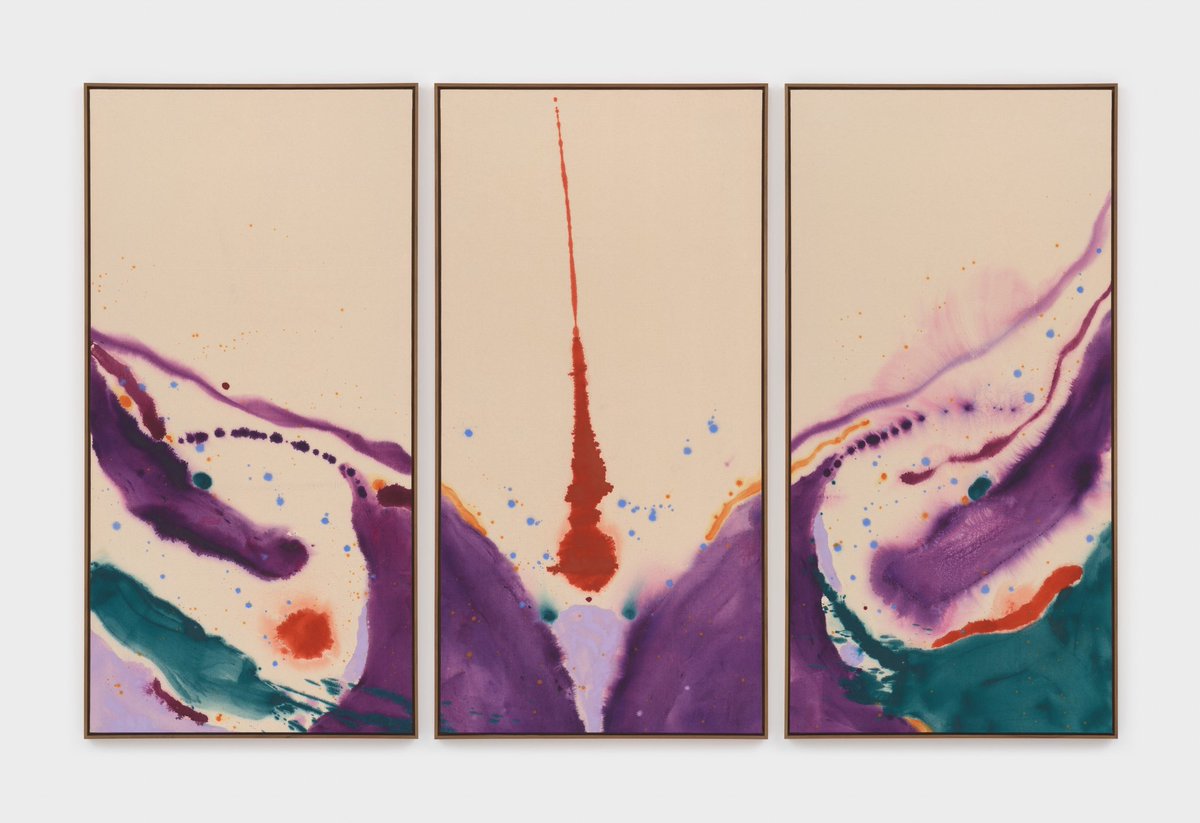
4. Teresita Fernández, Dark Earth (Cosmos), 2019
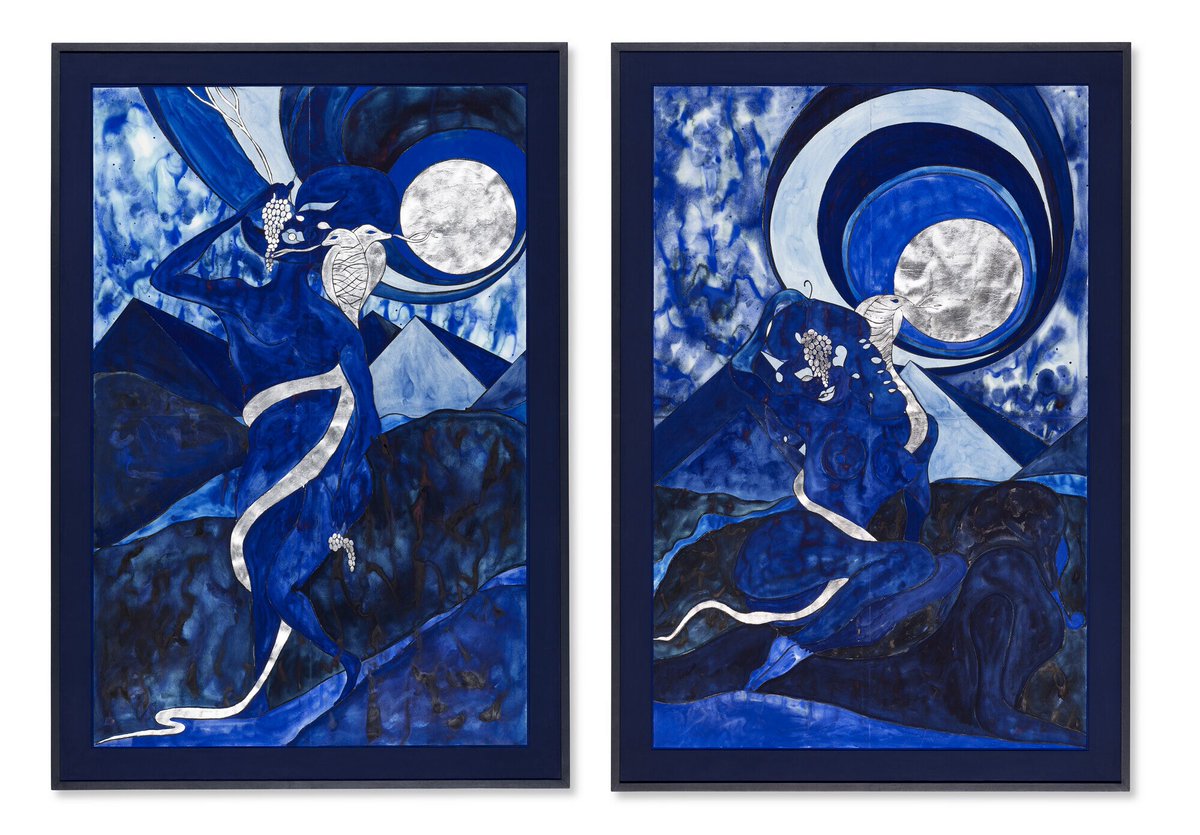
5. Chris Ofili, Blue Damascus, 2005
6. Pat Steir, Autumn: The Wave After Courbet as Though Painted by Turner Influenced by the Chinese, 1986
7. Violeta Maya, Mi versión del origen del mundo I-III (My Version of the Origin of the World I–III), 2024
8. José Bedia, Salto transcendental de un agujero negro a una estrella (Transcendental Leap from a Black Hole to a Star), ca. 1990
4-8: Installation views, A World Far Away, Nearby and Invisible: Territory Narratives in the Jorge M. Pérez Collection, El Espacio 23, Miami
#art #business #leadership #realestate #collecting #charity
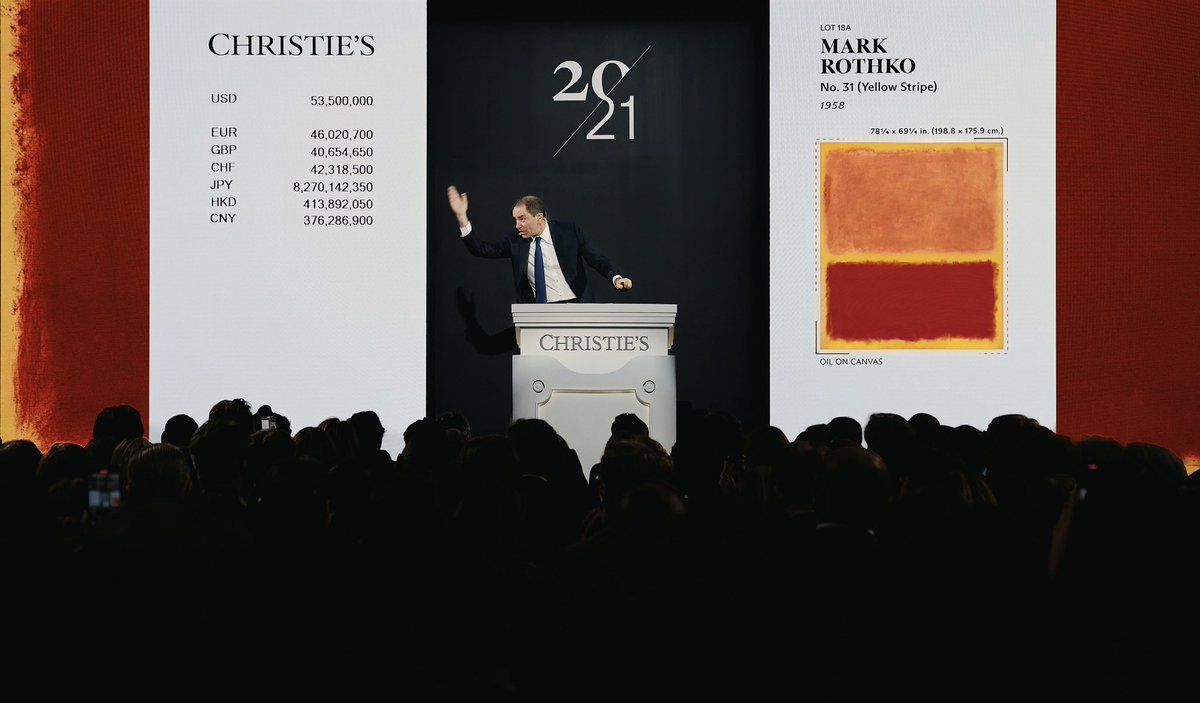
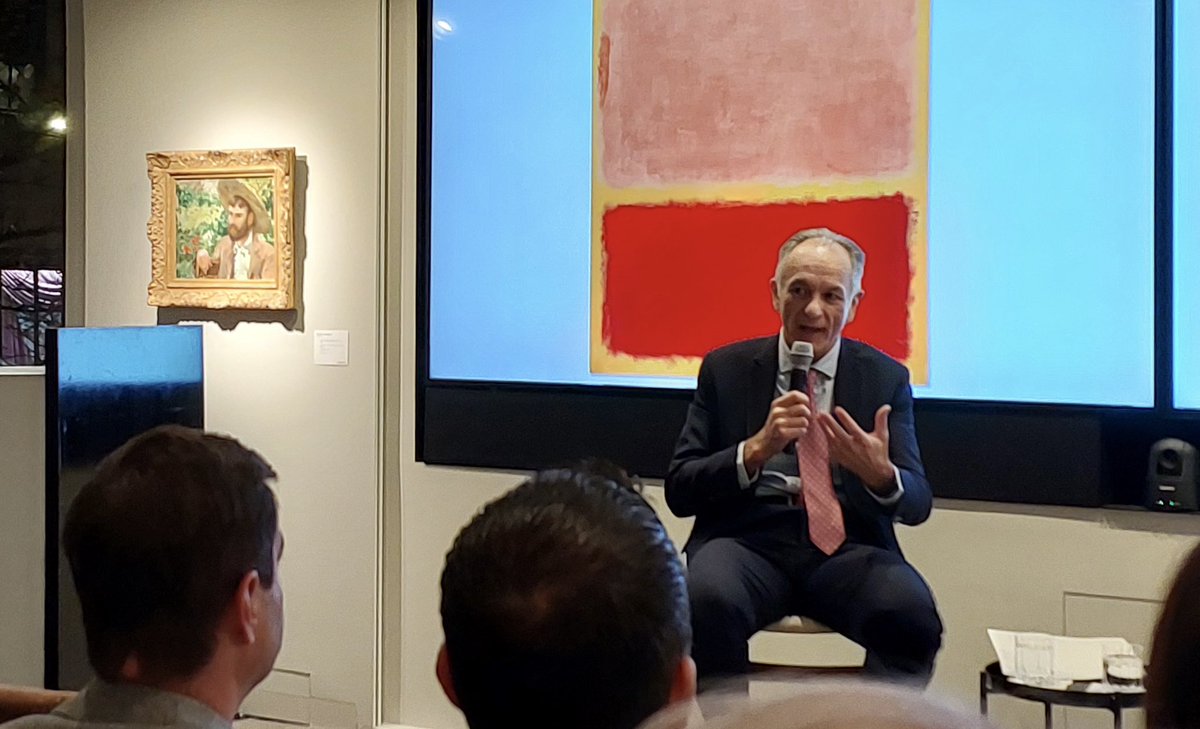
Thank you to everyone who joined us for an elegant evening at Rockefeller Center with Guillaume Cerutti, President of the Pinault Collection and Chairman of the Board at Christie's during the most important auction week of the year.
What can business leaders learn from the art world about brand endurance, emotional capital, and that cultural value and business value are not opposites, but partners? Guillaume reflected on the forms of value that define Christie’s at its best: trust, passion, connoisseurship, specialists’ morale, quality, and cultural credibility. These are the intangible assets that may not appear on a balance sheet, but are often the ones that outlast market cycles.
Guillaume also spoke about Christie’s owner François Pinault, the visionary collector with an extraordinary instinct for cultural power. For him, Christie’s is not simply a business, but the centre of a wider cultural constellation, where reputation and passion compound over decades.
Thanks to Christie’s for hosting in their beautiful boardroom. Please stay tuned for more events by Columbia Business School Alumni Club of NY🌹
#art #business #leadership #Christies #PinaultCollection #ColumbiaBusinessSchool #CBSACNY
“Living Memory” reimagines Leo Messi’s legendary goal as .#art, #philanthropy, and living memory, now on view at @ChristiesInc with a charity auction underway. As we await the highest offer, perhaps #Messi’s truest offering is already ours to keep. https://t.co/1GO3AW2PHR
Thank you to Dr. Page Knox for leading a private tour of Sargent and Paris at The Metropolitan Museum of Art for the Columbia Business School Alumni Club of New York❣️This much anticipated exhibition traces the formative years of John Singer Sargent in Paris, revealing not only his bold experimentation and sensual portraits, but also, as we learned through this tour, the strategic business thinking behind his career. Sargent made deliberate choices that shaped both his artistic legacy and professional success.
#TheMet #JohnSingerSargent #SargentAndParis #Art #Business
Gallerist to the world’s elite, David Zwirner moves millions in art. But his rarest asset can’t be priced.
This edition of the Global Leadership Conversation traces the architecture behind one of the world’s most influential galleries, where decisions are not only shaped by strategy but also by memory, trust, and emotional depth. The trade secret lies much deeper.
Welcome to read and listen to the full article on FT Chinese: https://t.co/PoAZdQM3h8
Images:
1. Luc Tuymans, Hearts, 2024
2. David Zwirner at the opening of his Los Angeles galleries on N Western Avenue in April 2023
3. David Zwirner 20th Street, New York, designed by Selldorf Architects, 2013
4. Jason Rhoades: CHERRY Makita – Honest Engine Work, 1993
#art #leadership #gallery #business #ft #DavidZwirner #heart