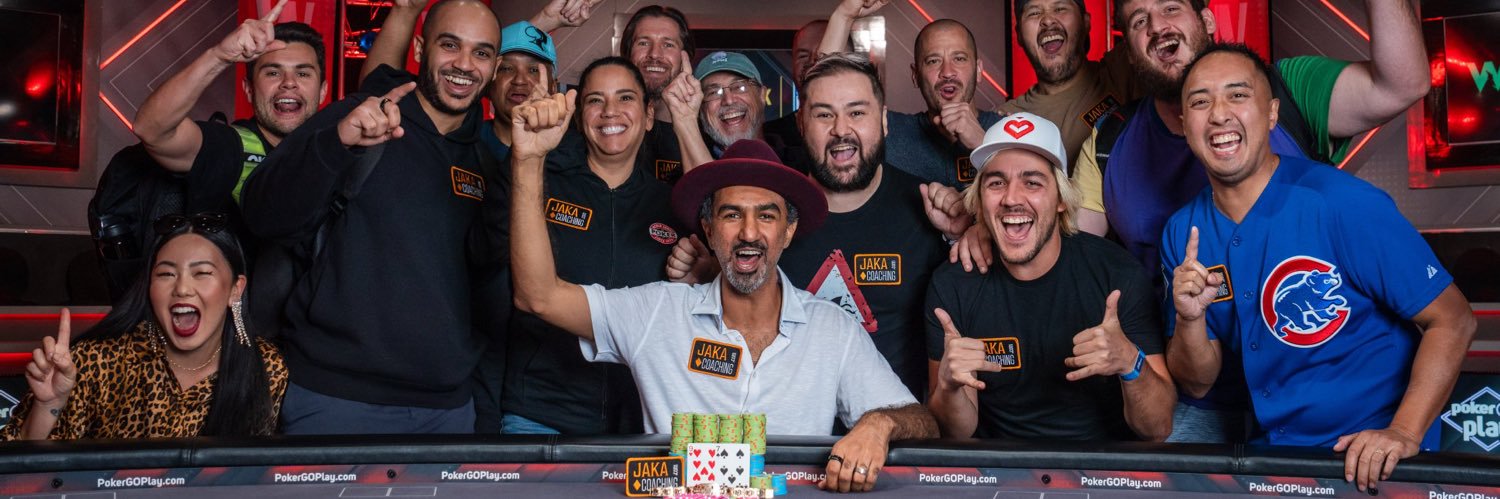
2025 Live MTT Results
Buy-ins: $842,172
Cashes: $1,670,261
Profit: $828,089
Live MTT entries: 117 (121 days)
Online: –$38,320
96 MTTs / 23 days
Highest volume year since playing full-time 2008-2015
I’ll share how I stay competitive while running a business + family and honest context on the results.
-----------------------------------------
A Quick Reality Check
This was a strong year results-wise, and I absolutely ran above expectation.
With tournament poker and sample sizes this small, results can swing wildly year to year. I’ve had years where I made far less, and years where I lost. That’s normal when it comes to tournament poker.
What I care about far more than any single year is whether my process is sound, my decisions are profitable, and my approach holds up over a decade, not a single year.
Volume & Lifestyle Context
Live MTTs played: 117
Travel days: 26
Days on the road: 166
Days playing poker (live + online): 144
For comparison, a full-time live pro typically plays 220–300 tournament entries across 250-300 days of poker.
To draw meaningful conclusions about ROI in tournaments, you’d need 600+ live MTTs or 1000+ online, and even that can be small depending on field size and structure.
Over the four years prior, I averaged 70–75 live tournaments per year, which is likely where I’ll settle again going forward. That’s a deliberate lifestyle choice.
I played full-time my entire 20s and loved it. I transitioned to part-time in my 30s with the intention of pursuing my passion for entrepreneurship and building a lifestyle conducive to raising a family.
Most of my time now goes into running my business @jakacoaching, raising two kids with a third 👶 on the way, coaching, and staying on top of my health now that I’m 40.
I’m playing roughly 25-30% of the volume of a full-time pro, so my edge has to come from how I study, not how much I study.
How I Stay Competitive With Limited Time
1. Prioritize The Spots That Matter Most
This is the biggest edge for both part-time and full-time players.
I identify the 10 most common spots that come up in MTTs and made sure I’m very strong in them. You can cover close to 80% of tournament decisions with about 20% of your study time.
Instead of memorizing solutions, I look for patterns, simplify strategies, and build heuristics that are easy to recall and execute under pressure.
From there, I break study into three buckets:
Bucket 1: The 10 High-Frequency Spots
These get constant reinforcement.
Bucket 2: Final Table ICM & Heads-Up
This one breaks the rule of what I said above. Most players delay these because they happen infrequently.
What’s different is that when they do come up, they account for a massive portion of your ROI, because that’s where all the money is.
I spend one focused week per quarter studying Final Table ICM and revisit Heads-Up twice a year so I’m never out of shape when deep runs suddenly appear.
Bucket 3: Personal Discomfort List
I keep a running list of spots where I consistently feel unsure in-game. Whenever I have time to grow beyond maintenance mode, I know exactly what to work on next.
2. Build Strong Peer Circle and Fast Feedback Loops
One of the biggest mistakes part-time players make is studying in isolation, thinking a solver can substitute human feedback. The reality is most people are using solvers wrong and don't have anyone to tell them that.
When volume is limited, feedback needs to be faster. That means having people you trust who challenge your thinking and pressure-test decisions before bad habits set in.
Study with players at or slightly above your level
Pay for access to people already where you want to be
Outsource learning when time is constrained
At the very least you want to have a group chat or access to a Discord to discuss hands with other players.
I can't tell you how many times this year I was second-guessing a hand I played or implementing a concept incorrectly, and a simple convo with a friend helped clear things up allowing me to get my head back in the game.
3. 1:1 Coaching
Once a month, I get an elite player to review my deep runs or hands I’ve tagged as unclear.
Coaching isn’t just for beginners. It’s often most valuable when you’re already doing a lot right but want to reduce blind spots or outsource some study.
At the top level, pros constantly learn from each other. No one has time to study everything deeply, so specialization and knowledge-sharing become essential.
Pre-committing to these sessions has been huge for me. Even in months where I don’t play much, knowing a review is coming up keeps my poker thinking sharp and prevents drift.
I’ve started making these reviews public inside my training community so members can join the process and learn alongside me.
4. Access To The Right Tools
Preflop ranges with ICM
Non-negotiable. I'm always surprised how many people have been playing for years and still don't use preflop charts. This is like being a real estate agent and not having an MLS account.
I use GTO Wizard; they're a partner of ours and you can get most of their preflop charts with a free account here: https://t.co/8lpeqQYFOi
Postflop solvers
Don't worry about using solvers if you're newer to studying, but make sure you know how to read solver outputs so you can follow along with teaching material or hand discussions in group chats.
Here is a video tutorial on how to read solver outputs: https://t.co/CNiyGW8WGw
ICM/Preflop tools (ICMizer, HoldemResources)
Mostly for advanced pros who have time to run custom sims. It allows you to make custom preflop ranges and exploits based on how your opponents are playing. Since I don't have time to do these anymore I just watch training videos that summarize work other coaches have done or I'll outsource the work to someone to run spots for me.
Drilling vs bots
Concepts don’t stick without reps. After watching a training video on a particular concept, I’ll drill that spot for 15–30 minutes to get the reps in. I use the GTO Wizard training tool.
The idea with tools is when you need to check postflop spots, or you get deep and need to double-check ICM/heads-up ranges, you already have access to the right tools and know how to use them.
How Much I Actually Study
Target: ~4 hours/week
• 1–2h watching training videos on https://t.co/HFNdX7siiY
• 1h reviewing marked hands on GTOW
• 1h discussing hands with peers or coaches
• 15–30 min drilling spots vs BOT (some weeks)
• 90 min 1:1 coaching session (monthly)
In reality, I only hit all 4 study hours about a third of the weeks, the other weeks I do what I can based on my priorities for the week.
Final Thought
You don’t need to be a pro or have massive volume to be a strong, winning player.
But you do need a clear process, honest feedback loops, access to quality tools and players, and the discipline to focus on the spots that actually move the needle.
Hope this helps some of you trying to do the same.
If you have questions that would be useful for your own game or situation, feel free to ask below.
@DagensBoost Are you clicking the orange button screenshotted above or something else lower in the email?
Haven’t had anyone else say they didn’t get it. See video below
Really appreciate you taking the time to do this comparison of poker training sites.
Many have told us the MTT Crash Course could be a standalone premium product. Instead, we include it with our regular membership because we want every member to have access to it.
It’s awesome seeing people come back a year later saying they’re still rewatching it. 💪
I started with @JakaCoaching, and I have to say the MTT Crash Course is exceptionally strong.
By the fourth video, I genuinely started wondering why Jaka is trying so hard to make the player pool tougher. There are concepts in this course that can genuinely change the way you think about poker. On the surface, it feels like these are topics everyone already knows, but he manages to dig much deeper into spots that seem like there’s nothing left to explore.
Honestly, I think the course is underpriced for the amount of insight it gives away. It feels like he’s sharing too many valuable ideas and strategic nuances for such a low price.
One thing is clear: @FarazJaka has a rare talent for making you look at poker from a completely different perspective after just a couple of videos.
Here is the link to the MTT Crash Course if you want to check it out.
Covers the highest priority MTT spots to be the most efficient use of your time.
https://t.co/om25Fowwhc
Haha def recall that lesson. I’m guessing those are from some videos that are about 2-3 years ago. Everything from the last 1.5 years should have higher production quality (video and audio) but curious to hear if you still feel our latest stuff was drastically different than RYE.
Appreciate the feedback
I’m giving away my Day 1 WSOP Main Event hand log.
The same record I use to review my own play.
So you can see behind the scenes of how I play this type of huge field.
Real hands.
Real stacks.
Real adjustments from Day 1 of the WSOP Main Event.
Seeing how confidently people say a hand they see in the Main Event "should've been played" reminds me how much context gets overlooked.
The best players adjust lines and bet sizes based on who they're playing and what they've learned about them.
Especially in sub-$25K buy-ins.
Just released a training video reviewing all my WSOP Main Event Day 1c hands, along with some tips for playing Day 2 through the Day 4 bubble.
It's in the @jakacoaching library for members; the link in the first reply below.
Documenting every hand I play in the #WSOPMainEvent Day 1 and emailing it to anyone who wants it.
The good, the bad & the ugly. Completely raw & unfiltered.
Giving 2% of my Main Event winnings split to 2 people who like, repost, reply & follows @farazjaka
Link in 1st reply 👇