Very respectable. Honestly agree with JFG about bridging the two sides. Though I think a lot of people are being disingenuous with there reviews on the book and have not read it (mainly for a lack of intelligence), I do wish you did more of an academic approach. Much to learn from both sides if we want actual victory.
These men rallied against immigration, and the media spent many years destroying their lives.
Will they do the same for women who had a rally in Massachusetts to support a literal child killer?
Notch was the original REM theorist. We see this in his counter of JEM, AIM, in which Jews are depicted very accurately and our hero defeats a dragon guarded by black men.
@MarkBrahmin@RichardBSpencer
Thoughts…?
>An ambitious masterpiece over a decade in the making
>A hotly anticipated passion project from arguably the best in their craft
>Memed on that it would never come out by doubters
>Received poorly upon release by plebeians who misunderstand it
>Be Megalopolis
Pic unrelated
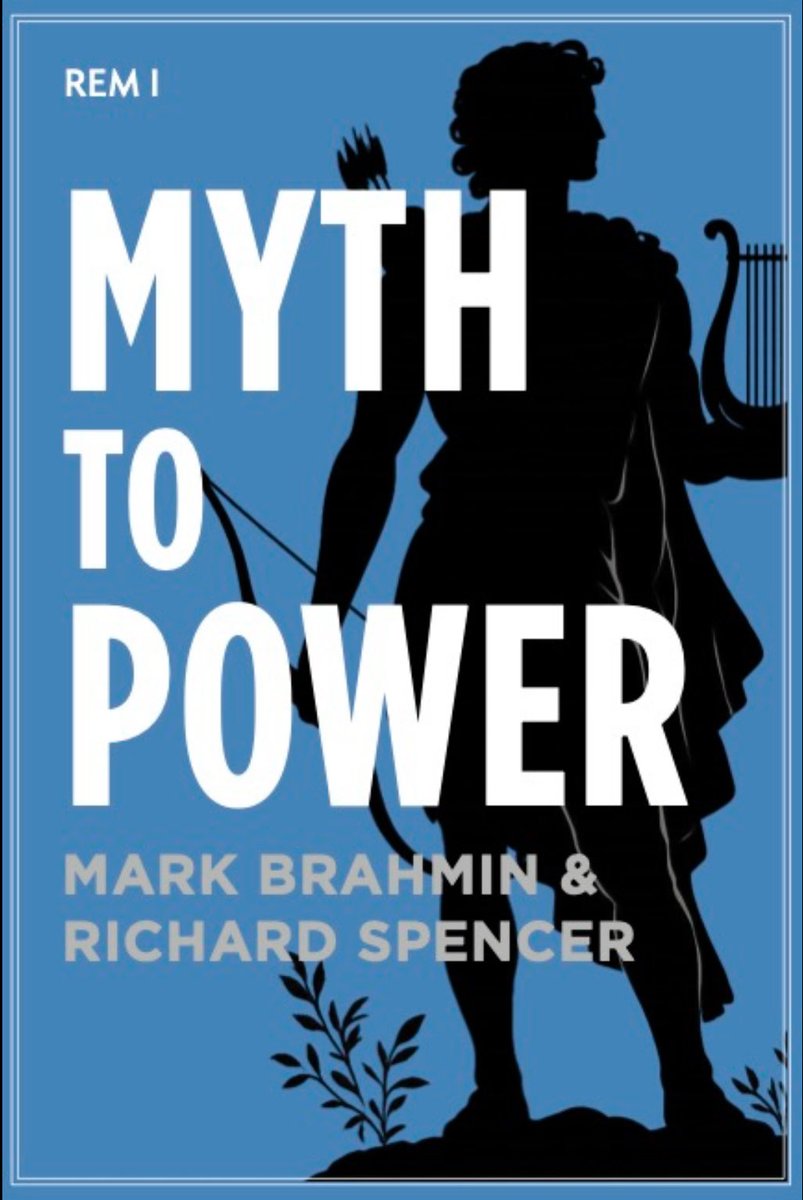
There have been some posts recently talking about Myth to Power by Spencer & Brahmin. I obtained a copy and have started to read it. I have some thoughts on what @KeithWoodsYT wrote as well as my own initial thoughts on what I have read so far.
We obviously have a lot of overlap in our love for the god Apollo, as well as Nietzsche's Birth of Tragedy, and just our views about Christianity and how the West became what it is.
REM Theory posits that prominent cultural narratives contain both exoteric & esoteric messages, decipherable layers meant to serve as moral or psychological programming for a given populace. These are employed through the arts; music, film, myth, etc. Even down to motif -- the smallest structural unit possessing thematic identity -- the 'Atoms' of our culture.
I agree with Richard in his preface. This is not an academic book. Spencer & Brahmin are tapping into something deep here that can't be done in an academic way. This is something that goes beyond expertise in specific fields of study such as philology, anthropology, history, or even theology. This is large-scale, deeply philosophical, and broad-sweeping. I can only describe it as 'Anti-Jungian' or Joseph Campbell flipped upside down. Where symbolism and archetypes are examined and placed on a chessboard to oppose each other as being on the side of Apollo (Aryan) or Dionysus (Jewish).
Now when we are dealing with these mediums of culture, we are dealing with Apollo, called Musagetes, "leader of the Muses." The nine Muses, who are the goddesses of the arts. But art-form mediums also have deep Dionysian roots. Intoxication and inspiration through frenzy & madness. The Apollonian Paean vs. the Dionysian Dithyramb are the two most fundamental core aspects of western art. The heavenly vs. the chthonic.
Although I have not finished the book nor have even read most of it, it seems as though Myth to Power is taking a stance that the Apollonian is the art that best suits the Aryan soul and therefore is superior to the Dionysian. And this might surprise the average Nietzsche fan who learned in The Birth of Tragedy that the West has gotten too Apollonian and therefore the Dionysian satyr was needed to bring about a future state of fullness. In a way, Myth to Power is in some way taking a stance against Nietzsche, and arguing that the West has gotten too Dionysian (through Judeo-Christian ethics & culture) and thus an Apollonian revolution is necessary to bring a future of order & perfection.
I do not want to speak too much on this because I could be missing some context that might get fleshed out later in the book.
But I was impressed with the depth at which they go to portray this cosmic struggle at the heart of our society.
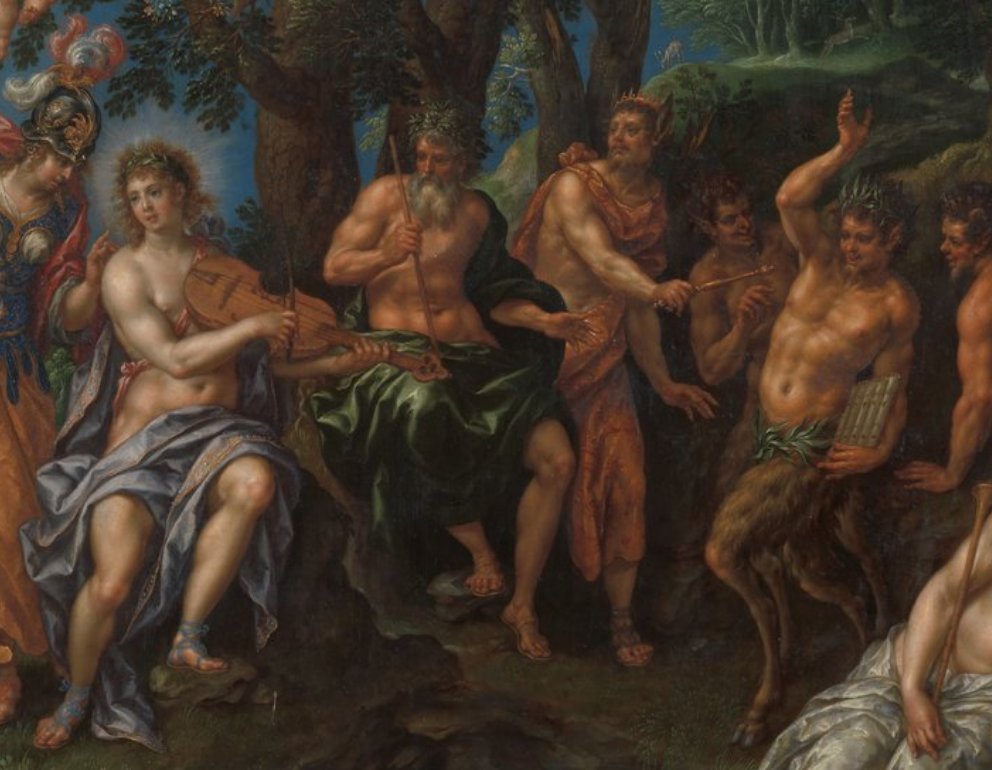
For example, on page 18, they bring up the famous story recounted in Ovid's Metamorphoses about King Midas, who just left the River Hebrus (on Dionysus' orders) to get baptized and wash off his "golden touch" so that he can be free from the curse that was given to him by Dionysus. On the way back to his palace, King Midas finds Apollo (with his lyre) & Pan (with his flute) playing music and is asked to judge between them. When Midas judges that Pan wins, he is cursed by Apollo with donkey ears. The comparison of King Midas to your modern normie who compares Kanye to Mozart is a perfect analogy. This is well said. And it also gets at the very core of their project. The rustic satyr vs. the Aryan chad.
Now as far as what Keith Woods has written on the idea of "proto-Jewish," I sort of agree with him that this idea can be too simplistic and might run into problems. Especially given how much Judeans borrowed from Greek and Hittite (Indo-European) culture in the Iron Age and classical period, which muddies the waters significantly when trying to classify cultural motifs as either Aryan or proto-Jewish. Not to mention how Judaism has it's own Apollonian aspects. This does come up quite a bit, and the word "proto-Jewish" appears 119 times in the book. However, they are clear that they aren't saying that these motifs are literally Jewish, and are using the term anachronistically on purpose to map out the chessboard more clearly. So I sort of get what they are trying to do in that sense.
Despite all that, Apollo makes sense for what they are trying to do. Apollo was the god of the Trojans. Troy was the first Western superpower in world history. He is the golden-haired Hyperborean god. Dionysus was the god whom the Greeks & Romans thought was the same as Yahweh in multiple sources (Plutarch, Macrobius, Chaldean Oracles). Dionysus was thought by Homer to be born "between Egypt & Phoenicia" (Zion), and Seneca listed Beth-Shean (Israel) as Mount Nysa.
I plan on finishing this and following what they do with this project, and I want to take a completely unbiased approach to the material.
HAIL APOLLO!
@RichardBSpencer@MarkBrahmin