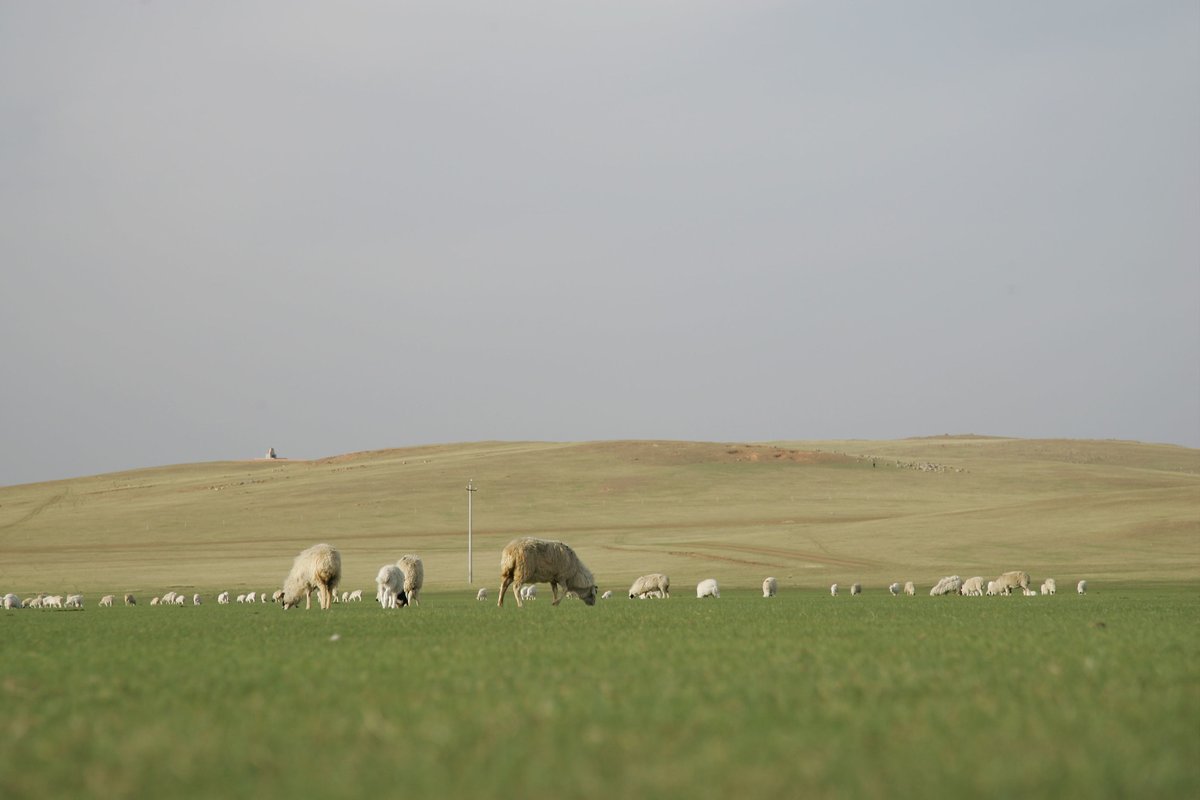
Native prairies and savannas once supported hundreds of plant and animal species per hectare 🌾
Isik Ozturk (@ShambaCentre) on why a more diverse farm is a resilient one, and how national biodiversity plans can help farms get there: https://t.co/dHedSuNR2S
Less reliable rain calls for smarter water use. As El Niño tests farmers, field trials in India are sowing direct seeded rice, cutting irrigation water use by up to 35%. This @CropLife case study explores how farmers can grow more with less 💧 https://t.co/uCllL1HL08
As digital tools and mechanisation make farming more rewarding, young people in Africa are finding opportunities across the value chain. @WFPF's Alyssa Brown explores how Africa could achieve its food security goals despite climate and economic shocks: https://t.co/kfd9cKw67c
Smallholder-friendly systems go beyond new technology. @TechnoServe experts point to new loans and farmer-buyer collaboration, with inclusion at the centre. Start-ups in their programme trained 3,000+ farmers: https://t.co/HNpbuqgC4y
Ethiopia and Malawi have consistently met the 10% target for public spending on agriculture. What would help more countries follow? Dr Hamady Diop of the @_AfricanUnion outlines the blended finance approaches that could: https://t.co/c88EXBWPtm
How a Data and AI Revolution is Helping Africa’s Farmers Build Resilience and Productivity
In this article, @AKADEMIYA2063’s @dr_racinely looks at how satellite data, machine learning, and predictive analytics are helping transform agricultural decision-making across Africa.
Through Africa Agriculture Watch (AAgWa), remotely sensed satellite data and machine-learning techniques are used to generate crop production predictions for 11 key crops across 47 African countries. Beyond showing current conditions, these tools provide insights into expected production and yields before the harvest season, helping farmers and policymakers anticipate potential challenges linked to climate, pests, diseases, and other shocks.
As Dr. Ly writes: “Predictability is a key element in times of crisis.” AAgWa is helping turn that predictability into actionable information for more resilient and food-secure agrifood systems.
Full piece @farmingfirst: https://t.co/2BEZZ6TMI9
As governments around the world grapple with rising migration pressures, the conversation too often centers on border security, climate shocks, and conflict. These factors matter, but they overlook a deeper economic reality: in an increasingly interconnected global labor market, migration is often driven by the search for better jobs and higher incomes. For many young Africans and others from the Global South, migration is not simply an escape from hardship but a calculated investment in economic opportunity.
Investing in agrifood systems will create productive opportunities that enable young Africans to build prosperous futures where they are and reduce the economic pressures that drive irregular migration.
Read more from @DrOBadiane via @farmingfirst👇
https://t.co/irpSzEBner
How can safer pest management help Indonesia reach staple-crop self-sufficiency by 2027?
Learn from @CropLifeIntl experts about the 3-part framework already supporting farmers to achieve safer, more productive harvests: https://t.co/z29cT2bzVj
📸 @IFPRI
🥁 The answer is... 40 tonnes!
One tonne of algal oil can replace the DHA from around 40 tonnes of wild-caught fish.
As El Niño squeezes Peru's anchovy catch, @Clim_Eat experts explain how algal oil could protect feed supplies from climate shocks: https://t.co/4tCyYyysoP
🇵🇪 Peru supplies around 20% of the world's fishmeal and fish oil. This year's El Niño just cut its anchovy quota to the lowest level in a decade.
🐟 QUIZ: One tonne of algal oil can replace the omega-3s from how many tonnes of wild-caught fish?
"If we want more young women to build farms, research programmes or agricultural businesses, encouragement is not enough." — Rainbow Crops' Hilde Nelissen on what the International Year of the Woman Farmer must deliver for women in agriculture: https://t.co/TXrbcUtEF3 #IYWF
Four years was all it took to transform Santa Brígida Farm in Goiás, Brazil from a liability to an income stream in the latest.
Learn from @CropLifeIntl how new systems of crop rotation can dramatically change landscapes and livelihoods: https://t.co/l4TQyDZqwM
A business starter kit helped Lilian Mwanga pay for equipment as she earned, not upfront. She now owns more land and mentors other women farmers in Kenya.
Learn from @IFDC experts how micro-finance is supporting women across Africa: https://t.co/R7SViKDylg
🇵🇪 Peru supplies around 20% of the world's fishmeal and fish oil. This year's El Niño just cut its anchovy quota to the lowest level in a decade.
🐟 QUIZ: One tonne of algal oil can replace the omega-3s from how many tonnes of wild-caught fish?
Africa holds nearly two-thirds of the world's uncultivated arable land, yet its food import bill continues to rise.
@AKADEMIYA2063's Dr Debisi Araba unpacks the technology coordination that could close that gap: https://t.co/WpLrHOipiN
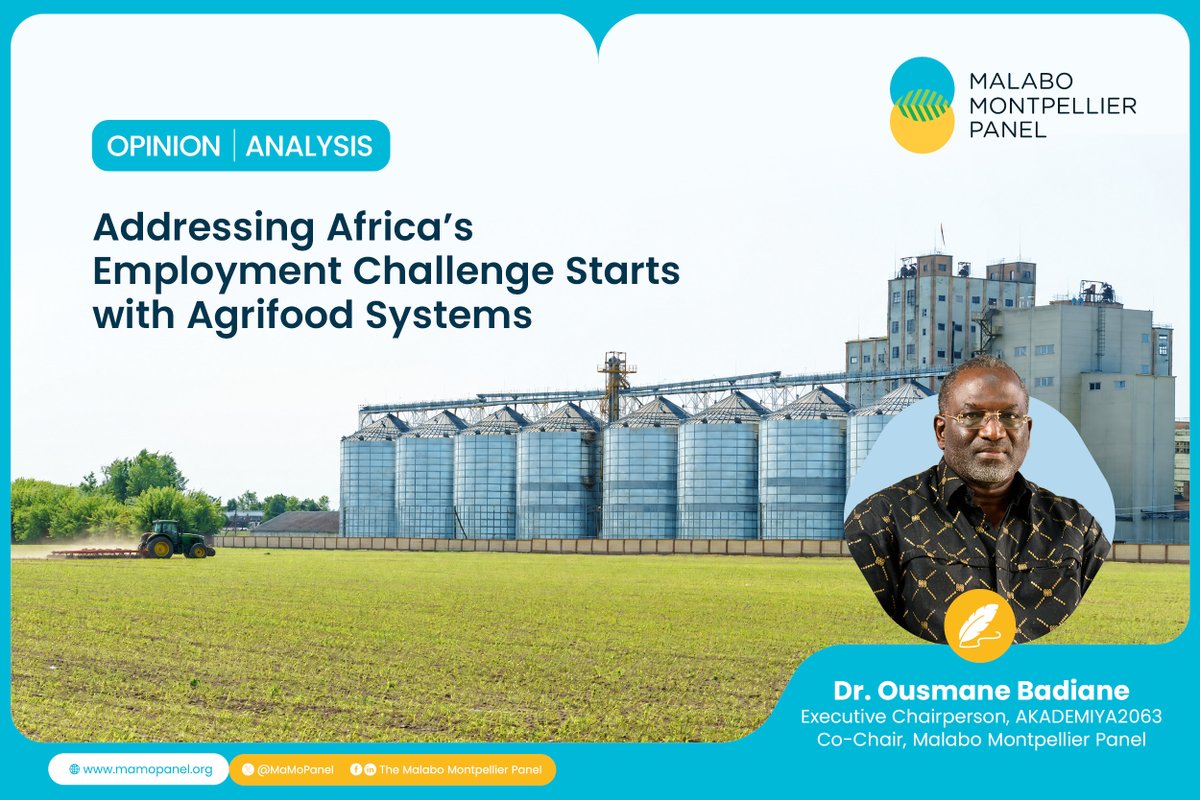
Addressing Africa’s Employment Challenge Starts with Agrifood Systems
As governments around the world grapple with rising migration pressures, the conversation too often centers on border security, climate shocks, and conflict. These factors matter, but they overlook a deeper economic reality: in an increasingly interconnected global labor market, migration is often driven by the search for better jobs and higher incomes. For many young Africans and others from the Global South, migration is not simply an escape from hardship but a calculated investment in economic opportunity.
Investing in agrifood systems will create productive opportunities that enable young Africans to build prosperous futures where they are and reduce the economic pressures that drive irregular migration.
Read more from @DrOBadiane via @farmingfirst 👇https://t.co/irpSzEBner
A $278 billion finance gap stands between rangeland restoration and the two billion people who depend on rangelands for their livelihoods. A new investment hub, launched at @Cop17Mongolia and led by @ILRI, aims to close it: https://t.co/lBnhOF5ywk
For many young Africans, migration is a calculated investment in opportunity, not an escape from hardship.
@AKADEMIYA2063's Ousmane Badiane on why agrifood systems, not border policy, hold the answer to Africa's 2 million jobs-a-month employment gap: https://t.co/YIyg9vpx5V
As school canteens rise as one of the most dynamic tools in African climate adaptation, @ATwahirwa speaks to experts from @AfDB_Group, @BiovIntCIAT_eng, @SDG2AdvocacyHub and @CGIAR about what this shift could mean for smallholder farmers and food security: https://t.co/tMg3G0bHxf
How can policy better recognise African women's contributions to agriculture?
Nine parliamentarians writing as @TheAFSPaN have an answer and a list of legal reforms to back it up:https://t.co/6Kmis4DKqG
📸: @ICRISAT
Kenya, Ghana and Nigeria's national genebanks used to run on handwritten notebooks. Now barcodes and shared digital systems mean seed data can be traced and accessed in seconds.
@CropTrust breaks down what it took to get three national genebanks this far: https://t.co/0MsA7zSlc6