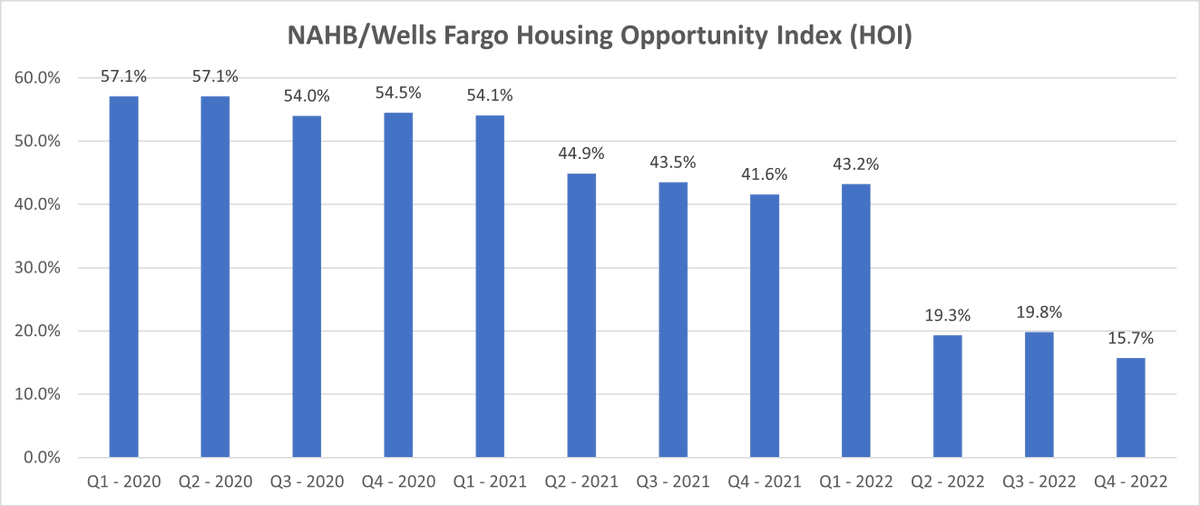
NAHB/Wells Fargo HOI shows that for Q4 2022, just 15.7% of homes sold in Portland MSA would have been affordable to a family earning the local median income, compared to 57.1% in Q1 2020.
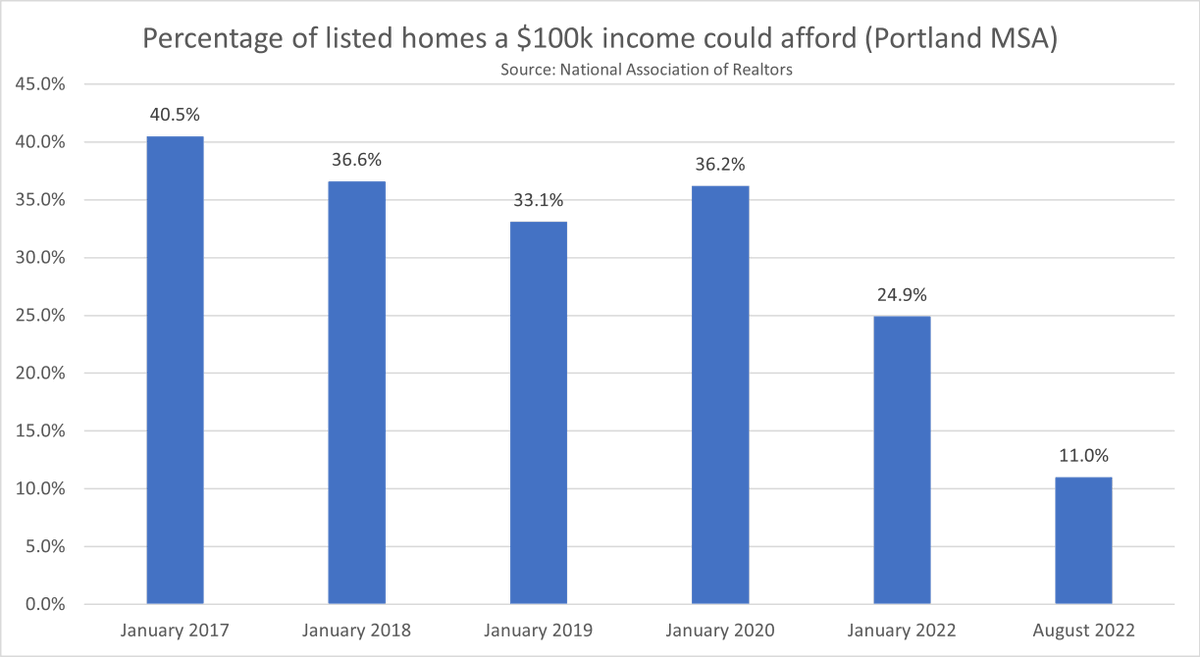
Portland’s population, in-migration, and broader economy hinge on affordable housing and the trends are bleak. From January 2017 to August 2022 the % of currently listed homes a $100k income could afford in the Portland MSA fell from 40% to 11%
"Perhaps most surprising is the domestic out-migration from the West. Six of that region’s 13 states saw net domestic out-migration ...six of the remaining seven western states showed smaller migration gains in 2021-22 than in the previous year" https://t.co/WxMYJ5o7P5
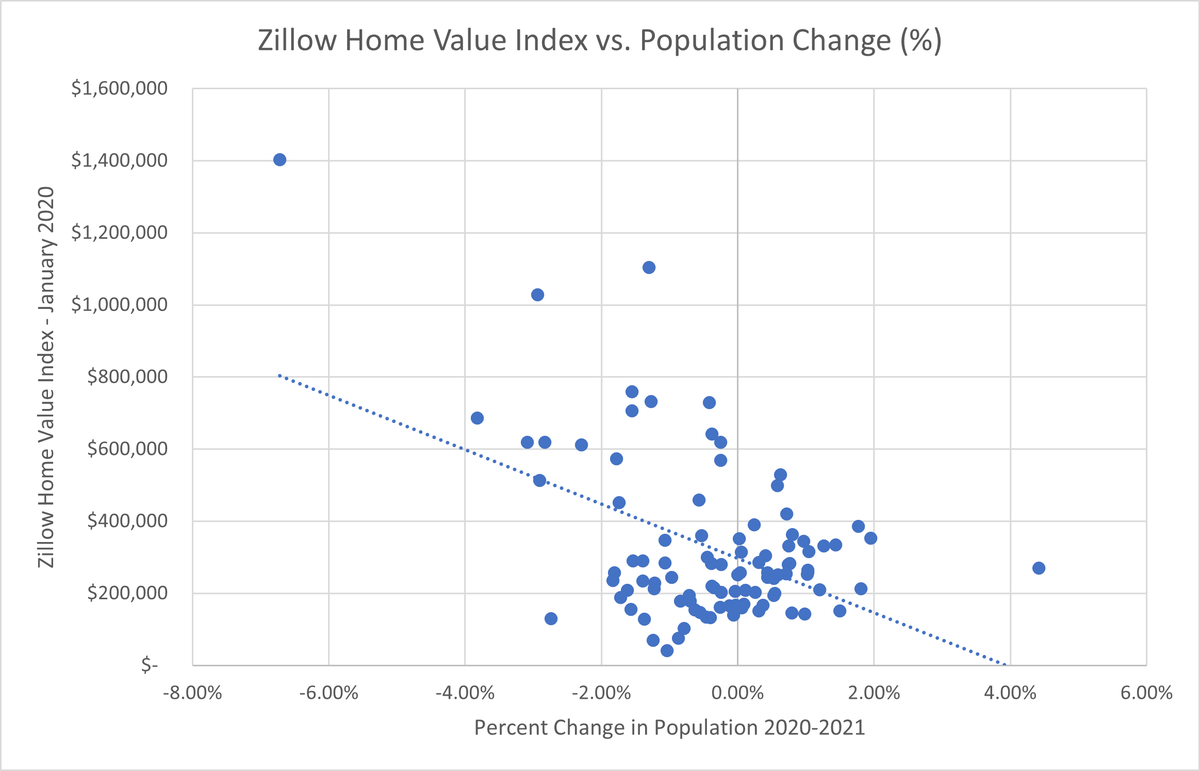
Of the top 100 most populous cities in the US,
Average Zillow Home Value Index in January 2020 for cities that saw a population increase: $273,754
Average Zillow Home Value Index in January 2020 for cities that saw a population decrease: $363,568
Housing prices drive migration
The old saying is a conservative is a liberal who’s been mugged. In Portland, many liberals are dodging stray bullets, losing catalytic converters to thieves, and sidestepping tents. Then they open their tax bills.
https://t.co/e1oItsn2AD
Of the top 100, biggest population gainers from 2020-2021 were cities in the west with ZHVI in Jan 2020 under $400k and the biggest losers were SF, NYC and Boston all with ZHVI in Jan 2020 over $600k
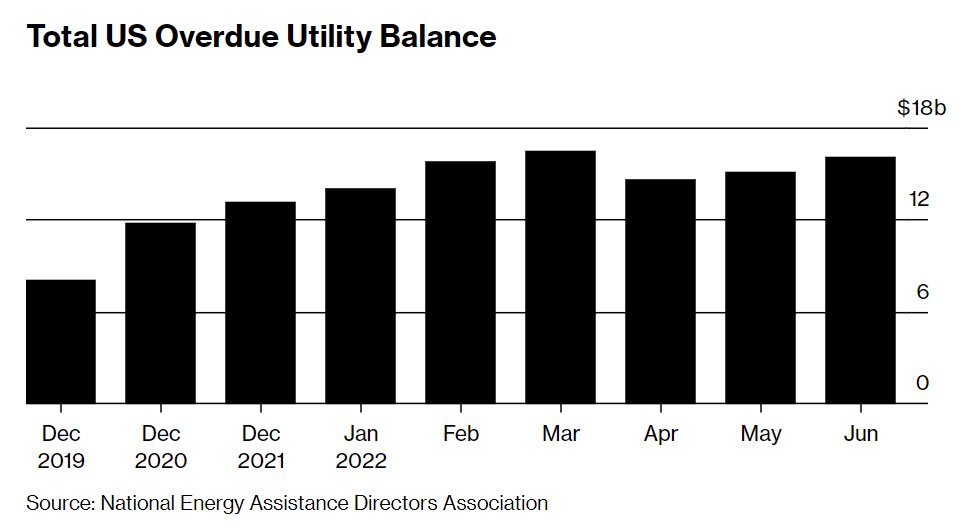
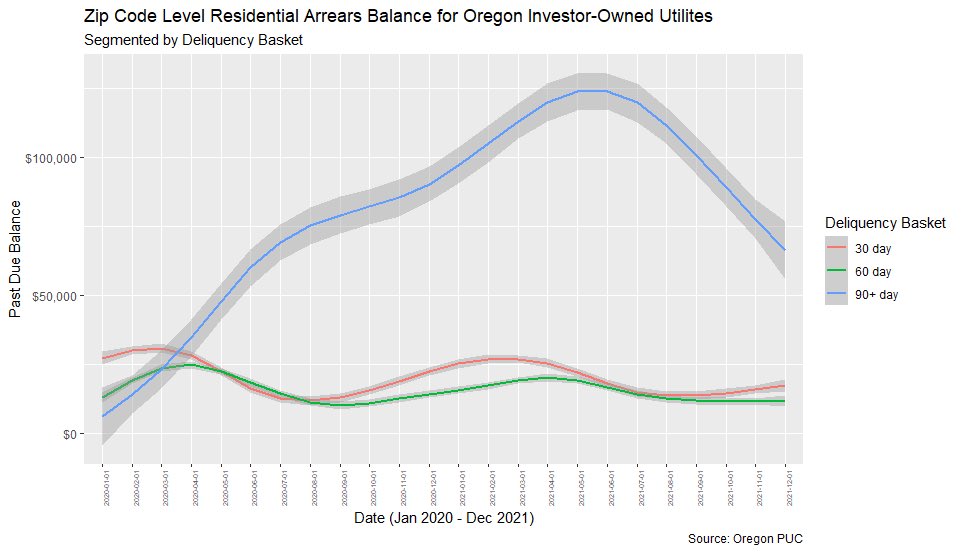
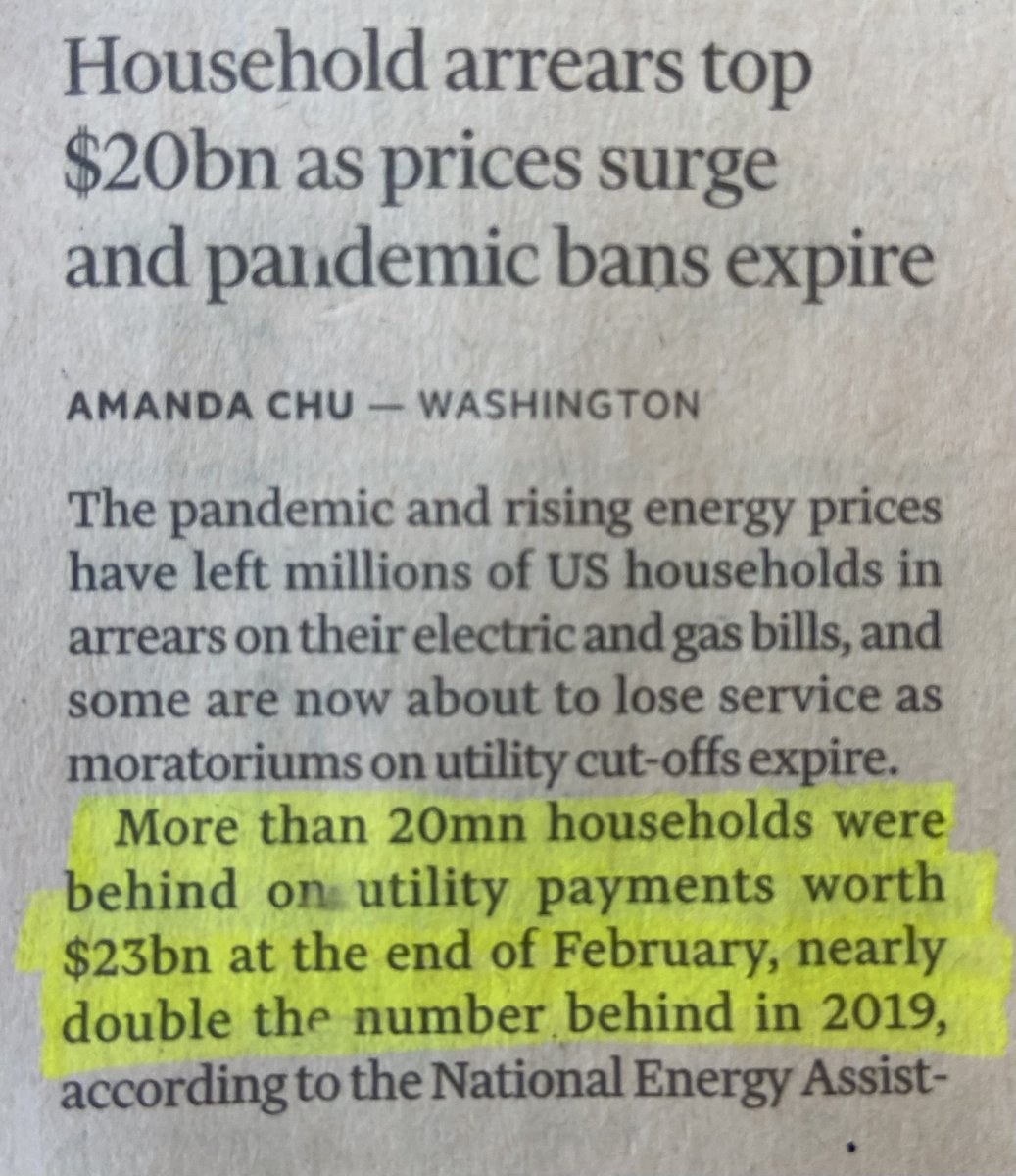
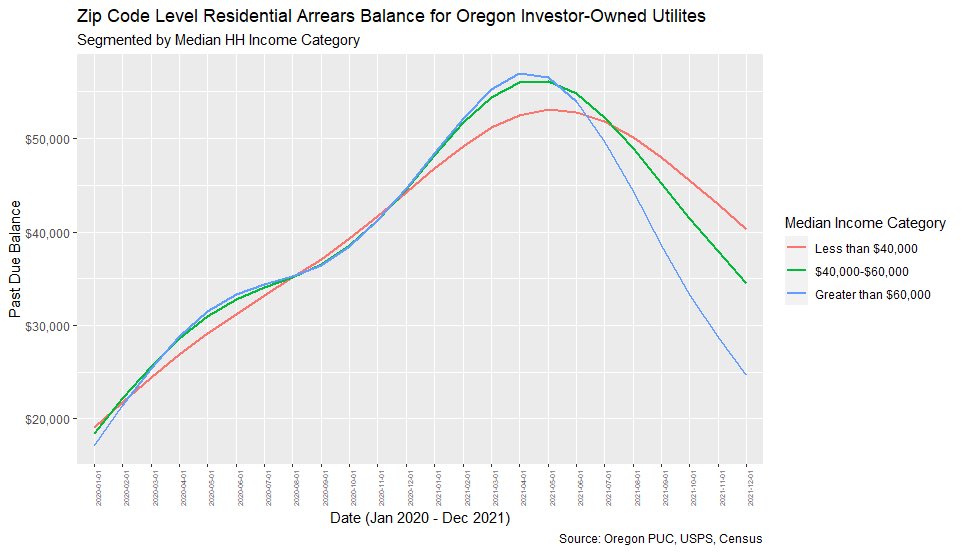
Oregon’s residential utility debt continues to decline (now down -42.5% since its peak in May 2021) despite a worsening national outlook surrounding overdue utility balances
@lehnerjw Curious how much suburban sprawl has compounded the issue of homelessness in urban cores. Failure to integrate different housing types or incomes among new construction in suburbs. Suburban Nation is a great read if you get the chance!
Back in 2009 the U.S. had an excess of 1.9 million vacant housing units. As of the fourth quarter of 2021 there was an undersupply of 1.8 million vacant units.
@lehnerjw A mix of out of pocket and assistance
Utilities have contributed around $34 million in AMP funds to customers past due balances since February, customers are also likely tapping into other energy assistance forms like LIHEAP.