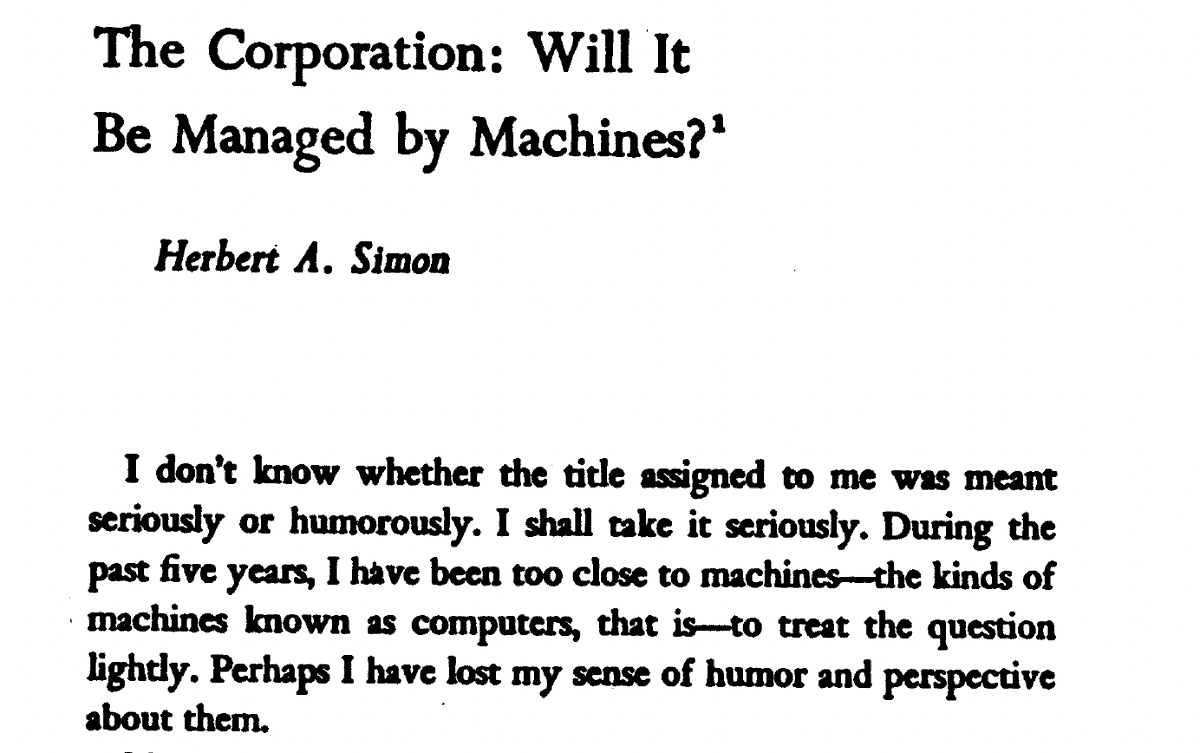
Reading this 1960 paper of Herbert Simon in the era of AI certainly feels way different.
"The Automation of Management: We have predicted that the automation of solving well-structured problems will proceed extremely rapidly. As less and less work becomes man paced and more and more of it machine paced, the nature of supervision will undergo change. There is no obvious way to assess quantitatively all these cross currents and conflicting trends. There is reason to believe that the kinds of activities that now characterize middle management will be more completely automated than the others"
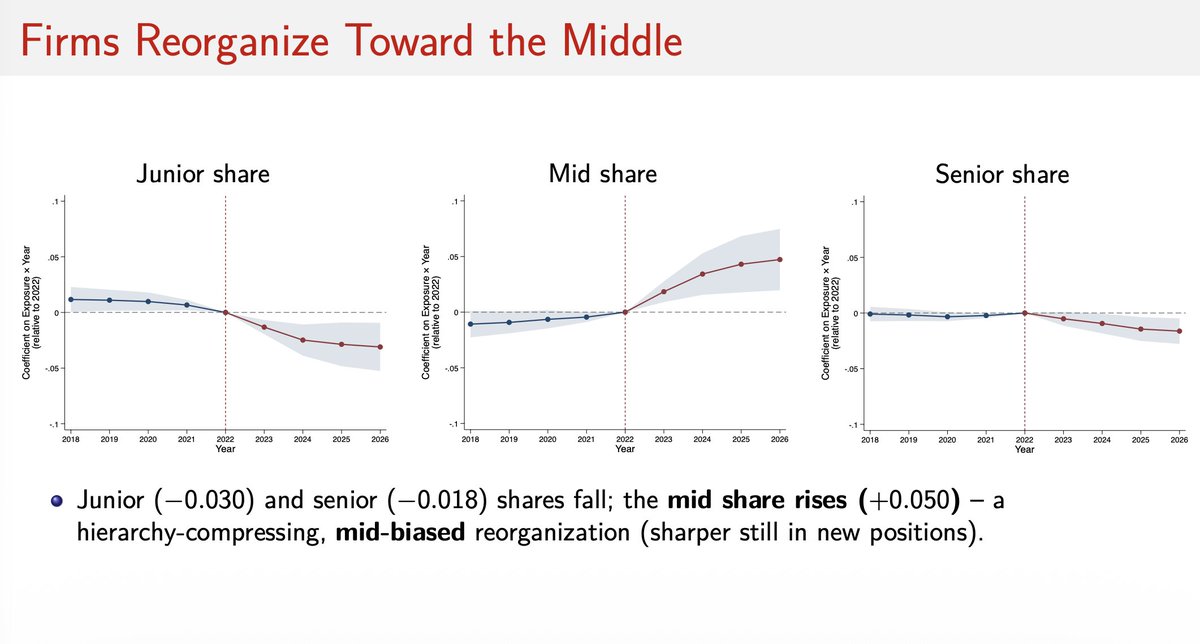
Herb Simon predicted that middle managers would be the first to be automated by machines. Interestingly, that's not what seems to be happening for now. We are seeing AI exposed firms and occupations reorganize towards the middle layers, with an increase in the share of mid-seniority roles, and drops in both the junior and senior shares.
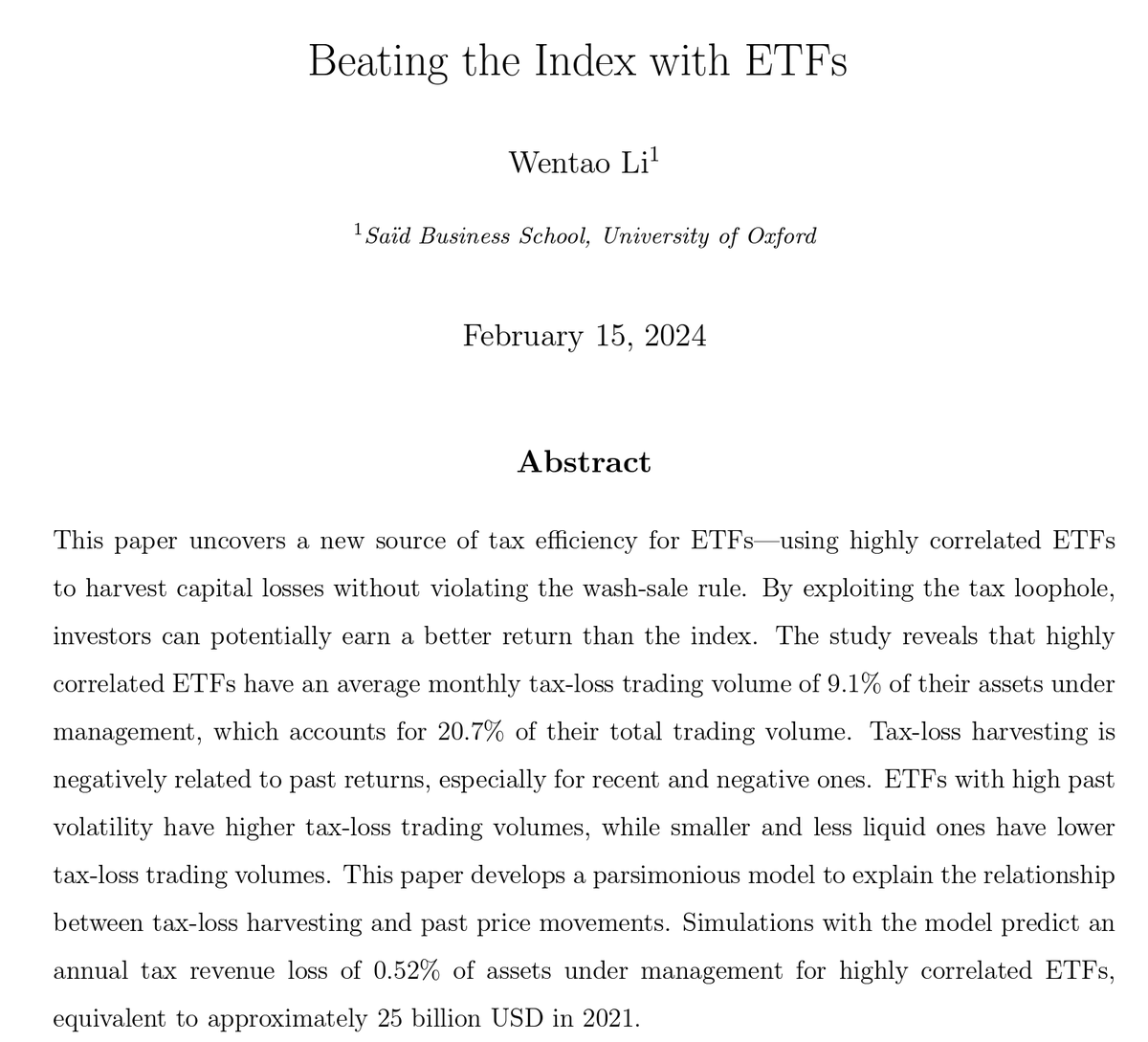
Investors can use highly correlated ETFs to harvest capital losses without violating the wash-sale rule. By exploiting the tax loophole, investors earn a better return than the index.
The annual tax revenue loss is equal to approximately $25 billion.
Deadline in two weeks (March 26):
LSE Corporate Governance Summer School for PhD students!
Sept 7-10, London.
Amil Dasgupta, Daniel Ferreira, Mike Burkart and I will teach cutting-edge corporate governance research.
Link in the first reponse.
Please share!
It looks like two of the best people in the profession - @HannoLustig and my dear friend and PhD advisor @RWacziarg - have decided to team up for a new econ @Substack called “The Two Cents”. Their first blog is excellent, very insightful analysis - and I bet it’s only gonna get better.
Go read it and subscribe!
About 40% of total wage payments occur in markets exceeding the HHI threshold of 2500 (the antitrust concern level). Workers typically receive only 70–80% of their marginal product, with the largest firms imposing the biggest markdowns.
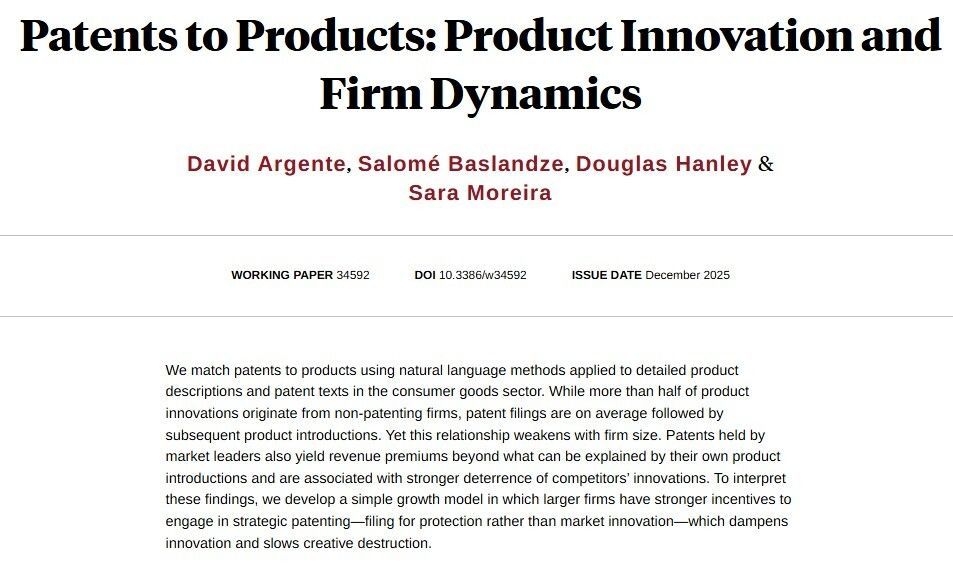
While more than half of product innovations originate from non-patenting firms, patent filings are on average followed by subsequent product introductions. This relationship weakens with firm size, from @dargente05, Salomé Baslandze, Douglas Hanley, and @sarapfmoreira https://t.co/oS8oLbwcfn
⏰ Reminder!
Submissions for the EAYE 2026 Annual Meeting, hosted by EHU-University of the Basque Country, are open for just a few more days!
Deadline: 28 December 2025
See the CfP for details 🔗 https://t.co/vYvWJVNox8
The great PhD students at HEC Econ are organising this terrific conference for graduate students. Send your papers (JMPs encouraged!) and get feedback + mingle with students and faculty
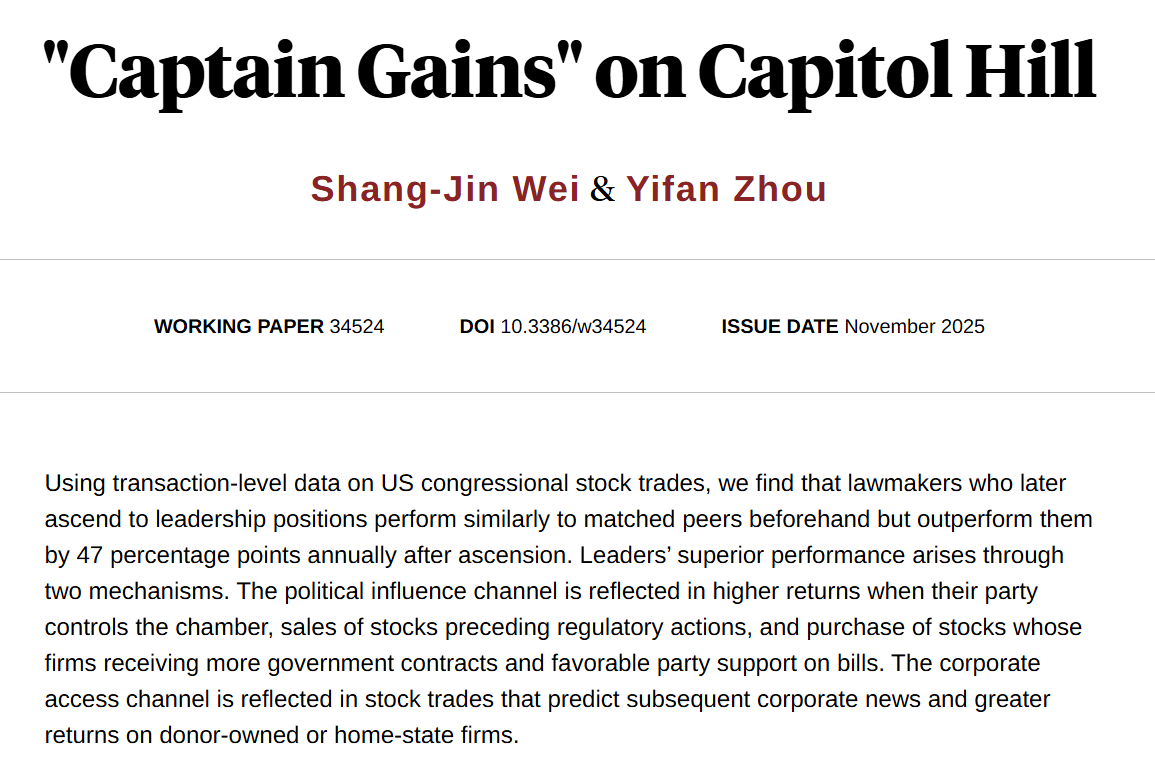
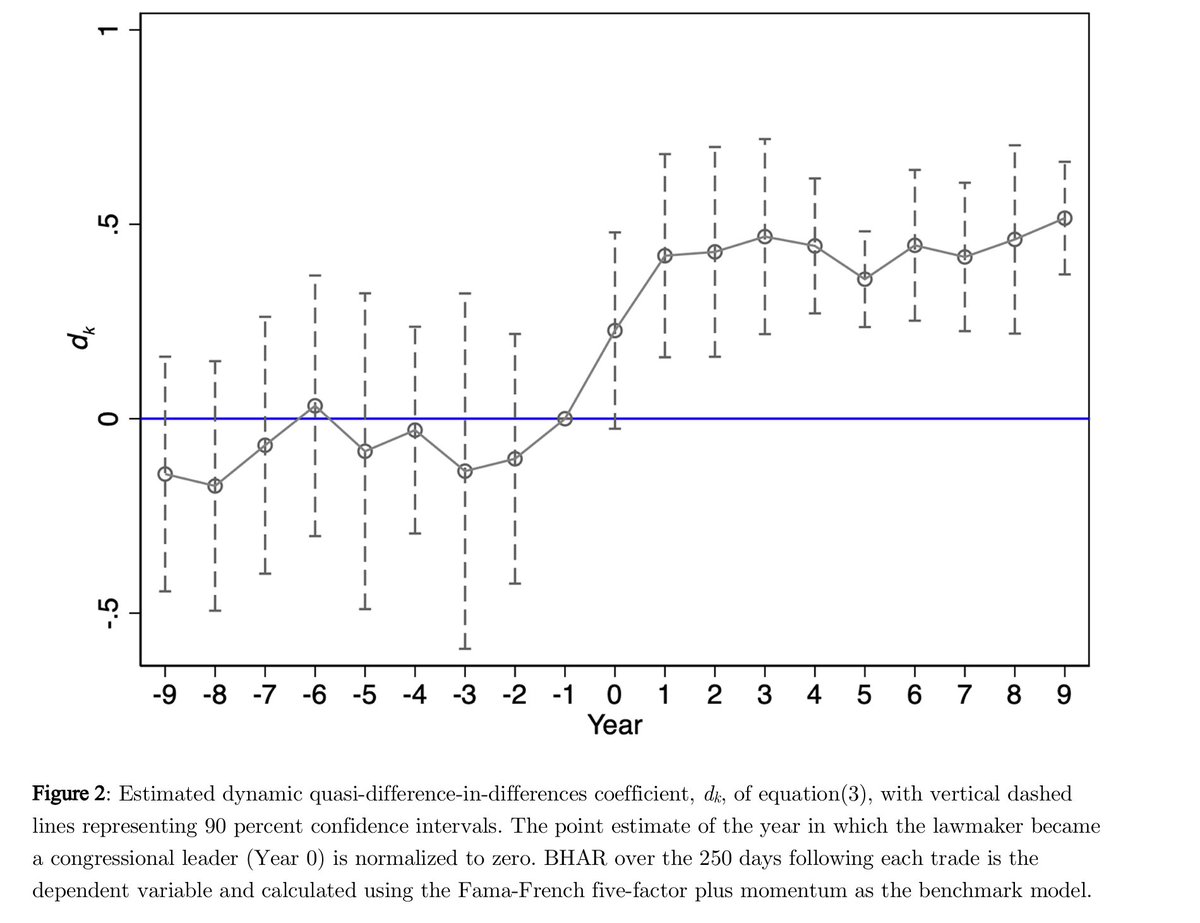
Politicians who later become congressional leaders trade stocks like everyone else ... until they ascend to power.
After ascension, their portfolios beat peers by 47 (!!!) percentage points a year through trades timed around bills and firms that later get government contracts.
Why aren't there more big, labor-intensive firms in poor countries?
Answer here: bigger firms use more white-color workers who are in shorter supply in poorer countries.
🧑⚖️⚖️Big news today as @Meta prevails against @FTC in a landmark antitrust case, and convinces the judge that its @instagram & @WhatsApp acquisitions did not violate antitrust laws.
I will use this case plenty in seminars and lectures as an example of how important market definition is to understanding monopoly power and demand elasticities, and how determinant it can be in antitrust litigation.
Key to Meta's success was showing that users do substitute @facebook for @tiktok_us and @YouTube. While I do have some doubts about the decision, I really like the paragraph below: the judge clearly appreciates imperfect substitution and the inherent fuzziness of product market definitions, something that is quite central to my research agenda.🕸️
#econtwitter #antitrust #TechGiants
📢 Call for papers!
The EAYE Annual Meeting welcomes submissions of full papers or extended abstracts (4-8K characters) in all fields of economics
👉 18–20 May '26, University of the Basque Country
⏲️ Submission deadline extended to 28 December 2025!
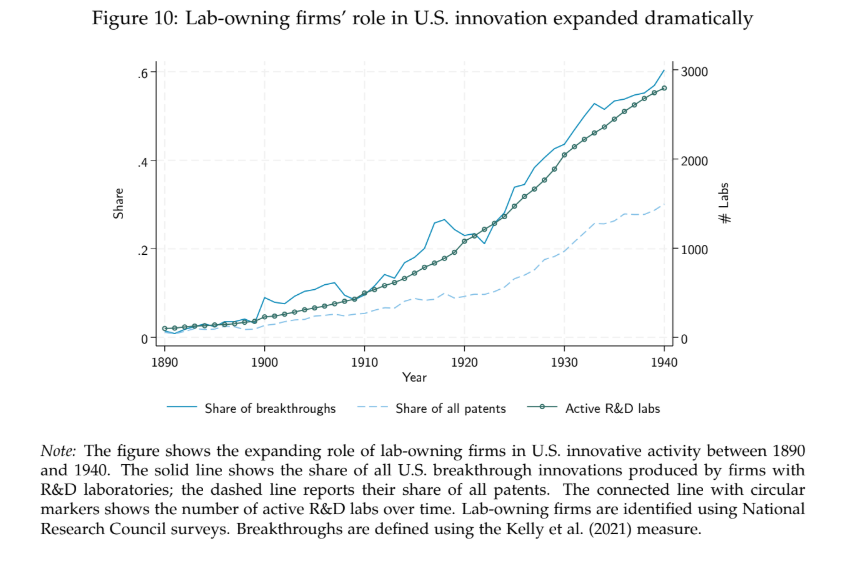
Very cool JMP by @ppcreanza: the Gilded Era merger wave didn't kill innovation, it turbo boosted it.
Large scale consolidation in early 20th century enabled large industrial labs, lower cost of capital, and more breakthrough patents
https://t.co/Jy2H37Bkme
This paper on US suburbs reminds me of this classic. When do rich people like density? When it means they can live close to their work, walk to fancy shops, go to the theatre, and be surrounded by rich people aka Europe. Can lead to multiple equilibria in preference for density.
Are you, or do you have, a PhD student who plans to be on the market this fall and works on a topic related to real estate?
We're attempting to create a top-notch opportunity for you here.
Please spread the word.
https://t.co/FAbAEBhOkd