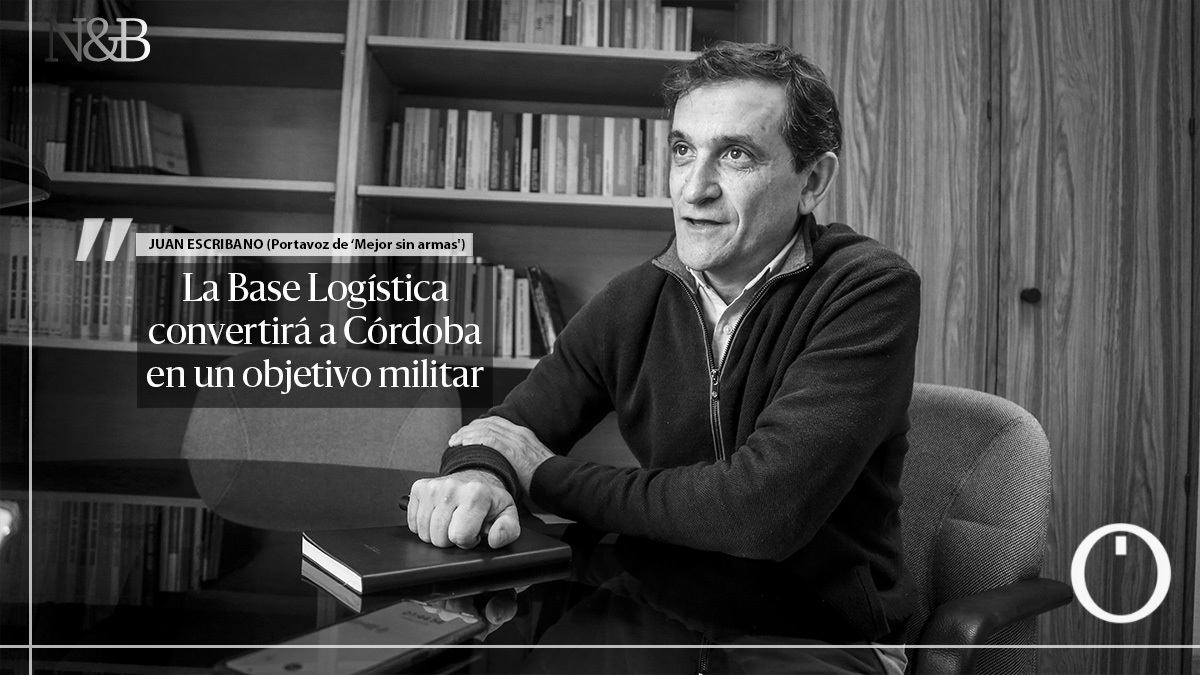
El informe final de ENTSO-E sobre el apagón del 28-A ya es público. 440 páginas.
Mi resumen y consideraciones rápidas siguen:
1⃣No fue mala suerte. Fue una acumulación de fallos sistémicos que nadie quiso ver.
The Hormuz closure is not a 6-week shock. It is an 18-month stress test for the global food system.
Most allocators are trading the obvious: oil up, defense up, gold up.
They are missing the connective tissue. 🧵
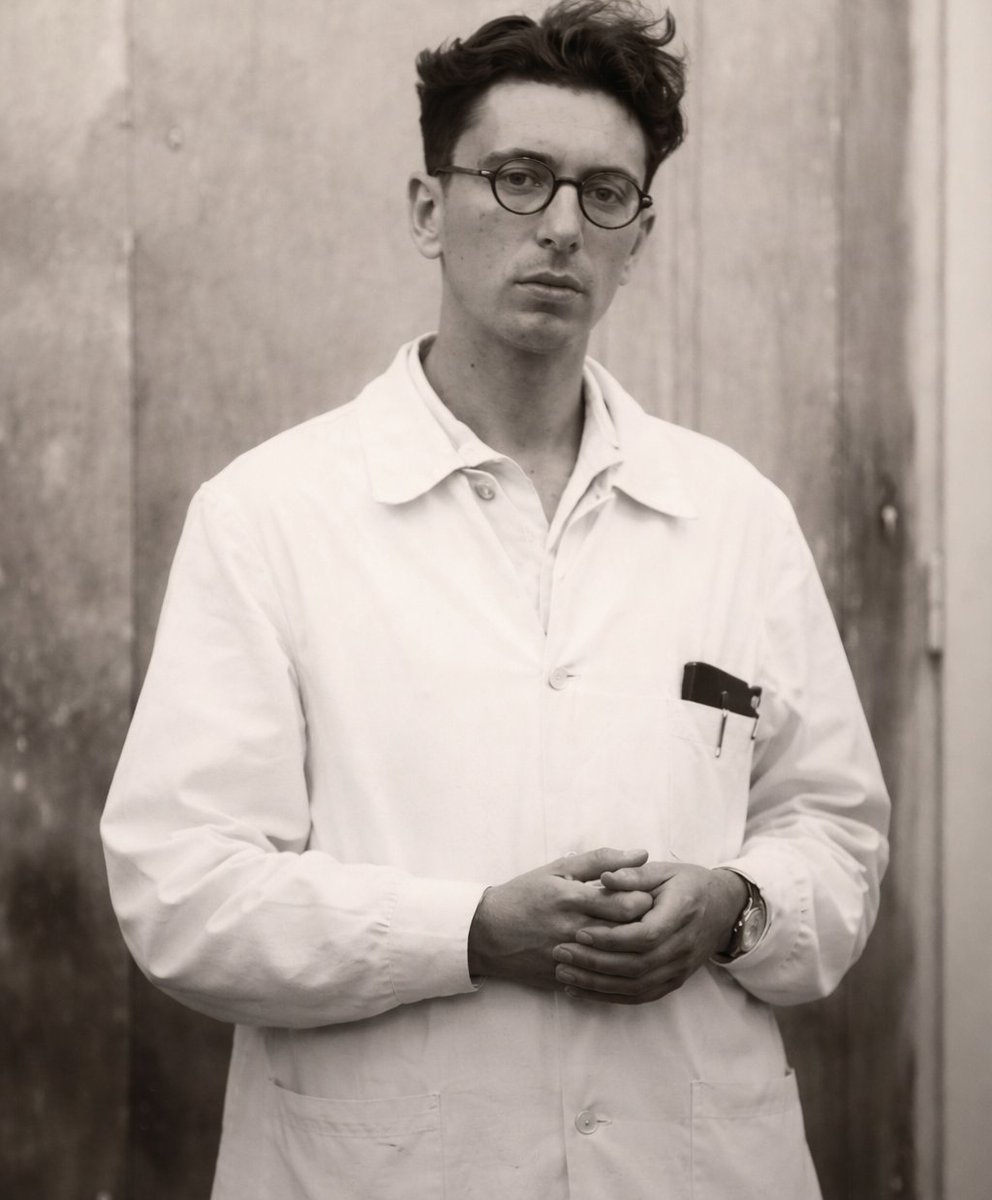
En 1942 le quitaron todo. El abrigo. El nombre. El trabajo de su vida. Hasta su manuscrito, cosido en el forro de la chaqueta, fue arrojado al fuego. Le afeitaron la cabeza, le tatuaron un número: 119.104. Creyeron que así habían borrado al hombre.
Estaban catastróficamente equivocados.
Habían despojado a Viktor Frankl de todo lo externo. Pero al hacerlo, lo empujaron hacia el único territorio que ningún guardia podía invadir: su libertad interior.
Meses antes, en Viena, tenía una visa para Estados Unidos. Seguridad. Futuro. Vida. Pero la visa no incluía a sus padres. Frente a un fragmento de mármol rescatado de una sinagoga destruida —“Honra a tu padre y a tu madre”— tomó la decisión que marcaría su destino: se quedó.
Theresienstadt. Auschwitz. Dachau. Hambre, frío, humillación. Sin embargo, como psiquiatra, observó algo inquietante: no morían primero los más débiles, sino los que perdían el sentido. Cuando un prisionero fumaba su propio cigarrillo —moneda de cambio por un plato de sopa— estaba renunciando al mañana. Y el cuerpo lo seguía.
Frankl comprendió que quien tiene un porqué puede soportar casi cualquier cómo.
Así comenzó su rebelión silenciosa. Reescribió mentalmente el libro que habían quemado. Se imaginó dando conferencias futuras. Habló en su mente con su esposa Tilly sin saber si seguía viva. Se aferró al amor como ancla invisible. Y empezó a preguntar a otros prisioneros: “¿Qué te espera?”. Una hija. Un libro por terminar. Una razón.
En 1945 fue liberado. Pesaba poco más de 40 kilos. Y entonces supo la verdad: su esposa, sus padres, su hermano… todos habían muerto.
Podía haberse rendido.
En cambio, escribió. En nueve días reconstruyó su obra. No para la fama, sino para dar testimonio. Ese libro, El hombre en busca de sentido, recorrería el mundo y devolvería esperanza a millones.
Frankl demostró algo que incomoda y libera al mismo tiempo: pueden quitarnos casi todo, pero no la actitud con la que enfrentamos lo inevitable.
No somos lo que nos ocurre.
Somos lo que elegimos hacer con lo que nos ocurre.
#crecimientopersonal #resiliencia #proposito #actitud #liderazgo #consciencia
Over the past couple weeks I've had a ton of lawyers reach out to ask me what AI tech I'm using in my legal practice.
The answer, increasingly, is @claudeai. That's basically it.
Not Harvey. Not CoCounsel. Not Spellbook. A general-purpose AI that I've taught how I practice law.
Here's how I use it:
These attacks are growing in intensity and sophistication. Addressing them will require rapid, coordinated action among industry players, policymakers, and the broader AI community.
Read more: https://t.co/4SVm8K3qou
Dostoyevski tuvo un hijo que murió a los 3 meses, se llamaba Alexei (Aliosha), y su muerte lo afectó tanto que nombró así al personaje más santo de toda su obra. Va hilo sobre la figura de Aliosha Karamazov, mi personaje preferido en la historia de la literatura:
OpenClaw on Mac Mini: The Complete Setup Guide
From fresh macOS install to a running personal AI assistant. Every step tested on real hardware
https://t.co/vD4a7hMfXr
Es increíble.
Por cuestiones que no vienen al caso necesito ir al @empleo_SEPE. No se puede ir sin cita previa. El otro día, iluso de mí, entré en la web a solicitar la dichosa cita, pero me encuentro con que no se dan citas ni presenciales ni telefónicas en todo Madrid 🧵
Here are a bunch of my thoughts on private equity. They won’t be popular. That’s fine.
I have been in investment banking or private equity for nearly 20 years, working with and for private equity firms. I’ve interviewed, met with, and interacted with hundreds of PE firms over the years. I’ve worked with good firms and bad firms, good people and bad people. I’ve seen what works and what doesn’t.
So that’s my background, but I’m still just one guy with incomplete information, biases, and all the other baggage that comes with being human. Take it with a grain of salt.
When I started in the space, private equity felt entrepreneurial. We called them “shops” (maybe that was just us?). They were hungry. They took risks. Success was not guaranteed.
I started my career excited about the prospect of joining, buying, fixing, growing, and selling companies. Since then the space has changed. That’s natural in any industry.
But PE has become commoditized. A systematic career ladder.
People don’t join PE because they love businesses or because they want to innovate. They join because it’s one of the safest, highest-paid tracks in America. If you make it into the system- the right schools, the right banks, the right funds, you’re set. Worst case, you fail and go do something else in finance. Best case, you become a Managing Director (MD) and make generational money.
That is not risk-taking. That’s joining a protected class.
The industry has been drifting. There are more firms than ever, more funds than ever, and more Patagonia vests being sold than ever before. Profits attract competition. That’s not new.
What used to be exciting and entrepreneurial is now systematic.
And people inside it are deeply defensive of this system. They don’t want change. Why would they? The system is working for them. It’s the rest of us who are just not appreciating how much value they actually create! (PE is not exactly known for its humility.)
But the system is good if you can get inside. Use other people’s money, take out debt, charge fees, and enjoy preferential tax treatment.
Still, there are signs of cracking - more recently, returns mimicking the S&P500 and longer hold periods are increasingly normal. Continuation funds are more common.
But the point is the system is asymmetric to the benefit of the private equity firms, the GPs.
Private equity general partners make money whether their investors do or not and sadly, whether they improve the companies they buy or not.
How? Fees.
Fees on capital raised, management fees levied on the companies, transaction fees, reimbursements, etc.
Keep in mind, these fees are disconnected from performance. Management fees are based on capital raised or charged to the companies for the pleasure of their ownership. On top of that, there can be other fees- transaction fees, deal fees, reimbursements, etc.
So right out of the gate, the firm is making money, whether they perform or not.
And when private equity does perform, they take a meaningful chunk of that value too. The classic 2&20 structure means they take a 2% fee on the capital raised and 20% of the earnings above a certain threshold (carried interest).
All together, ChatGPT reports private equity GPs collect 30-40% of the total economic value of any given deal (it actually caveats that it may be more like 40-50%).
Carried interest is designed to align incentives. It is payment for the firm's labor - not return on their own investment. The partners at a private equity firm may invest their own capital, but that is not what we’re talking about here. I’m just sharing the typical take home resulting from the structure. Lucrative.
On top of capturing a huge chunk of the economic value, believe it or not, much of the take home pay actually gets preferential tax treatment.
Carried interest is taxed at capital gains tax rates, not ordinary income.
But that makes sense since PE labor is creating real value, unlike teachers, plumbers, engineers, police officers, salesmen, warehouse workers, bakers, pastors, waitresses, lawncare workers, doctors, nurses, dog trainers, construction workers… you get the point.
To be fair, you can’t blame private equity for this - it’s the tax law. They’re just capitalizing on an opportunity, but again, it’s asymmetric.
Depending on the year, the private equity partner might pay a lower tax rate than the warehouse worker in the company his firm owns. It’s the Warren Buffett/secretary example.
Private equity’s job is to generate returns. That is the job for which they labor. And yet their labor gets taxed at 15–20%, while your labor gets taxed at 25–37% plus state?
It just begs the question… why in the world are we subsidizing the labor of private equity?
Keep in mind, they’re not deploying their own capital. They’re not the ones who have the capital (they’re just in the process of collecting it). They’re not the ones who run the business.
PE buys companies with other people’s money. They charge management fees to the company they own. And when they sell, they collect carried interest taxed as capital gains-not ordinary income like the rest of us.
But they don’t just buy companies with other people’s money - they also use debt. Glorious, non-recourse, printed-from-thin-air debt.
This debt creates risk. Obviously. But if the PE firm drives a company into the ground, they can walk away. Move on to the next deal with no obligation.
Employees lose jobs. Customers lose a supplier. Banks lose their money. But the PE firm keeps their fees. They move on to the next deal.
Again, asymmetric potential losses relative to the potential gain.
Meanwhile, the small business owning pharmacist who takes out an SBA loan to build his own business has to personally guarantee his loan. If the business goes under, he’s making payments until the bank is whole.
A student making an investment in education, with hopes of earning a living (future returns) is stuck with his loan too, even post bankruptcy!
So the pharmacist and student have to pay back their loans, but a private equity bro can load a company with debt, run it into the ground, and walk away scot-free?
Make it make sense.
(By the way, when new debt is issued, money is created out of thin air. This dilutes the power of your dollar- but that’s a topic for another day.)
Inside portfolio companies, the dynamic is just as distorted. MDs suggest ideas. Everyone scrambles. FP&A burns weeks. CEOs chase ideas they know are dumb because saying no is dangerous. CFOs burn out. Operators are neutered.
I used to think the people in seats before me, who I replaced, were weak. Losers. Why did this guy make this decision? Do things this way? Now I realize they were just beaten down, neutered by spreadsheets and initiatives. They were playing to survive, trying to hang on until their company sold.
But PE folks are mostly people who have never run a business, much less worked inside one. They know debt, models, covenants, and exit multiples. And now their spreadsheets impact the most intimate parts of your daily life.
They’re buying everything: Dentists. ENT practices. Veterinary clinics. Auto shops. Gyms. Valve distributors. Engineering firms. Healthcare groups. Fast casual chains. Your lunch. Your teeth. Your cancer treatment.
Do you really want spreadsheet-driven finance firms deciding how much time your dentist spends with you? Or which treatment plan your oncologist uses? Or where the meat on your sandwich is from?
These are finance guys with spreadsheets. Again, these are people who have never been in a business much less run one, and you think that they have the tools and skill set and judgment and moral compass to drive businesses that impact not just your day-to-day life like where you have a sandwich, but your actual health? Your lifespan? Do you expect to live longer with private equity backed healthcare?
Take Jersey Mike’s. What do you expect now that PE owns it? Higher quality meats? Better trained employees?
No. You expect: prices to go up, quality to erode, employees to become less friendly, the store to be less clean, etc.
That’s not innovation. That’s a transfer of wealth from customers and workers to shareholders.
And that’s a core problem with private equity - there is no innovation. There’s no risk taking. How can you when you are going to sell as soon as you can? (but not before three years - gotta get that cap gains treatment ;))
Hopefully we’re wrong and we all love Jersey Mike’s even more in a few years but the point is - that’s not your expectation when you hear PE bought your favorite restaurant.
No one is excited when they hear private equity bought their favorite business. That tells you a lot.
Operationally, private equity often claims to take a long term view but when you know you’re going to sell in just a few years, that’s just not what happens in practice.
When you are thinking of selling your home, do you replace the roof? Nah, you just replace the shingles, put a bucket in the attic and hope the next buyer doesn’t notice too much.
That may be an extreme example, but it does happen. Regardless of whether that’s the norm or the exception, it’s impossible to be truly long-term oriented when the incentives are to maximize short-term gain.
Truth is, PE is optimizing for 3-7 years time horizons, not a 20-year competitive advantage.
There is no vision setting, no ideating ten years down the road, no innovation. There are just hard, cold initiatives designed to “optimize” and drive the profits higher.
What would I change?
Despite the above, I think private equity investing can be a force for good. Like I said, I’ve seen great firms, great deals, and great people. It can be done well.
PE would do well to recognize how others perceive them, address the criticisms, and adjust. You see some attempts at that lately (e.g., KKR’s employee equity program being emphasized and advertised), but PE is just not great at admitting mistakes. They seem (to me) to be in an especially defensive, insecure posture.
That may be because returns have diminished, holds are longer, and continuation funds have risen in prominence.
But there’s more to adjust than just perception.
Longer holds would help. Making firms stand behind the debt they use would help (at least require them to pay back the mgmt fees they’ve collected when a company defaults). Transparently connecting fees to performance would help. Ending preferential tax treatment for carry would help. Forcing PE bros to actually work inside operating businesses they control would help.
I think the industry is heading for a bifurcation. The mega-funds will keep getting bigger. They’re powerful and political and will dominate fundraising. At the other end, lower-middle-market firms will keep creating real value by taking small businesses to the next level. The middle will get squeezed. You already see it… middle market firms selling stakes in themselves to the big guys (just another PE deal).
The real bottleneck going forward won’t be capital or deals. It will be operators. Financial engineering has been competed away. Sourcing has been automated. Spreadsheets can be done with AI (or will be soon). What actually creates value now is people who know how to run, fix, and grow businesses.
That’s a good thing, I think. The emphasis isn’t even really on operators so much as it’s on creating real value. Maybe PE bros need to lose the deal sleds for boots and become operators themselves…
Which raises an uncomfortable question for private equity: if great managers will create more value in the future, why do they keep giving most of the economics to spreadsheet people?
I think for PE’s next chapter, you will see some corrections, and I think those will be great. I think time horizon will be forced longer. You’ll see fewer 3–5 year windows and more 5–7. I hope that goes to 7–10; maybe it will.
For my money, the lower middle market is the place to be for the foreseeable future in the PE ecosystem. There, it’s genuinely helpful to equip companies with new tools, sophistication, and access to capital that they may or may not have ever been exposed to.
“Launching” these smaller businesses to the next level is valuable to all of us so long as it doesn’t end up in the never-ending cycle of selling from PE firm to PE firm to continuation fund and so on…
Despite the dour assessment, private equity isn’t evil. It’s just a tool, a strategy. Or it’s supposed to be.
There are always good and bad firms, good and bad people and so on. Good ones exist for sure. But that is just not the dominant flavor anymore.
The GP captures upside through fees and carry while transferring downside to LPs, lenders, workers, and the state. This is a structural free option.
Private equity is the only industry where you can lose other people’s money, fire workers, default on debt and still become personally richer.
It has generated a commoditized wealth-extraction machine that increasingly shapes society without accountability.
And I don’t think anyone wants to live in a society run by spreadsheet aristocrats.
🆕🖊️ #JuevesFiscal
Autónomos: como diferenciar los #Bizum profesionales de los particulares.
Si eres #autónomo y solo tienes una línea de móvil vinculada a Bizum, no hay forma automática dentro de la app de Bizum de diferenciar visualmente los cobros de clientes (profesionales) de los de amigos/familiares. Todos llegan al mismo número y se ven igual en la lista de movimientos.
Post de opciones que pueden funcionar hoy en día para evitar problemas con Hacienda 👇
https://t.co/WBgfygzFNu
My Venezuela experience as head of trading in the region for Cargill.
Cargill was/is the leading producer of critical staple ingredients such as flour, pasta, vegetable oil, and rice in VZ. I am not saying I agree with grabbing the dictator, but I did have a front row seat to the damage a kleptocracy did to innocent people.
1. The government took over our "minute rice" facility at gunpoint because we were "gouging" the nation's poor. The government was never able to run the plant. It never ran again. It was returned years later with no equipment inside
2. There are 1000's of generals in the army. They are each given a slice of the economy to loot. The large number of generals made it difficult to organize a coup against the regime.
3. The government opened grocery stores and sold staples below the cost we sold them to the government. In theory they used petro oil money to lower grocery prices. Our regular grocery outlets were forced out of business. When the government demanded we sell them products below cost we simply had to shut down. The populous became ever more dependent on the government handouts. (PS this is the mayor of New York City's proposal.
4. Dollars- We needed dollars to go buy raw materials like wheat from places like the US and Canada. The government would periodically allocate us some dollars that could only be spent for raw materials and freight. Eventually only the local companies that can and would pay bribes got dollar allocations. We had several facilities closed for lack of raw material
5. My employees liked working for Cargill. The office was an armed compound with access to a gym, high speed internet, global communications, and a weekly box of basic staples. Cargill provided a safe and secure environment if only for the working hours.
6. Employees became very close to others inside the apartment building. Going out on the street with a desperate population was not advisable.
7. I needed wood pallets for feed. We tried to export wood pallets to swap for grain. We refused to pay the bribes it would take to export the pallets
8. I once tried to set up a closed loop wheat planting to flour mill supply chain. A. They came and stole all the seed wheat for food. When we tried to ship in seed wheat in containers via US donors there was no way to get it out of the port without it being stolen
9. Livestock- Our feed business completely collapsed. Even if you could raise a pig, you couldn't defend it from being stolen. People with guns were hungry.
10. Employees- In the end my highly skilled team alone with other highly educated people chose to leave. Cargill often found jobs for them in other Latin countries. The regime was more than happy to see the well-educated leave the country. Setting these employees up with high quality stable jobs after fleeing remains one of the best things I ever did in my career. No one remembers millions in trading earnings.
This is a short list. In my opinion the first money spent needs to happen now and it needs to be food. The US is already on the clock. The current regime does not care if it starves the population. The orgy of theft will actually accelerate if they believe their days are numbered. VZ should be an outstanding customer of US grown ag products. Rice, bread wheat, veg oil ect. Feed the people first.
Jeff Kazin
Former head trading Cargill
There has been lots of talk about the current situation in Venezuela and what it could mean for global oil markets, so I just wanted to provide some nuance on this 🇻🇪 ⤵️
When people say “Venezuela has the world’s largest oil reserves,” as you undoubtedly have seen being thrown around a lot on here, they are technically referring to a specific accounting definition, not to a stock of easy, cheap barrels ready to flood the market. To unpack that, you need to get into what those reserves are, how they behave in the subsurface, what it costs to turn them into marketable liquids, and how price, technology, and above-ground risk interact.
That's a lot to cover, but let’s give it my best shot. On paper, Venezuela has roughly 300–303 billion barrels of proved reserves, about 17 % of the global total and slightly more than Saudi Arabia. The critical detail is that around three quarters of that booked volume is extra-heavy crude from the Orinoco Belt in eastern Venezuela. These are bitumen-like oils with API gravity typically in the 8–14° range, extremely viscous at reservoir conditions and with high sulfur and metals content. So the statement “largest reserves” is really “largest booked volumes of very challenging heavy and extra-heavy oil.”
Technically recoverable versus economically recoverable is the first big distinction. The USGS has long estimated that the Orinoco Belt contains on the order of 900–1,400 billion barrels of heavy crude in place, with perhaps 380–650 billion barrels technically recoverable using existing technology.
Venezuela and OPEC only book a subset of that as “proved,” but even those proved numbers are sensitive to the assumed oil price and development concept. When prices were strong in the 2005–2014 window, a large portion of Orinoco volumes became economic on paper and were reclassified as proved, driving the headline reserves from ~80 to ~300 billion barrels.
Geology and fluid properties are the second big differentiator. Orinoco crudes are extra-heavy, with densities up around 934–1,050 kg/m³, high asphaltene content and sulfur on the order of 3–4 wt% or more, depending on the block. This is a completely different animal from a 33–40° API, low-sulfur Arab Light-style crude. In plain English, that means it's much harder to handle at various stages and each step adds capex, opex and energy use.
In other words, the “barrel in the ground” in Venezuela is inherently worth less and depends on a narrower set of buyers.
Surface systems and institutional capacity are another constraint. Before the 2000s, PDVSA had a reputation as a technically capable NOC. Since then, you have had a combination of mass layoffs and politicization, under-investment, sanctions, corruption and brain drain. The result is decayed gathering systems, chronic power shortages, refinery fires and upgrader downtime.
Finally, integration with global refining and logistics matters for strategic value. Venezuela’s crude slate is optimized for complex “coking” refineries in the US Gulf Coast, parts of Asia and a few European plants. That's a story for another time though, because the length of this analysis is getting out of hand.
So when you hear that Venezuela has “the world’s largest oil reserves,” the technically accurate part is that the country has extremely large volumes of extra-heavy oil in place, and a big subset of that was once judged economically recoverable at high price assumptions and booked as proved. The more relevant questions for energy strategy are how many of those barrels are genuinely economic under realistic long-term prices, how quickly they can be brought onstream given infrastructure and institutional constraints, what netback they deliver at the refinery gate, and how exposed they are to being left in the ground if demand peaks. On those metrics, Venezuelan barrels sit much further out on the cost and risk curve than the headline “largest reserves” soundbite suggests. I hope this provided some good context.