🔴 NECESITO TU ATENCIÓN
Llevo una semana ayudando a Miriam en su caso de cáncer metastásico y quiero compartir la metodología que he estado usando porque es absolutamente replicable.
Pienso que, con suerte, puede ser ÚTIL A OTRAS PERSONAS con cáncer (o con cualquier otra enfermedad).
Los resultados que hemos conseguido no son un milagro, pero pensamos que son realmente útiles y pueden significar una diferencia crucial en un caso médico de vida o muerte.
Aquí va paso a paso el método:
1/ Usar los modelos más avanzados del momento (por desgracia de pago, y no son baratos, opino que Sanidad Pública debería invertir en esto):
- ChatGPT Pro + Extended (40min de pensamiento aprox por llamada)
- Claude Opus 4.6 MAX
Pendientes de probar a fondo:
- Perplexity Sonar Pro
- Notebook LM
2/ Dárselo MUY MASCADO a la IA todo el historial. Esto parece una tontería pero es muy importante.
- Lo primero que pido, con Claude Cowork que tiene acceso al disco duro, es que entre en la carpeta en la que está TODO EL HISTORIAL (pueden ser más de 100 pdfs) y lo unifique todo en:
- Un único PDF (puede ser de más de 1000 páginas o lo que sea necesario)
- Un único txt legible, que debe hacer correctamente usando un script con OCR y luego comprobar con lupa que está bien hecho.
Insisto: no saltar al siguiente paso antes de tener muy bien hecho lo anterior, sobre todo el txt.
3/ Una vez tenemos lo anterior utilizar este prompt junto con el txt y el PDF como archivos de entrada y lanzarlo en AMBOS modelos (y en más si es posible) a la vez.
👉 Os lo dejo aquí, este prompt es increíble complejo/avanzado: https://t.co/KEEWc8WNvW Está pensado para el caso concreto de Miriam, pero con los modelos del punto 1/ podrías adaptarlo a tu caso particular sin problemas.
4/ La PUNTA DE FLECHA enfrentando un modelo al otro: esta metodología no la he escuchado a nadie, pero funciona increíblemente bien. La sensación es la de ir afilando una estaca hasta que adquiere una punta reluciente.
Funciona así: con paciencia y en sucesivas iteraciones (aconsejo mínimo 5 veces, y en en cuenta que si ChatGPT tarda 40min te va a llevar un buen rato) enfrenta el resultado (el PDF) de un modelo a otro. Con un prompt sencillo del estilo:
"Otro comité de expertos opina esto. ¿Cómo lo ves? Si estás de acuerdo o lo contrario dime por qué, y genera un nuevo PDF si lo ves preciso".
El resultado se lo cruzas al modelo contrario. Así, en sucesivas iteraciones, búsquedas de internet, papers, etc. irán encontrando y afilando más cosas.
¿Cuándo acabar? Cuando AMBOS modelos digan que está perfecto y no puedan mejorar más el trabajo del contrario. Esto es tan absurdamente rompedor que pienso que los resultados de TODOS los modelos actuales mejorarían si siguieran esta metodología (apoyándose en una espiral rollo "adversarial model". No entiendo por qué nadie se ha dado cuenta de esto, si lo ha hecho, por qué no se le da más bombo. Funciona impresionantemente bien en cualquier ámbito, inclusive programación y matemáticas.
Es mas, mi teoría es que esto podría hacerse todavía mejor haciéndolo no solo con dos modelos: sino con una mayor combinatoria, añadiendo quizás Perplexity Sonar Pro, etc.
RESULTADOS
Increíbles. Obviamente no puedo saber si mejores que el mejor de los comités científico-sanitarios del mundo, pero le están dando a Miriam una nueva dimensión del caso, tests adicionales que hacer, posibles pruebas, etc.
Obviamente la IA milagros no hace, pero pienso que puede ya, a día de hoy, ayudar a muchos pacientes. Y Sanidad Pública debería invertir mucho, pero mucho, en esto.
Voy a preguntarle a Miriam si puedo poner el PDF completo de resultados más avanzado que conseguimos, para que os hagáis una idea de su calidad. Ya me ha dado más o menos permiso, pero quiero asegurarme 100%.
¿Cómo descubrir empresas que revolucionan todo un sector como $NU, $HIMS o $LMND?
Unifique mis apuntes de los siguientes 4 libros en 7 claves que destacan el éxito de este tipo de empresas.
Basado en:
- The Innovator’s Dilemma
- Zero to One
- Blue Ocean Strategy
- 100 Baggers.
Link en el último post.
I bought $AMD for $4.2.
Picked up $TSLA at $13.
Got into $PLTR when it was $7.
Entered $SPOT at $97.50.
And went long $HIMS at $15.
Still holding every one of them.
Here’s how I did it 🧵
The mental framework behind my 18X+ $PLTR pick:
1. Stocks are slices of ownership in a business. If a company grows its free cash flow per share by 10X, its stock price tends to follow in kind.
2. Achieving this requires expanding earning potential while deepening defensibility. Often, this involves delaying profits to build a stronger long-term position.
3. We now operate in a network-driven economy, where industries increasingly converge toward winner-take-most outcomes. To grasp modern businesses, you must understand how networks function.
4. Networks are forged through process power—daily, compounding actions that persuade the world to transact through your ecosystem. From process power come today’s dominant moats: network effects, switching costs, and brand equity.
5. Companies with powerful process engines grow revenue consistently and are tough to unseat. Their compounding advantage lies in relentless customer focus and an infrastructure that strengthens over time.
6. Financials tell you where a company has been; qualitative signals show you where it's headed. When customer obsession or process discipline fades, decline begins. Long-term success favors those willing to iterate, take risks, and self-disrupt.
7. Over time, strong moats crystallize into platforms—businesses offering an unbeatable combination of price and quality. Only a rare few reach this level, driven by elite process execution and capital deployment. These are the 100-baggers of the world.
10 rules I stick by to find potential 100x stocks-
1) Leader in their space. I am not looking for the next $RIVN no matter how cheap it may be.
2) Founder led. Numbers show that these massively outperform compared to non-founder led. (Extremely important when it comes to small companies in the innovation stage).
3) Founder must be trustworthy with a strong track record of past successes.
4) Company must be bought when it is in the $1b market cap range- 100x’ers don’t come from buying a $100b dollar MC stock.
5) Massive TAM. I like companies that monopolize small segments, but there must be opportunity for them to grow into a much larger TAM later down the road.
6) Direct to Consumer. Most of my portfolio is in DTC stocks. If you look at the largest companies in the world, a majority of them are DTC not B2B.
7) 10x better product at a cheaper price. This is the only recipe for massive success in business. You’re only spinning your wheels if you’re buying copycat businesses with no product differentiation or price advantage.
8) Stock is being sold for pennie’s on the dollar. When everyone is telling you you’re an idiot for buying the stock, you may be on the right track.
9) You understand the business. Don’t bet the farm on it if you have massive blind spots.
10) If it’s not a hell yes it’s a no. If you’re trying to sell yourself on buying the stock you should probably not buy the stock. There are many stocks I decide not to buy within the first couple minutes of looking into them because they don’t check one of my boxes.
🚨🚨Vamos a valorar juntos Nike $NKE, de la misma forma que he enseñado en mi último hilo.
Con esto veremos si es una empresa que vale la pena analizar más profundamente o si es mejor verla desde la barrera.
De primeras tenemos el Drawdown más grande de los últimos 20 años😱
⬇️
En el valor presente de Tesla, lo que más peso tiene y hay que vigilar, en orden de mayor a menor importancia, es:
1) Ritmo de innovación en hardware y software de Optimus y planes de producción a gran escala.
2) Evolución de intervenciones críticas por km del FSD.
3) Producción a escala y coste del Cybercab.
4) Crecimiento de Tesla Energy y coste por kWh.
5) Crecimiento de vehículos producidos.
📈 2025 puede ser el año de las Small Caps, o eso dicen muchos inversores profesionales.
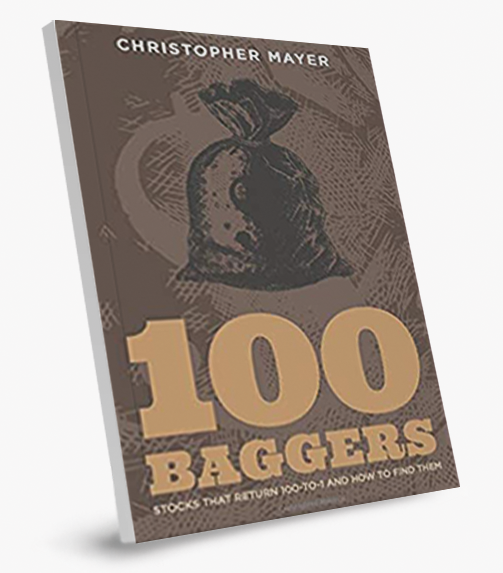
Si hay un libro por excelencia sobre acciones con potencial para multiplicar su precio, ese es 100-Baggers.
Hilo con los 10 principios esenciales para encontrar estas acciones: 🧵👇
LA ESCALA KARDASHEV
¿Cómo serán las civilizaciones con decenas de miles, incluso millones de años?
La escala Kardashev describe 3 niveles básicos de avance; la humanidad aún no ha alcanzado ni el Tipo 1.
Las civilizaciones de Tipo 3 serían indistinguibles de dioses.
🧵👇🏼
Los que nacieron hace 25/30 años están jodidos, con suerte comprarán casa a los 45 años.
Los que nacen ahora van a encontrar tanta oferta de vivienda que no sabrán dónde comprar.
Is $AMD Positioned to Disrupt the AI Landscape -- or Be Left Behind?
AMD stands at a fascinating crossroads -- a company making substantial strides while contending with the monolithic presence of $NVDA, a juggernaut that dominates the AI and data center landscapes. NVIDIA’s grip on the industry isn’t merely a matter of hardware -- it’s the strength of an ecosystem so seamlessly interwoven it feels almost unassailable.
CUDA, NVIDIA’s cornerstone, isn’t just software -- it’s a fortress. Coupled with HGX supercomputers and cutting-edge AI tools like NeMo, it forges a self-reinforcing cycle that locks in customers and tightens NVIDIA’s stranglehold. Switching providers? Nearly unthinkable. And yet, here’s AMD, defying the odds, pushing forward.
Dismissing AMD as a mere follower would be shortsighted. The company has made bold, attention-grabbing moves, increasing its 2024 data center GPU revenue projection to $5B. This isn’t theoretical optimism— -- AMD is landing serious deals. Partnerships with heavyweights like $META showcase the real-world adoption of its EPYC CPUs and MI300X GPUs for AI workloads. Financially, AMD is no slouch. With gross margins of 54% and a 34% YoY rise in Q3 operating income, the numbers speak to a company that’s not just surviving but thriving. Its roadmap is no less impressive, with the MI325X accelerator slated for early 2025 and the MI350 series promising exponential leaps in performance by late 2025.
Still, AMD faces a monumental challenge. NVIDIA’s dominance isn’t static -- it evolves, continuously extending the lifecycle of its GPUs and reinforcing its already staggering network effect. AMD is chipping away at this lead with innovative approaches, particularly its ROCm software stack and chiplet architecture. These solutions are cost-effective, scalable, and tailored to meet the escalating demands of AI workloads. Yet, the gap remains wide, and the climb is steep.
From a valuation perspective, however, AMD becomes harder to ignore. A forward PEG ratio below 1.0 and an expected EPS growth of 45% over the next 3-5 years paint the picture of a company underestimated by the market. AMD’s chiplet technology, which combines performance, efficiency, and cost advantages, uniquely positions it to handle the massive computational loads of AI training and inference. This flexibility is opening doors into custom silicon solutions -- broadening AMD’s addressable market beyond merchant GPUs and into bespoke ASICs.
The backdrop for all of this is an AI accelerator market primed for explosive growth. With a CAGR of 60%, the market is forecasted to reach $500B by 2028. While NVIDIA’s supremacy is unlikely to waver significantly, AMD is carving out a share in this vast and rapidly expanding sector. Its partnerships with hyperscalers like $MSFT, $GOOGL, and $AMZN -- expected to collectively spend $200B in CapEx on AI infrastructure in 2024 -- underline AMD’s growing relevance in the space.
Momentum is building, especially in AMD’s data center business, which has undergone a transformation. In Q3, data center revenue surged by an astounding 122% YoY, making up 52% of the company’s total revenue. High-profile wins, such as Meta’s deployment of MI300X accelerators for its Llama 3.1 workloads and Microsoft’s integration of the same GPUs into its Copilot services, validate AMD’s AI strategy. With production of the MI325X ramping up and the MI350 series on the horizon -- AMD is positioning itself for sustained growth. As the AI accelerator market continues to expand, AMD’s story isn’t about dethroning NVIDIA -- it’s about cementing its place in a rapidly emerging duopoly.
I’m intrigued by AMD’s progress and see it as a company worth watching closely. However, for now, I remain in wait-and-see mode, monitoring how its execution and innovation unfold in the face of NVIDIA’s dominance. AMD is showing promise, but for me to commit further, I need to see more.
I’m putting together 10 stocks to watch in 2025, and AMD is one of them. Members of my StockSavvyPrime newsletter will receive a detailed analysis of each stock, just like this one, over the next couple of weeks -- sign up below for access ⤵️