🚨 I'm recruiting 2 postdoctoral researchers for the @ldnsocmedobs, to be based at the @UniofOxford. These are both full-time positions for 2 years. Deadline for applications: June 23. Expected start date: September 2026. 🔁 Please share and help me spread the word! 🚀
There was a lot of laughter during this conversation and a few secret confessions... But we also had some great discussions about musicality, genetics, Beethoven and public outreach, mental health, and music genres... Thank you Born and Raised! 🎶 https://t.co/4FuVd43yMc
The best predictor of scientific impact isn't gender, seniority, methodology, or geography, it is the informal network of colleagues and mentors who provide guidance and feedback. We are often ignore the most important source of success.
Informal support networks are the unsung heroes in science. Joining a great community of supportive and collaborative colleagues might therefore be one of the most important keys to success.
This is based on a new paper analyzing the scientific impact of 86,000 scholars. The authors found that informal connections (ie the people who you thank in acknowledgement sections) are more important that your coauthors in predicting publication productivity and impact.
https://t.co/w8rJHWFpha
I was interviewed lately and asked: what do you believe needs to be done so that more Chinese Americans feel empowered to follow and achieve their dreams?
I want to be honest about a tension in this question. The standard answer is "follow your dreams," but dreams don't form in a vacuum. They're shaped by what you see people like you doing, and by what your family rewards you for. When the visible script is narrow, doctor, lawyer, engineer, finance, a lot of kids don't dream outside it. They're capable of more, but nothing in their environment told them those other lives were real options.
So the first thing we need to do is widen the script. Not by giving pep talks, but by making unconventional paths visible and legitimate.
Historically, men tended to have more children on average than women.
Today, we observe the opposite — and projections suggest this gap will widen through 2100. https://t.co/1BmkqQEQg1
We're hiring a Research Assistant (6 months) for our project. Looking for someone with strong political science training, experience in quantitative text analysis, and empirical data collection. Deadline: 13 April. See here: https://t.co/CbLhXeKOOm
We’re hiring postdocs and predocs at Yale (ZCAFE) working on AI and social science methods.
Projects include using AI and computer vision to work with multimodal data, build new indices, and design experiments. We’re especially interested in candidates who care about substantive social science questions and have experience with predictive modeling or LLMs.
Appointments are for one year, with the possibility of extension.
To apply, please send a CV and writing sample to [email protected].
Always energising to engage with cutting-edge work on assortative mating, cross-ancestry prediction, and rare variants at @ESSGN — especially with such a strong cohort of doctoral researchers at Vrije Universiteit Amsterdam.
#Sociogenomics#GeneticPrediction#ESSGN
Aysu Okbay and I are hiring a postdoc to study gene–environment interplay in health & social inequalities 🧬
You'll analyze large genomic datasets as part of a 3-node consortium with Uppsala & Oslo. Based at @amsterdamumc 🇳🇱
Apply by May 4 below, please RT for karma points👇🏽
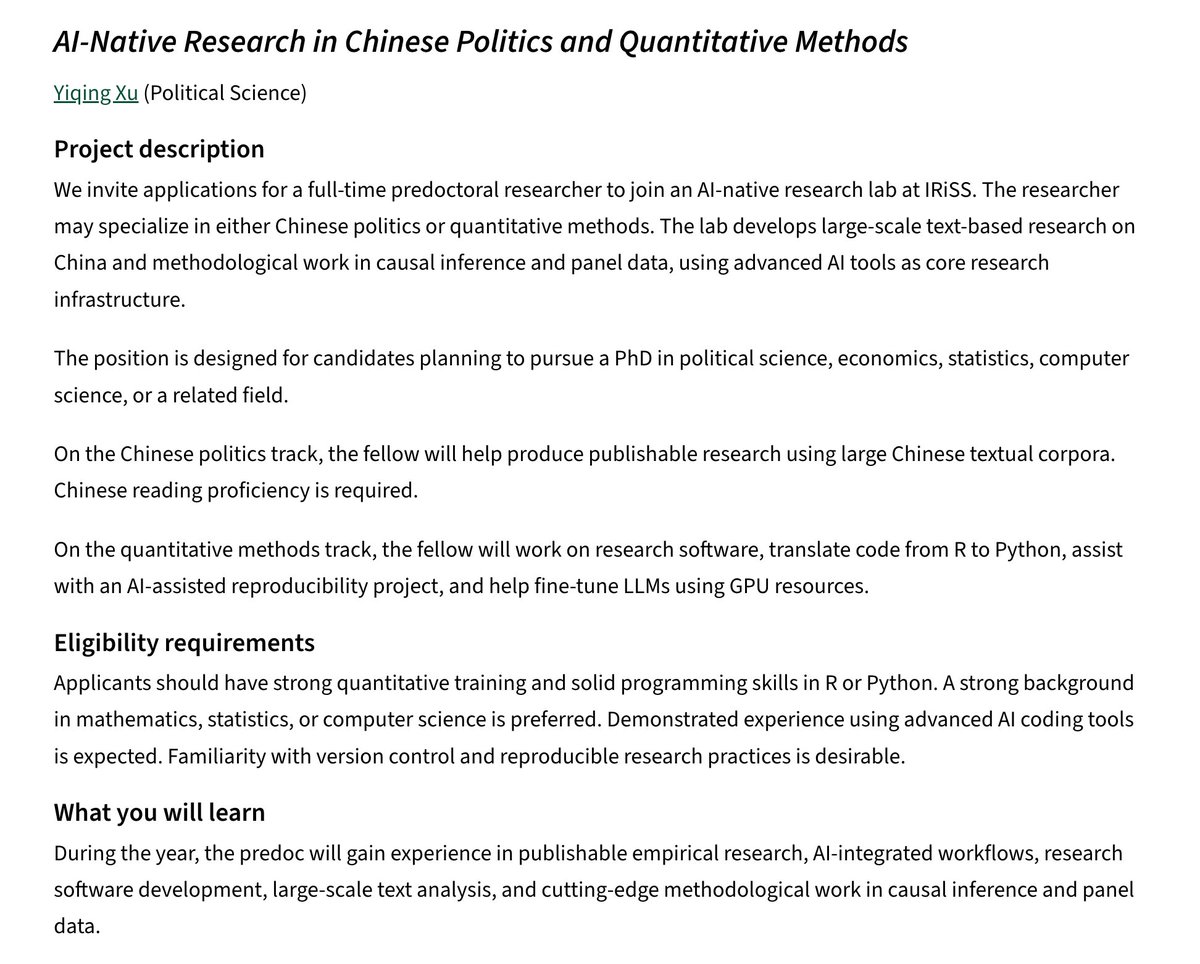
I’m hiring a predoc starting this summer. The focus is building AI workflows to improve research efficiency.
More importantly, I value independent thinking and ambition. You do not need to fit into a narrow topic.
If you’re interested in applied statistics, causal inference, or Chinese politics, broadly defined, plz apply. You can propose your own project --- I will support it.
https://t.co/GFYCuBj1Gu
Interested in using polygenic scores (PGS) in social science or health research? We are running a 2-day intensive short course @stats_UCL (20–21 April 2026): https://t.co/4oApIm3Mlv. Ideal for all quantitative researcher across Social and Health Sciences! Get started!
🚨 PhD Fellow opening @UniOslo: Join a top team exploring men's health + family dynamics in the ERC HOMME project! 3-4 yrs, quantitative background (psych, soc, econ), rich Norwegian population data. Deadline 31 March 2026. https://t.co/wtFLaF8pI0
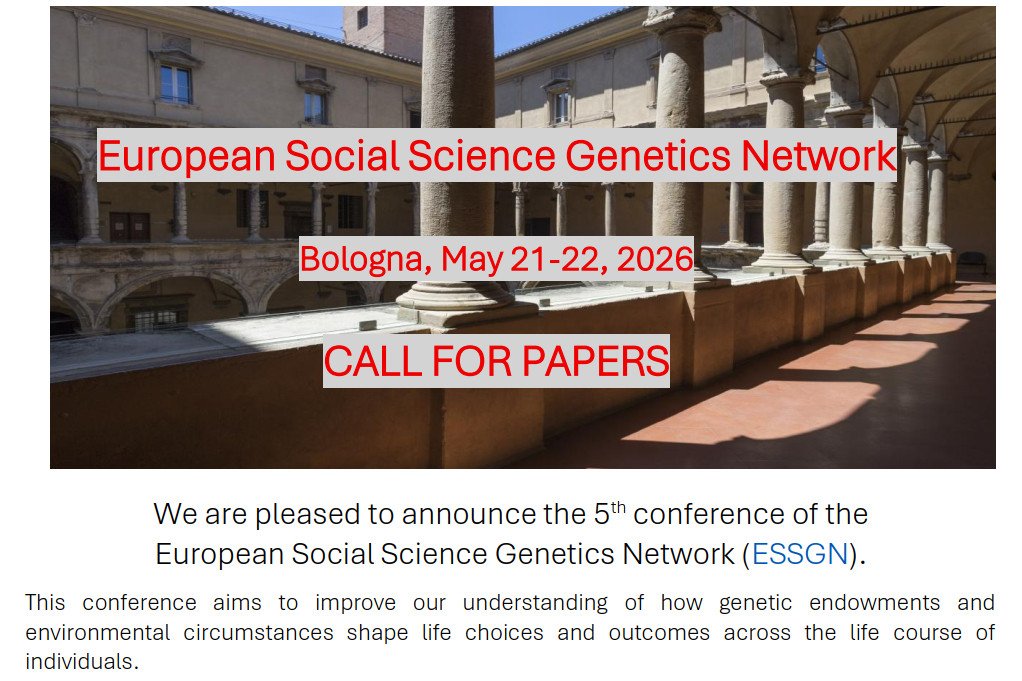
Do you like social science genetics and Italy as much as I do?
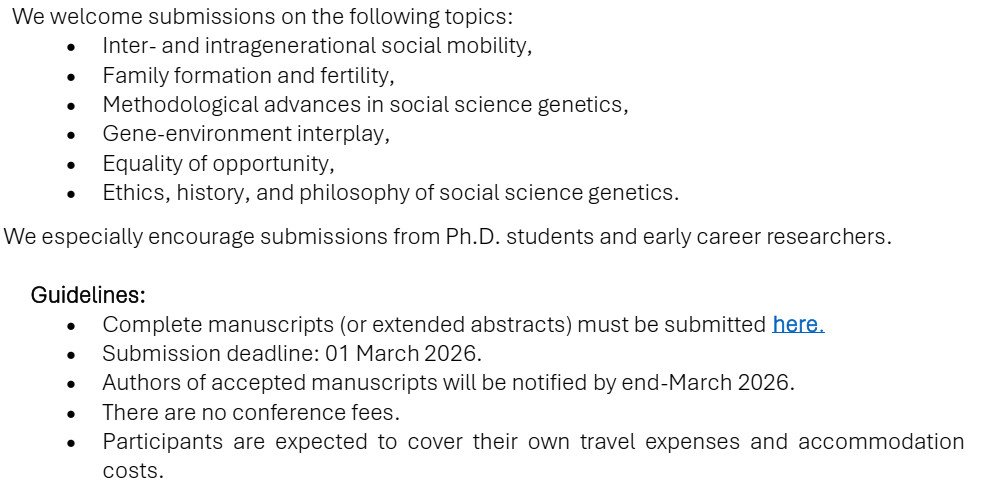
Then you'll love this: abstract deadline for the ESSGN Conference (May 21-22) in Bologna has been extended till the end of this week!
... and attendance is free!
https://t.co/zWayNzVzoW
🚨 New fully-funded DPhil studentship 🎓
Research British hacking & cybercrime 💻🔐 supervised by Associate Prof Jonathan Lusthaus.
Open to home & overseas students.
📅 Deadline: 3 March 2026
📍 Start: Oct 2026
Apply now! ⬇️
https://t.co/DNYALDa4uR
PhD position in Norway
Focus: Using artificial intelligence (AI) to study intrinsic capacity - the combined physical and mental abilities that allow people to function and thrive as they age.
https://t.co/nL2eFZQHWH
Dr Zotcheva leads the project and I am a co-supervisor.
🚀New #OpenAccess!
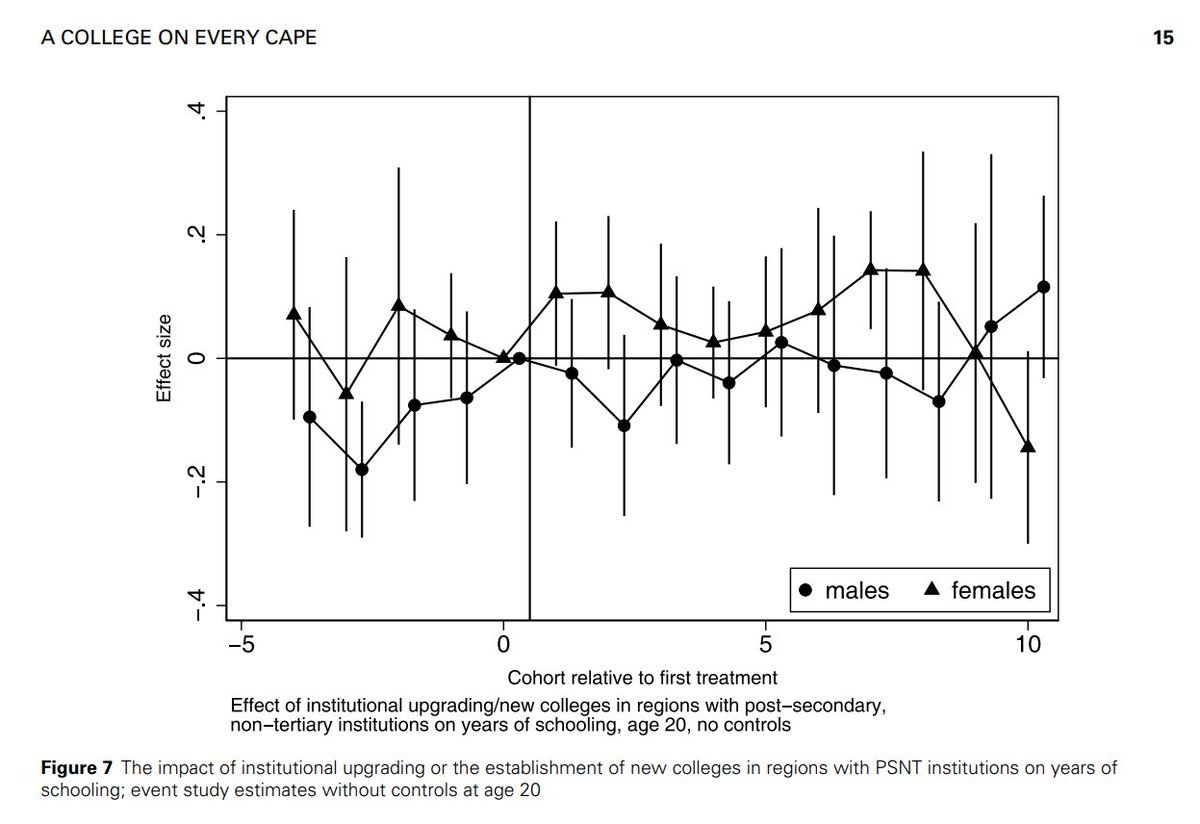
Using new data on the establishment of Norwegian colleges 1969–1992 linked to individual register data, #AF_Rogne#TK_Knutsen#J_Modalsli revisit the role of local access to higher education in shaping gendered educational outcomes!
🔓https://t.co/IR8BjIYrVw