Stable signals, for years, in a real patient. That's what turns a breakthrough into a treatment.
Longevity isn't a feature. For the people who will depend on these devices, it's everything.
#BCI#Neurotech#BrainComputerInterface#MedTech#Neurotechnology
A brain implant that works for a week is a demo. One that works for years is a therapy.
In BCI, longevity is the metric that matters most — and the hardest to earn.
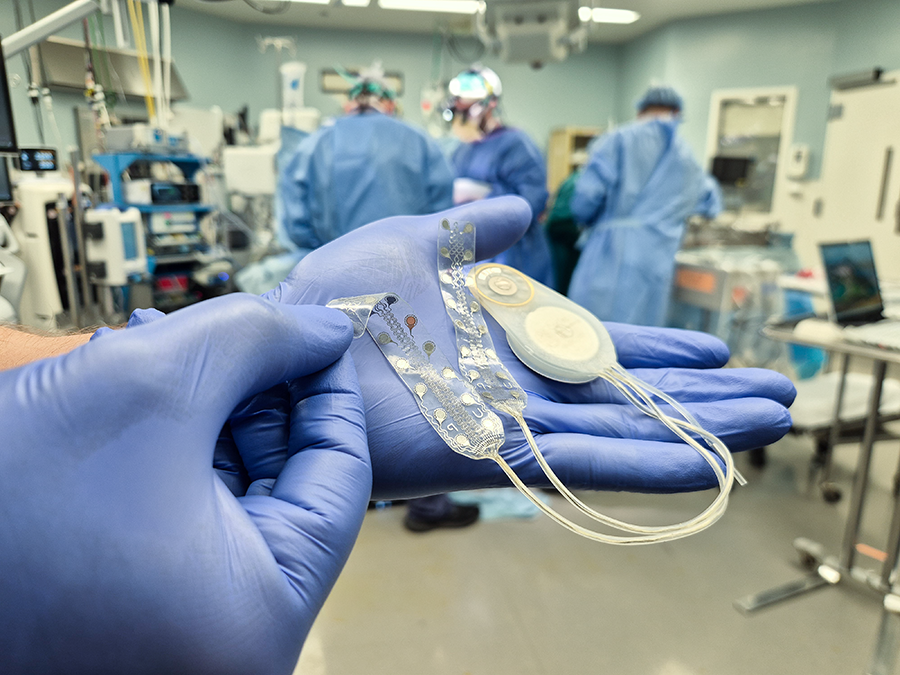
We've published 500+ days of continuous, stable operation in Nature Scientific Data. In our FDA-authorized stroke study, the first participant was still driving recovery with the same implant nine months after surgery — and used it to control a computer by thought.
Stable signals, for years, in a real patient. That's what turns a breakthrough into a treatment.
Longevity isn't a feature. For the people who will depend on these devices, it's everything.
#BCI#Neurotech#BrainComputerInterface#MedTech#Neurotechnology
A brain implant that works for a week is a demo. One that works for years is a therapy.
In BCI, longevity is the metric that matters most — and the hardest to earn.
We've published 500+ days of continuous, stable operation in Nature Scientific Data. In our FDA-authorized stroke study, the first participant was still driving recovery with the same implant nine months after surgery — and used it to control a computer by thought.
Keith McKenzie, once a precise organ and piano player, lost most movement in his left arm after a 2021 stroke. After rehab his progress plateaued and he accepted "what you've got is what you've got."
Keith's story → https://t.co/L5uNonCRyo
#BCI#Neurotech#StrokeRecovery
Controlling a computer with your thoughts used to be science fiction. One of our patients just did it.
For a century, the brain–machine link lived in novels and films: telepathy, minds moving machines, paralysis undone. We've crossed from that fiction into clinical reality.
The future people imagined for generations is being built now — in Freiburg, for patients worldwide.
Science fiction got the technology right. We're making sure it gets the purpose right too.
What once seemed impossible is now a matter of engineering — and time.
Controlling a computer with your thoughts used to be science fiction. One of our patients just did it.
For a century, the brain–machine link lived in novels and films: telepathy, minds moving machines, paralysis undone. We've crossed from that fiction into clinical reality.
The future people imagined for generations is being built now — in Freiburg, for patients worldwide.
Science fiction got the technology right. We're making sure it gets the purpose right too.
What once seemed impossible is now a matter of engineering — and time.