@markiplier YES!!!!!!! This is so awesome!!! I can't wait to see this!!! Wish it was playing in Spokane, WA. Chehalis, WA is just over 350 miles away.....May have a road trip planned for January 30th!!!
Monday 21st October 2024
We are all deeply saddened to learn about the passing of Paul Di'Anno earlier today. Paul's contribution to Iron Maiden was immense and helped set us on the path we have been travelling as a band for almost five decades. His pioneering presence as a frontman and vocalist, both on stage and on our first two albums, will be very fondly remembered not just by us, but by fans around the world.
“It’s just so sad he’s gone,” comments Steve Harris. “I was in touch with him only recently as we texted each other about West Ham and their ups and downs. At least he was still gigging until recently, it was something that kept him going, to be out there whenever he could. He will be missed by us all. Rest in peace mate ⚒⚒.”
We were very grateful to have had the chance to catch up a couple of years ago and to spend time with him once more. On behalf of the band, Rod and Andy, and the whole Iron Maiden team, we extend our deepest sympathies to Paul's family and close friends. Rest In Peace Paul.
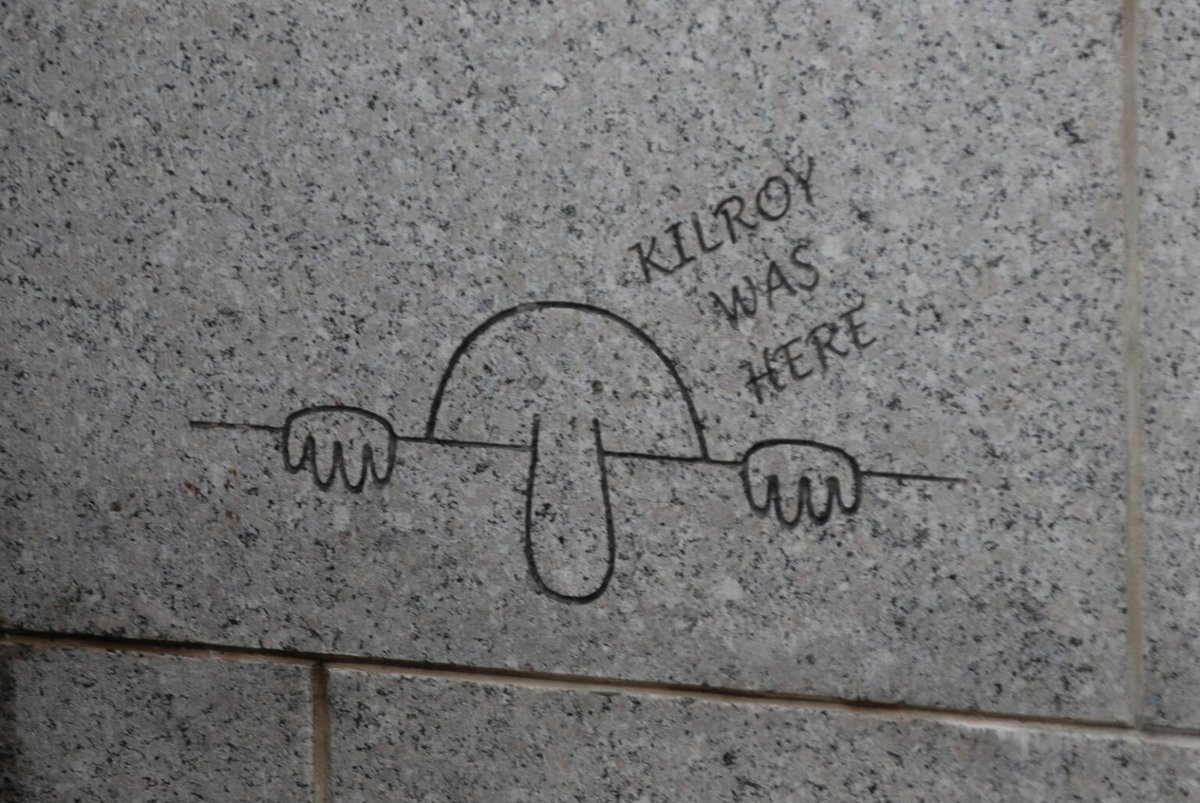
During World War II, the voracious spread of “Kilroy Was Here” began. Unbeknownst to anyone at the time, it would become a legendary, almost mythical part of American military culture and the history of the war.
The basic doodle featured a bald man with a large nose. His head and hands were peering suspiciously over a wall along with the tag “Kilroy Was Here.” It could soon be found across all theaters of war visited by American troops.
Kilroy was found in ship holds, bathrooms, bridges, and walls, and even painted on the shells of Air Force missiles. It was found scrawled across France, Germany, the entire Pacific theater, and more.
The graffiti’s popularity grew to the point where it transcended the battlefield. It was found just about everywhere it could be spray-painted, carved, drawn, or left behind in some shape or form, no matter the country.
In 1944, war photographer Robert Capa photographed an instance of the meme at Bastogne during the Battle of the Bulge. Soldiers had written “Kilroy Was Stuck Here” on the walls of an abandoned barn.
It is even rumored that during the Potsdam Conference in 1945, Stalin happened to stumble upon a drawing of “Kilroy Was Here” in the VIP bathroom. He supposedly inquired with his aides, asking who Kilroy was, to which one can only guess what their answer was.
Even Japanese enemy forces were confused and intrigued by the tiny man peering over the wall. Japanese troops were reported to be perplexed by the meme they found all over the Pacific theater. They found it painted onto the sides of tanks and missiles in Guadalcanal and other islands.
During the war and in the years since the myths surrounding “Kilroy Was Here” continued to proliferate wildly.
Kilroy’s most notable appearances are the two inscriptions hidden in the World War II memorial in Washington D.C. Tucked away, in small unassuming corners of both the Atlantic and Pacific sides of the memorial, Kilroy has been carved into the marble. It serves as a tribute to his legacy and impact on the war effort.
Many myths and legends cropped up to explain the sometimes baffling and mystifying graffiti man. However, the “Kilroy Was Here” phenomenon was primarily – and remains so – a lasting symbol of the American military during World War II and beyond.
Kilroy even made a comeback in the days of the Korean War. He was similarly spotted in Iraq and Afghanistan.
Wherever American troops go, Kilroy seems to follow.
🌎Have you seen the complete map of Palmarius? It's incredibly vast and magnificent, but it appears so narrow in the game.
Just like our lives, we are tiny beings on this Earth. The real significance lies in cherishing every moment and making the most of it!
#Omniheroes