For those that still don’t understand what Benghazi was all about:
🚨So here's the REAL story:
Ambassador Stevens was sent to Benghazi to secretly retrieve US made Stinger Missiles that the State Dept had supplied to Ansar al Sharia in Libya WITHOUT Congressional oversight or permission.
Sec State Hillary Clinton had brokered the Libya deal through Ambassador Stevens and a Private Arms Dealer named Marc Turi, but some of the shoulder fired Stinger Missiles ended up in Afghanistan where they were used against our own military. On July 25th, 2012, a US Chinook helicopter was downed by one of them. Not destroyed only because the idiot Taliban didn't arm the missile. The helicopter didn't explode, but it had to land and an ordnance team recovered the missile’s serial number which led back to a cache of Stinger Missiles kept in
Qatar by the CIA.
Obama and Hillary were in full panic mode, so Ambassador Stevens was sent to Benghazi to retrieve the rest of the Stinger Missiles. This was a "do-or-die" mission, which explains the Stand Down Orders given to multiple rescue teams during the siege of the US Embassy.
It was the State Dept, NOT the CIA, that supplied the Stinger Missiles to our sworn enemies because Gen. Petraeus at CIA would not approve supplying the deadly missiles due to their potential use against commercial aircraft. So then, Obama threw Gen. Petraeus under the bus when he refused to testify in support of Obama’s phony claim of a “spontaneous uprising caused by a YouTube video that insulted Muslims.”
Obama and Hillary committed TREASON!
THIS is what the investigation is all about, WHY she had a Private Server, (in order to delete the digital evidence), and WHY Obama, two weeks after the attack, told the UN that the attack was the result of the YouTube video, even though everyone KNEW it was not.
Furthermore, the Taliban knew that the administration had aided and abetted the enemy WITHOUT Congressional oversight or permission, so they began pressuring (blackmailing) the Obama Administration to release five Taliban generals being held at Guantanamo.
Bowe Bergdahl was just a useful pawn used to cover the release of the Taliban generals. Everyone knew Bergdahl was a traitor but Obama used Bergdahl’s exchange for the five Taliban generals to cover that Obama was being coerced by the Taliban about the unauthorized Stinger Missile deal.
So we have a traitor as POTUS that is not only corrupt, but compromised, as well and a Sec of State that is a serial liar, who perjured herself multiple times at the Congressional Hearings on Benghazi. Perhaps this is why no military aircraft were called upon for help in Benghazi: because the administration knew that our enemies had Stinger Missiles that, if used to down those planes, would likely be traced back to the CIA cache in Qatar and then to the State Dept’s illegitimate arms deal in Libya.
Forward this again and again and again until everyone reads the true story of Benghazi.
Spot on!! 🎯😎😆
I can’t wait for the comments!!
Nicklas Nilsson explains the difference between right-wing and left-wing people in spot-on text on Facebook:
"If a right-wing person is gay, then he is, and he doesn't care what others think.
If a left-winger is gay, then he demands legal changes, protests against everything and everyone, and turns it into a political struggle.
If a right-winger is vegan, then he simply doesn't eat meat.
If a left-winger is vegan, then he wants to ban meat, halt food production, and protest outside farms and chicken farms.
If a right-winger doesn't like guns, then he just doesn't buy any.
If a left-winger doesn't like guns, then he tries to ban them, prevent everyone else from owning one, and hates those who do.
If a right-winger is worried about the climate, then he flies less, drives an electric car if it suits him, and sorts his waste.
If a left-winger is worried about the climate, then he wants to ban fossil fuel cars, air travel, and meat for everyone else, protest outside factories, and demand that the state forces the change.
If a right-winger wants to give his children a good education, then he moves to an area with good schools, or chooses a private school, or gets involved himself.
If a left-winger wants to give his children a good education, then he demands more tax money from everyone, equal results for all, a ban on charter schools, and protests against every inequality.
If a right-winger complains about his job or workplace.. he doesn't. He changes jobs or starts his own business.
If a left-winger complains about his job – then it's the boss, the company, or the colleagues who are at fault. He demands collective agreements, strikes, changes for the whole community, and protests against the company so that it suits him.
If a right-winger is dissatisfied with his housing or rent, then he moves, renovates, or buys something else.
If a left-winger is dissatisfied with his housing or rent, then he demands rent freezes, more subsidies, regulations for everyone, and protests against landlords and politicians.
If a right-winger fails with a business or an investment that goes wrong, then he gets up, dusts himself off, and tries again tomorrow.
If a left-winger runs out of money on the 24th, then he blames the rich for having too much and needing to contribute more, blames the lottery win that didn't come home last week, and mutters that he has such damn bad luck.
If a right-winger sees this – then he sends it to a few friends for a good laugh.
If a left-winger sees this – then he tries to argue against it, get it removed, and delete me from Facebook."
For over 300 years, scientists dismissed it as myth. But when geologists finally proved the Cascadia earthquake of 1700 actually happened, they discovered something stunning: Indigenous families had already survived it—because their ancestors taught them exactly what to do when the earth wouldn't stop shaking.
Long before any university studied fault lines or any government issued evacuation maps, Quinault people lived where the rainforest meets the Pacific Ocean. Their elders passed down a story that sounded impossible: a time when the ground shook so violently that the ocean rose higher than the tallest cedar trees.
This wasn't folklore meant to entertain children around the fire.
It was a survival manual, encoded in memory.
On the night of January 26, 1700, that ancient warning became terrifyingly real. Deep beneath the Pacific, along what we now call the Cascadia Subduction Zone, two massive tectonic plates suddenly ruptured. The earthquake that followed measured an estimated magnitude 9.0—one of the most powerful in recorded history. But unlike earthquakes that shake for seconds, this one continued for minutes.
Quinault oral histories describe families jolting awake as their homes swayed like canoes on rough water. Dogs howled in confusion. Cooking racks collapsed. Fires scattered from their stone pits. The rumbling grew so deep and sustained that it felt as though the earth itself was groaning. Then something even more terrifying happened.
The ocean pulled back.
The tide withdrew so far that the beach stretched beyond anything anyone had seen in their lifetime. Fish flopped helplessly on exposed sand. Confused sea animals cried out. The air became unnaturally, impossibly still. And in that eerie silence, the elders remembered the teaching.
"When the earth shakes and the ocean runs away—run to the forest. Run to the high ground. Run now."
Families didn't hesitate. They grabbed their children and fled toward the tree line, scrambling uphill through darkness and falling branches, pushing toward the ancient ridges above the shoreline. Some carried blankets, some carried only hope. They climbed until they reached the safety of the old-growth forest.
Minutes later, the wall of water arrived.
Tsunami roared across the coastline with unimaginable force—taller than cedar houses, faster than any canoe could paddle. It obliterated villages along the lowlands, splintered boats, and swept away everything that hadn't moved to higher ground.
When dawn finally broke, survivors standing on forested ridge looked down at a landscape transformed. Where their homes had stood, only scattered debris remained. But the people were alive. Because they had remembered what their ancestors knew.
This story even more remarkable: Quinault weren't the only ones who preserved this memory. The Makah, Hoh, Yurok, and other coastal nations maintained similar accounts across hundreds of miles of coastline. And centuries later, when Japanese historians cross-referenced their own records, they found something astonishing—an entry describing a massive "orphan wave" that struck Japan on January 27, 1700, a tsunami with no corresponding local earthquake.
The wave had traveled across the entire Pacific Ocean. Scientists eventually used tree ring analysis, coastal sediment layers, and Indigenous oral histories to confirm what had seemed impossible: a magnitude 9.0 earthquake had indeed struck Pacific Northwest in 1700, exactly as stories described.
Today, emergency preparedness officials in Washington, Oregon, and Northern California teach the same lesson Quinault elders taught 300 years ago: when earth shakes and the ocean pulls back, you have minutes—not hours—to reach high ground. Indigenous knowledge didn't just preserve a story. It preserved an entire blueprint for survival, passed from generation to generation, waiting for the moment when it would be needed most. This is what wisdom looks like when it refuses to be forgotten.
#archaeohistories
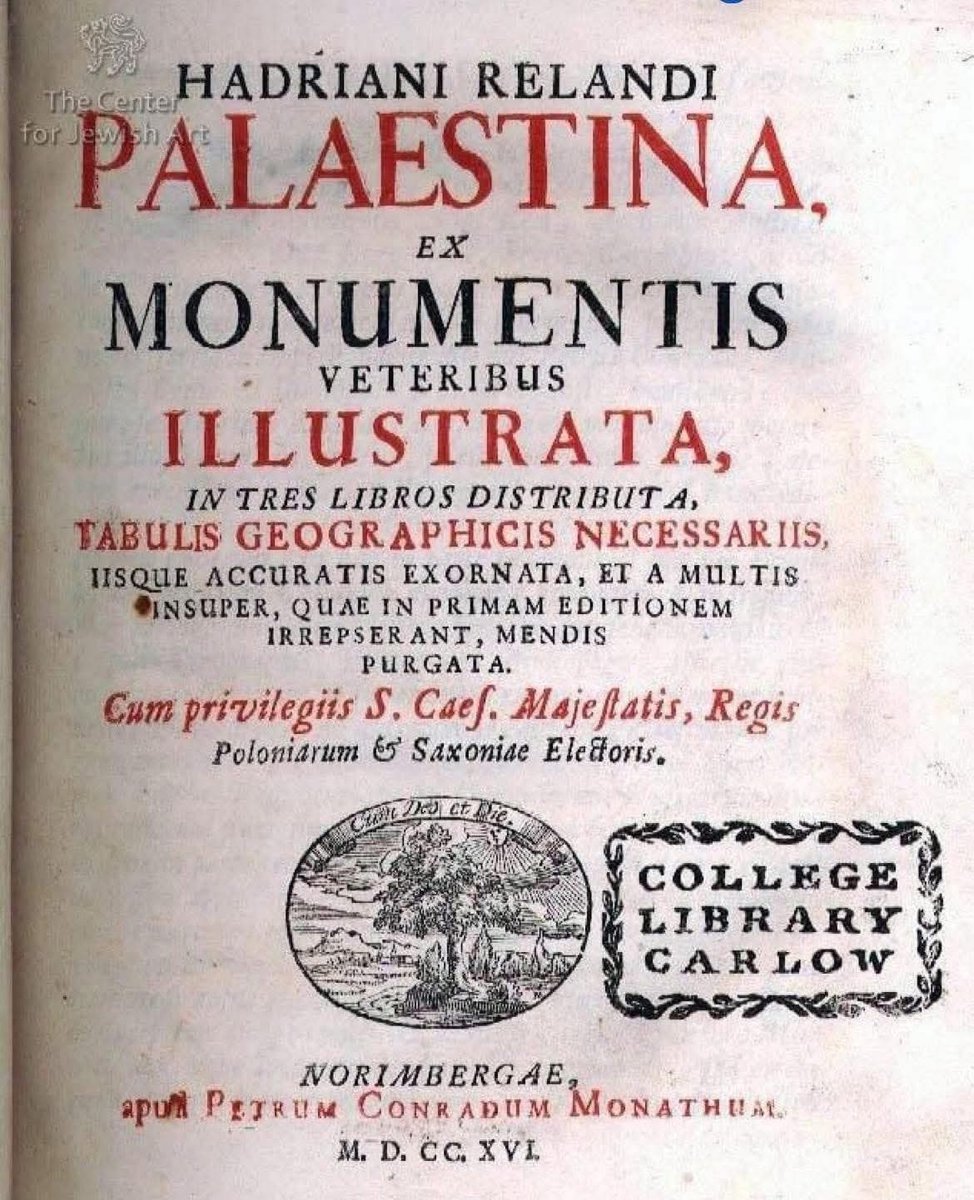
The truth. This book, written in Latin in 1695, describes the region called Palestine at that time.
Author Adriani Relandi was a geographer, cartographer, traveler, philologist.
He understood many languages, including Arabic, Ancient Greek and Hebrew.
He described nearly 2,500 settlements mentioned in the Bible, and made an approximate census according to settlements.
His notes;
1. Palestine is mostly empty, abandoned, sparsely populated. The main population is concentrated in Jerusalem, Akko, Tsfat, Jaffa, Tveria and Gaza.
2. The majority of the population is Jewish; almost everyone else is Christian. A very small part is Muslim, mostly Bedouin...
(Relandi refers to Muslims as nomadic Bedouins who come to cities only as seasonal workers in agriculture or construction.)
3. The only exception is Nablus, inhabited by about 120 members of the Muslim Natsha family and approximately 70 Samaritans.
4. About 5,000 people live in Jerusalem; almost all Jews, and a few Christians.
5. The names of most of the settlements are of Jewish origin, and some have Greek or Roman Latin names. Apart from the city of Ramla, there is no Arab settlement whose original name is Arabic.
Place names derived from Jewish, Greek or Latin are usually adapted into Arabic and meaningless...
6. Approximately 550 people live in Gaza, half of whom are Jews and half are Christians.
Jews were successful in agriculture, especially vineyards, olives and wheat, while Christians were engaged in trade and transportation..."
( Thanks to John Abeles )
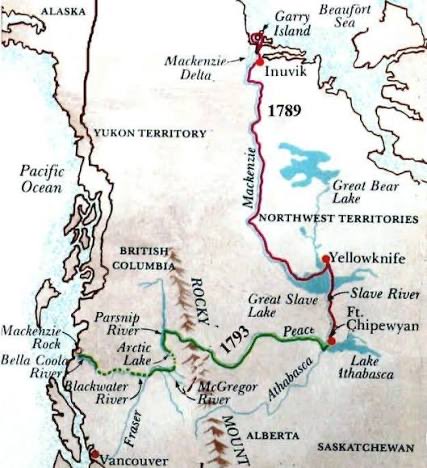
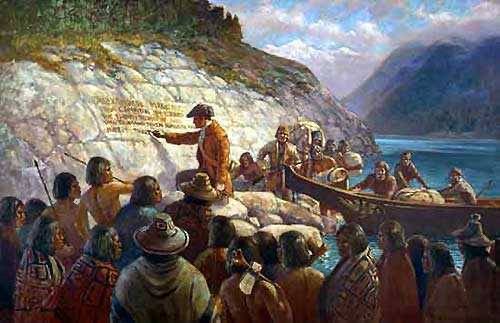
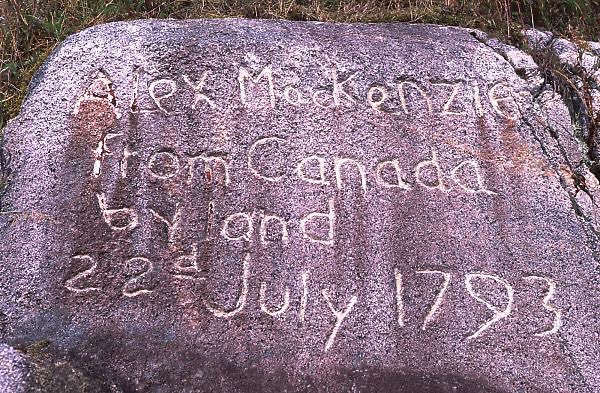
On this day in 1793, Scottish-Canadian explorer Sir Alexander Mackenzie reached the Pacific Ocean. It was the first crossing of the North American Continent north of Mexico, beating Lewis and Clark by 12 years, & is regarded as one of the greatest expeditions in Canadian history.
@CBCNews Major outage (~ 4pm EDT) from internet supplier Oxio; this affects 6 Canadian provinces ... maybe should be a news story?
https://t.co/w18x7CUe6d
@globalnews Major outage (~ 4pm EDT) from internet supplier Oxio; this affects 6 Canadian provinces ... maybe should be a news story?
https://t.co/w18x7CUe6d
@CTVNews Major outage (~ 4pm EDT) from internet supplier Oxio; this affects 6 Canadian provinces ... maybe should be a news story?
https://t.co/w18x7CUe6d
@thetuna99@oxio Sorry Tom, that was the wrong Oxio (https://t.co/wgkPiZsuNH website).
Our (mine) OXIO just has this page ... no other information or timeline. 😡
https://t.co/w18x7CUe6d